
 By Basiran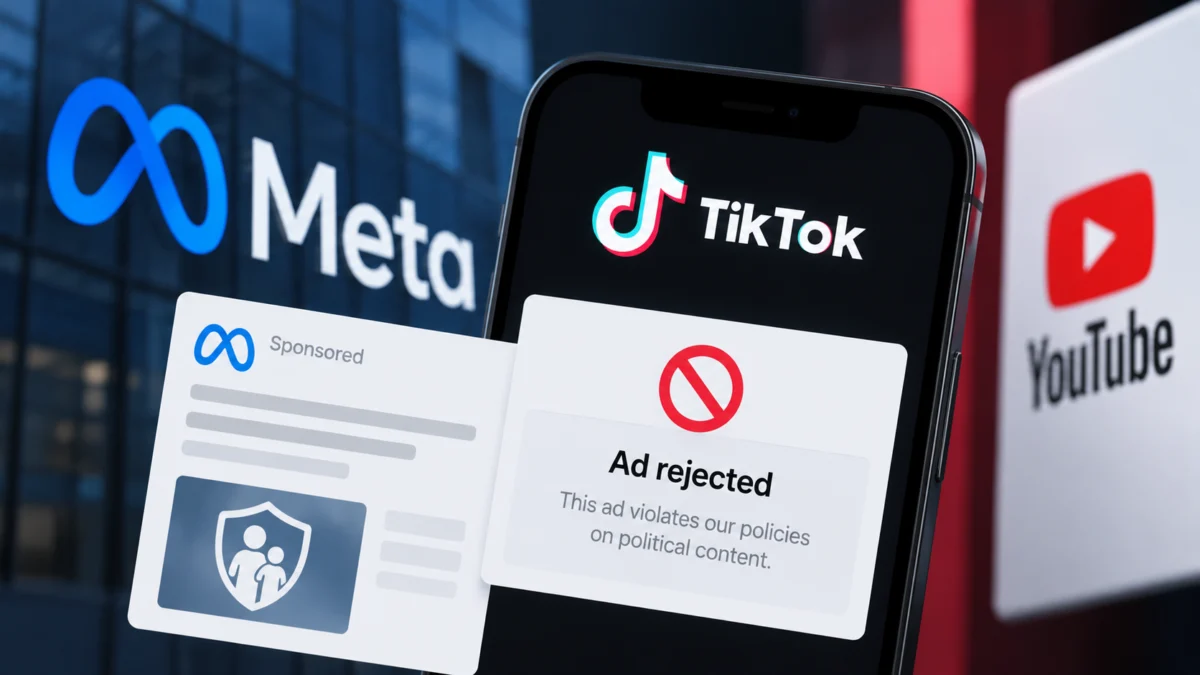
By Global Tech & Digital Policy Desk
Published: September 2026
Main Facts
A high-stakes public relations and legal war has erupted between some of the world’s most dominant social media conglomerates. Meta, the parent company of Facebook and Instagram, has found its aggressive cross-platform advocacy campaign blocked by rival TikTok, marking a dramatic escalation in an ongoing industry feud over youth safety.
At the center of the dispute is a massive, multibillion-dollar legal settlement. Meta recently agreed to pay up to $16.7 billion to resolve sweeping allegations brought by U.S. state attorneys general, who argued that Facebook and Instagram were intentionally designed with addictive features that caused severe mental and physical harm to children and adolescents.
However, a critical catch defines the agreement: roughly $5 billion of Meta’s financial settlement—and the structural efficacy of the reforms themselves—is entirely conditional. The terms dictate that other major industry stakeholders, specifically TikTok and YouTube, must also adopt comparable safety standards and contribute roughly $5 billion each to parallel agreements.
Desperate to avoid operating under severe market disadvantages, Meta launched a public relations and advertising blitz earlier this month, urging its rivals to join the settlement. When Meta attempted to run video advertisements on TikTok explicitly calling out both TikTok and YouTube to step up and meet the new regulatory bar, TikTok swiftly rejected the campaign. Citing strict internal policies against "political content," TikTok blocked the ads, leaving Meta’s public pressure campaign stalled on rival ground and exposing the deep vulnerabilities of using paid media to influence competitor behavior and public policy.
Chronology of Events
The unfolding standoff between Silicon Valley’s heavyweights follows a carefully calculated timeline of legal maneuverings, public relations offensives, and policy clashes:
- Late August 2026: Meta strikes a landmark legal agreement, settling multiple lawsuits with U.S. states for up to $17 billion. The settlement mandates sweeping changes to how minors interact with Facebook and Instagram, introducing usage caps, nighttime blackouts, and chronological feeds. Crucially, the fine print establishes that a third of the financial payout and several operational reforms are contingent upon TikTok and YouTube adopting identical terms.
- Early September 2026: Recognizing the competitive peril of going it alone, Meta launches a widespread public awareness and direct-pressure campaign. The company issues press releases, public statements, and paid video advertisements arguing that industry-wide adoption is the only way to genuinely protect teenagers, who will simply migrate to rival platforms if restrictions are isolated to Meta’s apps.
- Mid-September 2026: Meta attempts to buy advertising space directly on TikTok to air its appeal. The creative materials feature voiceovers, text, and imagery directly naming TikTok and YouTube and demanding they match Meta’s legal commitments.
- Wednesday of Same Week: TikTok officially rejects Meta’s ad placements. Content moderators and policy teams flag the campaign as violating platform guidelines prohibiting "political advertising," effectively silencing Meta’s message on its fastest-growing rival platform.
- Simultaneous Disengagements: Around the same period, both TikTok and YouTube noticeably pull back from collaborative policymaking arenas. Axios reports that representatives from both platforms withdraw from a scheduled Health and Human Services (HHS) panel concerning children’s screen time. Simultaneously, TikTok independently withdraws from an anticipated congressional meeting with the House China Select Committee in the immediate wake of Meta’s settlement.
Supporting Data and Financial Stakes
The numbers underlying this corporate standoff illustrate an unprecedented intersection of antitrust dynamics, legal liability, and product design adjustments:
- $16.7 Billion: The total maximum payout agreed to by Meta to settle state-level child safety lawsuits, making it one of the largest regulatory settlements in the history of the tech industry.
- $5 Billion Contingency: The specific financial threshold tied directly to competitor compliance. If TikTok and YouTube refuse to sign comparable consent decrees or settlements with the states, Meta faces unique structural burdens, and a massive chunk of its legal liability shifts unpredictably.
- Core Platform Restrictions Imposed on Meta: Under the settlement terms, Facebook and Instagram are now legally or operationally bound to implement:
- Strict daily time-limit caps for young users.
- Overnight access blocks preventing late-night scrolling.
- Notification silences during local school hours.
- Default algorithmic switches offering chronological feed options.
- Suppression or removal of visible "likes" and public reaction metrics for minor accounts to alleviate social validation pressures.
- Zero Financial Contribution from Rivals: To date, neither Google-owned YouTube nor ByteDance-owned TikTok have committed a single dollar or signed parallel terms with the coalition of state attorneys general, maintaining a unified front of public silence against Meta’s overtures.
Official Responses and Industry Positions
The public relations battle has forced executives, policy teams, and legal counsels to stake out aggressive positions, though the silence from targeted competitors speaks volumes.
Meta’s Perspective
Meta has made little secret of its strategic motivation: "reputational jujitsu" combined with fierce self-preservation. Company executives and public affairs spokespeople argue that imposing severe friction on Facebook and Instagram while leaving TikTok and YouTube entirely unregulated creates a fundamentally broken marketplace.
In public statements, Meta representatives asserted:

"To truly empower parents and keep teens safe across the apps they use the most, TikTok and YouTube need to step up and meet the standard we’ve set with state attorneys general."
Meta has continually expressed public disappointment regarding the lack of engagement from its competitors, though it insists it remains hopeful that regulatory and public pressure will ultimately force them to the negotiating table. The company’s core argument is straightforward: teen safety cannot be a competitive differentiator. If safety features drive disaffected youth off Facebook and Instagram and straight into the arms of unrestricted algorithms on TikTok and YouTube, the net psychological welfare of children will not improve—it will merely centralize on rival networks.
TikTok and YouTube’s Silence
In stark contrast to Meta’s aggressive transparency, TikTok and YouTube have maintained a rigid posture of public disengagement. Neither platform has issued formal responses addressing Meta’s demands, nor have they publicly acknowledged the conditional $5 billion settlement clauses.
Industry analysts note that by refusing to engage, TikTok and YouTube are denying Meta the legitimacy of a peer-to-peer debate. By framing Meta’s ad campaign as "political content," TikTok utilized its existing Terms of Service as an administrative shield to quietly vaporize an embarrassing and coercive PR stunt without needing to address the substantive child safety allegations head-on.
Implications for the Future of Social Media
The collision between Meta, TikTok, and YouTube carries profound implications that stretch far beyond corporate boardrooms, impacting advertising, product development, and the future of digital legislation.
1. The Weaponization of Platform Policies
TikTok’s decision to block Meta’s ads under the banner of "political content" highlights a fascinating grey area in modern digital governance. Traditionally, political ad bans are designed to curb election interference, dark money, and divisive civic discourse. However, this incident demonstrates how platforms can leverage these exact guardrails to block corporate competitors from engaging in public policy debates or deploying aggressive competitive maneuvers within their digital borders. It establishes a powerful precedent: tech giants can censor each other’s paid public campaigns under administrative pretexts.
2. Redefining the Teen User Experience
If Meta successfully coerces the industry standard, the daily digital reality for millions of teenagers will undergo a permanent paradigm shift. Features once core to social media engagement—endless scrolls, late-night dopamine loops, validation via public metrics, and hyper-targeted push notifications—could vanish across the board. However, if TikTok and YouTube successfully resist, Meta risks hemorrhaging its younger demographic permanently to competitors who face no such handcuffs, testing whether corporate social responsibility can survive in an ultra-competitive attention economy.
3. A New Era of State-Led Tech Regulation
The involvement of U.S. state attorneys general in extracting multibillion-dollar settlements signals a decentralization of federal tech oversight. Rather than waiting for stalled congressional gridlock to pass federal children’s online privacy legislation, states are utilizing coordinated legal pressure to force individual players to settle. By tying Meta’s financial relief to competitor compliance, the states have essentially deputized Meta to act as an aggressive proxy in dragging the rest of the industry into regulatory compliance.
What Happens Next?
Meta’s aggressive gambit is a high-risk, high-reward strategy. The company is betting that combined pressure from state attorneys general, concerned parents, and relentless public exposure will eventually corner TikTok and YouTube into submission.
However, TikTok’s swift rejection of Meta’s advertising dollars proves that building a united front for child safety is infinitely more complicated than signing a legal brief. As this corporate cold war continues to unfold, the ultimate winners—or losers—will not be the tech executives or the legal teams, but the generation of digital natives caught in the crossfire of the attention economy.
 Jia Lissa
  Nana Muazin
  Layla Zulfa