
 By Ali Ikhwan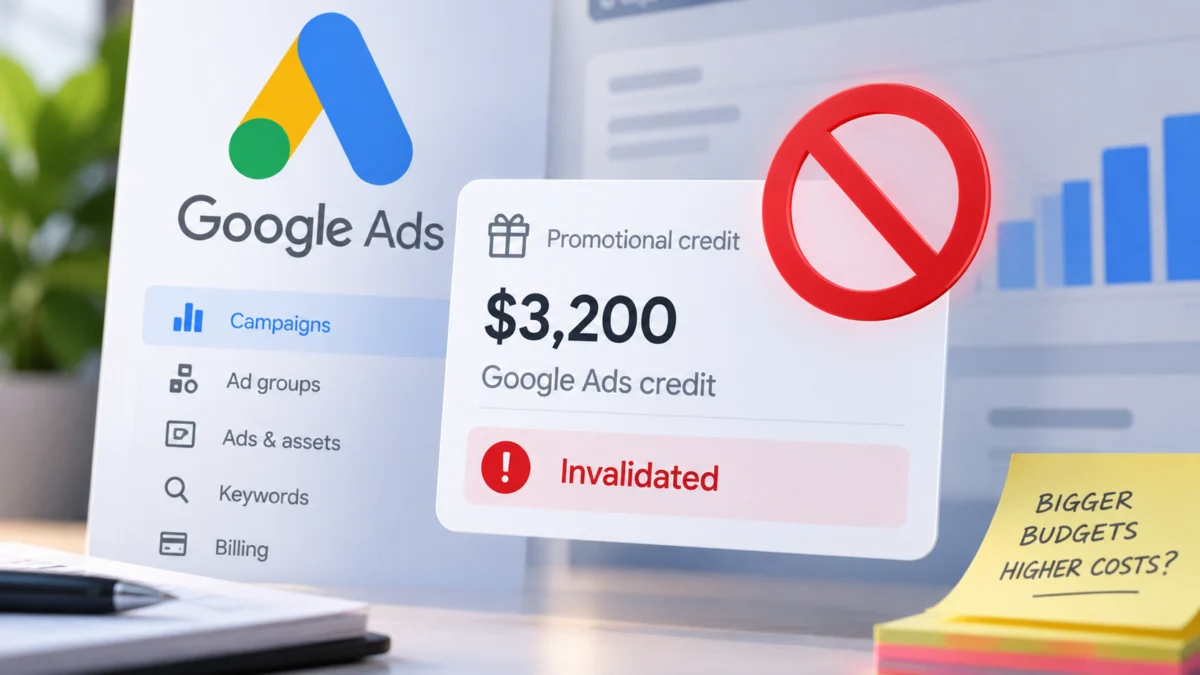
By Paid Media Desk
Published: Industry Insights & Analysis
Executive Summary: The Hidden Pitfalls of Google Ads Promotions
For digital marketers and business owners alike, promotional credits have long served as an attractive incentive to launch, test, or scale campaigns on major advertising networks. Platforms like Google Ads routinely dangle hundreds or even thousands of dollars in matching spend to lure new advertisers into the ecosystem or encourage existing ones to expand their digital footprints.
However, a growing controversy is threatening to upend trust in these promotional programs. Recent reports reveal that some Google Ads promotional credits are being invalidated after advertisers have already fulfilled the required spending thresholds. Because advertising spend is non-refundable and cannot be clawed back once injected into live campaigns, businesses are finding themselves saddled with higher-than-expected marketing costs, broken budgets, and virtually no apparent path to appeal Google’s automated decisions.
As PPC (Pay-Per-Click) professionals sound the alarm, the issue has cast a spotlight on the predictability of platform promotions, the rigidity of automated enforcement systems, and the urgent need for greater transparency from tech giants regarding how promotional eligibility is managed.
Main Facts: What is Happening to Google Ads Credits?
At the core of the issue is a stark mismatch between advertiser expectations and platform enforcement. When a business accepts a Google Ads promotional offer—such as a deal promising a dollar-for-dollar match up to a certain amount—they agree to invest a specific sum of their own capital into the platform within a designated timeframe. Once that financial threshold is crossed, the promised credit is expected to apply automatically to offset future ad impressions.
Instead, a troubling trend has emerged where these earned credits are abruptly stamped as “Invalidated” weeks or even months after the qualifying spend has already been cleared from the advertiser’s bank account or credit card.
The immediate ramifications include:
- Budget Overruns: Advertisers relying on the subsidy find their financial projections shattered, having spent thousands of dollars under the assumption that a portion of it would be reimbursed via platform credits.
- Irreversible Capital Outlay: Unlike physical retail products, digital ad impressions cannot be returned. Once an advertiser spends $3,200 to trigger a $3,200 credit, that cash is gone, regardless of whether the corresponding credit is later stripped away.
- Lack of Recourse: Affected users report a glaring absence of transparent support channels, appeal pathways, or human-reviewed dispute processes to challenge wrongful invalidations.
Chronology and Case Studies: How the Issue Came to Light
The controversy gained widespread traction following disclosures by prominent PPC consultant David Melamed, who publicly documented multiple instances of clients falling victim to unexpected credit revocations within a remarkably short operational window.
Case Study 1: The $3,200 Broken Promise
In the first prominent case highlighted by Melamed, an established advertiser committed to a high-tier campaign strategy explicitly driven by a promotional offer. The terms dictated that the advertiser would invest $3,200 of their own funds into Google Ads, which would then be matched dollar-for-dollar by a $3,200 promotional credit.
The advertiser dutifully met the spending requirement, keeping their campaigns active and injecting the full $3,200 into Google’s auctions. However, more than a month after the funds had been fully spent, the anticipated credit was pulled and labeled “Invalidated.”
According to Melamed, this particular business would never have authorized or risked the initial $3,200 expenditure if they had known the promotional cushion was illusory. Because the money had already cleared, the advertiser was left absorbing the entire financial blow without the expected offset.
Case Study 2: Manager Account Billing Technicalities
In a separate incident involving a new advertiser, Melamed noted that a promotional credit was invalidated due to a technical administrative detail: the billing profile originating from the user’s manager (MCC) account had been utilized during the initial setup phase.
While Google’s internal compliance and fraud-prevention systems often flag accounts based on complex risk heuristics, the lack of upfront warning or contextual feedback leaves users baffled. In this second instance, the precise trigger for the invalidation remained opaque, illustrating how easily technical minutiae can inadvertently void promotional eligibility long after the financial commitment has been fulfilled.
Supporting Data and Broader Economic Implications
While individual budget blowups are catastrophic for small and medium-sized enterprises (SMEs), industry experts point to broader systemic and economic consequences tied to how promotional credits influence the wider digital advertising marketplace.

Aggressive Bidding and Auction Inflation
Priced incentives do not exist in a vacuum. Melamed argues that promotional credits fundamentally alter advertiser psychology. When businesses view a portion of their advertising budget as effectively "discounted" or subsidized by Google, they tend to bid more aggressively, enter competitive keyword auctions they might otherwise avoid, and accelerate their spending velocity.
- Auction Dynamics: By encouraging higher initial spending thresholds, promotional offers pump external capital into Google Ads auctions.
- Collateral Competition: This artificial stimulation can drive up CPCs (Cost-Per-Click) across the board, potentially increasing the cost of impressions for all advertisers bidding on the same target keywords—even those not utilizing or benefiting from promotional credits.
While this perspective represents an analytical assessment of market behavior rather than a proven macroeconomic conspiracy, it underscores the profound ripple effects that platform-driven promotions exert on digital marketing ecosystems.
Official Responses: Google Acknowledges the Complaint
As frustration mounted within the digital marketing community on platforms like LinkedIn and specialized forums, the issue caught the attention of Google leadership.
Ginny Marvin, the official Google Ads Liaison, responded directly to David Melamed’s viral LinkedIn expose. In her public reply, Marvin stated:
"Thank you for bringing this to our attention, David. I’ve passed this along to the team."
Despite this acknowledgment, Google has yet to issue a formal public statement explaining the root cause of these specific invalidations, nor has the tech giant outlined any immediate plans to modify how promotional credit disputes, reviews, and appeals are handled. The silence leaves many advertisers wondering whether these revocations are the result of overly aggressive automated compliance filters or a systemic policy shift.
Implications for Advertisers: What You Need to Know and Do
The fallout from these invalidated credits serves as a sharp wake-up call for the digital advertising community. Moving forward, marketing professionals must fundamentally alter how they account for promotional offers in financial planning.
1. Reevaluate Promotional Credit Risk Management
Advertisers and agencies can no longer treat a Google Ads promotional credit as a guaranteed line item in their campaign budgets. Until Google implements robust, transparent appeal mechanisms, financial forecasts should treat credits as "nice-to-have" bonuses rather than dependable cost-reducers. If an ad campaign cannot economically survive without the credit, it carries an unacceptable risk profile.
2. Scrutinize Terms, Conditions, and Setup Protocols
The incidents highlight the critical importance of reviewing every fine-print condition attached to Google promotional offers. Simple administrative choices—such as whether a billing profile is linked via a manager account, how payment methods are authenticated, or the exact velocity of campaign spend—can become retroactive triggers for disqualification. Advertisers must audit their setup procedures meticulously before committing capital.
3. Demand Greater Platform Transparency
The broader digital marketing industry faces a familiar challenge: navigating opaque, automated platform enforcement with little to no human recourse. As agencies and enterprise brands spend millions on Google Ads, the lack of an appeal path for earned credits points to a glaring customer service deficit. Industry bodies and prominent consultants will likely continue pushing Google for:
- Clear, human-reviewed explanations when credits are revoked.
- Standardized dispute and appeal windows.
- Protection for advertisers who act in good faith under explicit promotional terms.
The Bottom Line
Google Ads promotional credits have historically served as a bridge for businesses stepping into the complex world of paid search. However, reports of credits being systematically invalidated after qualifying spend has occurred threaten to erode trust in these programs.
For businesses operating on tight margins, an unexpected loss of thousands of dollars can be devastating. As the industry awaits a formal policy update or technical fix from Google, advertisers are advised to proceed with extreme caution, scrutinize their account structures, and prepare for a landscape where promotional promises may no longer be entirely reliable.
First spotted and reported by David Melamed via LinkedIn.
 Jia Lissa
  Nana Muazin
  Layla Zulfa