
 By Suro Senen
Introduction: The Human Element of Cloud Architecture
In the rapidly evolving landscape of cloud computing, the narrative is frequently dominated by raw computational power, artificial intelligence breakthroughs, and abstract data architectures. Yet, behind every petabyte of stored data and every microsecond of latency reduction lies a vibrant, interconnected community of human builders.
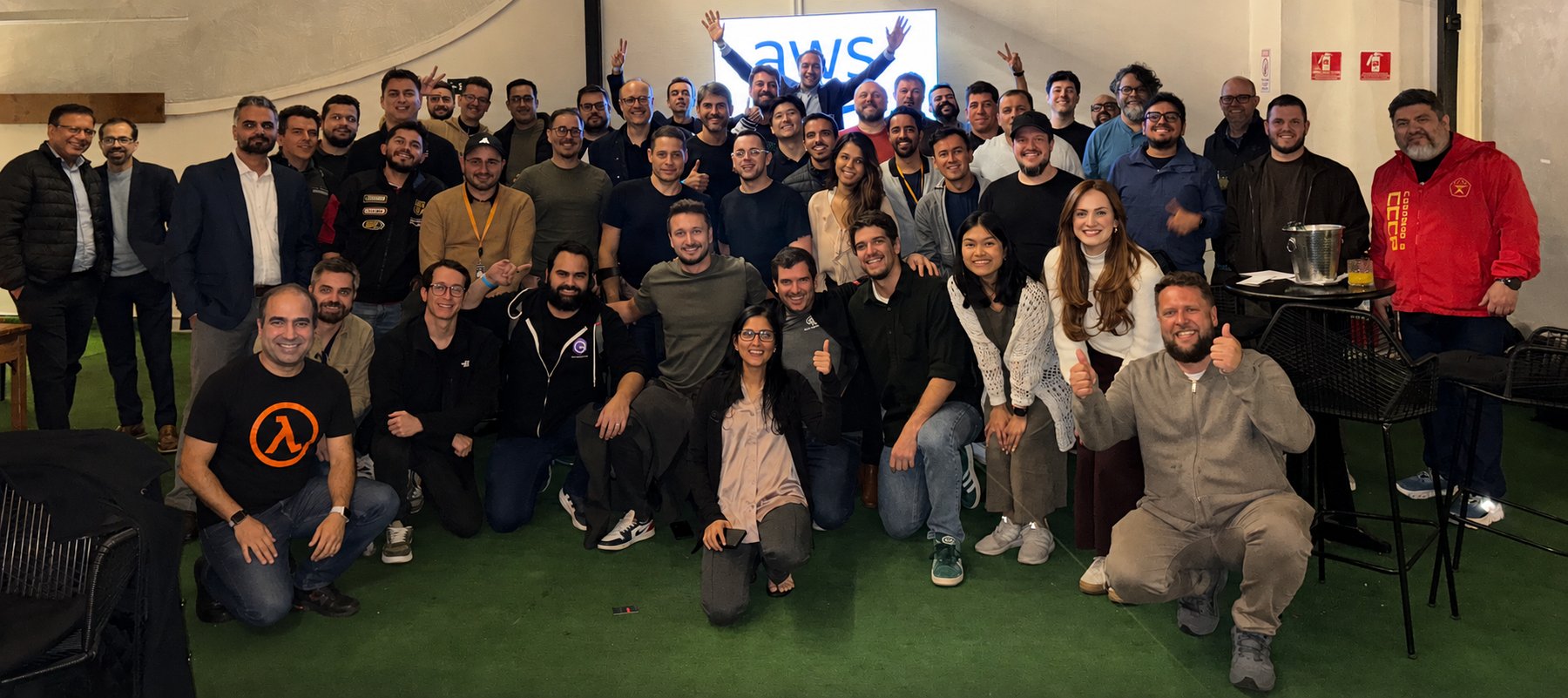
This duality—the immense scale of global infrastructure paired with the intimate, collaborative spirit of regional developer communities—was on vivid display recently. Following a high-energy, three-day technical gathering in São Paulo, Brazil, Amazon Web Services (AWS) highlighted the heartbeat of its engineering ecosystem while simultaneously pushing its physical infrastructure closer to end users.
At the intersection of community-driven innovation and heavy-duty infrastructure engineering lies AWS’s latest strategic deployment: the launch of a brand-new Local Zone in Athens, Greece. This expansion is not merely an exercise in geographic footprint extension; it is a calculated response to the modern enterprise’s twin demands: ultra-low latency and stringent local data residency compliance.
Main Facts: The Athens Local Zone Deployment
The centerpiece of this week’s infrastructure announcements is the official opening of the AWS Local Zone in Athens, Greece. Designed to bridge the gap between centralized cloud regions and end-user population centers, this new facility brings compute, storage, and database services directly into one of Europe’s critical industrial and cultural hubs.
Key Technical Specifications of the Athens Local Zone:
- EMEA Milestone: This is only the second Local Zone in the Europe, Middle East, and Africa (EMEA) region equipped with native support for Amazon Simple Storage Service (Amazon S3) and Amazon Elastic Block Store (Amazon EBS) Local Snapshots.
- In-Country Data Compliance: By allowing organizations to store and process data entirely within Greece, the facility directly addresses national and European Union data residency mandates.
- Compute Capabilities: The Athens Local Zone supports high-performance Amazon Elastic Compute Cloud (Amazon EC2) instances, specifically incorporating C7i, M7i, and R7i instance families.
- Storage and Container Services: Alongside EC2, the zone supports Amazon S3 (utilizing the One Zone-Infrequent Access storage class), Amazon EBS, and Amazon Elastic Container Service (Amazon ECS), enabling complex containerized workloads to run at the edge.
- Performance Metric: The deployment delivers single-digit millisecond latency to end users located in and around Athens, making it ideal for performance-critical applications.
AWS Local Zones are engineered specifically to place compute, storage, database, and other select AWS services close to large population, industry, and IT hubs where no AWS Region currently exists. By doing so, they eliminate the traditional network hops associated with routing data back to a distant regional data center.
Chronology: From São Paulo’s Whiteboards to the Mediterranean Edge
To understand how AWS synchronizes its grassroots developer engagement with massive capital expenditure on infrastructure, it is helpful to look at the recent timeline of events driving the platform’s momentum.
The Latin American Builder Summit (São Paulo, Brazil)
- Days 1–3: Technical builders, cloud architects, and enterprise partners from across Latin America converged in São Paulo for a regional immersion event.
- Activities: The program featured deep-dive technical sessions, hands-on architecture workshops, and collaborative whiteboard problem-solving. Attendees exchanged localized scaling strategies, highlighting the unique challenges of building resilient cloud architectures across geographically diverse and rapidly developing markets.
- Core Takeaway: The event underscored the reality that robust tooling is only as effective as the community wielding it. Peer-to-peer knowledge sharing emerged as a primary driver of cloud adoption and optimization.
Infrastructure Expansion and the Athens Launch
- Mid-July 2026: Preparatory announcements and regional summits (such as the EAMM Summit for Latin America and EMEA) set the stage for infrastructure deployments tailored to regional regulatory needs.
- Late July to Early August 2026: Final deployment protocols for the Athens Local Zone were completed, leading to the official go-live announcement.
- First Week of August 2026: AWS officially integrated the Athens facility into its global network directory, opening access to C7i, M7i, and R7i instances alongside localized S3 and EBS capabilities.
Supporting Data: Why Edge Infrastructure Matters
The deployment of Local Zones like the one in Athens is backed by shifting enterprise requirements across multiple high-stakes industries. Modern workloads—particularly those involving real-time processing—cannot tolerate the physical limitations of light traveling across vast distances to centralized cloud regions.
Target Industries and Workloads
- Financial Services: High-frequency trading platforms, real-time fraud detection, and localized banking transactions require absolute sub-millisecond predictability and strict adherence to national financial regulations.
- Healthcare and Life Sciences: Patient telemetry, electronic health records, and localized medical imaging processing demand rigorous data residency controls to comply with patient privacy laws.
- Media Production and Broadcasting: Collaborative video editing, real-time rendering, and live sports broadcasting require massive bandwidth and minimal latency to handle uncompressed video feeds smoothly.
- Real-Time Gaming: Multiplayer gaming experiences rely on instant feedback loops. Placing game servers at the edge eliminates input lag, ensuring a competitive and seamless player experience.
The Technical Advantage of C7i, M7i, and R7i Instances
By incorporating Intel-powered 7th-generation instances into the Athens Local Zone, AWS ensures that edge workloads do not have to compromise on performance.

- C7i Instances: Optimized for compute-intensive workloads such as batch processing, distributed analytics, and high-performance computing (HPC).
- M7i Instances: Designed to provide a balanced ratio of compute, memory, and network resources, making them ideal for general-purpose applications, microservices, and enterprise back-ends.
- R7i Instances: Tailored for memory-intensive workloads, including large-scale relational databases, caching systems, and real-time analytics engines.
Furthermore, the inclusion of Amazon S3 and EBS Local Snapshots within the Athens zone means that data durability and backup operations do not need to rely on cross-border data transit, satisfying both performance benchmarks and compliance frameworks.
Official Responses and Industry Perspectives
The dual narrative of community connection and infrastructure decentralization has drawn commentary from AWS leadership and regional technology advocates alike.
Reflecting on the energy of the São Paulo gathering, AWS technical leadership noted:
"What struck me most wasn’t any single session, it was the energy of a technical community that so rarely gets to be in the same room. People traded architecture ideas over coffee, sketched out solutions on whiteboards, and left with a longer list of things to try than they arrived with. It’s a good reminder that, for all the tooling we build, the community around it is what makes the technology stick."
This philosophy of proximity—whether bringing developers together in a physical room or bringing compute resources closer to a city’s population center—defines the current phase of cloud evolution.
Regarding the deployment in Greece, infrastructure specialists emphasized the removal of administrative and architectural friction. Enterprises operating in southeastern Europe have historically faced a difficult choice: build and maintain costly on-premises data centers to satisfy local data residency laws, or accept higher network latency by routing traffic to core European regions like Frankfurt or Dublin.
The Athens Local Zone effectively eliminates this compromise. By offering AWS services natively within Greek borders, local enterprises can modernize their infrastructure, leverage managed container services like Amazon ECS, and scale elastically without the burden of physical hardware management.
Implications: What This Means for Builders and Enterprises
The convergence of community-focused events and edge infrastructure expansion signals several broader implications for the cloud computing industry:
1. Decentralization is Accelerating
The era of relying solely on massive, centralized Availability Zones is maturing. While core regions remain the backbone for heavy global processing and large-scale machine learning training, edge locations like Local Zones, Wavelength zones, and Outposts are becoming the primary touchpoints for user-facing applications. Businesses must design hybrid and multi-tier architectures that intelligently distribute workloads between core regions and local edge sites.
2. Compliance as a Catalyst for Cloud Migration
Data sovereignty is no longer an afterthought; it is a primary architectural constraint. As regulatory bodies worldwide tighten rules regarding where citizen and corporate data can be stored and processed, cloud providers that offer granular, in-country storage options—such as the S3-enabled Athens Local Zone—will capture workloads from highly regulated sectors that were previously hesitant to adopt public cloud solutions.
3. The Enduring Value of Human Communities
Despite the rapid ascent of generative AI, automated code generation, and autonomous infrastructure management, the developer community remains the ultimate catalyst for technological adoption. Events in São Paulo, alongside developer hubs like the AWS Builder Center, prove that physical and digital spaces for peer collaboration accelerate problem-solving in ways that software alone cannot replicate.
Conclusion and Next Steps
As AWS continues to roll out localized infrastructure and foster regional developer communities, builders are equipped with an increasingly powerful toolkit. Whether you are an architect designing a low-latency financial trading platform in the Mediterranean or a developer sketching out microservices on a whiteboard in Latin America, the modern cloud is expanding to meet you where you are.
For those looking to stay ahead of these developments:
- Explore Local Infrastructure: Review the official AWS Global Infrastructure and Sustainability Blog for deep dives into setting up workloads in the new Athens Local Zone.
- Connect with Peers: Join the AWS Builder Center to share solutions, access specialized development content, and engage with global technical communities.
- Stay Updated: Keep a close eye on the official What’s New with AWS page for rolling updates on regional expansions, instance availability, and service integrations.
This report is part of our ongoing coverage of global cloud infrastructure developments and enterprise technology strategy. Check back next week for further updates and analysis.
 Lina Hope
  Asep Darmawan
  Nila Kartika Wati