As social media transforms from a supplementary marketing channel into a core driver of brand equity, customer acquisition, and market intelligence, the traditional approach to staffing is undergoing a radical shift. Building a high-performing social media organization is no longer just about hiring a single "unicorn" manager to post on Instagram and answer DMs. Today, it requires a carefully architected team balancing specialized roles, scalable workflows, and advanced artificial intelligence tools.
Whether you are a lean startup building your first multi-channel presence or an enterprise-scale organization optimizing a global workforce, understanding the key roles, structural frameworks, and budgetary expectations is critical for success in 2026 and beyond.
Main Facts: The Anatomy of Modern Social Media Teams
At its core, a social media team is responsible for planning, creating, publishing, and managing a brand’s entire digital footprint. However, the scope of responsibilities has expanded far beyond daily scheduling.
A modern, well-rounded social media program bridges the gap between daily execution and long-term business goals. This involves:
Executing real-time engagement and reactive marketing.
Building and protecting brand reputation across volatile digital landscapes.
Generating organic reach and managing high-budget paid social campaigns.
Feeding crucial customer sentiment, competitive intelligence, and risk signals back into wider enterprise departments.
Not every organization requires the same headcount. While a small business may rely on one or two generalists wearing multiple hats, larger corporations deploy dedicated specialists for each discipline. Furthermore, hybrid models are becoming the norm, blending in-house talent with specialized outsourced agencies and freelancers depending on seasonal campaign needs and budgetary boundaries.
Chronology: The Evolution of Social Media Staffing
To understand where social media staffing stands today, it helps to examine how the discipline has matured over the past decade and adapted to technological shifts.
Phase 1: The Era of the Intern (Early 2010s): Social media was largely treated as an afterthought. Companies often delegated posting responsibilities to junior staff members or interns with little oversight, formal strategy, or alignment with broader business objectives.
Phase 2: The Generalist Social Media Manager (Mid-to-Late 2010s): As platforms monetized and algorithms grew complex, organizations recognized the need for dedicated professionals. The "Social Media Manager" emerged as a hybrid creator, copywriter, strategist, and community manager.
Phase 3: The Specialized & Matrixed Enterprise Team (2020–2024): With the explosive growth of short-form video (TikTok, Reels, Shorts), paid social algorithms, and influencer marketing, single generalists became overwhelmed. Brands began splitting functions into dedicated content creation, paid media, analytics, and community management roles.
Phase 4: The AI-Augmented Hybrid Team (2025–2026): Artificial intelligence has fundamentally altered the mathematics of headcount. With AI-assisted drafting, predictive analytics, and automated tagging, smaller teams can now cover more ground. Consequently, modern hiring focuses less on sheer volume and more on high-value strategy, human creativity, governance, and prompt engineering.
Supporting Data: Roles, Salaries, and Structures
Building your team requires a clear grasp of organizational models, compensation expectations, and role breakdowns.
1. Choosing Your Team Structure
Before hiring, organizations must select an operational model that minimizes friction:
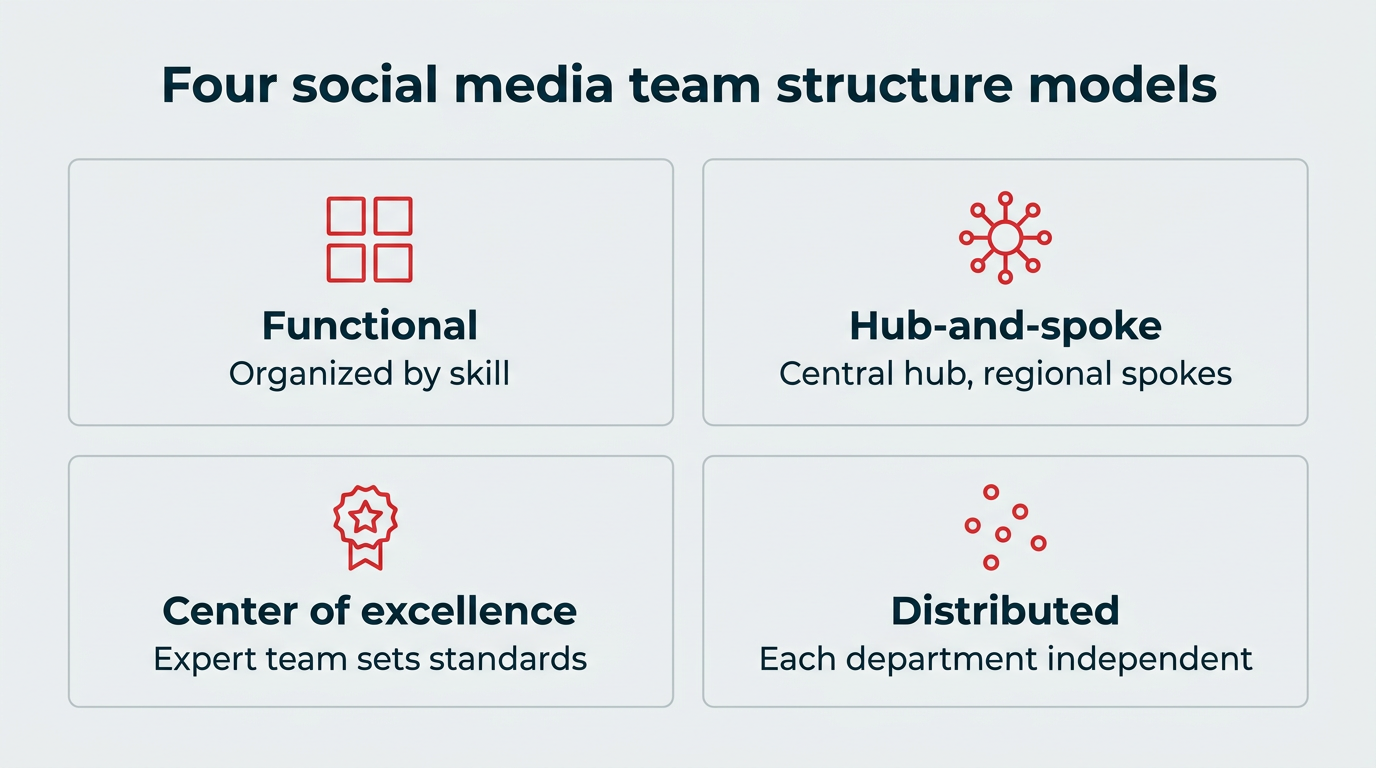
Functional Structure: Organized by skill (content, community, analytics, paid social). Best for mid-size companies with a single brand.
Hub-and-Spoke: A central team dictates strategy and brand voice, while regional or business-unit teams handle local execution. Ideal for multi-brand or global enterprises.
Center of Excellence: A small expert team sets playbooks and tools for practitioners embedded across departments like HR, PR, and customer support.
Distributed Structure: Departments manage their own social presence independently. While fast, this carries high compliance and brand consistency risks.
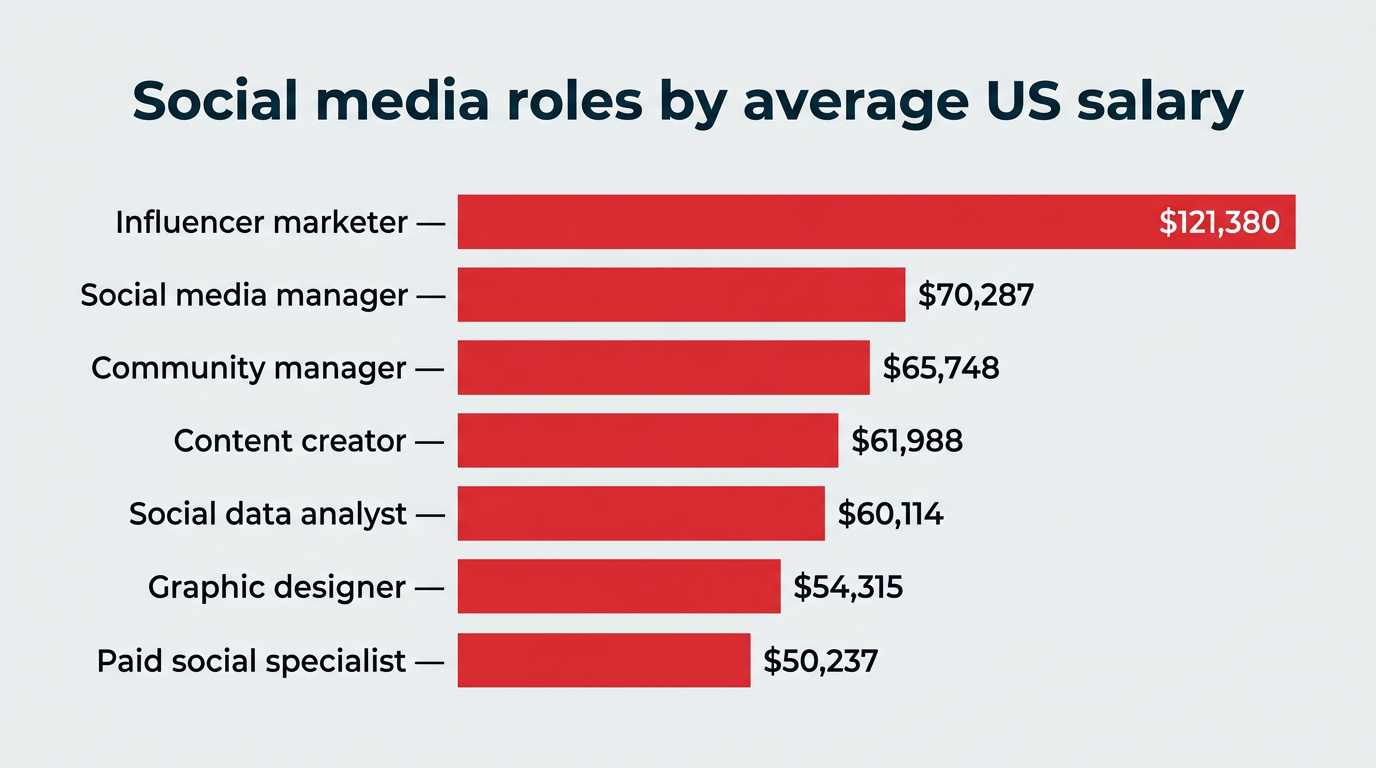
2. Key Roles and US Salary Expectations
High-performing teams integrate several core positions, each commanding distinct skill sets and market rates:
Industry leaders emphasize that successful hiring requires strategic alignment rather than searching for an impossible "unicorn" employee who can effortlessly handle every single digital task.
"Being a Social Media Manager can be an overwhelming job," notes Eileen Kwok, Hootsuite’s former Social & Influencer Marketing Strategist. "That’s why the ones that are naturally curious about all things social, have the desire to always learn and improve, and, most importantly, place creativity at the forefront of their work, are the ones that truly succeed."
Kwok advises hiring managers to avoid looking for a one-size-fits-all candidate. "Set your expectations and get really clear on what you are looking for. Jot down your list of priorities and be mindful of what’s achievable from one person or a small team. Work backwards from your core business goals."
Furthermore, experts recommend utilizing practical assessments during the interview process. Requesting a short, paid test project—such as auditing an existing channel or drafting a mini content calendar—remains one of the most reliable indicators of a candidate’s actual execution capabilities.
Implications: The Future of Social Teams in the Age of AI
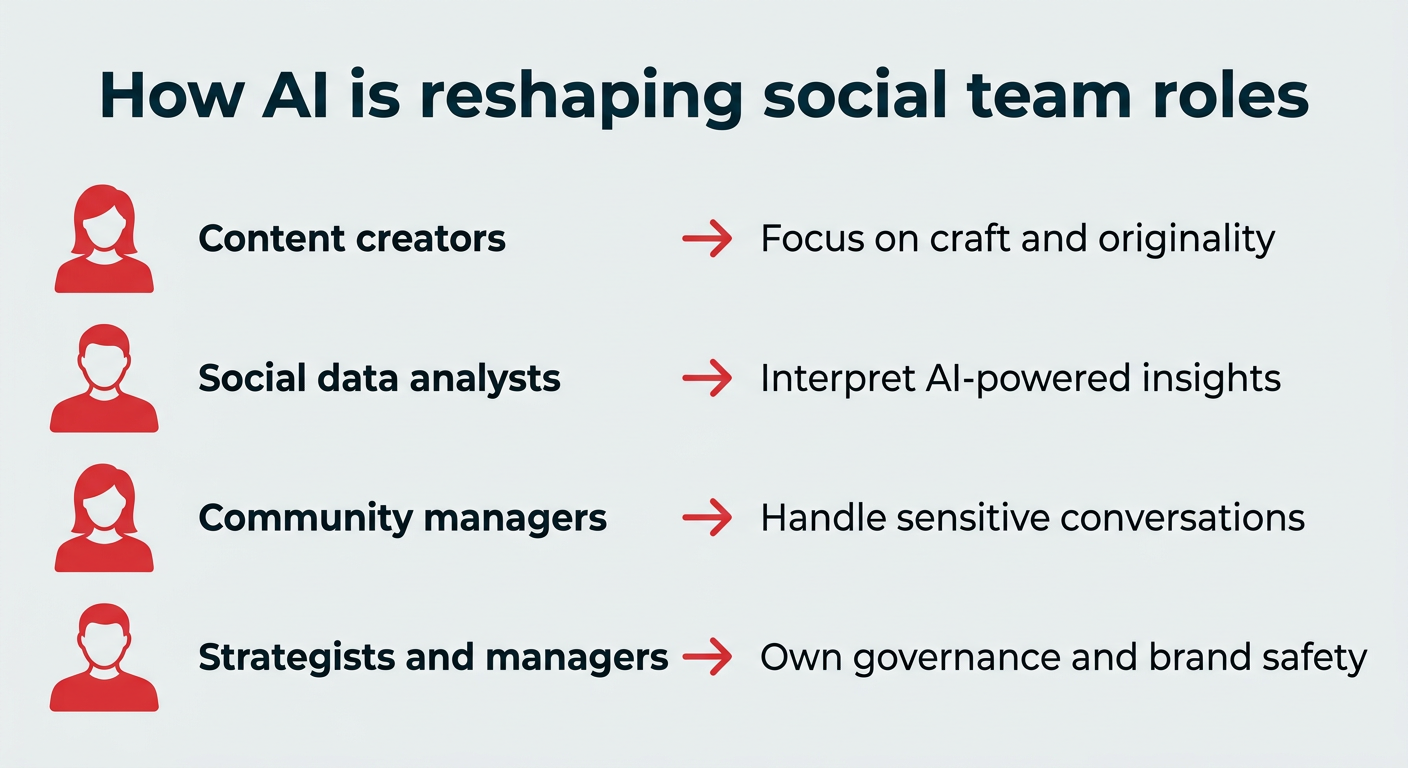
The integration of artificial intelligence into daily workflows has profound implications for digital marketing departments. Rather than replacing human professionals, AI is automating the "work about work"—such as routine copywriting drafts, basic sentiment tagging, and standardized performance reporting.
This technological shift has several major implications for enterprise marketing:
Upskilling for AI Literacy: Team members are increasingly required to master prompt engineering, data interpretation, and AI-governance guardrails to ensure brand safety.
Elevated Focus on Human Creativity: With mechanical tasks automated, content creators and strategists can dedicate more time to high-value cultural relevance, authentic community building, and creative risk-taking.
Optimized Headcount Scaling: Leaner teams can now achieve outputs that previously required twice the staffing. However, governance, strategic oversight, and brand compliance roles are more critical than ever to prevent automated errors or brand fragmentation.
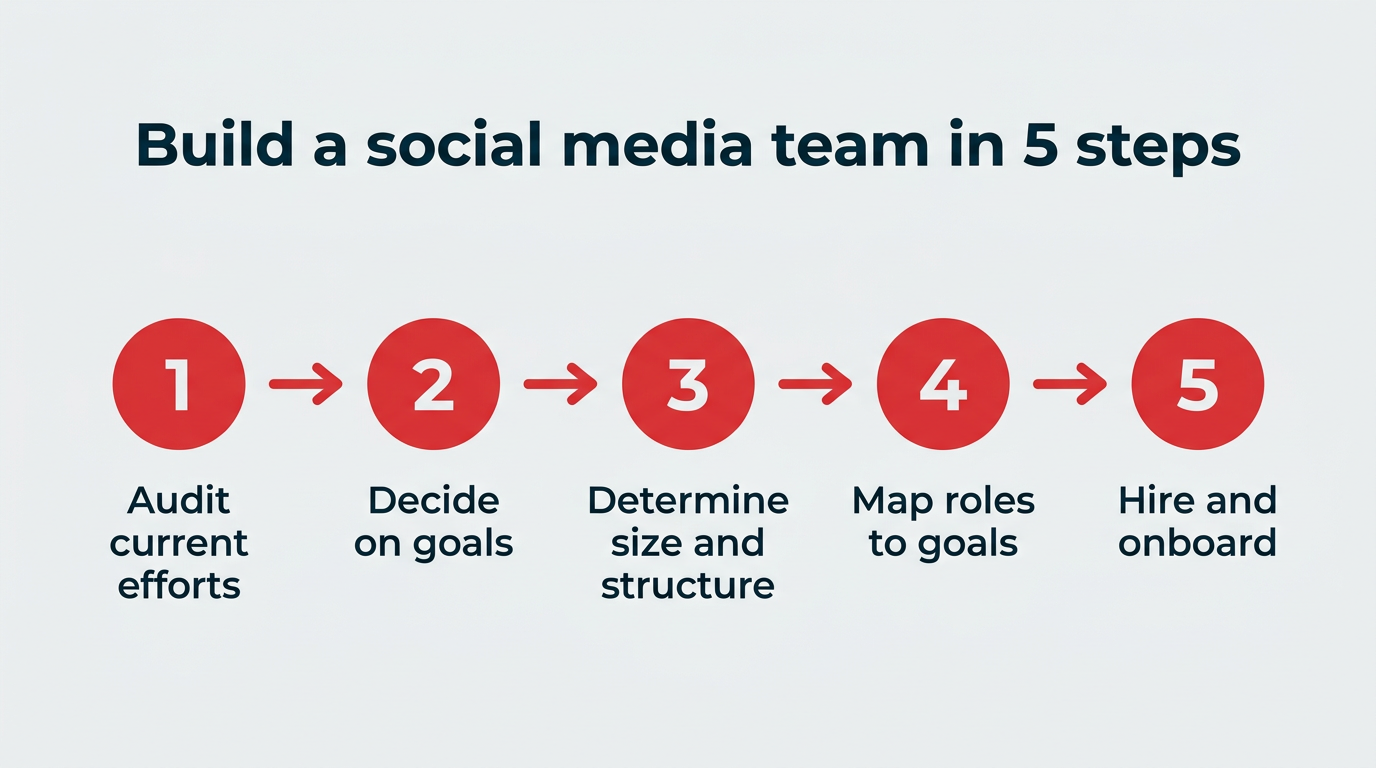
A Five-Step Blueprint for Building Your Team
Audit Your Current Efforts: Evaluate what content resonates, analyze existing resource gaps, and assess your available budget.
Define Your Goals: Align hiring priorities directly with business objectives (e.g., hiring a community manager for reputation management, or a paid specialist for revenue generation).
Determine Team Size: Match your organizational maturity to appropriate staffing tiers (e.g., 1–3 people for lean startups; 4–6 for mid-market brands; 7+ for complex enterprises).
Map Roles to KPIs: Ensure every team member has clear accountability tied directly to organizational key performance indicators.
Onboard with Guardrails: Equip new hires with documented brand guidelines, tone-of-voice playbooks, and standardized approval workflows.
By combining structured workflows, targeted specialized hiring, and intelligent automation, modern businesses can build resilient social media teams capable of turning everyday digital engagement into measurable, long-term enterprise growth.

 By Nila Kartika Wati



 Reynand Wu
  Muslim