
 By Nila Kartika Wati
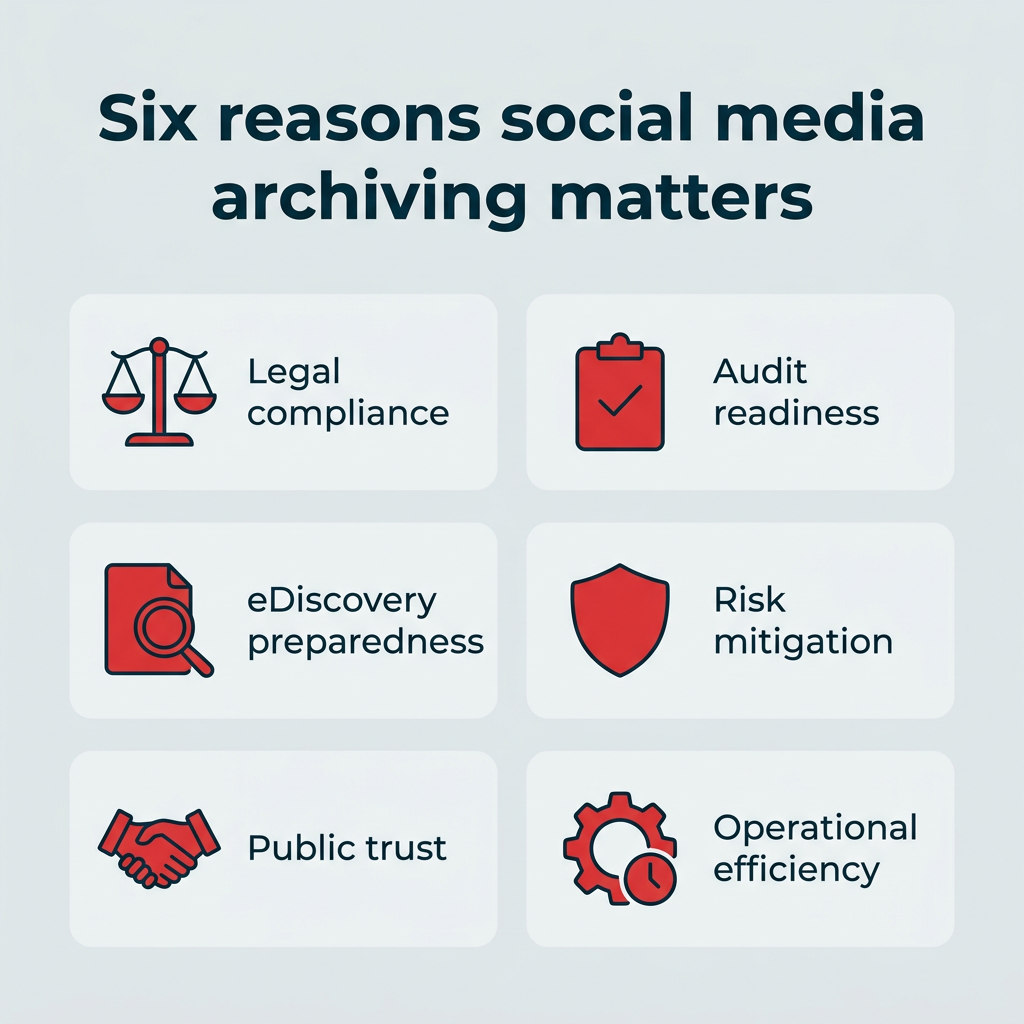
As digital communication continues to anchor how government bodies, financial institutions, healthcare providers, and educational facilities interact with the public, the stakes for managing and preserving online records have never been higher. Social media archiving—the systematic process of capturing, preserving, and storing all digital social content—is no longer merely a best practice; it is a vital operational necessity.

For regulated sectors, failing to maintain a tamper-proof, legally defensible archive exposes organizations to severe legal liabilities, multi-million-dollar fines, and a catastrophic loss of public trust.

Main Facts: What is Social Media Archiving and Why Does It Matter?
At its core, social media archiving is the automated or systematic preservation of all digital interactions taking place across social networks. This encompasses much more than polished broadcast posts; it covers comments, direct messages, multimedia files, revisions, hidden text, deletions, and the underlying digital metadata.
While public-facing accounts display content openly, private social media corporations are not bound by government open records laws. They hold no obligation to store an entity’s data indefinitely. Furthermore, frequent updates to platform Application Programming Interfaces (APIs) can instantly alter or restrict access to historical logs.
For government bodies, social channels are legally considered public forums. Under the Freedom of Information Act (FOIA) and various state-level open records statutes, every digital communication, citizen comment, and subsequent deletion constitutes a public record. Similarly, the financial, healthcare, and education sectors must navigate strict federal and international mandates—including SEC/FINRA rules, HIPAA, and FERPA—where social messages are legally classified as critical business or educational communications.
Chronology of the Shift: From Manual Screen Captures to Automated Compliance
To understand the current regulatory landscape, it is helpful to trace how organizations have attempted to manage digital retention over the past two decades:
- The Early 2000s (The Era of Email and Static Web): Digital recordkeeping primarily focused on static web pages and email servers. Early social media platforms were largely ignored by compliance officers, viewed strictly as informal marketing experiments rather than official communication channels.
- The Mid-2010s (Rise of Open Records and Early Litigation): As agencies increasingly adopted platforms like Twitter and Facebook to communicate with citizens, courts began recognizing social media posts and comment threads as admissible evidence in litigation and public records requests. Organizations relied heavily on manual methods—taking screenshots or saving PDF copies of pages.
- The Late 2010s to 2020s (Regulatory Enforcement and Off-Channel Crackdowns): Regulatory bodies began closing loopholes regarding informal messaging. The SEC and FINRA levied massive penalties against financial institutions for "off-channel communications" conducted on unmonitored platforms like WhatsApp and Signal. Simultaneously, rising First Amendment challenges forced government entities to justify the deletion of user comments using verifiable historical data.
- Present Day (Real-Time, API-Driven Automation): Modern compliance requires real-time, automated capture tools integrated directly into enterprise systems. Organizations now utilize FedRAMP-authorized and specialized compliance architectures to instantly record edits, hidden comments, and rich metadata before digital footprints vanish.
Supporting Data: Industry Regulations and Retention Requirements
Different sectors face unique governing bodies, regulatory frameworks, and retention timelines. The data below outlines how these obligations break down across key industries:

| Industry | Key Regulation | Governing Body | What Must Be Archived | Typical Retention Period |
|---|---|---|---|---|
| Government | FOIA, State Open Records Laws | NARA, State Archives | Posts, comments, DMs, edits, deletions, metadata | Varies by jurisdiction (some permanent) |
| Finance | SEC Rule 17a-4, FINRA Rules 3110/2210 | SEC, FINRA | All business communications including social posts, DMs, promotional content | Minimum 3 years for most records; 6 years for certain categories |
| Healthcare | HIPAA Privacy Rule | HHS Office for Civil Rights | Any content containing or referencing Protected Health Information (PHI) | 6 years from creation or the date last in effect, whichever is later |
| Education | FERPA | U.S. Department of Education | Social communications about students that form part of educational records | Duration of enrollment + defined period set by state law and policy |
The Flaws of Manual Archiving
Many organizations initially rely on manual methods—such as spreadsheet logs, PDF exports, or screenshots—to save on software costs. However, these methods fail under judicial scrutiny:
- Lack of Metadata: Screenshots carry no verifiable background data, making their authenticity easily challengeable in court.
- Vulnerability to Tampering: Images and PDFs can be easily edited or fabricated.
- The Disappearing Comment Problem: A comment posted and deleted within thirty seconds will completely bypass a manual workflow, leaving a blind spot during audits or legal discovery.
Official Responses and Governance Frameworks
To safeguard citizen and institutional data, governing bodies have established strict criteria for software compliance. For instance, the U.S. government mandates that all cloud services used by federal entities must pass the Federal Risk and Authorization Management Program (FedRAMP). Enterprise tools such as Hootsuite maintain FedRAMP authorization alongside compliance certifications for financial frameworks (such as SEC, FINRA, FCA, and MiFID II), serving thousands of government agencies globally.
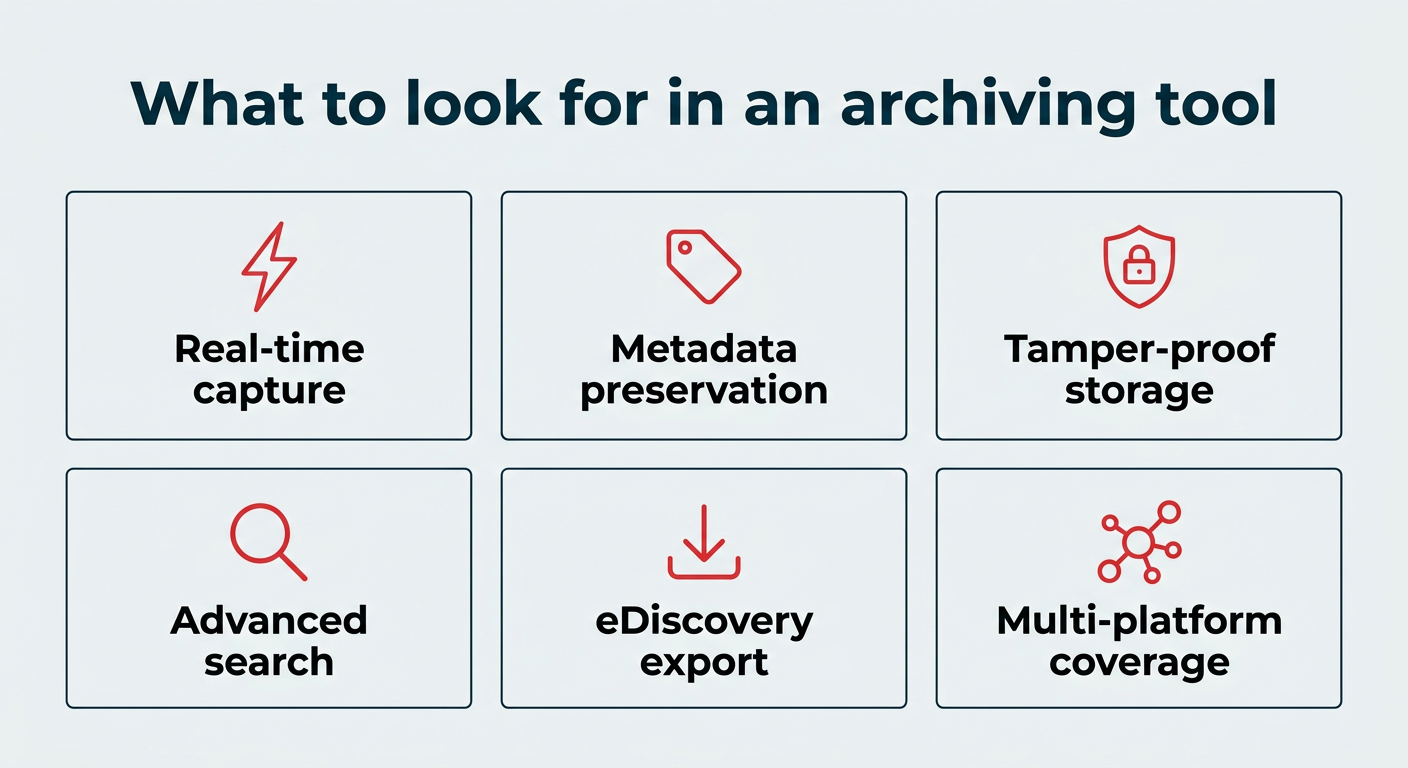
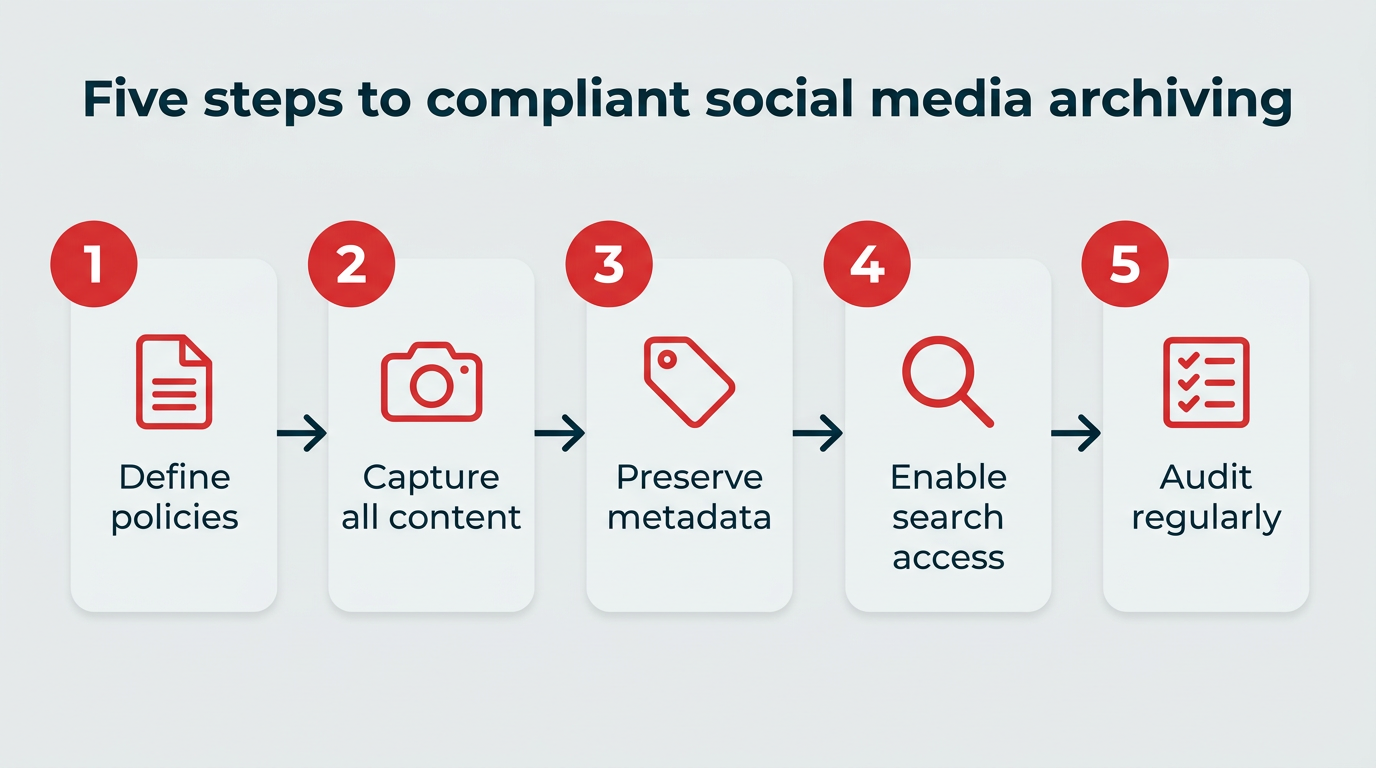
Furthermore, industry leaders emphasize a structured, 5-step workflow to establish defensible archiving:

- Define Policies and Governance: Integrate clear archiving rules into an overall social media policy, accounting for data residency requirements (e.g., storing Australian public data within Australian data centers).
- Automate Real-Time Capture: Connect directly via platform APIs to record content instantaneously as it is published, edited, or hidden.
- Preserve Context and Metadata: Ensure that timestamps, device fingerprints, unique user identifiers, and IP traces accompany every record to prove authenticity.
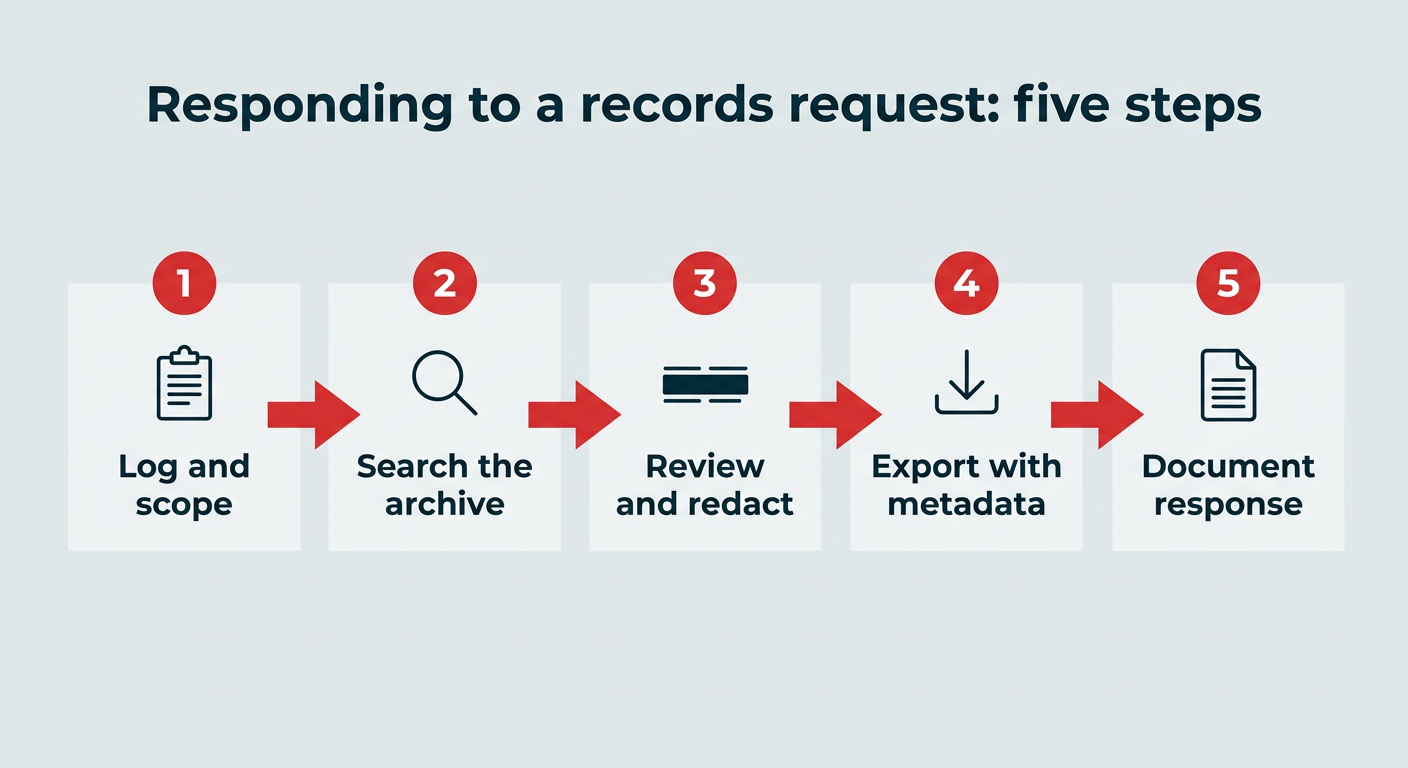
- Ensure Searchability and Accessibility: Implement advanced search, tagging, and export features to swiftly respond to eDiscovery and FOIA demands.
- Conduct Regular Audits: Perform quarterly reviews of archiving processes, ensuring newly launched departmental accounts are immediately integrated into the compliance net.
Implications: Risks of Non-Compliance and the Path Forward
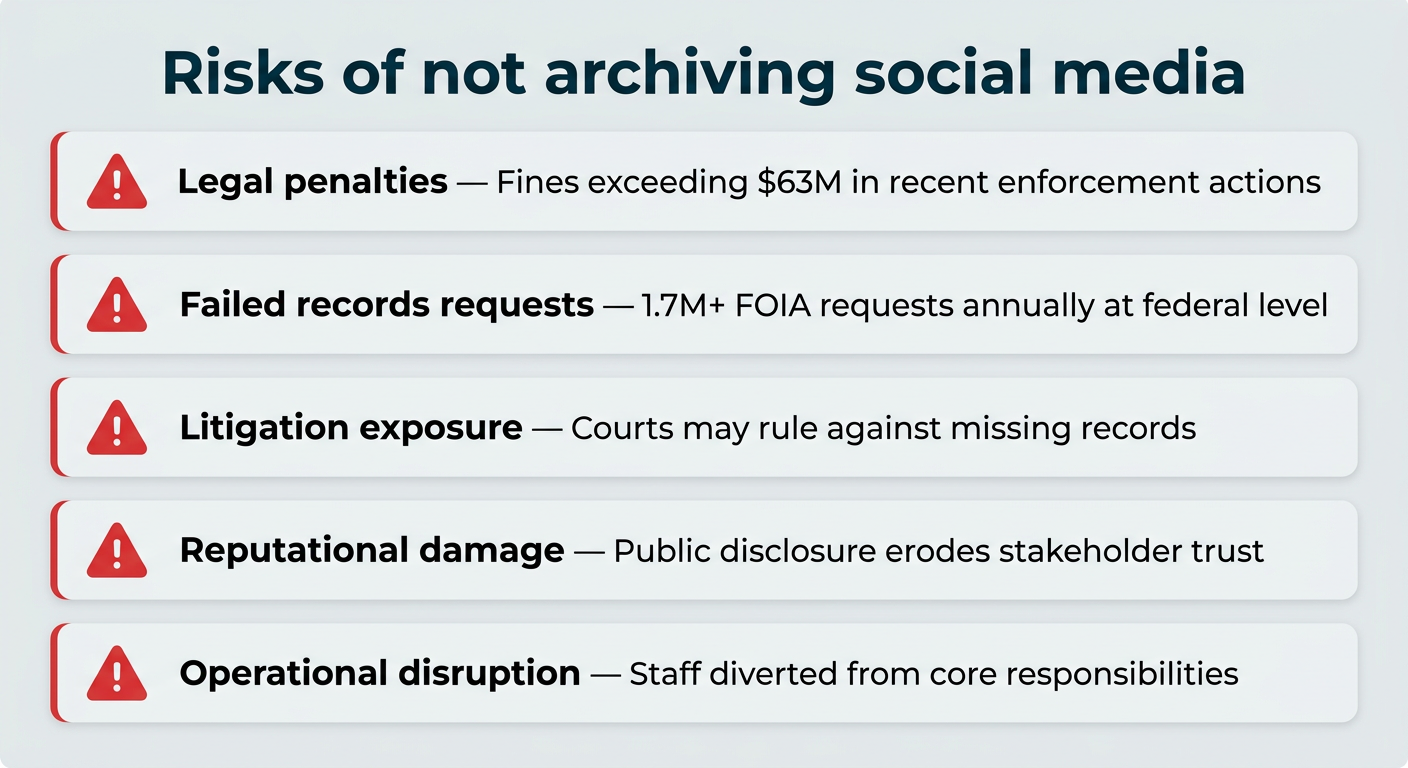
Failing to maintain a robust, automated social media archive invites severe institutional penalties. Organizations that ignore retention mandates face catastrophic consequences, including:

- Legal Sanctions and Court Fines: Inability to produce requested records during eDiscovery can result in court-mandated sanctions or lost litigation.
- Regulatory Penalties: Financial institutions face aggressive SEC and FINRA enforcement actions, while healthcare providers risk maximum penalties of over $2.19 million under HIPAA for unaddressed violations involving Protected Health Information (PHI).
- Erosion of Public Trust: Inability to answer public records requests or transparently justify the moderation of social media comments severely damages an institution’s credibility.
Ultimately, social media archiving is far more than a technical checkbox. It is an essential pillar of organizational risk management that bridges the gap between public engagement and legal accountability. By replacing manual guesswork with automated, metadata-rich archiving solutions, institutions can confidently navigate the complexities of the digital public square while remaining fully audit-ready.
 Reynand Wu
  Muslim
  Asro
Asro 