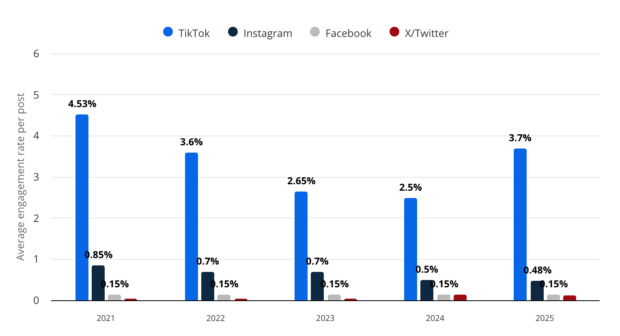
In the contemporary digital landscape, the old adage "if you build it, they will come" has been thoroughly dismantled. Modern content creators, brands, and enterprises pour immense resources, creativity, and labor into producing high-tier assets, only to watch them vanish into the digital ether. According to recent industry data, organic reach has plummeted to historic lows—averaging a meager 0.15% engagement rate on Facebook and roughly 0.48% on Instagram.
This stark reality highlights a fundamental shift in marketing challenges: the bottleneck is no longer content creation; it is content distribution.
Without a deliberate, multi-channel distribution strategy, even the most groundbreaking whitepapers, compelling videos, and insightful blogs will fail to secure the visibility they deserve. Industry experts emphasize that achieving sustainable digital growth requires transitioning away from isolated publishing toward integrated, strategic, and repeatable distribution frameworks.
Main Facts: Deconstructing the Modern Distribution Crisis
At its core, a content distribution strategy is a systematic blueprint designed to place brand assets in front of the right target audience using a strategic blend of owned, earned, and paid channels.
As digital ecosystems become increasingly saturated, brands can no longer rely on a single launch post or a solitary platform to drive results. Instead, marketers must adopt a "social-first" and cross-functional mindset. This involves taking a high-value anchor piece—such as a 45-minute webinar, a comprehensive research report, or an exhaustive long-form article—and systematically breaking it down. A single research study, for instance, can be transformed into a series of thought-leadership threads for X (formerly Twitter), visual carousels for Instagram, short-form vertical clips for TikTok, and dedicated executive commentary posts for LinkedIn.
Content distribution channels fundamentally fall into three primary categories, each serving a distinct strategic purpose:
Owned Media: Channels fully controlled by the brand, including corporate websites, blogs, email newsletters, and organic social media profiles. These serve as the foundational bedrock for long-term brand visibility and audience nurturing.
Earned Media: Amplification driven organically by external stakeholders, including user-generated content, press coverage, guest articles, social shares, and external backlinks. Earned media remains the gold standard for establishing organic credibility and consumer trust.
Paid Media: Financial investments in ad placements, including social media advertisements, search engine marketing (SEM), display banners, sponsored placements, and creator partnerships. Paid channels provide brands with the agility to scale content rapidly and target specific demographic segments precisely.
While top-performing brands typically leverage a combination of all three, the strategic allocation of resources must align directly with organizational goals, audience behavior, and platform dynamics.
Chronology and Industry Evolution: The Shift Toward Smart Repurposing
The discipline of content distribution has undergone a massive transformation over the past decade.
The Early 2010s (The Volume Era): Initially, digital marketing was dictated by a volume-first mentality. Brands believed that publishing daily, isolated pieces of content across every available platform was the key to capturing market share. This approach led to widespread audience fatigue and skyrocketing content production costs.
The Late 2010s (The Channel Specialization Era): Marketers realized that cross-posting identical text and imagery across Facebook, LinkedIn, and Twitter yielded poor results. Platforms developed distinct cultures, forcing brands to tailor asset formats to specific channel norms.
The 2020s to 2026 (The AI-Driven Multi-Channel Era): Today, distribution is defined by efficiency, wave-based release schedules, and artificial intelligence integration. Modern marketing teams no longer look at content as a one-and-done output. Instead, distribution workflows begin at the ideation stage. Marketers map out downstream distribution paths before production even starts. Using advanced AI tools and centralized platforms, teams can ingest a single piece of long-form media, automatically extract key takeaways, and schedule synchronized, multi-platform deployment waves over a period of weeks.
Supporting Data: Where Effort Meets Impact
Data from leading global analytics firms underscores why structured distribution is non-negotiable for modern enterprises:
Organic Reach Deficits: Statista figures confirm that organic social engagement rates hover near fractions of a percent (0.15% on Facebook, 0.48% on Instagram), proving that organic discovery cannot be left to chance.
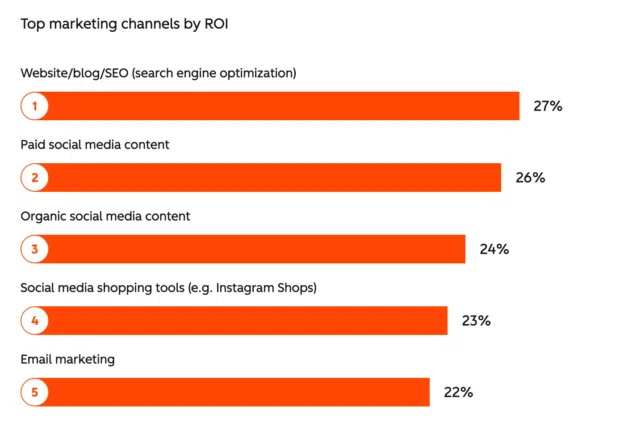
The Dominance of Search and Website ROI: According to comprehensive state-of-marketing studies by HubSpot, website, blog, and SEO channels continue to rank as the number one marketing channel for Return on Investment (ROI). Unlike fleeting social posts, optimized search assets capture high-intent users actively searching for solutions, generating sustained traffic for months or even years.
The Power of Creator Trust: Data from Deloitte Digital reveals a stark trust gap between corporate brands and independent voices. While the average consumer follows only seven brands on social media, they follow roughly 13 influencers. Furthermore, 83% of consumers view content creators as genuinely trustworthy information sources, making creator partnerships an invaluable component of earned and paid distribution mixes.
Discovery Habits: Deloitte’s research also indicates that 61% of consumers discovered a new brand or product via social media channels over the past year, establishing social platforms as critical top-of-funnel discovery engines.
Official Insights and Expert Perspectives
Industry leaders emphasize that successful distribution is deeply rooted in audience alignment and workflow repeatability rather than random, ad-hoc posting schedules.
Beth Owens, Head of Content at Superfiliate, stresses the importance of matching distribution channels to consumer habits rather than chasing vanity metrics on trendy platforms.
"Ultimately, your content distribution channels need to make sense for your audience," Owens explains. "If you’ve tried distributing content on X and it isn’t getting traction, it could be because it’s not a channel your audience actually spends much time on."
Owens also highlights the logistical hurdle of maintaining a consistent multi-channel presence, pointing to artificial intelligence as an indispensable collaborator.
"Different content formats will lend themselves naturally to different channels," Owens notes, citing how a single webinar can be parsed into video clips for YouTube and LinkedIn while its core data points feed an email newsletter. "The most important thing is building a repeatable process. AI is an excellent partner here!"
To visualize this operational flow, Owens recommends a tactile approach for growing marketing teams: sketching out distribution maps using pen and paper to understand how a single asset feeds downstream channels before deploying software systems.
Step-by-Step Framework: Building a High-Performance Distribution Strategy
Organizations looking to overhaul their content reach must implement a rigorous, seven-step methodology:
1. Establish Clear, Targeted Goals
Every distribution framework must tie back to a concrete business objective. Whether the goal is building brand authority (tracked via backlinks and brand mentions), driving website traffic (measured through clicks and referrals), or generating qualified leads (monitored via conversion rates), metrics must match the specific job of the channel.
2. Map Audience Geography
Audit social analytics, web traffic data, and social listening insights to determine precisely where target demographics congregate, consume information, and make purchasing decisions.
3. Assign Specific Jobs to Every Channel
Avoid treating all platforms equally. Designate specific roles: use Instagram to build visual brand awareness, LinkedIn to cultivate B2B thought leadership, search channels to capture high-intent buyers, and email to nurture existing brand advocates.
4. Conduct a Comprehensive Content Audit
Review existing content libraries to identify high-performing or evergreen assets. Score each asset based on its potential for creative repurposing (low, medium, or high).
5. Build a Repeatable Repurposing Workflow
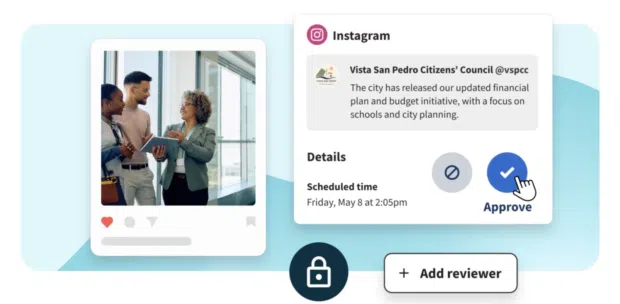
Establish standardized operating procedures for transforming assets. For instance, inputting a video transcript into an AI tool to extract five key soundbites, drafting platform-native copy, routing assets through internal approvals, and queuing them for publication.
6. Plan Distribution in Waves
Abandon the traditional "single launch" mentality. Structure distribution campaigns in chronological waves—launching a primary report on Monday, publishing executive LinkedIn takeaways on Tuesday, and rolling out short-form video clips across the subsequent weeks.
7. Measure, Analyze, and Iterate
Continuously evaluate Key Performance Indicators (KPIs) against initial goals. Double down on formats and channels driving tangible engagement while pruning underperforming tactics.
Technological Solutions: Streamlining Distribution with Modern Tooling
As multi-channel marketing grows increasingly complex, enterprise teams are turning to all-in-one operational platforms—such as Hootsuite—to manage the heavy lifting of distribution, scheduling, and AI-driven repurposing.
Modern toolkits generally feature specialized operational modules:
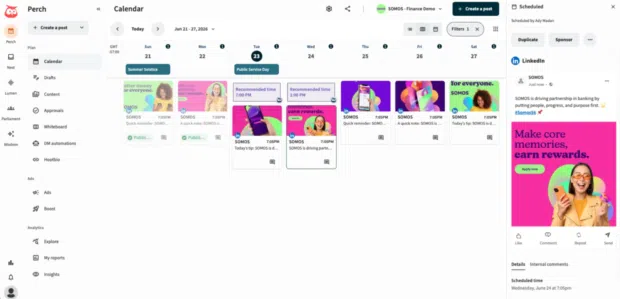
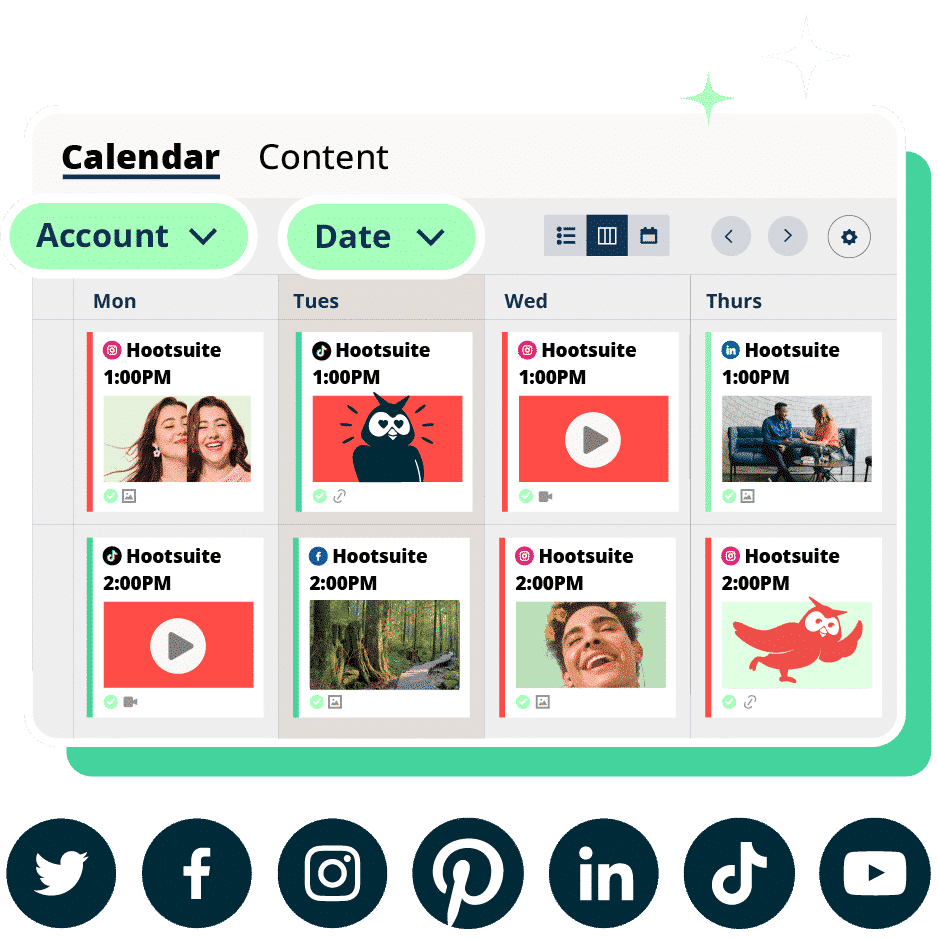
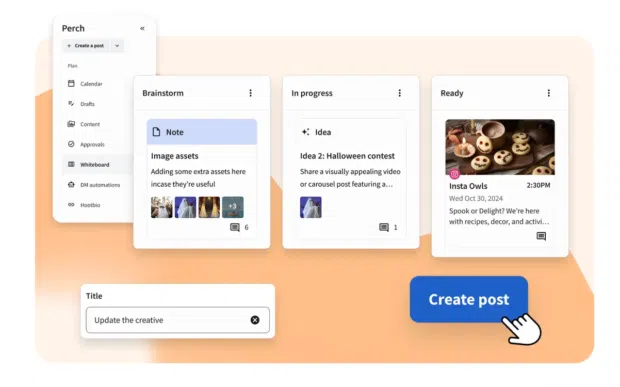
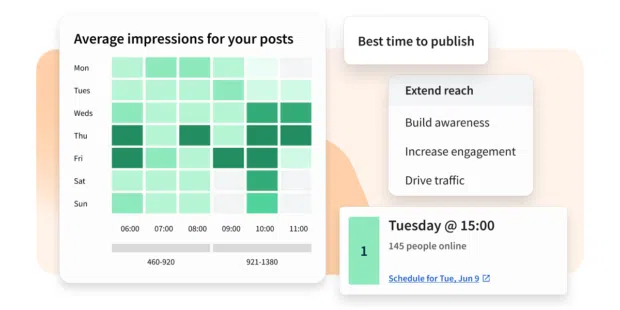
Centralized Planning Calendars (e.g., Perch): These solutions allow marketing teams to manage cross-network campaigns via drag-and-drop calendars. Features include collaborative whiteboards, multi-tier approval workflows, and algorithmic "best time to post" scheduling recommendations to ensure content goes live when target audiences are actively online.
Social-First AI Assistants (e.g., Wisdom): Built specifically for modern marketers, these AI engines help transform single content assets into dozens of tailored variations. By analyzing trending topics and adjusting brand tone automatically, AI streamlines the creation of platform-native posts and drops drafts directly into shared content calendars.
Implications for the Future of Marketing
The ongoing evolution of content distribution carries profound implications for digital marketing budgets, team structures, and creative execution.
As organic reach continues to face algorithmic constraints, organizations that fail to adopt structured distribution frameworks will find their content production budgets yielding diminishing returns. Conversely, enterprises that embrace intelligent repurposing, wave-based scheduling, and AI-enhanced workflows will maximize the lifespan and ROI of every single creative asset.
Ultimately, mastering content distribution is no longer an optional marketing tactic; it is the vital bridge connecting exceptional creative work with the audiences who need it most.

 By Muslim





 Reynand Wu
  Nila Kartika Wati
  Asro
Asro 