
 By Layla Zulfa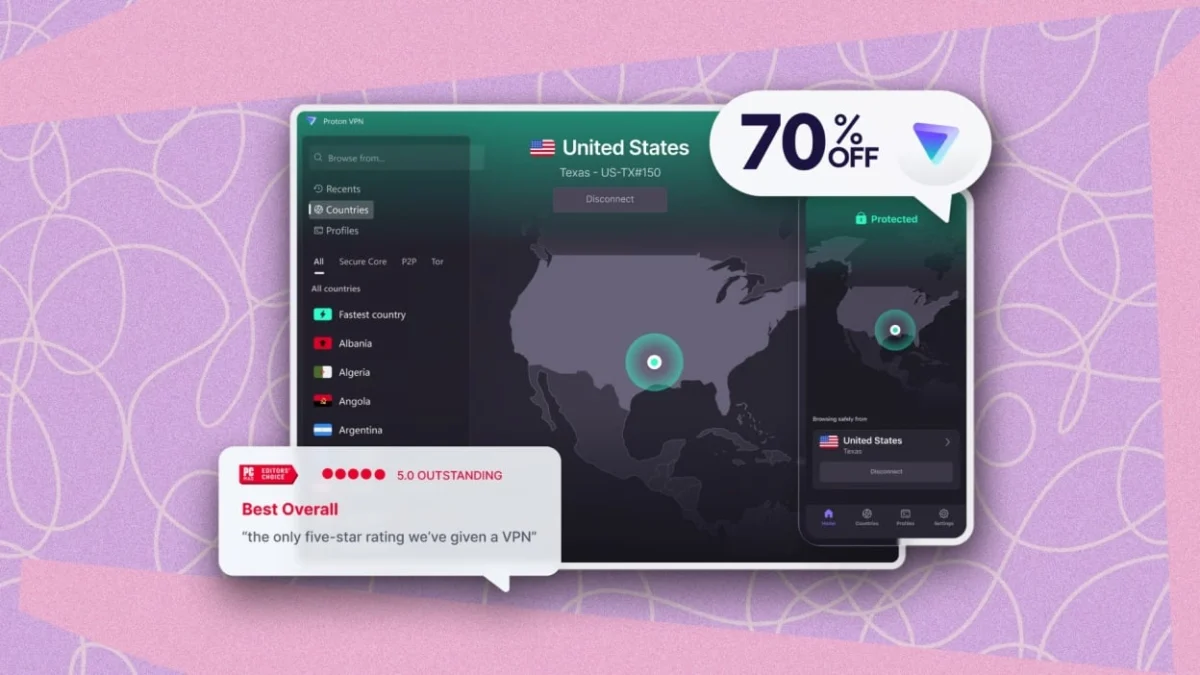
By Pradershika Sharma
Published: September 17, 2026
In the ever-evolving landscape of digital privacy and cybersecurity, finding a reliable Virtual Private Network (VPN) that balances robust data protection, speed, and affordability can be a challenge. Proton VPN, a service renowned for its strong stance on user privacy and open-source transparency, has rolled out a significant promotional discount.
The company’s latest deal slashes the price of its two-year VPN Plus plan by 70%, bringing the cost down to $2.99 per month. While the monthly breakdown makes for an easy comparison, the subscription requires an upfront payment for the entire initial term. As consumers increasingly scrutinize their digital footprints against a backdrop of rising online tracking and geo-restrictions, this aggressive pricing strategy positions Proton VPN as a major contender in the consumer privacy market.
Main Facts
The core of the new promotion centers on Proton VPN’s flagship two-year subscription tier, offering substantial savings for long-term users.
- Discounted Pricing: The two-year VPN Plus plan is available for $2.99 per month, a steep drop from the standard monthly rate of $9.99.
- Upfront Billing Structure: Although marketed at a monthly rate, the plan is billed as a single lump sum of $71.76 upon sign-up, covering the full 24-month introductory period.
- Total Savings: Subscribers save approximately $168 over the course of the initial two-year term compared to paying month-to-month.
- Renewal Terms: Following the expiration of the initial 24-month promotional window, the subscription automatically renews at an annual rate of $83.88 (equivalent to roughly $6.99 per month).
- Risk-Free Trial: Proton VPN backs the offer with a 30-day money-and-back guarantee, allowing users to test connection speeds, device compatibility, and streaming functionality before fully committing.
- Simultaneous Connections: A single subscription covers up to 10 devices concurrently, accommodating smartphones, laptops, tablets, and smart TVs without requiring users to constantly log out and switch devices.
Chronology of the Promotion and Service Evolution
To understand the weight of this current promotion, it helps to examine the timeline of Proton VPN’s development, its pricing adjustments, and how it arrived at this market-disrupting discount strategy.
The Foundation of Proton
- 2014–2017: Born out of CERN by the same team that created ProtonMail, Proton initially focused on end-to-end encrypted email to combat mass surveillance. Following immense public interest, the team expanded its ecosystem into VPN services, emphasizing strict privacy jurisdictions in Switzerland.
- 2019–2020: Proton VPN shifted from a primarily free-and-tier-locked model to a more aggressive expansion phase, introducing high-speed server infrastructure and introducing its proprietary "Secure Core" architecture to route traffic through multiple servers.
- 2021–2023: The service matured rapidly, opening up its applications to independent security audits—a rare move in an industry historically plagued by unverified marketing claims. The provider also transitioned its apps to fully open-source, allowing independent security researchers to inspect its code for vulnerabilities.
The 2026 Promotional Rollout
- Early September 2026: Proton VPN conceptualized and prepared its late-summer promotional push to capture back-to-school and autumn digital privacy surges.
- September 17, 2026: The 70% off campaign officially goes live, dropping the two-year plan to $2.99/month ($71.76 billed upfront). Concurrently, the deal is vetted by independent tech reviewers and consumer advocates to confirm its real-world value proposition against competitors like NordVPN, ExpressVPN, and Surfshark.
- Current Status: The promotion remains active for new subscribers, though digital security analysts note that introductory pricing structures in the VPN industry are subject to change based on fluctuating market demand and corporate strategy.
Supporting Data and Technical Specifications
Beyond the surface-level cost savings, a VPN’s utility is defined by its infrastructure, server distribution, and supplementary features. Proton VPN’s Plus tier incorporates a robust suite of technical specifications designed to handle both privacy-centric tasks and everyday media consumption.
Infrastructure and Speeds
- Global Server Network: Subscribers gain access to over 20,000 servers spread across more than 140 countries. This vast network allows users to easily spoof their geographic location or find less-congested local nodes for optimal performance.
- VPN Accelerator Technology: Proton utilizes a proprietary performance-enhancing protocol known as VPN Accelerator. While advertisements historically cite potential speed improvements of up to 400% on specific long-distance VPN routes, engineers clarify that this technology is designed to mitigate bottlenecks in high-latency environments rather than multiply a user’s base broadband speed.
- Unlimited Bandwidth: Unlike free-tier models that often throttle data usage or cap monthly consumption, the VPN Plus plan features zero bandwidth caps, making it viable for heavy data users, gamers, and 4K streamers.
Ecosystem and Cross-Platform Support
- App Availability: Native applications are provided for all major operating systems, including Windows, macOS, Linux, iOS, and Android.
- Smart TV Integration: Support extends to major living room platforms, most notably Amazon Fire TV devices, enabling privacy protection directly on streaming hardware.
Privacy Architecture and Security Audits
- Independent Audits: One of Proton’s primary differentiators is its commitment to transparency. The company’s no-logs policy—which dictates that no user browsing history, connection timestamps, or IP addresses are tracked or stored—has been subjected to rigorous, independent third-party security audits. These reports are published publicly for consumer review.
- Secure Core Architecture: For users requiring heightened security against sophisticated network surveillance, the Secure Core feature routes traffic through multiple servers (often located in privacy-friendly jurisdictions like Switzerland or Iceland) before it leaves the Proton network. While this adds a layer of encryption and obfuscation, users should expect a minor trade-off in connection latency.
- NetShield Ad and Malware Blocker: Integrated directly into the application, NetShield functions as a DNS filtering tool. It actively blocks known malware domains, trackers, and intrusive advertisements before they load in the browser, improving page-load speeds and reducing data consumption. However, experts caution that it is not a silver bullet and may not bypass sophisticated ad-block detection on certain media-streaming platforms.
Official Responses and Industry Context
The rollout of aggressive discounts in the VPN sector typically prompts mixed reactions from cybersecurity advocates, financial analysts, and competing service providers.
Industry analysts point out that the VPN market has reached a point of high saturation. To stand out against massive marketing budgets from competitors, privacy-first companies like Proton must periodically leverage deep discounts—such as this 70% off campaign—to capture market share from providers that may compromise on user privacy or data transparency.

In previous statements regarding corporate transparency, Proton executives have repeatedly emphasized that open-source code and verifiable audits are the only ethical way forward for the VPN industry.
"A privacy promise is only as good as its verification," noted a security briefing from Proton’s engineering team. "Users should never have to take a company’s word at face value when it comes to zero-logs claims. Independent audits and open-source code provide the accountability that the digital world demands."
Consumer advocacy groups have largely welcomed the deal, noting that the inclusion of a 30-day money-back guarantee mitigates the risk associated with upfront, multi-year commitments. However, financial advisors routinely remind consumers to set calendar reminders ahead of the 24-month mark to evaluate whether they wish to continue at the standard renewal rate of $83.88 per year.
Implications for Consumers and the Digital Privacy Market
As digital surveillance expands through corporate data collection, government oversight, and cyber threats, tools like Proton VPN occupy a unique space in modern consumer technology.
What This Means for Everyday Users
For the average internet user, a discounted subscription lowers the financial barrier to entry for digital self-defense. Features like NetShield and unlimited bandwidth make the transition seamless across up to 10 personal devices.
However, users must maintain realistic expectations regarding common misconceptions:
- Streaming Limitations: While connecting to servers in other countries can help travelers access home media libraries, major streaming services (such as Netflix, Amazon Prime, and BBC iPlayer) continuously update their IP-blocking mechanisms. No VPN can guarantee uninterrupted access to every geo-restricted streaming catalog.
- Anonymity vs. Privacy: A VPN shields internet traffic from Internet Service Providers (ISPs) and local network sniffers, but it does not make a user anonymous to websites where they log into personal accounts (such as Google, banking portals, or social media platforms).
Broader Market Impact
Proton VPN’s promotional pricing strategy places pressure on rival services to either match value or double down on specialized features. As consumers become more tech-savvy, marketing slogans are increasingly scrutinized in favor of verifiable cryptographic security, clear jurisdiction laws (such as Switzerland’s strict privacy protections outside of EU/US surveillance pacts), and open-source validation.
Ultimately, for consumers looking to lock in multi-year privacy protection across multiple devices without breaking the bank, the current 70% promotion represents one of the more economically viable entry points into the upper echelon of the VPN market—provided they are comfortable with the upfront billing model and mindful of future renewal rates.
 Asep Darmawan
  Nana
Nana  Lina Hope