
 By Raul Delapena Setiawan
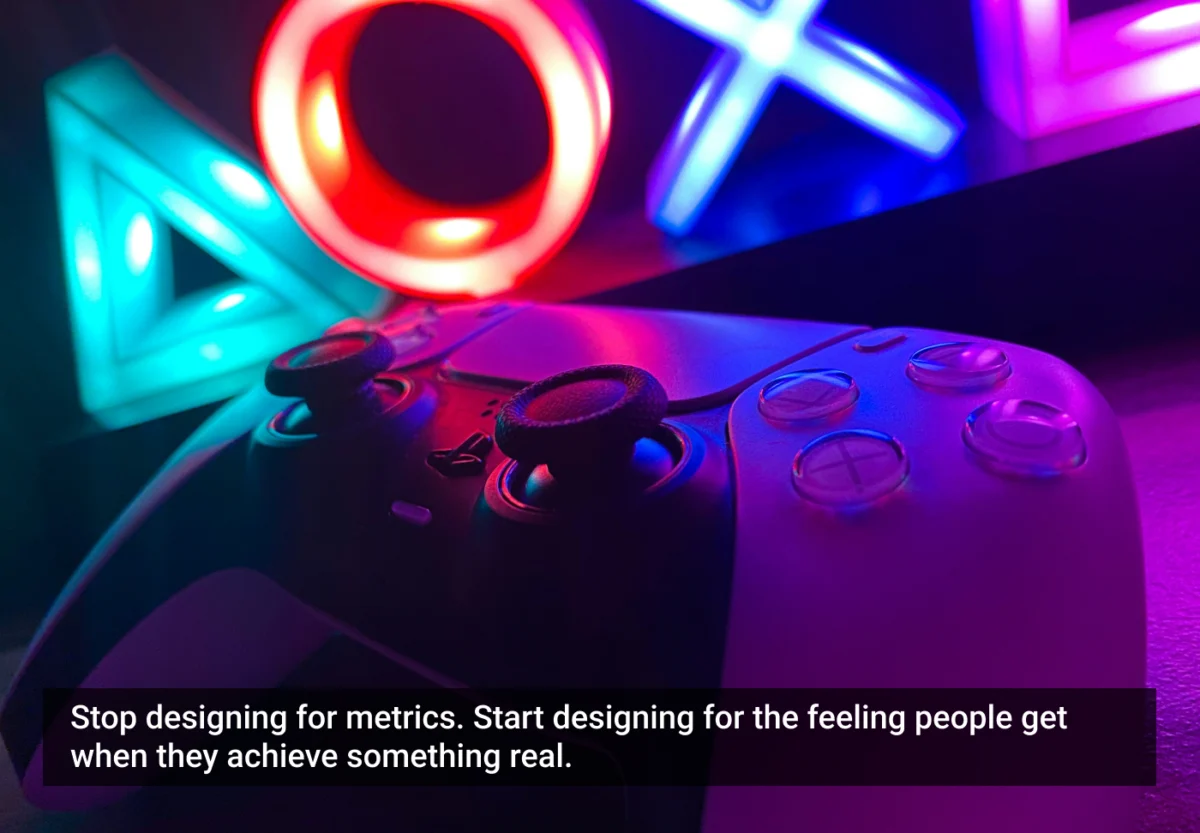
SAN FRANCISCO — For over two decades, the digital product landscape has operated under a singular, unquestioned dogma: If you can measure it, you can manipulate it.
From the rise of early web applications to the ubiquity of modern mobile software, product teams have leaned heavily on a playbook borrowed straight from behavioral psychology laboratories and casino floors. Daily Active Users (DAU), retention curves, arbitrary point systems, merciless streak counters, and glowing leaderboards have become the standard metrics of success.
Yet, beneath the glossy dashboards and cheering corporate quarterly reports, a quiet exhaustion has taken root among digital consumers. Across the globe, millions of app users close their screens each night with a distinct, hollow sensation: a toxic mixture of relief and self-loathing. It is the unmistakable cognitive dissonance of someone who has just spent forty-five minutes completing meaningless digital chores simply to prevent a virtual streak counter from resetting to zero.
Now, a growing cohort of UX designers, game developers, and digital ethicists are pushing back. They argue that the traditional approach to gamification—relying on dark patterns, manufactured guilt, and extrinsic bribery—is fundamentally broken. The emerging consensus calls for a radical evolution: Gamification 2.0, a philosophy rooted not in exploiting human psychological vulnerabilities, but in honoring human agency, intrinsic motivation, and genuine dignity.
The Main Facts: The Crisis of Extrinsic Manipulation
The core thesis of the Gamification 2.0 movement is elegantly simple: People play games because games are worth playing, not because games award points.
When we examine the history of interactive entertainment—from 8-bit arcade cabinets to photorealistic cloud-streamed open worlds—the medium’s enduring cultural dominance has never rested on reward schedules or automated guilt trips. People play games because those experiences make them feel capable, creative, and deeply connected. They engage because the medium respects their intelligence and their time, presenting challenges that feel fundamentally fair, meaningful, and satisfying to overcome.
In contrast, mainstream corporate software has weaponized the surface aesthetics of gaming while stripping away its soul. By substituting genuine value with superficial compulsion loops, product teams have transformed productive tools into digital treadmills.
Industry critics argue that current gamification models treat users less like autonomous human beings and more like laboratory animals. The mechanism is glaringly transparent: ring the bell, hand out the digital pellet, and leverage the fear of loss (via broken streaks or missed rewards) to drive retention dashboards upward. When an app relies on anxiety, FOMO (Fear Of Missing Out), and manufactured shame to maintain engagement, it ceases to be a tool for human empowerment and becomes a sophisticated trap.
The Chronology: How Digital Products Lost Their Way
To understand how we arrived at an era of pervasive digital fatigue, it is necessary to trace the historical marriage of technology, marketing psychology, and software design.
Phase 1: The Utility Era (Late 1990s – Early 2000s)
In the early days of consumer web applications and software development, products largely succeeded or failed on pure utility. Search engines, email clients, and text editors were judged by how efficiently they solved specific user problems. Digital experiences were functional, straightforward, and rarely attempted to hijack human neurology for daily check-ins.
Phase 2: The Social and Mobile Boom (2008 – 2015)
The launch of the iPhone and the subsequent explosion of the app store fundamentally altered the economics of software. With millions of applications competing for attention in crowded marketplaces, mere utility was no longer enough.
Product teams turned to behavioral psychology for answers. Influenced by early pioneers of behavioral design and "hook models," tech companies began integrating achievement badges, level progressions, and social leaderboards into everything from fitness trackers to language-learning apps. Initially, these additions felt novel and encouraging.
Phase 3: The Optimization Trap (2015 – Present)
Over the last decade, product design became hyper-quantified. A/B testing frameworks, growth hacking conferences, and data-driven metrics optimization became the gold standard of Silicon Valley.
The question shifted subtly from "How do we make this app genuinely useful and enjoyable?" to "How do we maximize DAU and minimize churn?" This metric-first obsession led to the proliferation of predatory engagement loops. Streaks became hostages; notifications became emotional guilt trips; and software began prioritizing the investor’s dashboard over the user’s mental well-being.
Phase 4: The Pushback and Gamification 2.0 (Present Day)
Today, we are witnessing the inevitable backlash. Users are increasingly fatigued by hollow notification spam and artificial progression mechanics. A counter-movement of designers and developers is advocating for a return to fundamental design principles: honoring user time, fostering intrinsic joy, and building software that people use voluntarily because it genuinely enriches their lives.
Supporting Data and Real-World Comparisons: Fake vs. Real Achievement
The divergence between manipulative gamification and true engagement is starkly illustrated by comparing how users feel after interacting with different types of digital systems.
The Anatomy of Fake Gamification
- The Mechanism: Extrinsic rewards, constant metric increments, punitive streak tracking, and arbitrary level-ups.
- The Emotional Payoff: Anxiety leading up to the daily check-in deadline; hollow relief upon completion; lingering shame for wasting time.
- The Long-Term Outcome: Eventual app abandonment, user resentment, and a lingering sense of being exploited.
The Anatomy of Real Achievement (The Video Game Standard)
Consider how masterclass video games build lifelong loyalty without resorting to dark patterns:
- Portal (Valve): Solving an intricate puzzle delivers an electric rush of insight—the sudden, satisfying click of understanding that makes the player feel genuinely clever.
- Minecraft (Mojang): Building an elaborate mechanical contraption or architectural marvel provides authentic pride in creation, leaving the user with something tangible that did not exist before.
- Dark Souls (FromSoftware): Defeating a notoriously difficult boss after dozens of failures provides hard-earned mastery. The player knows with absolute certainty that their own real-world reflexes, pattern recognition, and patience have improved.
- Guitar Hero (Harmonix): Mastering a complex song on a plastic guitar translates into actual, demonstrable rhythm and coordination skills that carry over into real-world musicianship.
When users complete these experiences, they do not feel manipulated. They feel capable, proud, and eager to tackle the next challenge because the process itself was intrinsically rewarding.
Official Responses and Industry Perspectives
Thought leaders across the software design and gaming industries are increasingly vocal about the ethical imperative to overhaul product development standards.
Jane McGonigal, a renowned game designer and researcher specializing in how games can improve real-world lives, has long argued that the emotional frameworks of gaming—such as urgent optimism, joyful participation, and epic meaning—must be applied ethically.
"When we design experiences that respect human intelligence, we don’t need to rely on the crutch of fear or manufactured scarcity," notes a prominent San Francisco-based product strategist. "Users aren’t stupid. They can tell the difference between an application built to solve their problems and a Skinner box engineered to inflate quarterly retention numbers."
Independent UX researchers point out that software retaining users through authentic value creation ultimately exhibits stronger long-term resilience. Applications like Notion, Roblox, and Minecraft have achieved legendary status not by trapping users in compulsion loops, but by offering deep creative agency, flexibility, and genuine utility. Their growth is propelled by word-of-mouth recommendations from satisfied users, bypassing the need for aggressive, guilt-inducing push notifications.
Implications: The Future of Product Design Under Gamification 2.0
The transition toward Gamification 2.0 carries profound implications for product management, business metrics, and digital ethics.
1. A Paradigm Shift in Success Metrics
Product teams must undergo the uncomfortable process of unlearning growth-at-all-costs metrics. Instead of asking, "How do we increase DAU?" forward-thinking organizations are beginning to ask, "What would make this experience genuinely enjoyable?" and "Does our app make our users more capable, creative, and connected than they were before?"
This requires optimizing for harder-to-measure qualities: long-term user satisfaction, skill acquisition, and authentic life enrichment.
2. Respecting User Diversity
Traditional gamification often treats human motivation as a single, universal algorithm waiting to be cracked. Gamification 2.0 recognizes that different users are motivated by entirely different psychological drivers. A data analyst seeking a quiet productivity workspace does not want action-game grinding or distracting animations. A creative sandbox explorer requires different structural support than a linear goal-oriented planner. Successful apps will tailor their experiences to align naturally with the underlying psychology of their target audience.
3. The Ultimate Litmus Test
Industry veterans suggest a simple heuristic for any product team preparing to launch a feature:
- Would someone who plays world-class video games find this feature genuinely engaging, or would they see through it immediately?
- If your twelve-year-old nephew—who has spent thousands of hours exploring expertly crafted virtual worlds—would roll his eyes at your achievement badge system, you aren’t doing gamification. You are wrapping manipulation in a game aesthetic.
4. Reclaiming Human Dignity
Ultimately, Gamification 2.0 is a moral call to arms. It challenges developers to stop building digital treadmills and start designing environments that foster joy instead of guilt, pride instead of shame, and mastery instead of hollow compulsion.
We are not Pavlov’s dogs, salivating at bells and pressing digital levers for food pellets. We are human beings seeking meaning, mastery, and connection. The products that win the future will be those that have the courage and respect to design for that extraordinary human potential.
That is not just good product design. That is basic human dignity.
 Nana Muazin
 Suro Senen
