
 By Ali Ikhwan
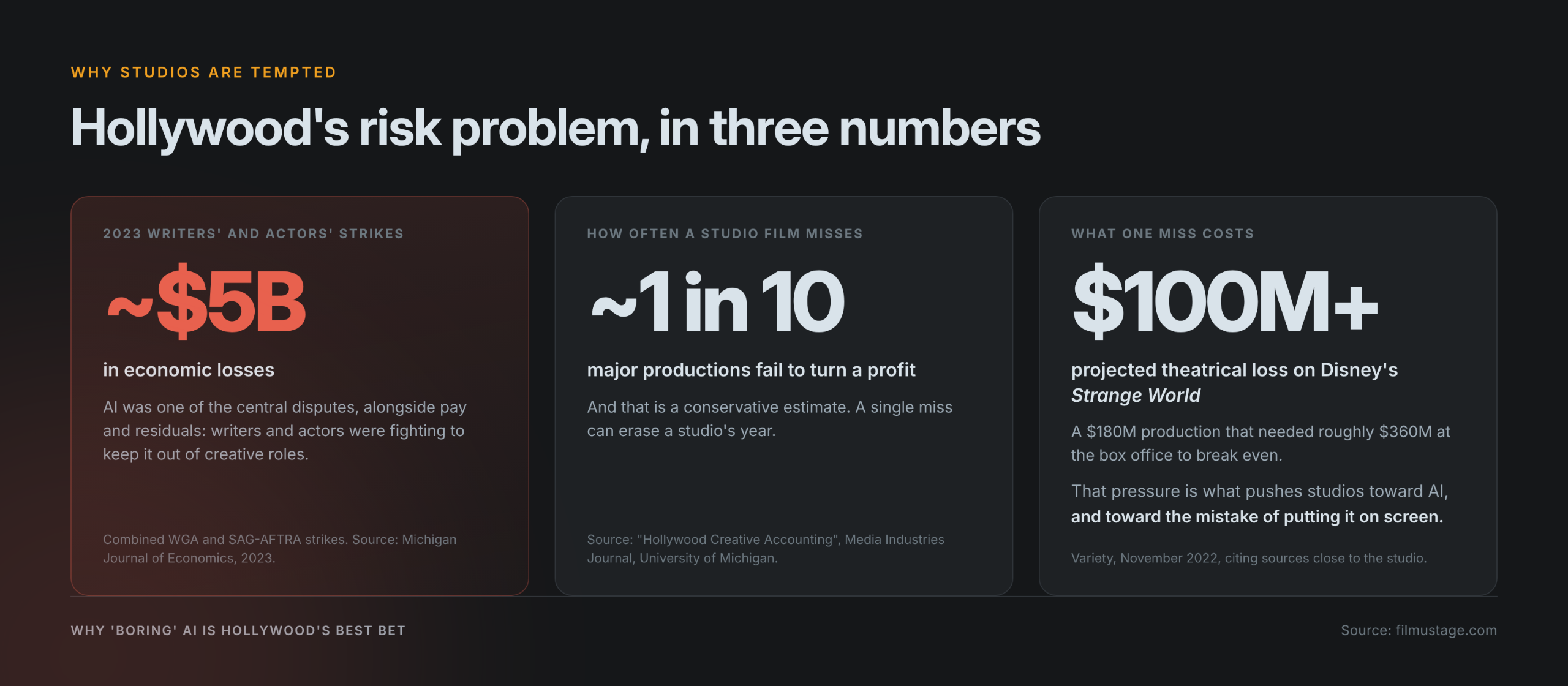
In the high-stakes world of modern cinema, a single box-office misfire can be catastrophic. When a major production fails to connect with audiences, the financial hemorrhaging is measured not in thousands, but in hundreds of millions of dollars. Disney’s Strange World reportedly incurred losses near the $200 million mark, while DC’s The Flash saw a deficit exceeding $150 million. These are not mere anomalies; industry data suggests that approximately 10% of major studio productions fail to turn a profit. Faced with these grim margins, Hollywood is increasingly turning to generative AI as a potential savior. However, the industry’s relationship with silicon-based assistance is fraught with tension, raising a critical question: Can artificial intelligence save the studio system without destroying the soul of cinema?
The Great Divide: Creative Automation vs. Back-Office Efficiency
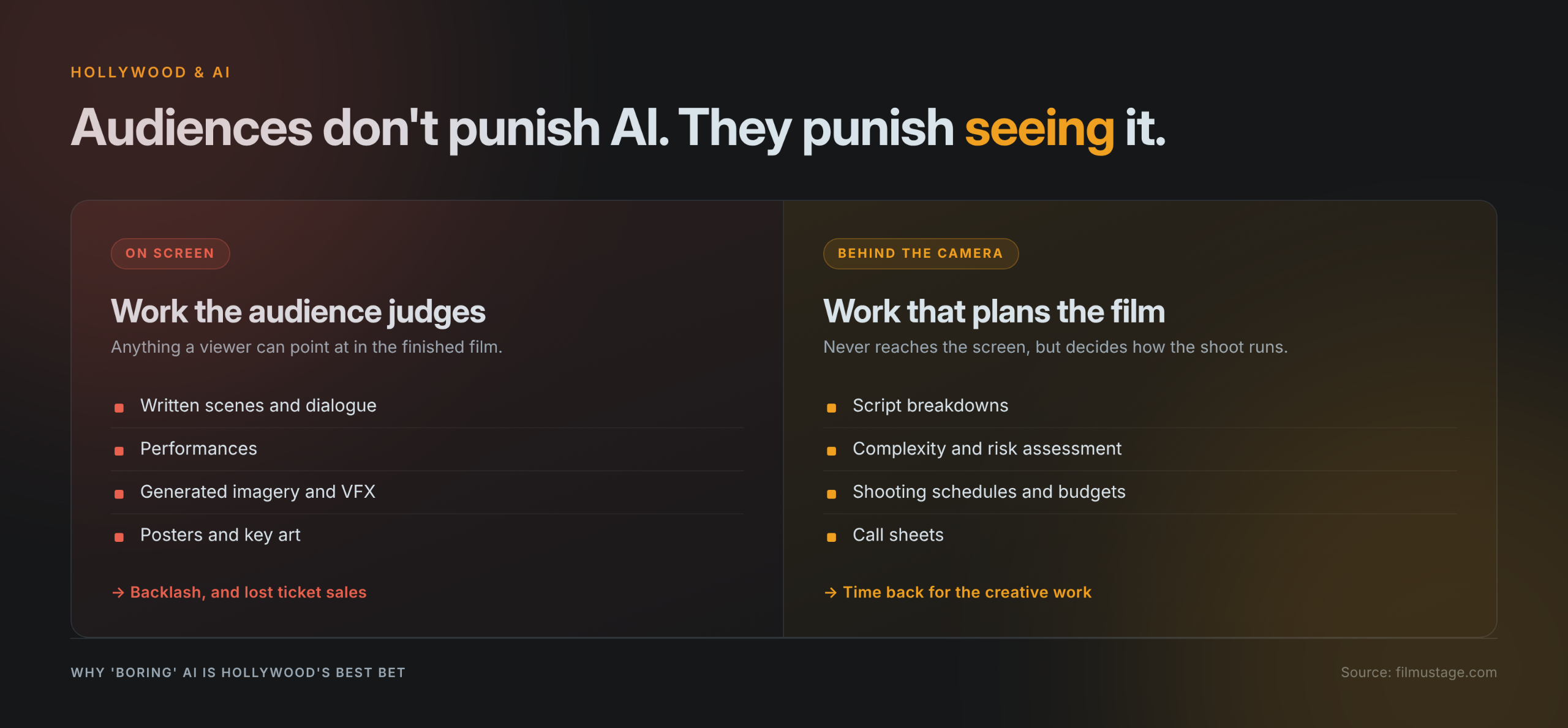
To understand the current state of AI in film, one must distinguish between two vastly different applications of the technology. On one side lies the "creative" use of AI—generative tools that attempt to write scripts, synthesize performances, or generate visual effects. This is the application that has sparked intense backlash, fueled the 2023 SAG-AFTRA strikes, and left audiences cold. Projects like Misaligned, which relied on AI-generated personas, or films that have utilized AI for promotional materials, have been met with derision. Audiences and creators alike have drawn a line in the sand, viewing these intrusions as a threat to human artistry and job security.
On the other side, however, is a quieter, more pragmatic revolution. It is the use of AI as an administrative and logistical powerhouse. This is where Egor Dubrovsky, CEO of the production technology platform Filmustage, sees the true future of the medium. Having helped over 30,000 filmmakers save an estimated 3.5 million hours of labor, Dubrovsky argues that the industry’s most pressing problems aren’t solved by AI-generated actors, but by AI-managed data.
Chronology of the AI Shift: From Experimental to Essential
The integration of AI into filmmaking did not happen overnight; it began as a series of niche experiments in post-production before migrating into the heart of pre-production.
- Early 2010s: Machine learning is primarily utilized for basic color grading and rudimentary motion tracking in visual effects.
- 2018–2020: The rise of deepfake technology and sophisticated generative models begins to alarm the Screen Actors Guild, leading to early discussions regarding the protection of an actor’s "digital likeness."
- 2022: The public release of advanced Large Language Models (LLMs) triggers a gold rush in script analysis and automated scheduling tools.
- 2023: The SAG-AFTRA and WGA strikes culminate in landmark agreements that place strict guardrails on the use of AI, specifically targeting the displacement of human writers and performers.
- 2024–Present: The industry pivots toward "invisible" AI—tools that automate the tedious, non-creative logistics of filmmaking, such as budgeting, script breakdown, and shooting schedules.
Supporting Data: The High Cost of Manual Labor
The financial argument for AI in pre-production is compelling. Pre-production typically consumes three to seven months of a project’s timeline and accounts for 10% to 15% of the total budget. For a massive production like Star Wars: The Force Awakens, which carried a reported production cost of $537 million, a 15% allocation for pre-production represents roughly $80 million.
When human production assistants are tasked with manually combing through thousands of pages of scripts to flag props, identify character locations, and calculate potential budget clashes, the margin for human error—and the cost of human time—is staggering. By contrast, AI can ingest a script in seconds, cross-reference it against databases, and produce comprehensive scene breakdowns that are both faster and more consistent than human counterparts. To date, platforms like Filmustage have already facilitated the saving of over 5.2 million hours of manual work across the global industry.

Official Responses and the Industry Stance
The 2023 strikes were a watershed moment that defined the boundary between "accepted" and "rejected" technology. The consensus reached by the unions was clear: AI is not to be used to replace the fundamental human elements of acting and writing. The industry is, however, tacitly accepting of AI as a digital assistant.
Netflix’s The Gentlemen, for instance, utilized AI behind the scenes to streamline its action-heavy scripts and optimize shooting logistics. Critically, this use of AI did not influence the final visual output or the narrative structure in a way that viewers could discern. The show was a critical and commercial success, proving that when AI is kept in the engine room, it does not alienate the audience.
"I worked as a director’s assistant in Hollywood," says Egor Dubrovsky. "I can confidently say the vast majority of the industry’s workforce would be happy handing over these tasks. Film production is a grueling, high-stress environment, where 12-hour days are the norm and 16-hour days are not uncommon. Nobody suffers through that because they love combing through call sheets for clashes or calculating expenses item by item."
The Psychological Implications of AI Integration
The resistance to AI in Hollywood is as much psychological as it is economic. When audiences see a film, they are participating in a human contract—a story told by people, for people. When a film relies on AI for its creative output, that contract feels broken. The "uncanny valley" effect, where AI-generated images look almost—but not quite—human, creates a subconscious repulsion that can doom a film regardless of its narrative quality.
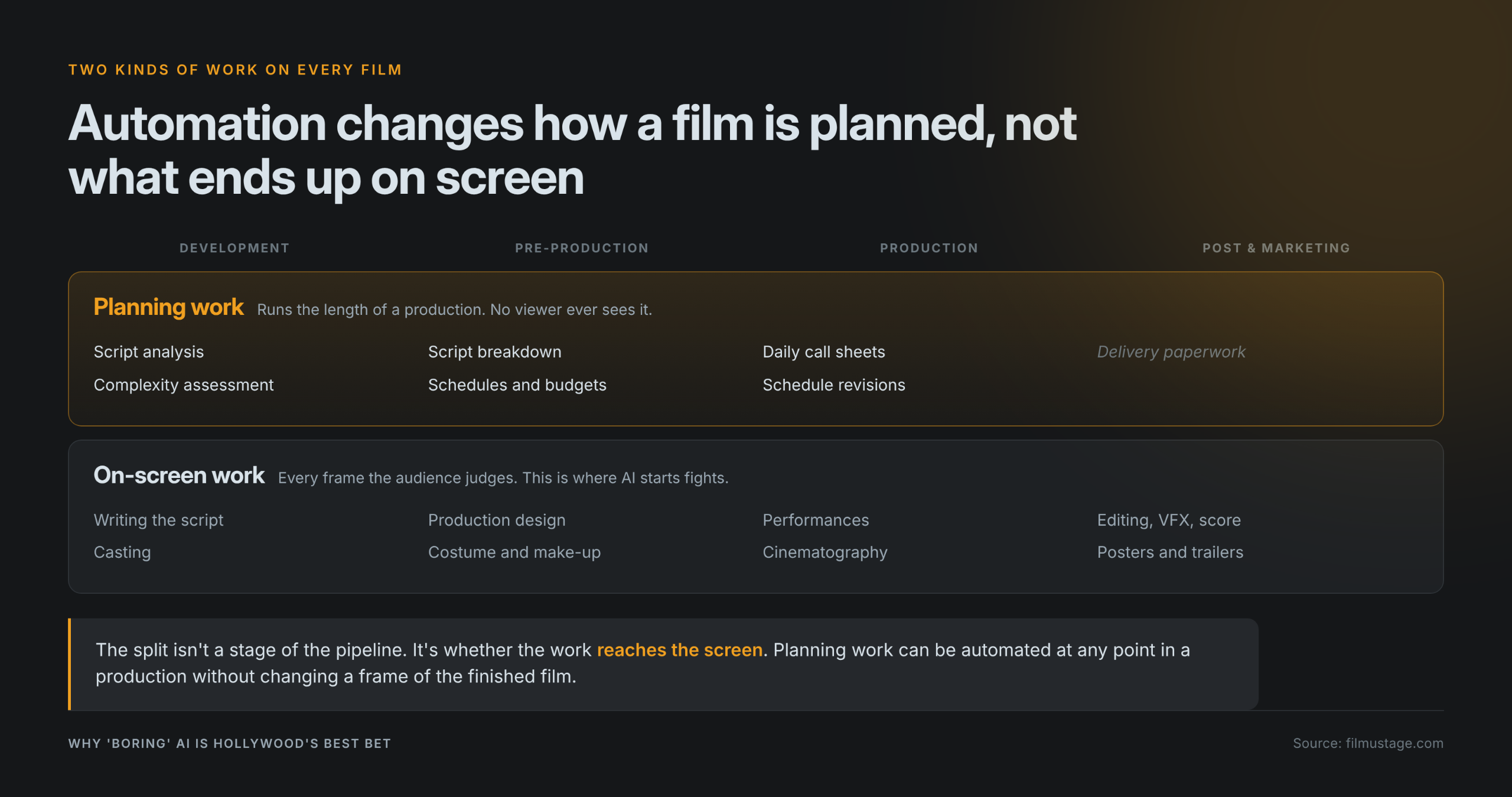
This is why the "boring" automation of pre-production is actually the most ethical path forward. By automating the drudgery, studios aren’t just saving money; they are potentially liberating human creatives. If a producer saves weeks of time on budgeting and scheduling, that time can be reinvested into the artistic process—refining a script, perfecting a performance, or pushing the boundaries of practical effects.
Implications for the Future of Filmmaking
The future of the industry hinges on whether studios can maintain this distinction. If the goal of AI adoption remains solely to "cut costs" by replacing humans, the industry will continue to face backlash, strikes, and audience disinterest. However, if the goal shifts toward "optimizing quality," AI could become the most important tool in a filmmaker’s kit since the advent of digital editing.
Key Considerations for the Coming Decade:
- Transparency: Studios will need to be increasingly transparent about where and how AI is used, or risk the "AI label" becoming a box-office poison.
- Resource Reallocation: The true value of AI lies in its ability to allow human talent to focus on high-value creative decisions. Studios that use AI savings to bolster their creative departments will likely outperform those that use them to pad their bottom line.
- The Human-in-the-Loop Requirement: As long as AI is relegated to the "back office," it remains a powerful tool. The moment it is given a "starring role" in creative decision-making, the risk of artistic mediocrity and audience rejection rises exponentially.
In conclusion, the integration of AI into Hollywood is inevitable, but its form is not yet set in stone. The industry is currently at a crossroads. By embracing the technology to handle the repetitive, error-prone, and soul-crushing tasks of production management, Hollywood can ensure that its human artists have more time to do what they do best: tell stories that resonate. The danger lies not in the machine, but in the ambition of those who might mistake efficiency for art. For now, the most successful projects will be those that keep the AI on the payroll, but off the screen.
 Iffa Jayyana
 Reynand Wu
 Nila Kartika Wati
