
 By Nila Kartika Wati
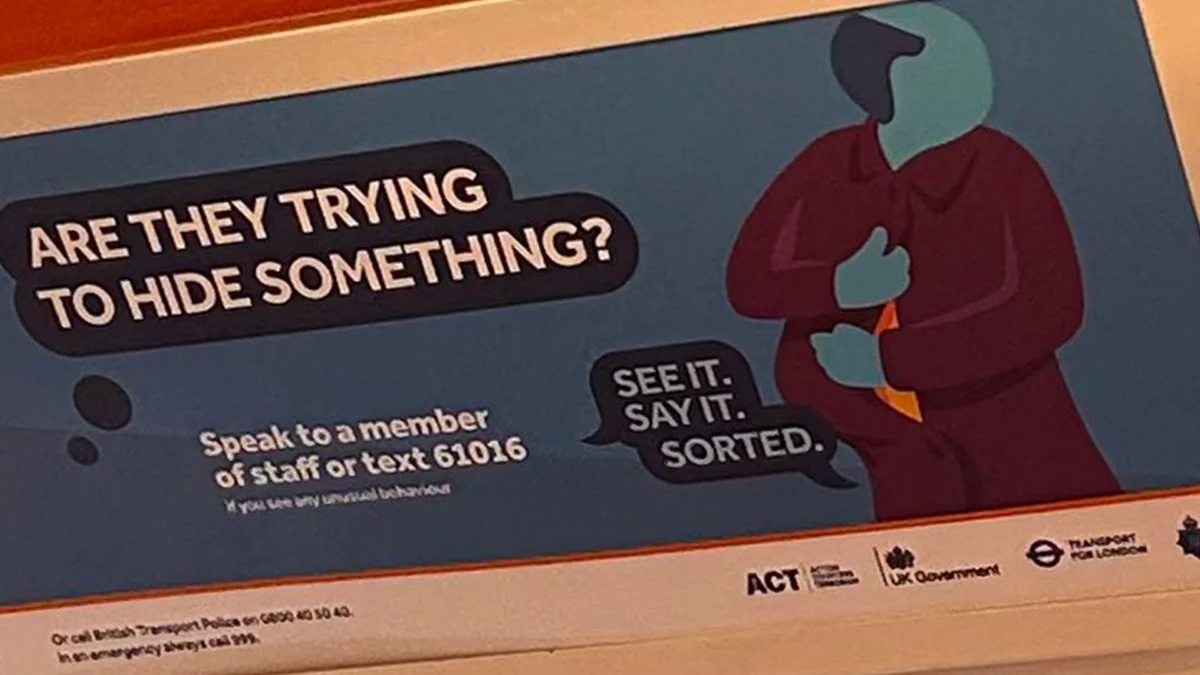
In the high-stakes world of public information campaigns, the margin for error is razor-thin. When a government body or public transit authority releases a safety message, it is expected to be clear, authoritative, and universally understood. However, Transport for London (TfL) recently found itself at the epicenter of a digital firestorm after an unauthorized, highly ambiguous poster appeared on its network, triggering widespread accusations of bias and incompetence.
The incident, which saw a public safety advertisement featuring "Corporate Memphis" style artwork misinterpreted as a discriminatory message, serves as a masterclass in how visual ambiguity and poor design choices can spiral into a full-blown public relations crisis.
The Catalyst: A Design That Backfired
The controversy erupted in late October 2026, when commuters began circulating images of a poster spotted on the London Underground. At first glance, the graphic appeared to be a standard, if somewhat uninspired, public service announcement (PSA). The artwork utilized the "Corporate Memphis" style—characterized by flat, featureless characters, disproportionate limbs, and a minimalist aesthetic often favored by tech giants and corporate branding departments.
The central figure in the graphic was intended to be a man looking over his shoulder. However, due to the abstract, minimalist nature of the illustration, the image was widely interpreted by commuters as a woman wearing a hijab. The accompanying copy, reading "Are they trying to hide something?", transformed what was presumably meant to be a generic warning about vigilance into a targeted, xenophobic-coded message.
For many, the pairing of the ambiguous illustration with a pointed, accusatory question felt like a blatant instance of racial profiling. The backlash was instantaneous and severe, spreading rapidly across X (formerly Twitter) and other social media platforms.
Chronology of the Incident
The timeline of the controversy highlights the speed at which misinformation—or, conversely, genuine public outrage—can travel in the digital age.
- October 25, 2026: Commuters begin posting photographs of the offensive advertisement. The discourse shifts from confusion to anger as users characterize the poster as "disgusting" and "appalling."
- Late October 25, 2026: As the posts go viral, TfL enters the conversation. Their initial response is one of damage control, claiming the posters were "unauthorized" and the result of "flyposting"—the illegal act of placing posters in public spaces without permission.
- October 26, 2026: Doubts regarding TfL’s official narrative begin to surface. Observers note that news outlets had previously reported on the campaign as if it were legitimate, and the high production quality of the posters suggested an official source.
- Late October 26, 2026: Skepticism reaches a fever pitch as users point out that the British Transport Police (BTP) appear to have been associated with the campaign’s rollout, contradicting TfL’s claims that the materials were strictly illegal, unauthorized flyposting.
The "Corporate Memphis" Problem
The artistic style known as "Corporate Memphis" has become ubiquitous in modern advertising. While its flat, simplistic design is intended to be inclusive and neutral, critics have long argued that it is fundamentally "soulless." In this specific instance, the design’s lack of detail proved to be its undoing.
When you strip away facial features, skin texture, and specific sartorial markers, you leave a void that the human brain desperately attempts to fill. In the context of a high-stress environment like a subway commute, and when paired with loaded language like "hiding something," the human subconscious is prone to projecting biases onto the image.
By utilizing a style that emphasizes abstraction over clarity, the creators of the ad inadvertently created a "Rorschach test" for commuters. The result was a design that, in the eyes of the public, seemed to target a specific demographic, even if the creative intent was entirely different.
Official Responses and the Credibility Gap
TfL’s response to the crisis was, by many accounts, insufficient to quell the rising tide of public dissatisfaction. By labeling the posters as "unauthorized flyposting" and declaring that they had alerted the British Transport Police, TfL attempted to distance itself from the creative content of the ads.
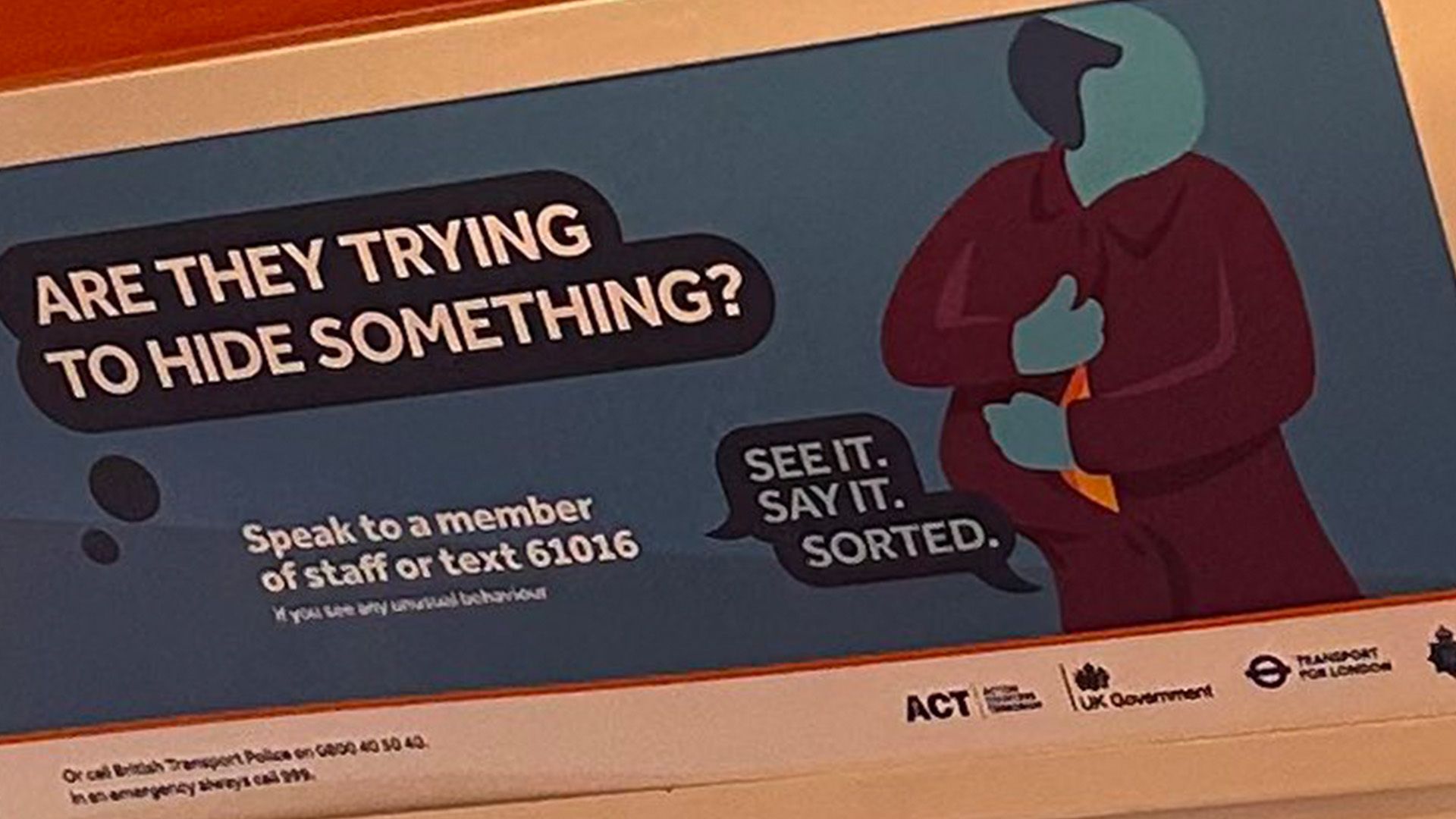
However, this narrative backfired. In the modern age of digital investigative journalism, social media users were quick to cross-reference the "unauthorized" claim against previous public reports and official mentions of the campaign. The discrepancy between the "illegal flyposting" narrative and the reality of the posters appearing as part of a structured campaign led to a profound trust deficit.
When a public institution blames "unauthorized" actors for a campaign that bears the hallmarks of institutional design, the public is left with two equally damaging conclusions: either the institution has lost control of its own physical advertising space, or it is being dishonest about its involvement in a campaign that went wrong.
Broader Implications for Public Advertising
The 2026 TfL incident is not an isolated event; it is emblematic of a "Year of the Cancelled Ad." Across the globe, advertisers are struggling to balance the desire for minimalist, trendy aesthetics with the need for clear, responsible messaging.
1. The Death of Ambiguity
In an era of hyper-polarization, ambiguity is no longer a creative asset; it is a liability. Brands and government bodies must prioritize clarity over style. If a message can be misinterpreted as xenophobic, sexist, or otherwise offensive, it will be. The responsibility lies with the creators to "stress-test" their imagery against diverse perspectives before it ever hits the platform.
2. The Responsibility of Media Partners
TfL’s struggle highlights the complex relationship between transit authorities and their media partners. Often, advertising space on public transport is sold through third-party agencies. This creates a firewall of accountability that, while legally convenient, becomes a PR nightmare when a campaign triggers a moral panic. Moving forward, authorities will likely face increased pressure to implement stricter oversight on the content of the ads they allow on their network, not just the contracts they sign with agencies.
3. The Digital Archive and Institutional Memory
The ease with which social media users debunked TfL’s claims shows that institutions can no longer rely on traditional "deny and deflect" tactics. Because every piece of information is archived and searchable, an official statement that contradicts historical digital records will be dismantled in minutes. This puts a premium on transparency and immediate accountability.
Conclusion: Lessons for the Future
The "Are they trying to hide something?" scandal serves as a sobering reminder of the power and danger of visual communication. Whether the ad was a case of genuine flyposting or a botched official campaign, the damage to public trust is real.
For design professionals, the takeaway is clear: the aesthetic choices you make carry social weight. "Corporate Memphis" might be cheap and easy to scale, but when used for public safety messaging, it lacks the human nuance required to prevent misinterpretation. For public institutions, the lesson is even more vital: if you cannot own the message, you cannot control the narrative.
As we move further into an age where every commuter has a camera and a platform, the standard for public advertising has been irrevocably raised. The era of the "ambiguous ad" is over; in its place, the public is demanding clarity, accountability, and a higher level of sensitivity in the visual language that occupies our shared public spaces. The TfL controversy will likely be studied for years to come as a definitive example of how quickly a lack of design precision can spiral into a crisis of institutional legitimacy.
 Reynand Wu
 Nana Muazin
 Laily UPN
