
 By Jia Lissa
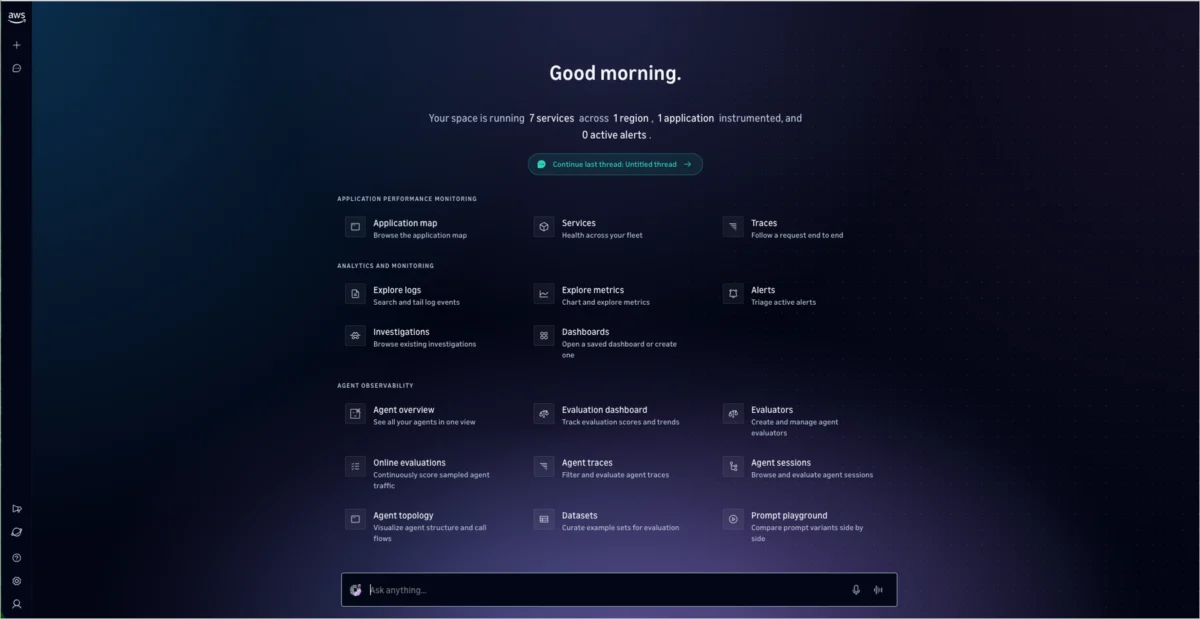
SEATTLE — In a major development for the cloud computing and artificial intelligence sectors, Amazon Web Services (AWS) has officially announced the general availability of Amazon CloudWatch Omni. Billed as a unified, app-centric, and AI-powered observability suite, CloudWatch Omni is specifically engineered to tackle the notoriously complex monitoring, evaluation, and experimentation challenges presented by modern generative AI workloads and autonomous AI agents.
Built on open standards and delivered both off-console and directly within developer environments, the solution aims to bridge a critical gap in the enterprise software development lifecycle. By combining telemetry, evaluation-driven workflows, and robust debugging tools into a single integrated platform, AWS is positioning CloudWatch Omni as an essential utility for organizations scaling agentic systems from local prototyping to massive production fleets.
Main Facts: What is Amazon CloudWatch Omni?
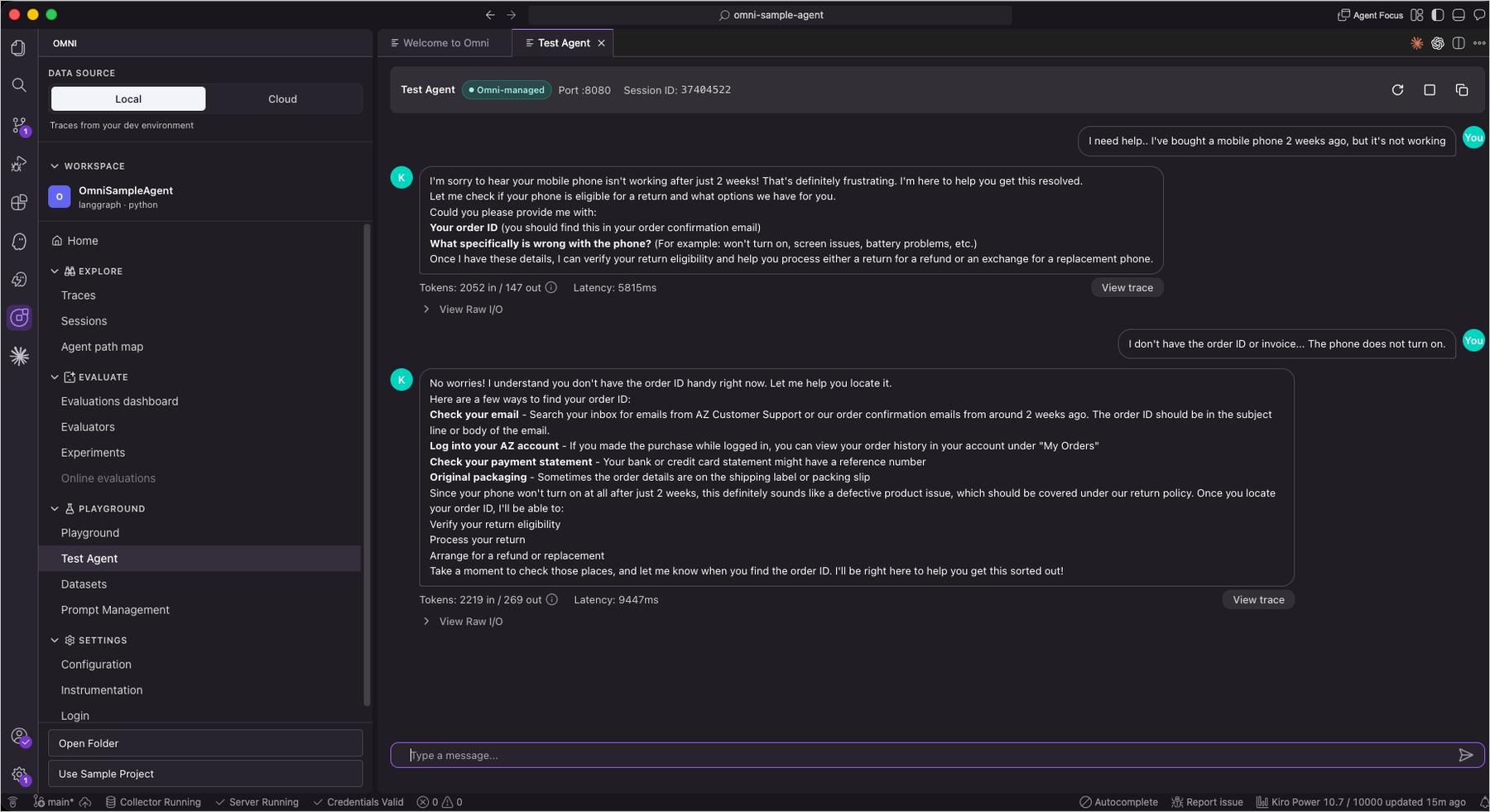
At its core, CloudWatch Omni is a purpose-built observability and evaluation platform designed to monitor non-deterministic AI applications. Unlike traditional software, where inputs reliably map to predictable outputs, AI agents make autonomous decisions—such as chaining sub-calls, composing dynamic prompts, and invoking external tools—making standard application performance monitoring (APM) tools insufficient.
The platform introduces several key capabilities:

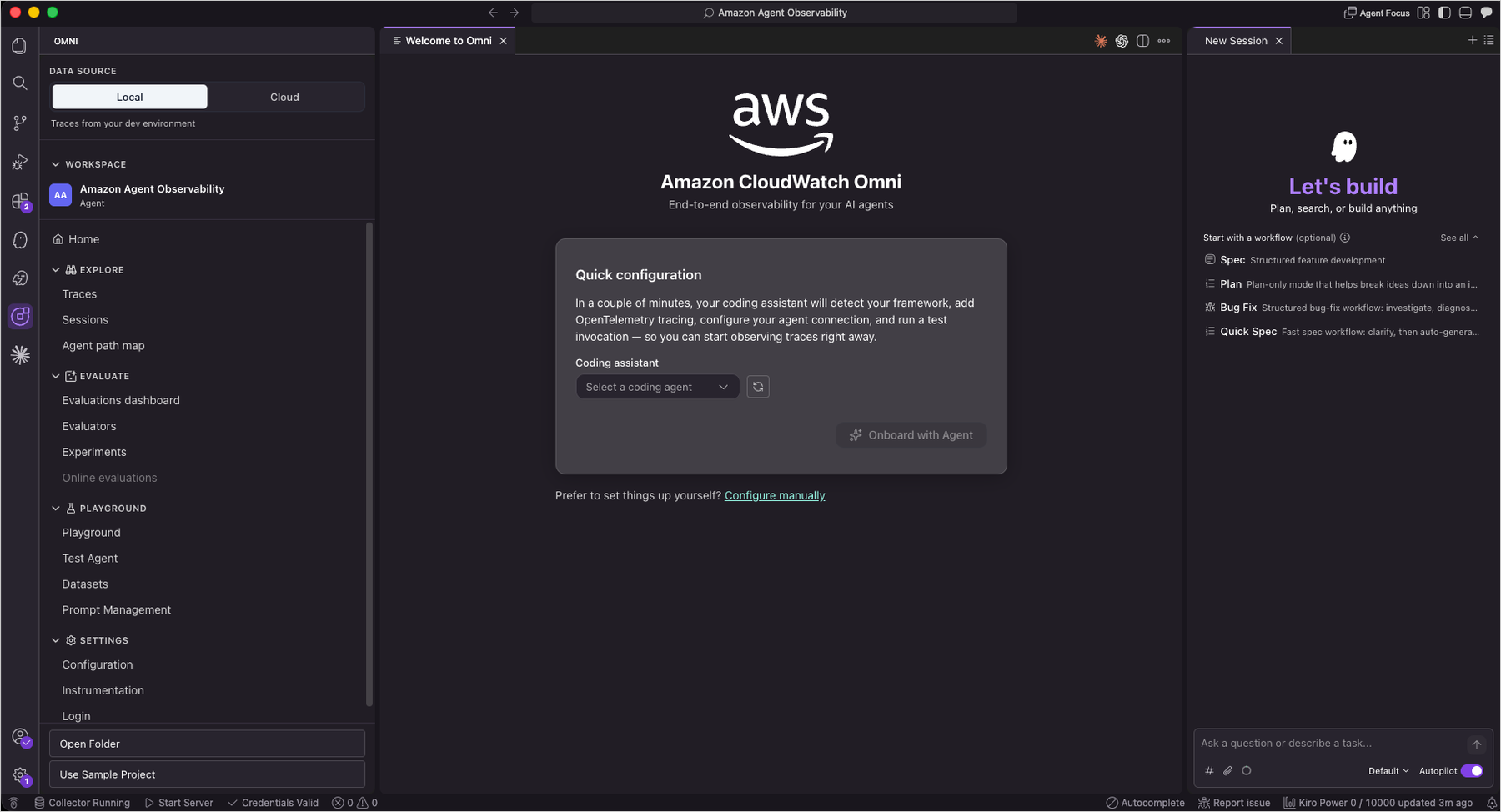
- Dual-Surface Delivery: Operates seamlessly inside developer Integrated Development Environments (IDEs)—specifically VS Code and Kiro—via a native extension, while offering a standalone web experience for operations teams through secure Single Sign-On (SSO) without requiring direct access to the AWS Management Console.
- Comprehensive Tracing and Visualization: Captures every step of an agent’s execution pipeline, rendering it in a structured hierarchical timeline via the Trace Explorer.
- Built-in and Extensible Evaluators: Features 17 native evaluation metrics (including correctness, coherence, helpfulness, faithfulness, and routing accuracy) and integrates with third-party frameworks like AutoEval and DeepEval.
- Framework and Model Agnostic: Supports popular agentic frameworks such as LangChain, LangGraph, CrewAI, OpenAI SDK, Strands, and Vercel AI SDK, alongside native instrumentation for Amazon Bedrock AgentCore.
- Open Standards Foundation: Relies on open telemetry standards, including OpenInference and the AWS Distro for OpenTelemetry (ADOT), ensuring compatibility across diverse cloud environments (AWS, multi-cloud, or on-premises) without locking users into proprietary plumbing.
Chronology: The Evolution Toward Agentic Observability
The journey to CloudWatch Omni reflects the rapid evolution of generative AI from simple prompt-and-response chatbots to complex, multi-step autonomous agents.
- Phase 1: The Chatbot Era and Fragmented Monitoring. Initially, enterprises deployed LLMs via simple API wrappers. Monitoring was largely restricted to tracking latency, error rates, and token consumption. However, as organizations shifted toward agentic workflows—where AI systems autonomously reason, write code, and utilize external tools—traditional metrics failed to capture contextual degradation or logical regressions.
- Phase 2: The Context-Switching Bottleneck. Developers attempting to debug agent behavior were forced to constantly toggle between code editors, browser-based observability dashboards, and scattered log files. This manual troubleshooting slowed development velocity and made root-cause analysis exceptionally difficult.
- Phase 3: The Genesis of Omni. Recognizing that generative AI required a specialized, evaluation-driven operational paradigm, AWS architected CloudWatch Omni. The platform was designed to unify the developer and operator experience, ensuring that the exact trace a developer debugs locally is the one an operator investigates in production.
- Phase 4: General Availability Launch. AWS officially rolled out CloudWatch Omni, making the IDE extension freely available via the VS Code Marketplace while introducing flexible cloud integration options for persistent storage, golden dataset curation, and fleet-wide monitoring.
Supporting Data and Technical Architecture
The technical architecture of CloudWatch Omni is designed to provide granular visibility into complex AI execution graphs without imposing heavy operational overhead.
The Developer-to-Operator Pipeline
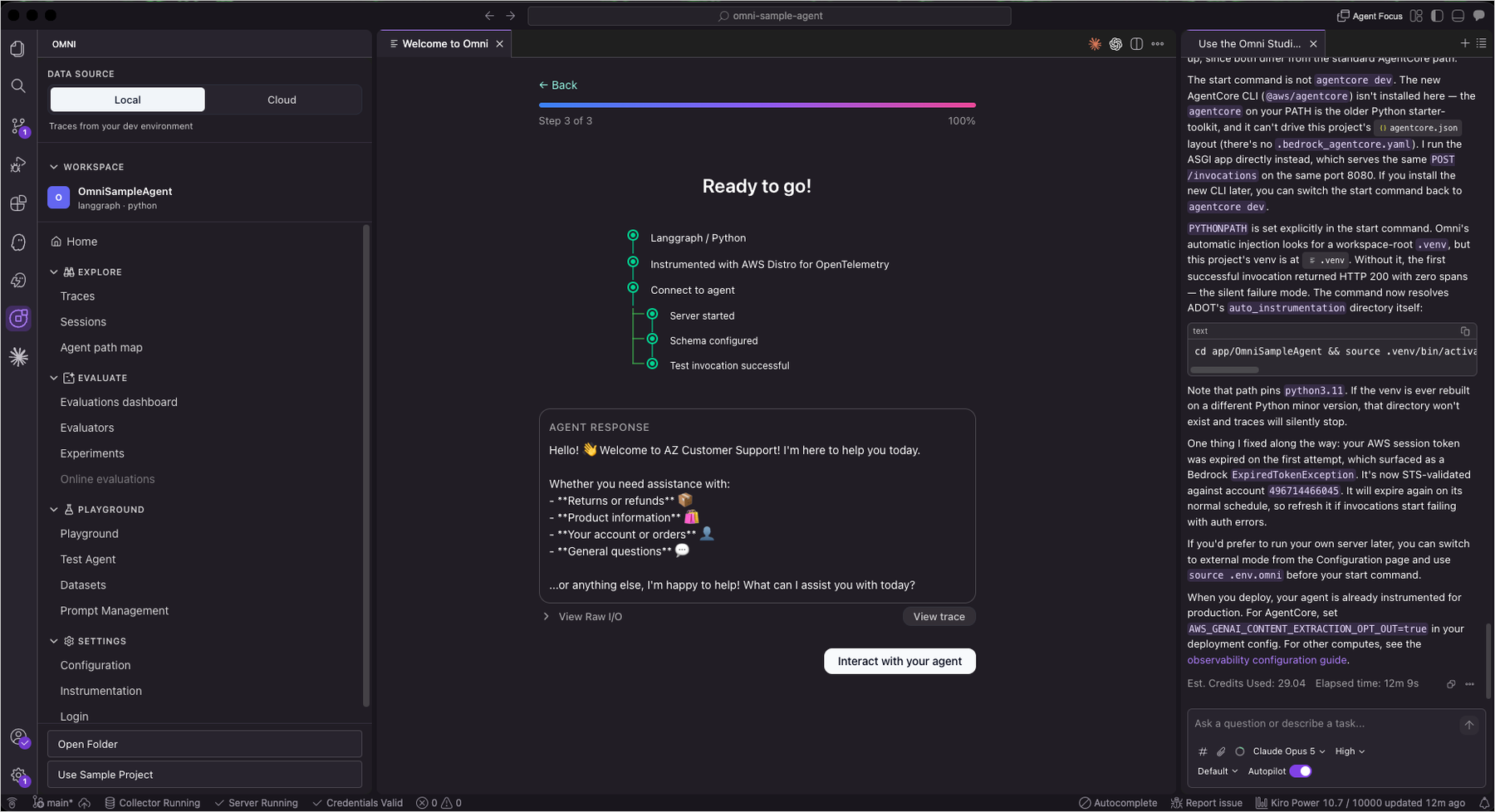
CloudWatch Omni connects local development environments to cloud-based monitoring infrastructure via an optional Cloud Login feature. Developers can build, test, and trace agents entirely on their local machines without an AWS account or active credentials (beyond API keys for model providers like OpenAI, Anthropic, or Amazon Bedrock). Once agents are ready for production, developers can stream telemetry data to Amazon CloudWatch with a single configuration change.
Key Functional Components
- The Playground & Prompt Management: Developers can compare multiple model configurations and prompt variations side by side in real time. Prompt Management tracks version histories, allowing teams to instantly roll back underperforming prompt updates.
- Compare Mode and Trace Explorer: When an agent exhibits unexpected behavior, the Trace Explorer breaks down LLM calls, tool invocations, and reasoning steps. Compare mode places two disparate traces side by side to isolate the exact prompt change or configuration shift that triggered a performance regression.
- Ask Assistant: Leveraging built-in generative AI capabilities, this feature analyzes telemetry traces to answer targeted diagnostic questions, such as explaining why an agent invoked a specific tool multiple times.
- Golden Datasets and Experiments: Teams can curate production traffic into golden evaluation datasets. The Experiments console runs these datasets against multiple agent variants, automatically scoring outputs based on latency, token usage, and quality metrics to determine the optimal configuration.
- Agent Topology: A visual mapping tool that displays the architecture of complex multi-agent systems, highlighting sub-agents, tool dependencies, and performance bottlenecks across the entire topology.
Official Responses and Strategic Significance
AWS leadership emphasizes that CloudWatch Omni represents a fundamental mindset shift—moving enterprise observability from purely reactive metric-tracking to proactive, evaluation-driven quality assurance.
Industry analysts have noted that as enterprise adoption of autonomous AI agents accelerates, debugging non-deterministic behavior has become one of the most significant bottlenecks in software engineering. By integrating observability directly into the tools developers already use—such as VS Code, Kiro, and AI code assistants like Claude Code and Codex—AWS has significantly lowered the barrier to entry for robust AI governance.
Furthermore, by embracing open standards like OpenInference and ADOT, AWS has avoided forcing a proprietary ecosystem upon developers. Organizations utilizing LangChain or CrewAI on alternative cloud infrastructures can still leverage CloudWatch Omni for evaluation and telemetry, making the platform highly versatile in heterogeneous enterprise environments.
Implications for Enterprises and Developers
The launch of Amazon CloudWatch Omni carries profound implications for software engineering teams, IT operators, and business leaders deploying generative AI solutions:
- Elimination of Silos: By bridging the gap between local IDE debugging and cloud-based operations, Omni ensures that software engineers and site reliability engineers (SREs) operate from a single source of truth.
- Accelerated Time-to-Market: Automated instrumentation tools—including auto-configuration via Kiro and pre-built code snippets for Python and TypeScript—enable teams to transition from installation to running traced agent sessions in a matter of minutes.
- Proactive Quality Control: Built-in evaluators and regression testing frameworks shift quality assurance upstream. Rather than waiting for end-user complaints about poor agent responses, developers can catch semantic regressions during the experimentation phase.
- Cost and Resource Optimization: Granular visibility into token usage, latency, and reasoning loops allows organizations to optimize their underlying model calls, preventing runaway cloud bills associated with inefficient agent loops.
Getting Started
Amazon CloudWatch Omni is generally available today. The IDE extension is completely free to download from the VS Code Marketplace, requiring no upfront AWS account setup for local development. Teams looking to explore full cloud capabilities, access documentation, or utilize the AWS Model Context Protocol (MCP) Server can visit the AWS Builder Center and official AWS CloudWatch documentation portals.
 Sagoh
 Siti Muinah
 Reynand Wu
