
 By Azzam Bilal Chamdy
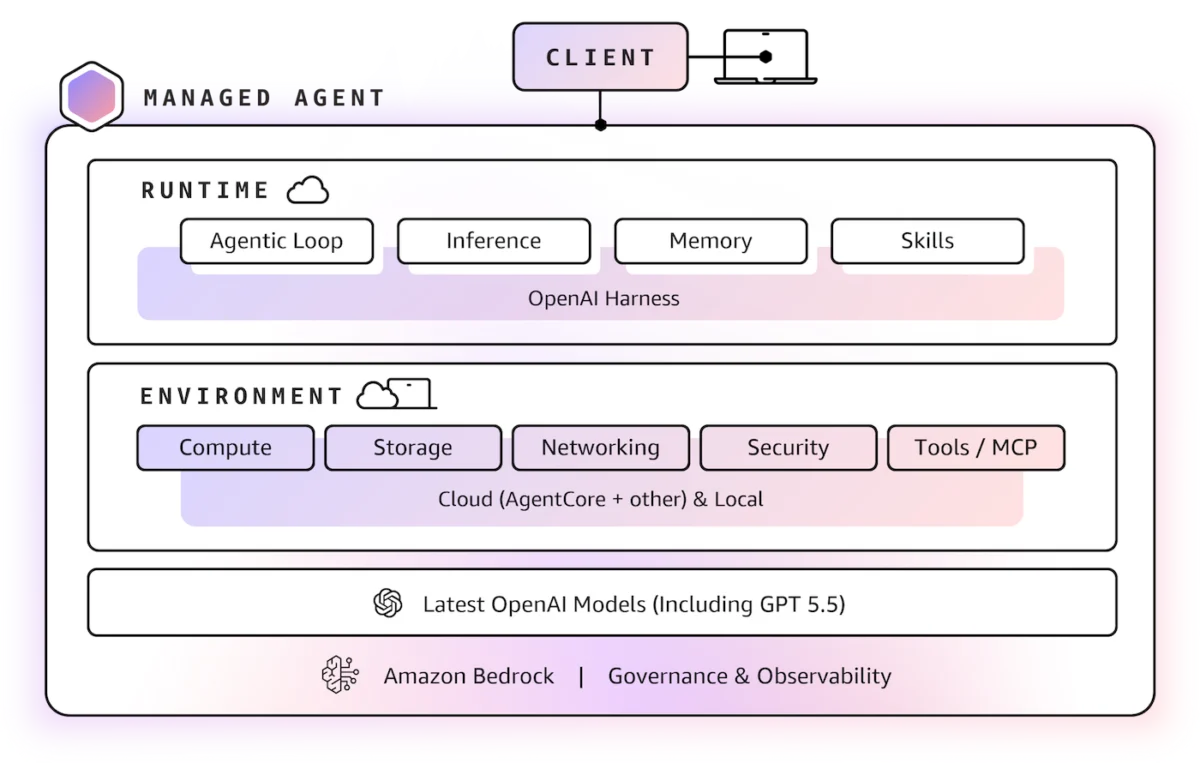
SEATTLE — In a significant development bridging major artificial intelligence ecosystems, Amazon Web Services (AWS) has announced the public preview of Amazon Bedrock Managed Agents powered by OpenAI. Unveiled by AWS developer advocate Channy Yun, this new offering brings a customized version of OpenAI’s Agents API directly into the AWS-native environment.
The integration allows developers and enterprise architects to harness OpenAI’s advanced model architecture while seamlessly leveraging established AWS infrastructure, security identities, granular permissions, and comprehensive governance controls. This release represents a major step forward in enterprise multi-model flexibility, addressing the growing demand for secure, scalable, and deeply integrated AI agent workflows within corporate cloud architectures.
Main Facts
The newly launched Amazon Bedrock Managed Agents powered by OpenAI are engineered to eliminate the friction typically associated with bridging disparate AI services and corporate cloud environments.
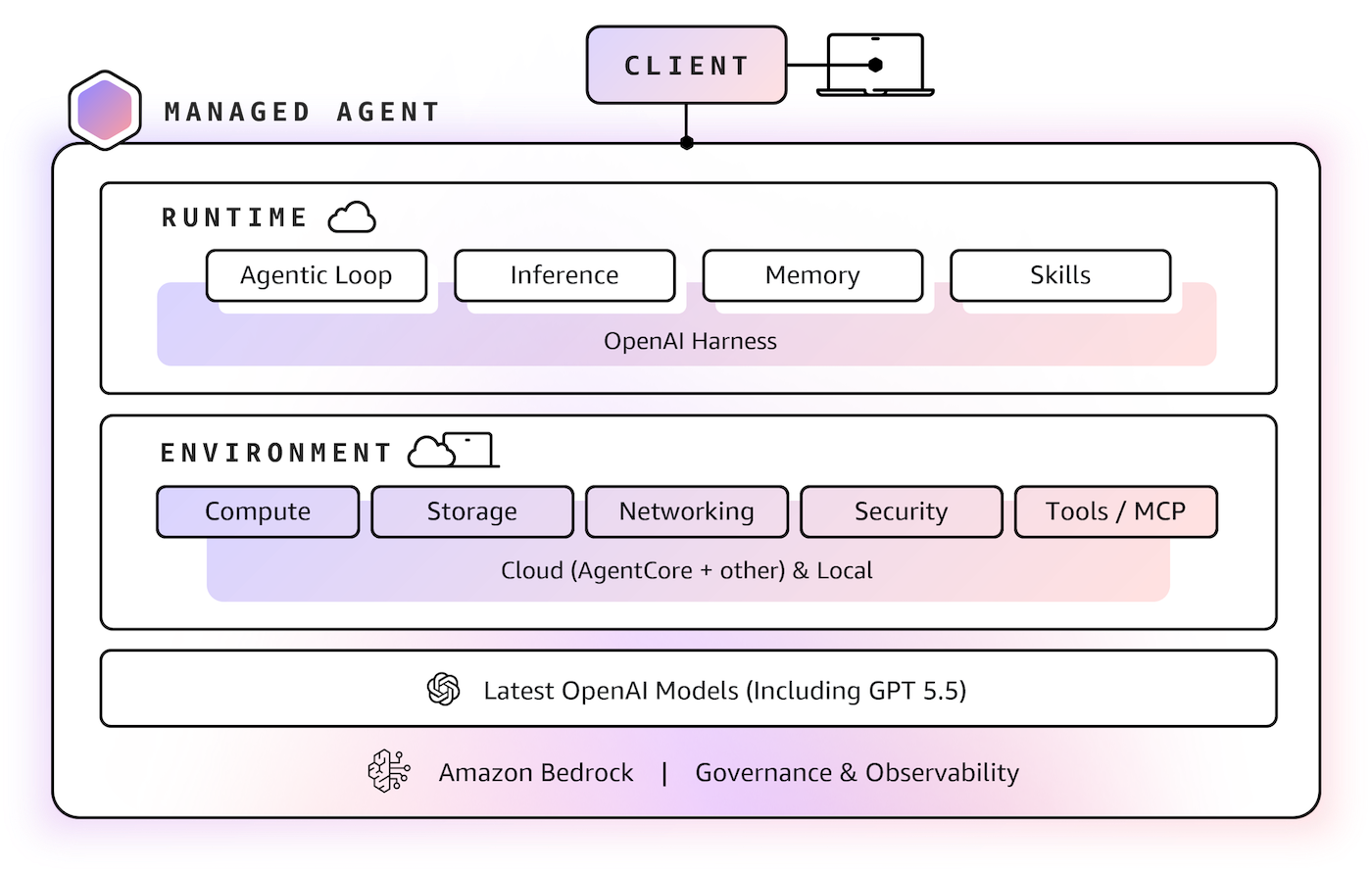
- AWS-Native OpenAI Integration: Built upon a customized variant of OpenAI’s Agents API, the service is natively integrated with AWS resources. This ensures that enterprise developers no longer need to build brittle custom bridges to connect external AI logic with internal cloud infrastructure.
- Unified Security and Governance: Organizations can build and deploy agents optimized for OpenAI models while operating entirely within their existing AWS governance frameworks. This includes utilizing native identity and access management (IAM) protocols, permission boundaries, and compliance controls.
- Flexible Execution Environments: AWS is offering two primary deployment models to cater to varying developer workflows and enterprise security requirements:
- Self-Hosted Compute: Ideal for development flexibility, allowing teams to run agents on existing local development machines, customized containers, or current compute environments.
- Amazon Bedrock AgentCore Runtime: A fully managed runtime environment designed for production workloads, offering managed sessions and configurable storage secured directly within the user’s AWS account.
- Expanded Frontier Model Lineup: Alongside the Bedrock Managed Agents preview, AWS continues to broaden its foundational model catalog on Amazon Bedrock, providing developers with an increasingly diverse array of high-performance models to choose from for their specific use cases.
- Lifecycle and Maintenance Updates: As part of its routine platform management, AWS has issued product lifecycle updates, detailing service transitions into maintenance, sunset phases, and end-of-support statuses to help organizations plan migrations with minimal operational disruption.
Chronology of Events
The introduction of Bedrock Managed Agents powered by OpenAI is part of a continuous, aggressive expansion of the Amazon Bedrock ecosystem, marking a milestone in how cloud providers approach multi-model interoperability.
- Late 2023 – 2025: Amazon Bedrock rapidly establishes itself as a premier fully managed service for building generative AI applications, offering choice through foundational models from AI21 Labs, Anthropic, Cohere, Meta, Mistral AI, and Stability AI, alongside Amazon’s own Titan models. Enterprises increasingly demand complex, multi-step autonomous agents capable of executing workflows.
- Early to Mid-2026: Feedback from enterprise customers highlights a desire to combine the advanced reasoning and orchestration capabilities of OpenAI’s developer tooling with the robust data security, residency, and governance guarantees of AWS. Development accelerates on a specialized, AWS-native adaptation of OpenAI’s agent architecture.
- September 29, 2026: AWS publishes routine service availability and product lifecycle updates, outlining shifts toward maintenance and sunset for older or legacy features to streamline cloud performance.
- Early October 2026: AWS officially announces the public preview of Amazon Bedrock Managed Agents powered by OpenAI. Documentation goes live on the official Amazon Bedrock user guide, and the developer community gains access to both self-hosted and Bedrock AgentCore Runtime execution options.
- October 29, 2026: The upcoming milestone date where specific older services and features targeted in the recent lifecycle update transition fully into maintenance mode, becoming inaccessible to new customers as part of AWS’s continuous optimization cycle.
- Late 2026 and Beyond: Industry eyes turn toward upcoming developer gatherings, including AWS re:Invent and regional AWS Community Days, where deeper architectural use cases, customer case studies, and feature expansions for Bedrock Managed Agents are expected to take center stage.
Supporting Data and Technical Architecture
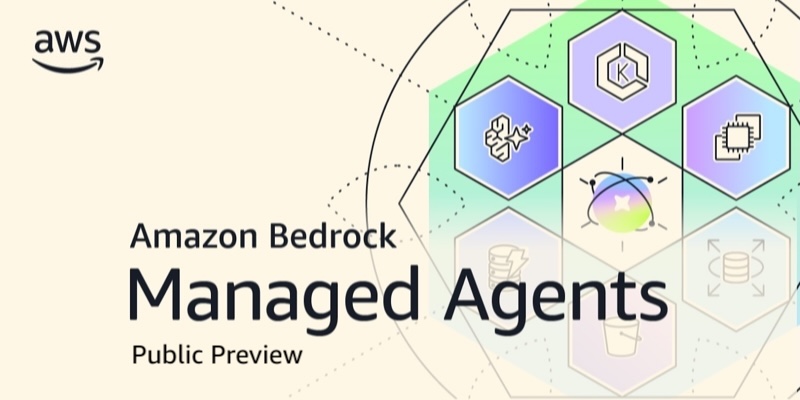
To understand the operational significance of Amazon Bedrock Managed Agents powered by OpenAI, one must examine the underlying architecture designed to balance external AI capability with internal cloud security.
+-----------------------------------------------------------------+
|                    AWS Enterprise Environment                   |
|                                                                 |
|  +---------------------------+     +-------------------------+  |
|  |     AWS IAM & Security    |     |  Bedrock AgentCore      |  |
|  |     (Permissions/Gov)     |     |  Runtime (Managed)      |  |
|  +-------------+-------------+     +------------+------------+  |
|                |                                |               |
|                +----------------+---------------+               |
|                                 |                               |
|                                 v                               |
|             +---------------------------------------+           |
|             |    Bedrock Managed Agents (OpenAI)    |           |
|             |    - Customized OpenAI Agents API     |           |
|             |    - AWS-Native Resource Binding      |           |
|             +---------------------------------------+           |
|                                                                 |
|  OR: [ Self-Hosted Compute / Local Containers / Dev Machines ]  |
+-----------------------------------------------------------------+
Execution Environment Specifications
-
Amazon Bedrock AgentCore Runtime:
- Purpose: Production-grade, fully managed runtime sessions.
- Storage: Configurable, isolated storage bound directly to the customer’s AWS account boundaries.
- Benefits: Removes the overhead of infrastructure management, auto-scales based on agentic workflow demands, and maintains enterprise compliance standards out of the box.
-
Self-Hosted Compute Integration:
- Purpose: Rapid prototyping, local debugging, and customized hybrid deployments.
- Environment: Compatible with developer laptops, private Docker containers, or existing enterprise compute clusters.
- Benefits: Gives developers total control over the local execution stack while still routing agent authentication and resource calls through secure AWS endpoints.
Service Lifecycle Metrics
AWS governance updates emphasize proactive migration management. In the September 29, 2026 lifecycle disclosures:
- Maintenance Transition: Selected legacy features shift to maintenance, halting onboarding for new customers effective October 29, 2026.
- Sunset and End of Support: Clear deprecation pathways are established to ensure engineering teams have adequate runway to transition workloads to modern equivalents like Bedrock-backed architectures.
Official Responses and Industry Perspectives
The announcement has elicited widespread commentary from cloud architects, enterprise IT leaders, and the broader developer community, represented by AWS advocates like Channy Yun.
In outlining the release, AWS emphasized that customer choice and flexibility remain paramount pillars of the Amazon Bedrock strategy. Rather than forcing enterprises into a single proprietary ecosystem, AWS is positioning Bedrock as an open orchestration layer where organizations can seamlessly blend leading frontier models with their preferred cloud security postures.

Industry analysts have noted that this move reflects a broader maturation in the generative AI market. Early enterprise adoption was frequently characterized by siloed experiments where security teams struggled to govern external API calls made by autonomous agents. By baking OpenAI’s agent capabilities directly into AWS identity, access, and logging frameworks, Amazon is addressing the number one blocker to enterprise AI adoption: governance and data security.
Furthermore, community leaders within the AWS Builder Center and upcoming AWS re:Invent planning committees have pointed out that developers no longer have to choose between cutting-edge model intelligence and enterprise-grade cloud management. The ability to deploy agents via either managed runtimes (Bedrock AgentCore) or flexible local environments gives teams the agility required for modern software development life cycles.
Implications for Developers and Enterprise IT
The introduction of Amazon Bedrock Managed Agents powered by OpenAI carries profound implications across multiple facets of enterprise technology, cloud economics, and software engineering.
1. Streamlined Enterprise Security and Compliance
For Chief Information Security Officers (CISOs), managing shadow AI and unauthorized API keys has been a persistent headache. By routing OpenAI-powered agent operations through native AWS IAM roles, cloud logging (such as AWS CloudTrail), and encryption mechanisms, organizations can maintain strict compliance with frameworks like HIPAA, GDPR, and SOC 2. Agents can interact with internal databases, S3 buckets, and Lambda functions without exposing credentials to insecure external environments.
2. Accelerated Agentic Workflow Development
Autonomous agents—software systems capable of planning, executing multi-step tasks, and utilizing tools—represent the next frontier of software automation. By combining OpenAI’s sophisticated reasoning paradigms with AWS’s vast ecosystem of tools (databases, serverless compute, storage), developers can construct exceptionally powerful workflows. Customer service automation, automated code refactoring pipelines, and complex data-analysis agents can now be built with significantly less boilerplate code.
3. Mitigation of Vendor Lock-in
Enterprise architects are naturally cautious about tying their entire application logic to a single vendor’s proprietary stack. The Bedrock paradigm reinforces a multi-model strategy. If an organization wishes to switch between OpenAI-optimized agents and models from Anthropic or Meta, the underlying AWS infrastructure, data connectors, and security policies remain largely untouched. This architectural abstraction protects long-term technology investments.
4. Operational Transition and Cloud Hygiene
With AWS actively updating its service availability and lifecycle guidelines, IT departments are reminded of the importance of maintaining modern cloud footprints. The phased retirement of older services—moving from maintenance to sunset and final end-of-support—underscores the rapid pace of cloud evolution. Engineering teams must review AWS Product Lifecycle documentation regularly to ensure their serverless and AI architectures remain aligned with fully supported, high-performance services.
Conclusion and Next Steps
The public preview of Amazon Bedrock Managed Agents powered by OpenAI marks a pivotal moment in the convergence of cloud computing and frontier artificial intelligence. By harmonizing OpenAI’s powerful agent architecture with AWS-native security, identity management, and flexible runtime environments—ranging from local developer setups to the managed Bedrock AgentCore Runtime—AWS is empowering builders to create smarter, safer, and more scalable AI applications.
Developers interested in exploring these new capabilities can review the technical documentation available on the official Amazon Bedrock user guide. As the tech industry looks toward major upcoming gatherings like AWS re:Invent and regional AWS Community Days, further architectural blueprints, customer success stories, and feature enhancements are expected to emerge.
Builders are encouraged to engage with the AWS Builder Center to share solutions, connect with peers, and stay updated on the weekly cadence of AWS innovations.
 Siti Muinah
 Reynand Wu
 Jia Lissa
