
 By Jia Lissa
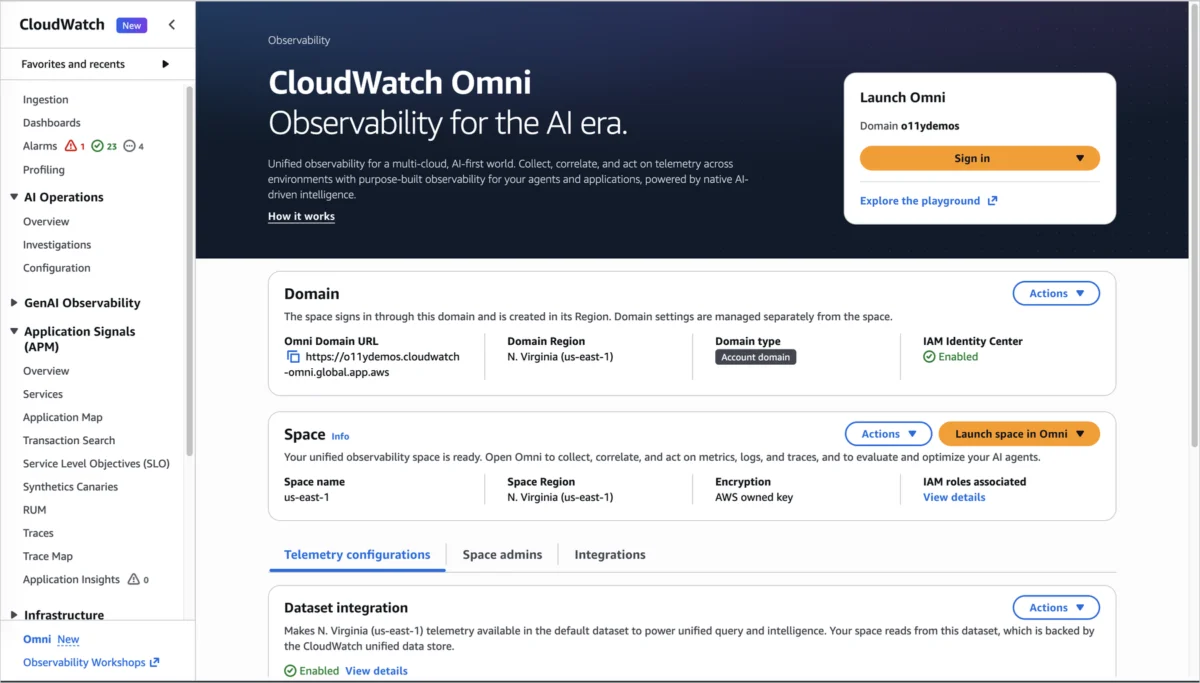
SEATTLE — In an era where modern software architectures scale faster than human teams can monitor them, Amazon Web Services (AWS) has introduced a transformative leap in operational intelligence. The company has officially rolled out Amazon CloudWatch Omni, a dedicated, AI-driven observability experience designed to bridge the gap between traditional application monitoring and the complex demands of generative AI and agentic workloads.
By unifying telemetry, introducing collaborative workspaces, and embedding the autonomous intelligence of the Amazon DevOps Agent, Omni aims to eradicate the traditional silos that plague engineering organizations during high-pressure system outages.
Main Facts: What is Amazon CloudWatch Omni?
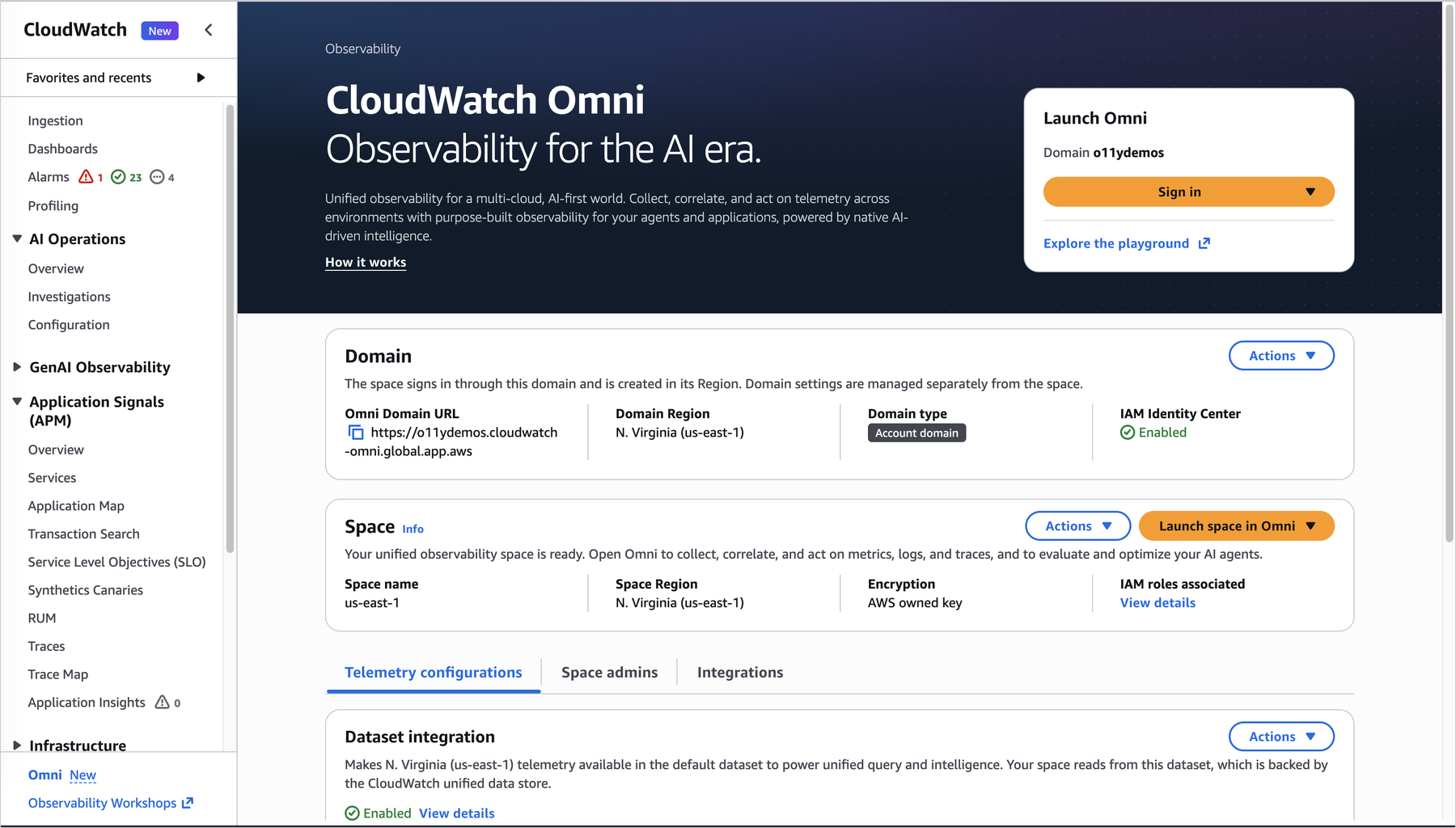
At its core, Amazon CloudWatch Omni is a comprehensive observability platform that decouples infrastructure monitoring from the AWS Management Console, reframing it around collaborative, application-centric workspaces called "Spaces."
Built natively on OpenTelemetry, Omni ingests existing telemetry—logs, metrics, traces, and alarms—without requiring extensive reconfigurations or data migrations. Workloads instrumented with OpenTelemetry automatically route data to an OpenTelemetry Protocol (OTLP) endpoint, while existing CloudWatch data is instantly accessible.

The platform addresses three foundational friction points that software engineering teams face globally:
- Unified Cross-Team Collaboration: Rather than forcing SREs, developers, database administrators, and managers to jump between disparate tools, Omni provides a single, secure URL accessed via enterprise Single Sign-On (SSO) through AWS IAM Identity Center (integrating seamlessly with identity providers such as Okta and Microsoft Entra ID). No AWS Management Console credentials are required for everyday observability tasks.
- Dynamic, Self-Adapting Topologies: Omni automatically discovers services, maps complex dependencies, and adjusts alarms based on high-level declarations of what matters (such as latency budgets and availability targets) rather than manual, static dashboard curation.
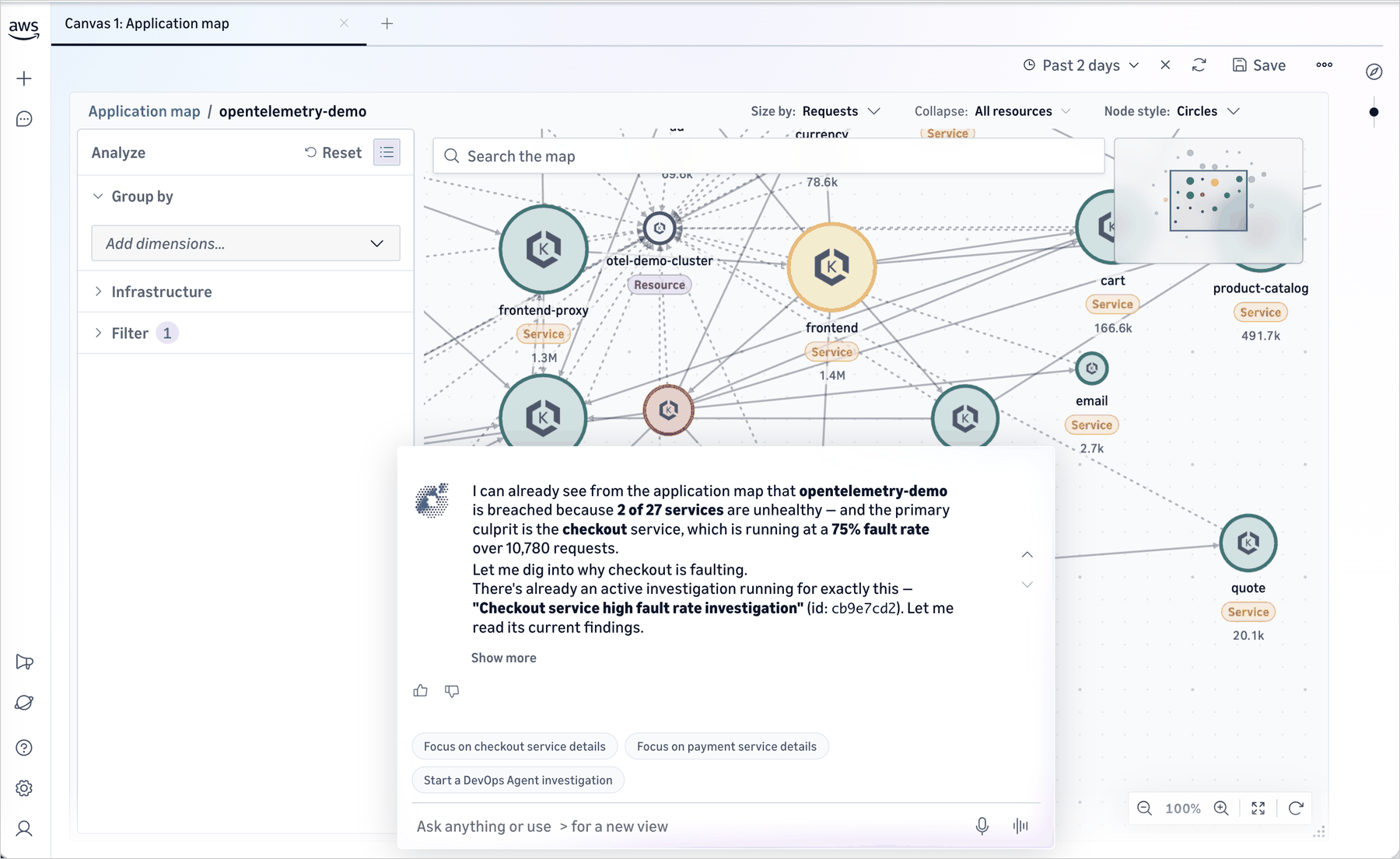
- Autonomous AI Investigations: Through deep integration with the Amazon DevOps Agent, Omni brings a generative AI co-pilot into live investigation sessions. The agent correlates disparate signals, surfaces root causes across dynamic dependency graphs, and automatically maintains an immutable historical record for post-incident reviews.
Chronology: The Evolution Toward Agentic Observability
The journey to CloudWatch Omni reflects a broader industry reckoning with the architectural complexity introduced by microservices and, more recently, generative artificial intelligence.
- The Siloed Era of Monitoring: Historically, engineering teams relied on isolated dashboards tracking CPU utilization, memory thresholds, and individual error logs. When an incident occurred, engineers spent valuable time switching between tools, piecing together timelines in fragmented Slack channels, and manually correlating events.
- The Rise of Distributed Systems and OpenTelemetry: As enterprises migrated toward microservices and serverless architectures, the sheer volume of telemetry exploded. OpenTelemetry emerged as the vendor-neutral standard for collecting metrics, logs, and traces, yet teams still struggled with the overhead of maintaining thousands of static dashboards.
- The Generative AI Inflection Point: With the mainstream adoption of large language models (LLMs) and autonomous AI agents, applications ceased to be purely deterministic. Debugging required tracking non-linear execution paths, prompt latency, and agentic reasoning loops—creating a pressing need for specialized, intelligent tooling.
- The Omni Announcement: AWS bridged these historical gaps by launching Omni to handle both traditional application observability and modern agentic workloads concurrently. By combining the infrastructure backbone of CloudWatch with generative AI workflows, AWS has established a new benchmark for how systems are monitored and managed.
Supporting Data: The Mechanics of Modern Incident Resolution
To understand the practical impact of CloudWatch Omni, it is vital to examine how an incident flows through the platform compared to traditional methodologies.
The Traditional Incident Workflow
In a legacy monitoring environment, an alarm triggers an automated alert. An on-call engineer logs into a monitoring console, tries to isolate the offending service, takes screenshots, copies log snippets, and pastes them into a chat room. When the issue crosses team boundaries—such as an internal checkout service failing due to a downstream third-party payment API—context is invariably lost in translation. The new engineer joining the incident must start their diagnostic journey from scratch.
The CloudWatch Omni Incident Workflow
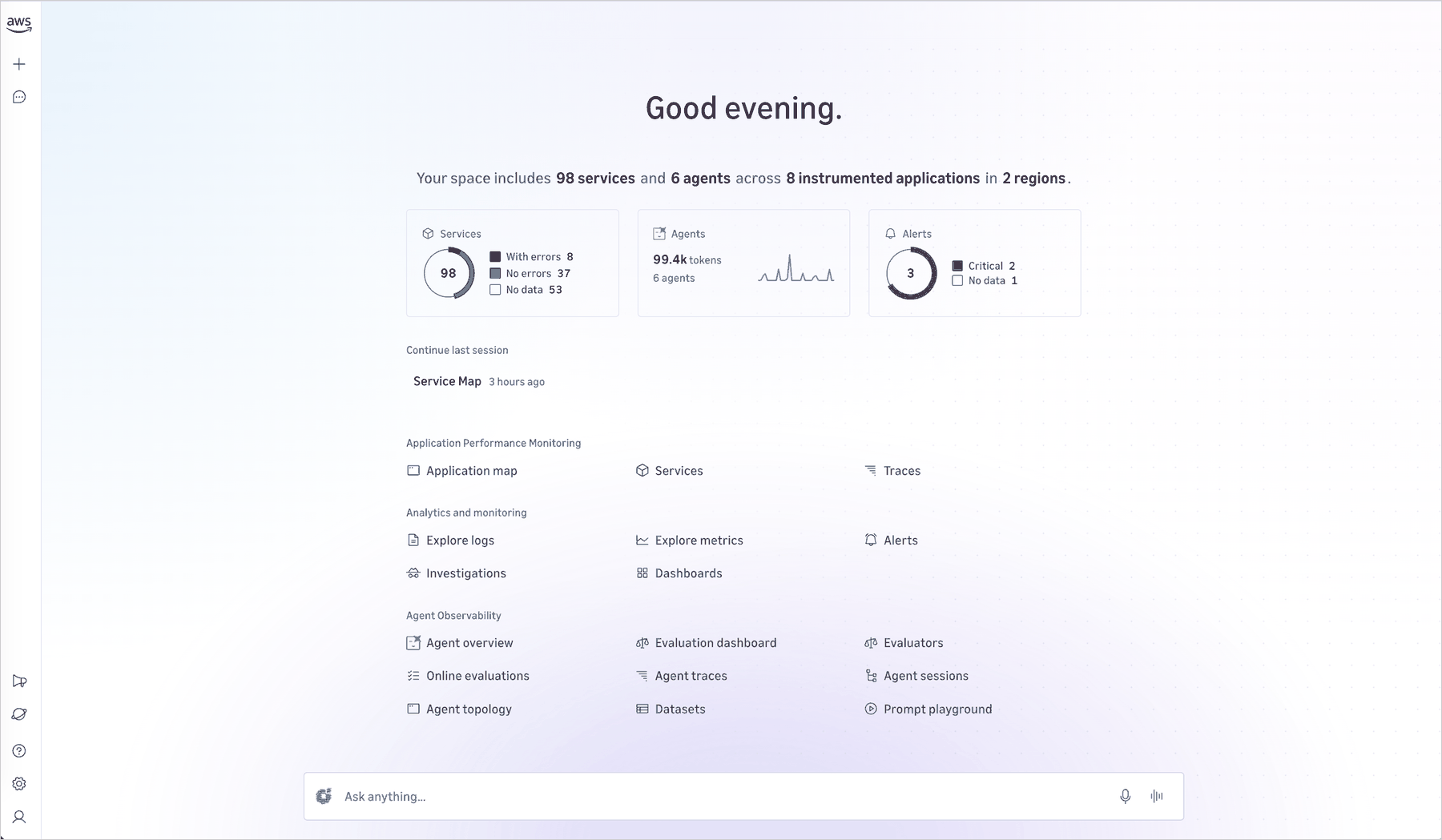
Under Omni’s architectural model, an incident triggers a pre-loaded, collaborative Investigation Session:
- Contextual Initialization: When the checkout service experiences elevated error rates, Omni opens a shared session displaying the service topology, a deployment timeline (e.g., a release 10 minutes prior), and a downstream latency spike from the payment API.
- AI-Assisted Correlation: The Amazon DevOps Agent actively participates in the session, drawing from the exact telemetry the engineers are viewing. It highlights that the payment API latency correlates with a configuration modification inside the payment provider’s API gateway.
- Seamless Escalation: The on-call SRE pulls in the payments team engineer. Because all data, automated traces, and DevOps Agent insights live in a shared workspace, the payments engineer is instantly up to speed without reading through chat scrolls or asking for screenshots.
- Automated Documentation: Once the root cause is identified and rolled back, the entire investigation history is captured automatically, eliminating the administrative overhead of writing manual post-incident reports.
Official Responses and Strategic Implications
Industry analysts and AWS architects alike view the launch of Omni as a strategic maturation of cloud observability.
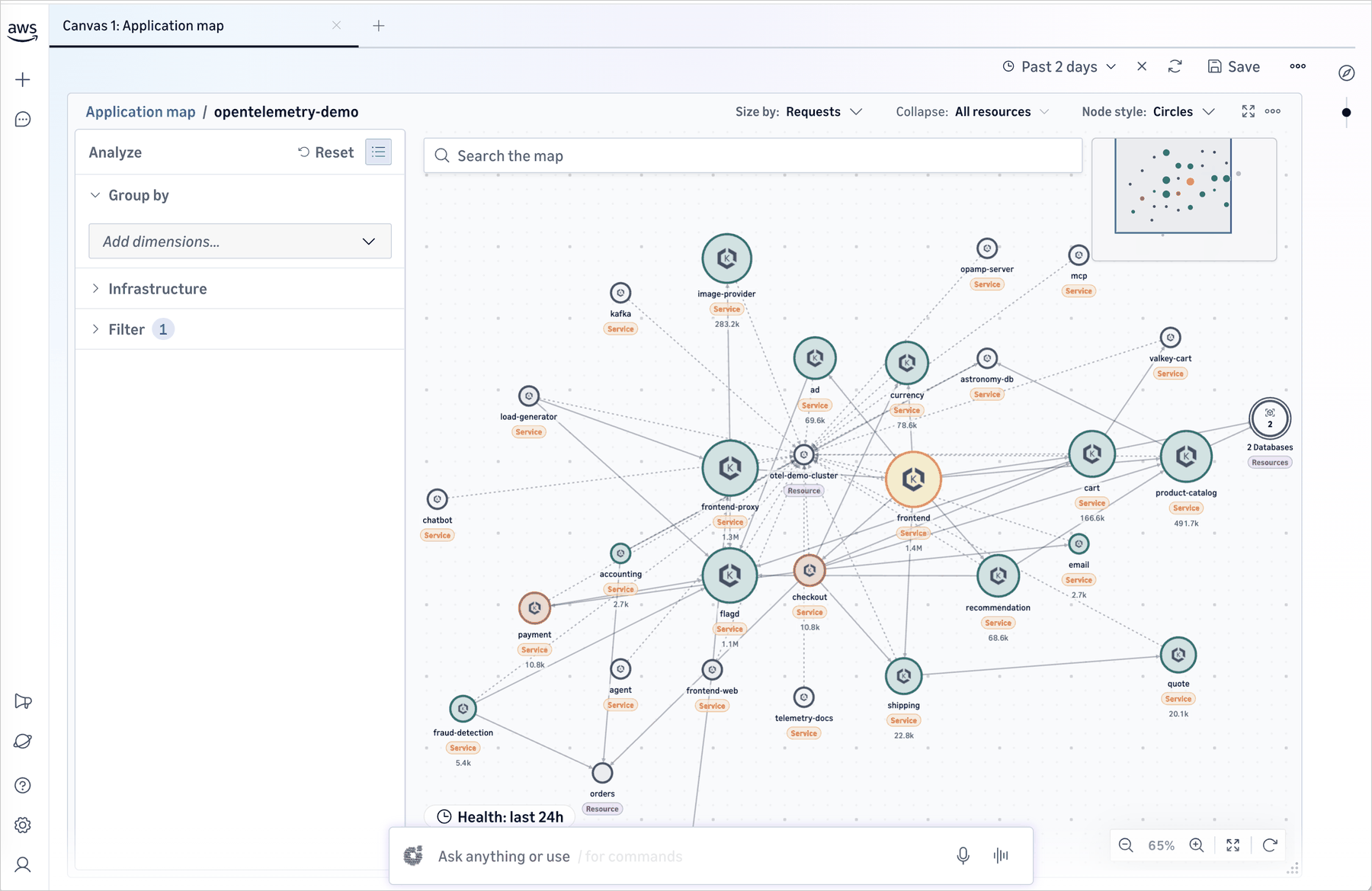
"Engineering teams spend far too much time acting as human glue between disconnected monitoring tools," notes Daniel Abib, AWS product engineering lead. "When an incident crosses service boundaries, context shouldn’t live in a screenshot or a transient chat thread. CloudWatch Omni reorganizes observability around the application and brings the entire team into a single, intelligent workspace powered by the Amazon DevOps Agent."
Key Implications for Enterprises:
- Democratization of Observability: By removing the requirement for AWS Management Console access and leveraging enterprise SSO, organizations can safely open observability data to product managers, business analysts, and customer success teams without risking infrastructure security.
- Reduction in Mean Time to Resolution (MTTR): Automated service discovery and AI-driven root-cause analysis significantly compress the diagnostic window during critical outages.
- Streamlined Multi-Environment Management: While deeply integrated with AWS Config and core CloudWatch data stores, Omni supports connectors for external and multi-cloud environments, ensuring that disparate systems appear within the same collaborative Spaces.
- Readiness for Generative AI: As companies rush to deploy AI agents in production, Omni provides the necessary observability framework—covering trace exploration, evaluation frameworks, and real-time monitoring—to ensure agentic reliability.
Getting Started with Amazon CloudWatch Omni
CloudWatch Omni is generally available now. Getting started requires minimal administrative overhead:
- For Existing CloudWatch Customers: Navigate to the Amazon CloudWatch console and select "Try CloudWatch Omni." Existing logs, metrics, traces, and alarms are immediately indexed, and automatic workload discovery populates your initial application topology.
- For Organization-Wide Deployment: Administrators can configure custom domains, connect enterprise identity providers via AWS IAM Identity Center (supporting Okta, Microsoft Entra ID, and other SAML 2.0 providers), and establish dedicated "Spaces" for individual engineering teams.
- For Multi-Environment and AI Workloads: Organizations can deploy built-in connectors to ingest telemetry from external sources, while activating specialized observability features for generative AI and agentic workloads.
Pricing details and comprehensive documentation are available directly through the Amazon CloudWatch Pricing Page and the official Amazon CloudWatch Omni Portal. Developers looking to interact with APIs and automation tools can also leverage the AWS Model Context Protocol (MCP) Server and associated plugins.
 Reynand Wu
 Nana Wu
 Ali Ikhwan
