
 By Lina Hope
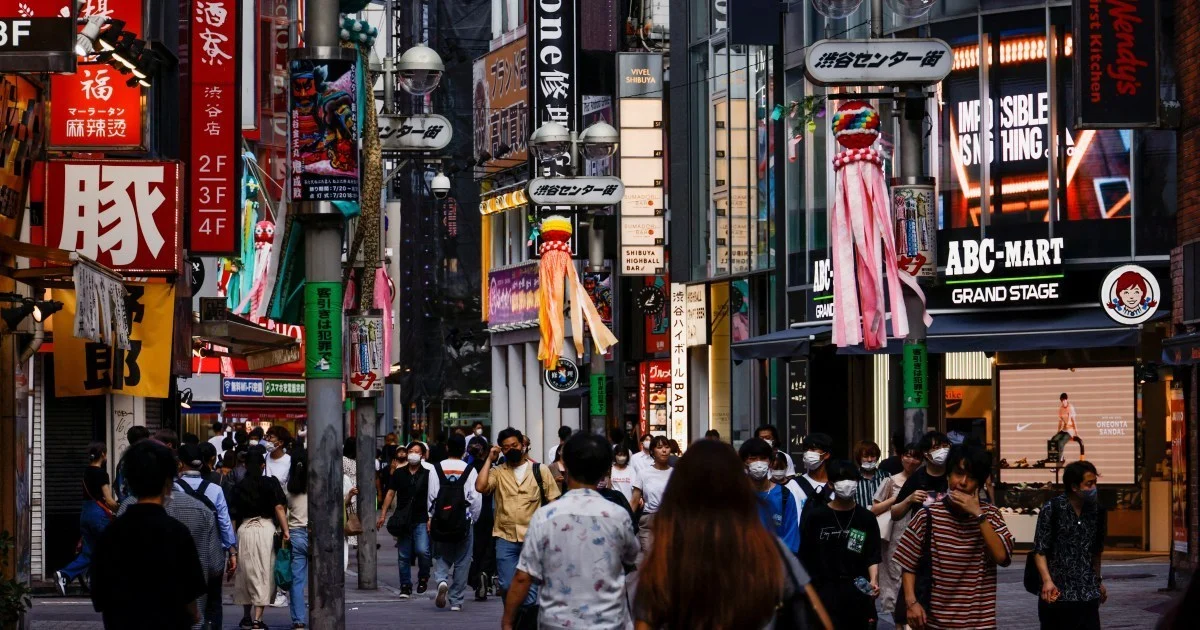
TOKYO, JAPAN — For Abdul, a technology engineer who has spent the better part of a decade navigating the professional and cultural landscape of Japan, the country has become more than just a place of employment. It has become home. Having moved to Tokyo eight years ago, he describes his life there as more familiar and comfortable than the country of his birth, Bangladesh. He speaks the language, follows the local customs, and has built a stable life with his wife.
Yet, in recent months, the sense of security that underpinned his decision to build a future in Japan has begun to erode. As the Japanese government moves to implement a stringent overhaul of its immigration and residency policies, and as a burgeoning wave of anti-immigrant sentiment ripples through the Japanese public, residents like Abdul are forced to confront a sobering question: Is there a future for them in Japan, or is it time to leave?
The Impending Policy Shift: A New Era of Scrutiny
The Japanese government, under the administration of Prime Minister Sanae Takaichi, has signaled a decisive shift toward a more restrictive and exclusionary immigration environment. Starting in phases from October 1, the Immigration Services Agency (ISA) will enforce significantly higher barriers for those seeking permanent residency.
Under the new directives, applicants must prove that their annual household income exceeds the national average—a mandate that is being applied retroactively to applications submitted as early as April. Beyond the financial threshold, applicants are required to demonstrate a high degree of Japanese-language proficiency and provide proof of a pension reserve equivalent to 30 years of future payouts.
The official rationale provided by the ISA is a push for “independent living,” with the agency explicitly stating that the goal is to ensure foreigners lead “a stable life without the risk of becoming a burden” on the Japanese state. However, for those already living and working in the country, these requirements feel less like a standard bureaucratic hurdle and more like a systematic filtering process designed to discourage long-term settlement.
“I don’t know what the government will do in the future, if they’ll make things even stricter,” says Abdul, who requested anonymity due to the sensitivity of his pending residency application. “I have to be prepared if both my residency and citizenship applications are rejected. Right now, I am starting to look for opportunities outside of Japan.”
A Human Cost: The Personal Toll of Uncertainty
The anxiety currently permeating the foreign resident community is perhaps best exemplified by Sarah Nelkin, an American who has spent the last 14 years in Japan. Having arrived as a university student, Nelkin successfully transitioned into the competitive Japanese entertainment industry, where she has spent over a decade building a career.

For Nelkin, the choice is binary and brutal. If her permanent residency application is denied, her only remaining path to stability is to apply for Japanese citizenship. Because Japan does not recognize dual nationality, this would require her to renounce her American citizenship.
“I’ve lived my entire adult life in Japan,” Nelkin explains. “I would rather not give up my American passport. My mother lives in the US, and I want to retain my citizenship for a lot of reasons, like visiting family. But at this point, I might have to give up my American nationality just to stay in the home I’ve built.”
For both Abdul and Nelkin, the emotional toll of this uncertainty is compounded by a perceived change in the social atmosphere. Both note that the welcoming, or at least indifferent, attitude they once encountered has hardened. “Before 2024, I never felt any discrimination,” Abdul notes. “But recently, there has been a shift—especially online.” Nelkin echoes this, noting that she has heard increasingly xenophobic rhetoric from people she previously considered reasonable. “I’ve worked for this country and specifically avoided breaking any rules, and they’re saying you are never enough. That’s really hard.”
Chronology of a Policy Pivot
The current climate did not emerge in a vacuum. It is the result of a deliberate, multi-year political realignment.
- 2024: Public sentiment begins to turn. Surveys conducted by the University of Tokyo’s Institute of Social Science show a marked increase in opposition to immigration, with the percentage of those opposed to accepting more foreigners rising from 35.6% to over 56%.
- Early 2025: As the population crisis deepens—with Japanese nationals decreasing by 900,000 in a single year—the political debate shifts from labor shortages to national identity.
- Late 2025: Prime Minister Sanae Takaichi, during her leadership bid for the Liberal Democratic Party (LDP), openly advocates for a rethink of policies regarding the intake of people with “completely different cultures and backgrounds.”
- January 2026: Following the dissolution of the lower house, the LDP forms a coalition with the right-wing Japan Innovation Party (JIP), cementing a platform focused on “social friction” and stricter enforcement.
- August 2026: The ISA confirms the implementation of the new, stringent permanent residency requirements, triggering widespread panic among the foreign resident population.
Economic Implications: The Paradox of Labor Shortages
Economists are increasingly sounding the alarm regarding the long-term viability of these restrictive policies. Risa Hagiwara, a professor of economics at Meikai University, describes the current approach as a “selective and conditional” policy that sits in direct tension with the economic realities of a country suffering from a record-low birthrate and an aging workforce.
“Japan needs foreign workers because of labor shortages,” Hagiwara notes. “But if the conditions for long-term settlement become substantially more difficult, this could potentially reduce Japan’s attractiveness to the very people it needs to build a future here.”
The data supports this concern. While Japan’s foreign resident population reached a record 4.12 million by the end of 2025—roughly 3% of the total population—it remains far below the OECD average of 10%. Projections suggest that Japan would need to reach that 10% mark by 2070 to stabilize its workforce. By creating an environment where even long-term, assimilated residents feel unwelcome, Japan risks a "brain drain" of international talent that could further cripple its economic recovery.

Official Responses and Political Rhetoric
The government’s stance is increasingly framed through the lens of national security and cultural preservation. The rise of the far-right Sanseito party, which secured 15 seats in the lower house on a “Japan First” platform, has forced mainstream parties to adopt harder-line rhetoric to retain conservative voters.
The coalition agreement between the LDP and the JIP emphasizes the need to address “potential social friction,” a term often used in political discourse to signal a desire to limit the integration of non-Japanese individuals. Critics argue that this language is being used to normalize exclusionary practices, effectively turning the immigrant population into a scapegoat for broader systemic issues like stagnant wages and the decline of rural communities.
Conclusion: What Kind of Society Does Japan Want?
As the October 1 deadline approaches, the future of Japan’s foreign population hangs in the balance. The country is effectively at a crossroads. It can continue to rely on the economic output of foreign workers while simultaneously alienating them through restrictive policies and rising social hostility, or it can attempt to integrate its new residents more holistically.
Professor Hagiwara captures the essence of the dilemma: “The question is increasingly not only ‘how many foreign workers does Japan need?’ but also ‘what kind of society does Japan want to build with the people who come here?’”
For individuals like Abdul and Nelkin, the answer provided by current government policy seems increasingly clear: they are viewed as temporary assets rather than permanent members of the national fabric. As they weigh their options, the risk is not just that they will leave, but that the Japan they fell in love with—a country of opportunity, respect, and global integration—is closing its doors to the world.
 Sagoh
 Pevita Pearce
 Layla Zulfa
