
 By Layla Zulfa
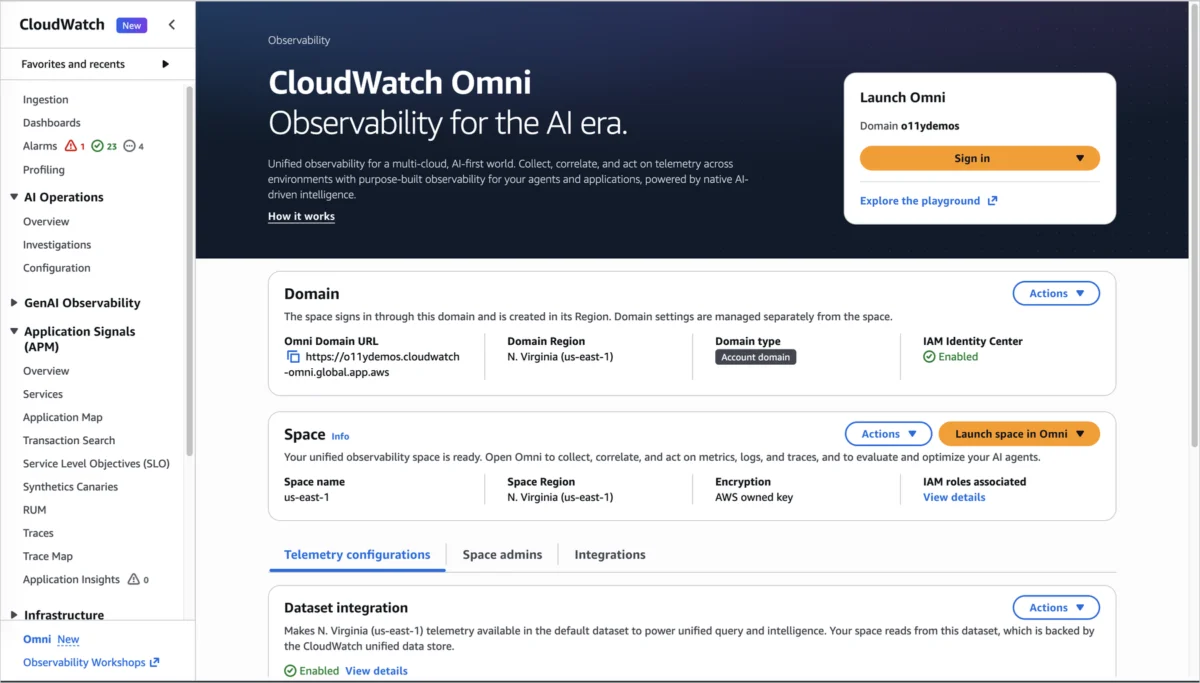
SEATTLE — In a major evolution of its cloud management portfolio, Amazon Web Services (AWS) has officially announced the launch of Amazon CloudWatch Omni, a new observability experience designed to unify application monitoring, infrastructure metrics, and generative AI agent telemetry. Built natively on OpenTelemetry and integrated with the Amazon DevOps Agent, Omni aims to eradicate the traditional silos, fragmented dashboards, and reactive incident responses that plague modern engineering organizations.
By shifting the paradigm from isolated metric-tracking to holistic, application-centric collaboration, AWS is addressing the growing complexity of distributed microservices and autonomous AI agents. The release arrives as engineering teams face mounting pressure to maintain high system reliability amidst increasingly convoluted digital architectures.
Main Facts: What is Amazon CloudWatch Omni?
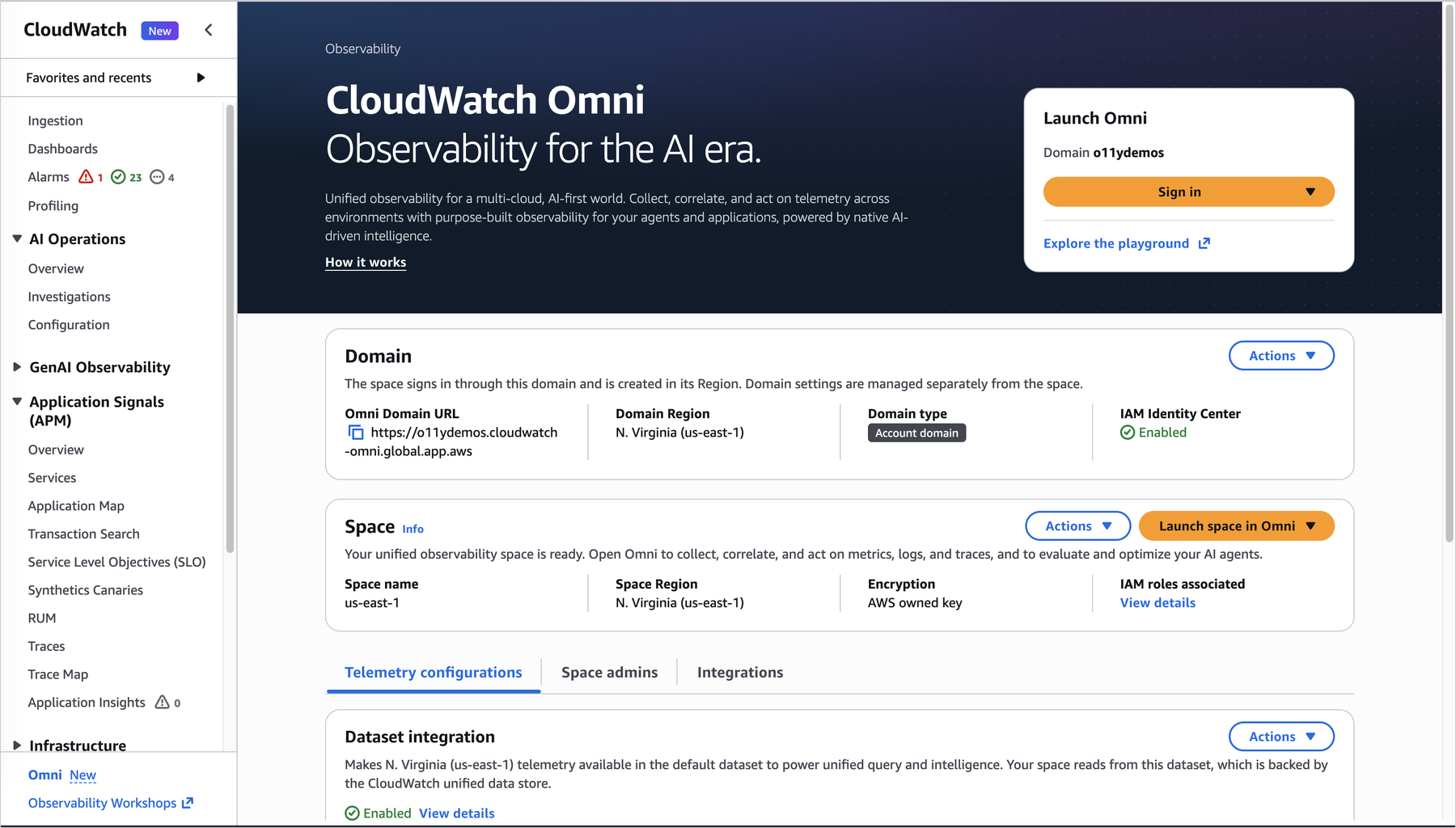
Amazon CloudWatch Omni is an advanced, AI-powered observability platform accessible via a dedicated organizational URL. Crucially, it liberates cross-functional teams—site reliability engineers (SREs), developers, database administrators, and managers—from the confines of the traditional AWS Management Console.
Core Capabilities
- Unified Workspace ("Spaces"): Teams can organize their telemetry around applications rather than individual infrastructure components. Omni aggregates existing logs, metrics, traces, and alarms from CloudWatch without requiring any data duplication or complex reconfigurations.
- OpenTelemetry Native: Operating on OpenTelemetry standards, Omni automatically integrates existing telemetry data while accepting inputs from non-AWS workloads via an OpenTelemetry Protocol (OTLP) endpoint.
- Enterprise Identity Integration: Utilizing AWS IAM Identity Center, Omni supports enterprise Single Sign-On (SSO) through providers like Okta and Azure Active Directory, enabling secure access without granting underlying AWS console credentials.
- Autonomous AI Collaboration: Powered by the Amazon DevOps Agent, Omni embeds an intelligent assistant directly into investigation sessions. The agent correlates disparate signals, traces root-cause paths through auto-discovered dependency graphs, and generates automated incident histories.
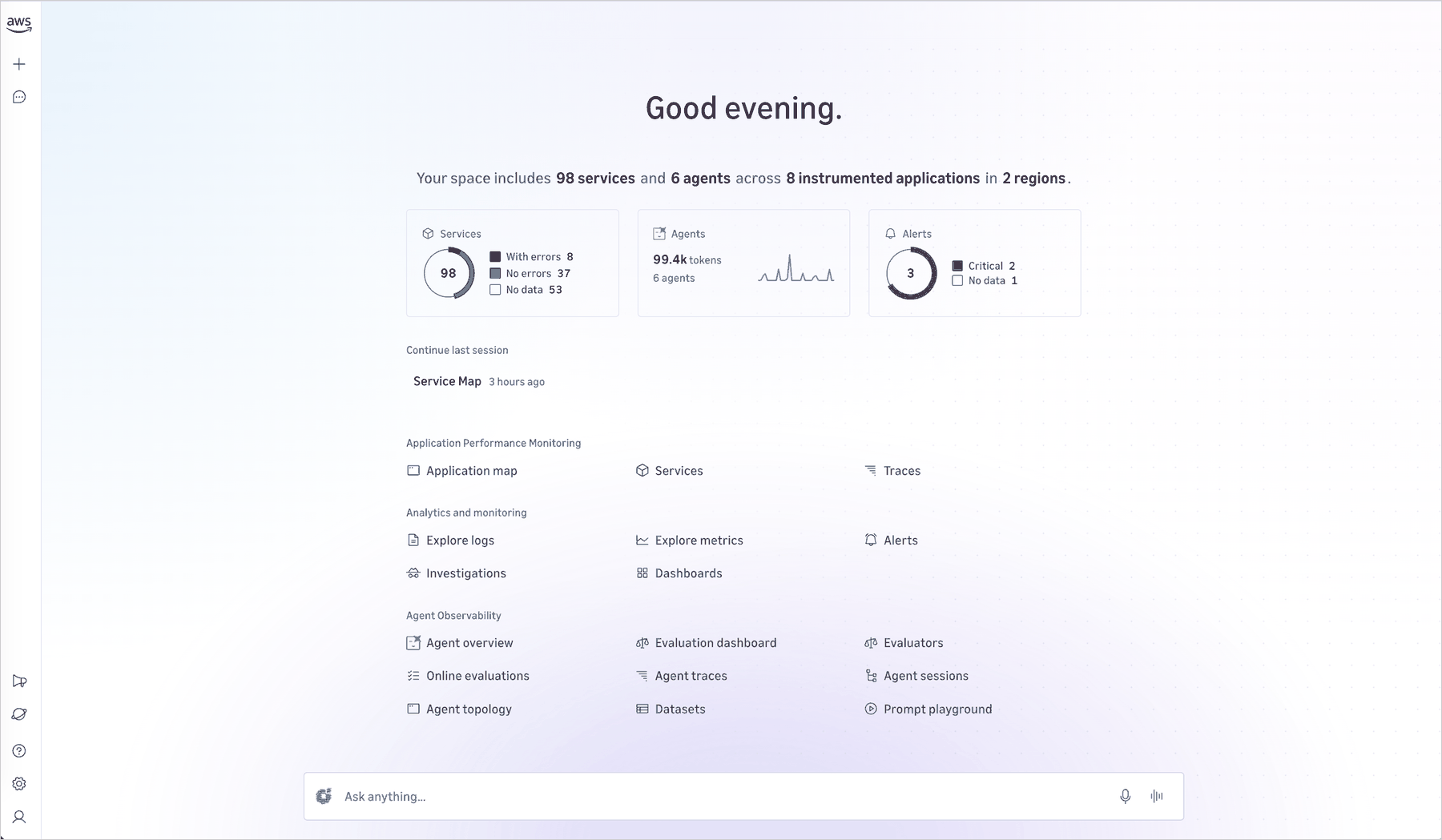
- Dual Focus on Applications and AI: Alongside traditional application observability, Omni features specialized agent observability tools tailored for generative AI and agentic workloads, supporting complex multi-agent systems and Large Language Model (LLM) performance tracking.
Chronology: The Road to Application-Centric Observability
The release of CloudWatch Omni represents the culmination of years of iterative development in cloud telemetry, cloud-native monitoring, and generative AI automation.
The Evolution of Cloud Telemetry
- Early 2010s: CloudWatch established itself as a foundational resource-level monitoring tool for AWS infrastructure, tracking CPU utilization, disk reads, and basic EC2 health metrics.
- The Microservices Era: As enterprises transitioned from monolithic architectures to distributed microservices, infrastructure-centric monitoring struggled to capture cross-service dependencies, leading to the adoption of distributed tracing and APM (Application Performance Monitoring) tools.
- The OpenTelemetry Standardization: Recognizing the industry-wide friction of proprietary agents, AWS increasingly aligned its services with OpenTelemetry, paving the way for vendor-neutral data ingestion.
- The Generative AI Boom (2023–2025): The rapid deployment of LLMs and autonomous AI agents introduced unprecedented debugging challenges. Traditional metrics could not adequately explain non-deterministic agent behaviors or reasoning loops.
- The Omni Breakthrough (Late 2025 / 2026): AWS consolidated its monitoring ecosystem, bridging the gap between classical cloud applications and generative AI workloads under a single, AI-driven collaborative interface.
Supporting Data: The Cost of Fragmented Tooling and Incident Fatigue
To understand the necessity of CloudWatch Omni, one must examine the daily friction experienced by modern software engineering teams. Industry studies and internal AWS telemetry assessments highlight several key pain points in incident management:
- Time Lost to Tool-Switching: Engineering teams historically spend up to 40% of their observability lifecycle maintaining static dashboards, tuning alert thresholds, and manually shifting between log analyzers, metric dashboards, and tracing tools.
- Context Fragmentation: During major incidents, critical diagnostic discussions frequently fracture across asynchronous chat threads (e.g., Slack), isolated screenshots, and disconnected ticketing systems. When engineers rotate on-call shifts or escalate issues across team boundaries, critical context is lost.
- Alert Fatigue: Static threshold alerts frequently generate false positives, desensitizing teams and delaying genuine incident recognition.
- Zero Data Movement Costs: Because CloudWatch Omni points directly at pre-existing CloudWatch data streams, organizations avoid the financial and computational overhead associated with duplicate data ingestion pipelines or external log-shipping fees.
Official Responses and Strategic Vision
According to Daniel Abib, the principal architect behind the rollout, CloudWatch Omni was born from direct feedback regarding the cognitive load placed on modern engineering organizations.

"Engineering teams spend a significant portion of their observability time maintaining dashboards, tuning thresholds, and switching between tools to piece together what happened during an incident," Abib noted in the official release. "When an issue crosses team boundaries, context gets lost in Slack threads and screenshots rather than flowing naturally to the next engineer. CloudWatch Omni changes this by organizing observability around your applications rather than individual signals, and bringing your whole team into the same workspace."
AWS leadership emphasizes that as enterprises deploy autonomous AI agents alongside traditional microservices, human-only observability frameworks are no longer sustainable. By pairing human engineers with the Amazon DevOps Agent within a shared operational "Space," AWS is positioning Omni as a bridge between human expertise and automated remediation.
Implications: Transforming Enterprise Operations
The introduction of Amazon CloudWatch Omni carries profound implications for DevOps practices, security compliance, and the broader enterprise software market.
1. Democratizing Incident Response
By decoupling observability access from the AWS Management Console via IAM Identity Center, organizations can safely invite non-technical stakeholders—such as product managers, customer success leads, and QA specialists—into active investigation spaces. This ensures that business-level metrics (like checkout conversion rates or latency budgets) remain front and center during technical troubleshooting.
2. Eliminating Manual Documentation
One of the most tedious administrative burdens in engineering is the post-incident report (post-mortem). Because CloudWatch Omni automatically logs the chronological evolution of an investigation session—including the DevOps Agent’s findings, human hypotheses, and verified root causes—the entire incident history is captured organically. This drastically reduces the time required to compile compliance and audit reports.
3. Adapting to Dynamic Cloud Environments
Static dashboards degrade in utility the moment an application topology changes. Omni’s dynamic discovery model leverages AWS Config and runtime telemetry to automatically redraw dependency maps as services scale up, spin down, or migrate across availability zones. This ensures that monitoring structures never drift out of sync with production reality.
4. A New Standard for Generative AI Monitoring
As businesses race to production with agentic AI workflows, debugging non-deterministic failures requires specialized tooling. By integrating agent observability directly into the same workspace as traditional application metrics, Omni provides a unified pane of glass for hybrid systems where traditional microservices and AI agents interact dynamically.
Getting Started with CloudWatch Omni
Amazon CloudWatch Omni is generally available now. Existing CloudWatch customers can evaluate the platform immediately by navigating to the CloudWatch console and selecting "Try CloudWatch Omni."
Implementation Pathway
- Console Access & Domain Setup: An enterprise administrator initializes the platform, defining organizational domains and linking identity providers (such as Okta or Azure AD) via IAM Identity Center.
- Space Configuration: Teams establish dedicated "Spaces" corresponding to specific business units, products, or environments, linking them to existing telemetry stores without data re-architecture.
- Automated Discovery: Omni immediately analyzes incoming OpenTelemetry and AWS Config data, populating real-time application topologies and service health baselines.
- Agent Activation: Teams can optionally engage the Amazon DevOps Agent to begin automated correlation, root-cause pathfinding, and natural-language telemetry querying.
For comprehensive pricing details, regional availability matrices, and advanced API documentation, developers can visit the official Amazon CloudWatch Omni portal or consult the AWS Management Console. Additional technical guidance and developer plugins are accessible via the AWS MCP Server toolkit.
 Sagoh
 Siti Muinah
 Reynand Wu
