
 By Muslim
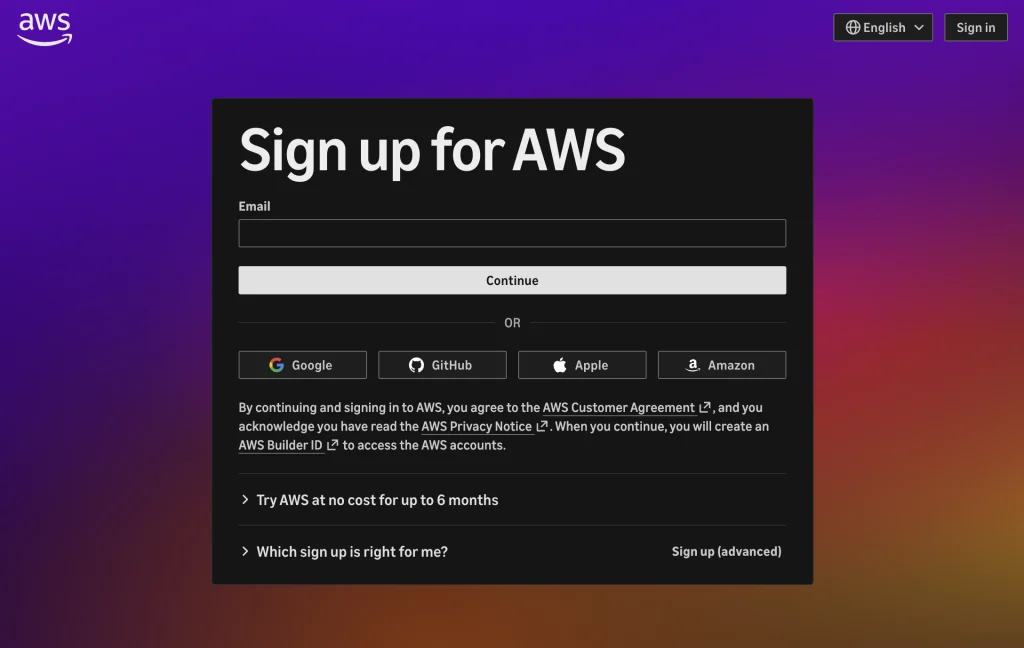
SEATTLE — Amazon Web Services (AWS), the titan of cloud computing and infrastructure, has announced a fundamental transformation of its onboarding and project management experience. Designed specifically for the breakneck pace of the artificial intelligence era, the newly unveiled workflow allows developers, entrepreneurs, and tinkerers to bypass traditional administrative bottlenecks. Instead of wrestling with complex configuration tasks, intricate security policies, and payment setups, new users can now dive straight into building applications using sensible defaults, automated agent toolkits, and streamlined financial controls.
This strategic pivot marks a return to AWS’s original ethos: empowering anyone with a brilliant idea to start building instantly, while retaining the enterprise-grade depth, breadth, and global reach that has made the platform an industry standard for the world’s largest corporations and governments.

Main Facts: What Is Changing on AWS?
The newly introduced experience completely reimagines how developers interact with AWS from the moment they sign up. Key components of the update include:
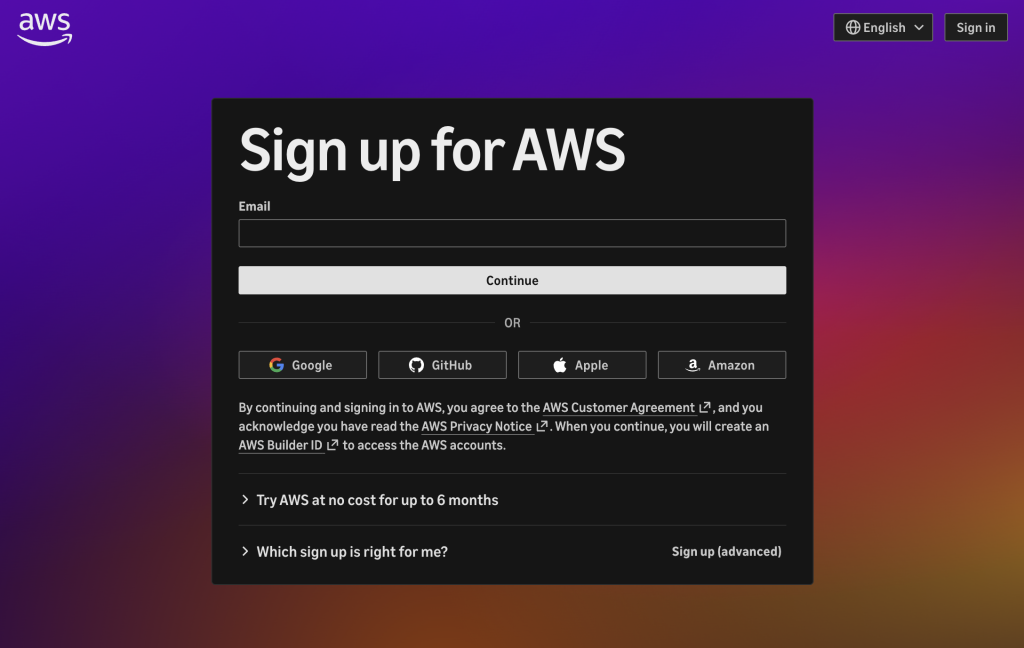
- Frictionless Authentication: New users can sign up using existing identities from familiar providers, including Google, GitHub, and Apple, removing the initial friction of creating specialized credentials.
- No Credit Card Required: For the vast majority of new customers, upfront payment methods are unnecessary. Users instantly receive $100 in free credits as part of the expanded AWS Free Tier.
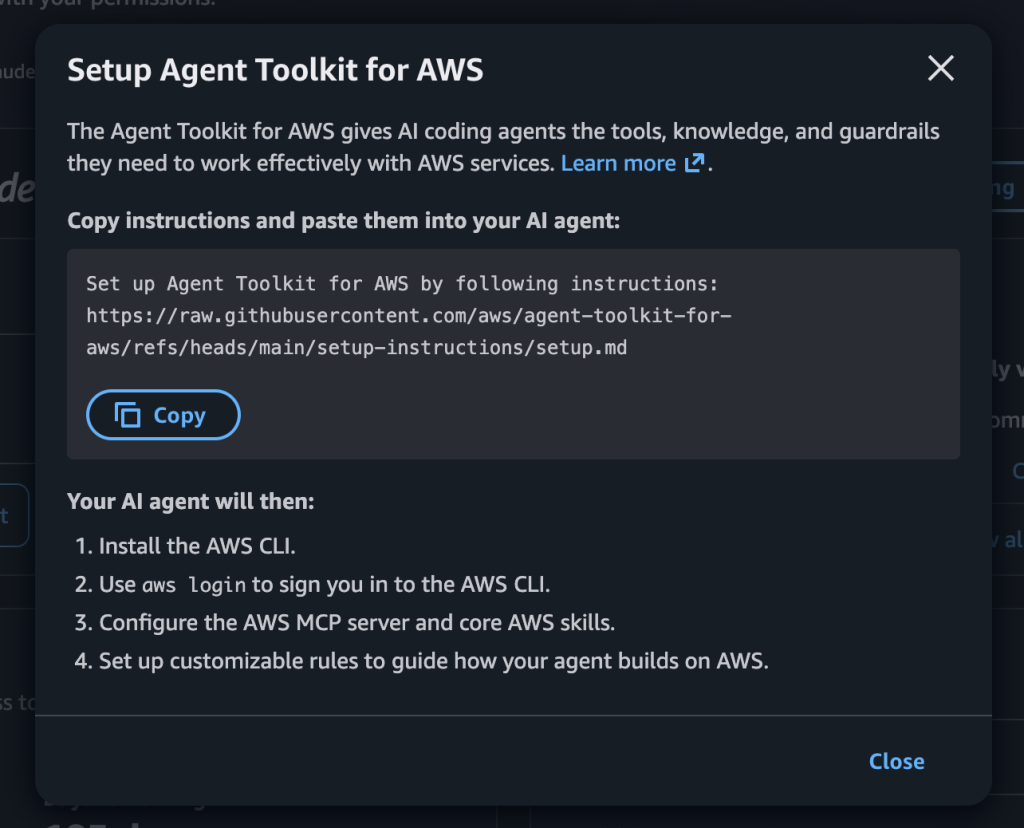
- AI Coding Agent Integration: Upon signing in, users are provided with a dedicated setup prompt. Pasting this prompt into a coding agent automatically configures the AWS Command Line Interface (CLI), installs the Agent Toolkit for AWS, and sets up project guidelines.
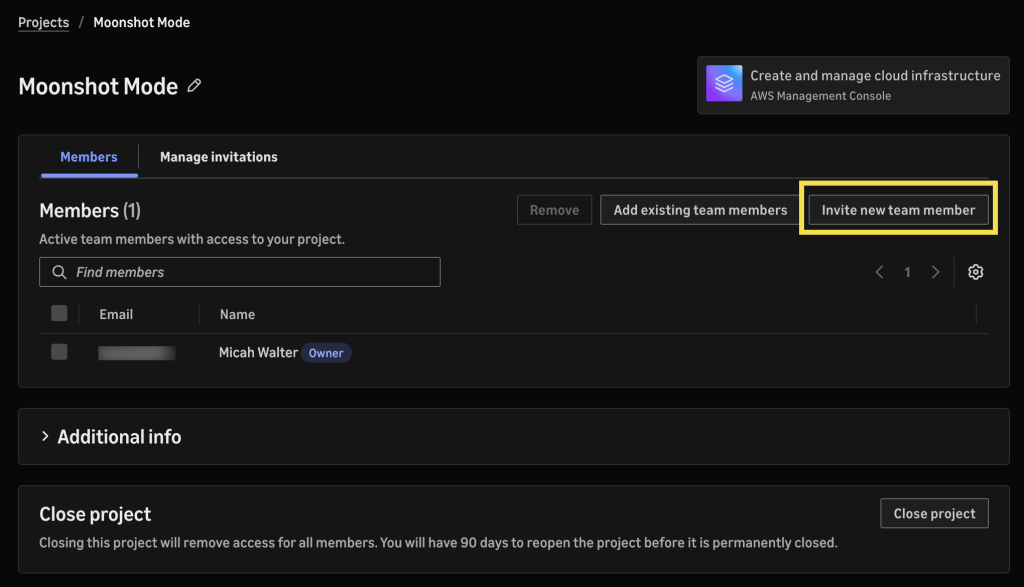
- Automated Resource and Permission Management: Projects are structured inside isolated AWS accounts with automated security controls. Coding agents and console workflows automatically configure permissions between supported services, eliminating the need to manually troubleshoot or configure complex Identity and Access Management (IAM) policies.
- Smart Financial Safeguards: To protect against runaway cloud bills, AWS has introduced strict project-level spend limits starting at $20 per month. If a project reaches its budget cap, AWS pauses the workload rather than accruing unwanted charges, ensuring complete financial predictability.
- Seamless Path to Advanced Infrastructure: As projects scale beyond experimental phases into full-blown production workloads requiring multi-region deployment or complex governance policies, developers can activate advanced AWS features. This transition happens seamlessly with zero downtime or data migration.
Chronology: The Evolution of Cloud Infrastructure
To understand the significance of this latest release, it is helpful to trace the chronological evolution of cloud computing architecture over the past two decades.

Phase 1: The Infrastructure Pioneer (Early 2000s)
When AWS first emerged, it pioneered cloud computing by offering a handful of foundational infrastructure services—such as Amazon Simple Storage Service (Amazon S3), Amazon Elastic Compute Cloud (Amazon EC2), and Amazon Simple Queue Service (Amazon SQS). At this stage, the goal was simple: provide raw, scalable building blocks so that developers could construct applications without purchasing physical servers.
Phase 2: Enterprise Expansion and Complexity (2010s–Early 2020s)
As multinational corporations and government agencies migrated mission-critical workloads to AWS, their demands shifted. They required granular control over security, global compliance, networking isolation, and precise cost governance. To accommodate these demands, AWS expanded globally into dozens of distinct geographical Regions and launched hundreds of specialized services.
However, this massive expansion inadvertently created a steep learning curve. Setting up a new cloud environment required navigating hundreds of configuration options, establishing IAM roles, provisioning VPCs, and managing credit card verifications before writing a single line of application code.
Phase 3: The AI-Speed Era and the New Experience (Present)
In the current technological landscape, generative AI and modern coding assistants have accelerated software development cycles from months to mere minutes. Recognizing that traditional cloud setup procedures were becoming a bottleneck, AWS engineered this new simplified experience. By abstracting administrative overhead, AWS has bridged the gap between raw cloud power and the immediate, rapid-fire iteration cycles demanded by modern AI builders.
Supporting Data: Hands-On Demonstration and Practical Metrics
To test the viability of the new onboarding workflow, early evaluations highlight a remarkably frictionless user journey.
1. Rapid Account Creation and Agent Setup
Signing up via a Google account takes mere seconds. Upon entry, the system instantly presents a specialized prompt designed for AI coding agents. Pasting this snippet configures the environment instantly:

- Sets up the AWS CLI.
- Deploys the Agent Toolkit for AWS.
- Generates a structured
CLAUDE.mdfile containing architectural and operational guidelines tailored for the new workflow.
2. Streamlined Application Deployment
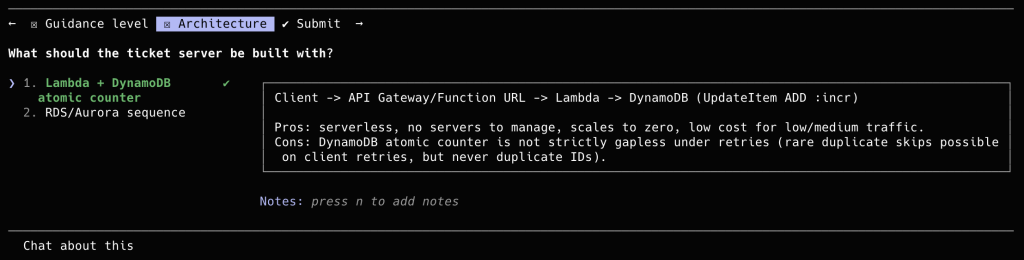
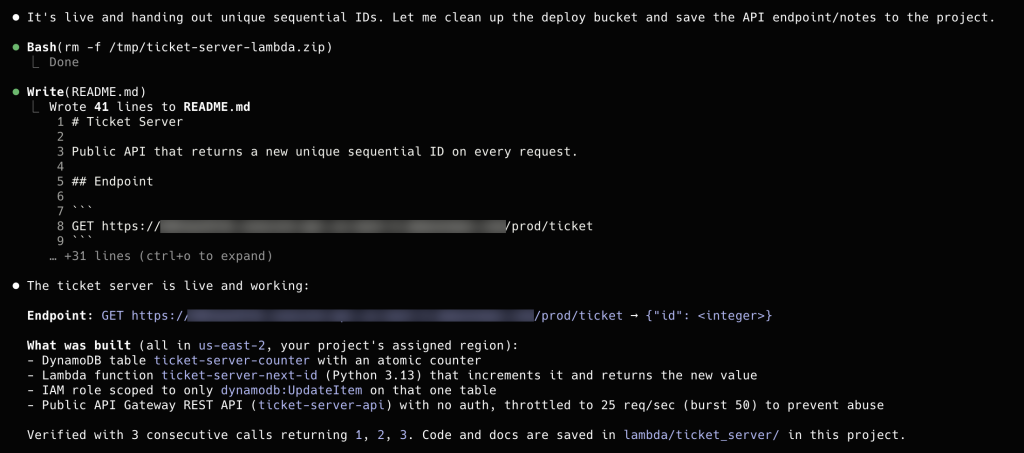
When tasked with a simple directive—such as building an API that returns a unique sequential ID on every request—an AI coding agent can independently orchestrate multiple AWS services. Without any manual intervention or explicit permission-wrangling, the agent successfully provisions:
- An AWS Lambda function for serverless compute execution.
- An Amazon DynamoDB table for reliable, low-latency data storage.
- An Amazon API Gateway configuration to expose the public endpoint.
The entire architecture is deployed, linked, and verified in minutes. Furthermore, completing milestones—such as deploying the Lambda function—triggers additional promotional credits, supplementing the initial $100 allocation.
3. Financial Controls and Guardrails
The economic model of the new experience relies on granular project isolation:
- Budget Ceilings: Users can establish monthly spend limits starting at $20.
- Usage-Based Invoicing: You pay strictly for what you use, up to the predetermined ceiling. For instance, if a $50 limit is established and a project incurs $32 in actual charges, the bill reflects only $32 plus applicable taxes.
- Automatic Pausing: If a project’s traffic spikes unexpectedly and approaches the financial ceiling, AWS issues early warning notifications. If the limit is reached, the system pauses the project rather than accumulating debt, allowing developers to raise the limit manually when they are ready to scale.
Official Responses and Industry Implications
The announcement has triggered widespread discussion across the software engineering community, signaling a fundamental shift in how cloud providers view the developer lifecycle.
The Developer Experience Paradigm Shift
Industry analysts point out that developer velocity is the ultimate currency in modern tech. For years, platform-as-a-service (PaaS) providers and serverless startups lured developers away from hyper-scalers simply because traditional cloud consoles were too intimidating for early-stage projects. By introducing a streamlined, project-centric wrapper around its core infrastructure, AWS is aggressively reclaiming the indie hacker, startup, and AI-builder demographic.
Enterprise Readiness Without Migration Anxiety
A common fear among fast-growing startups is that starting on a simplified, lightweight tier will eventually force a painful, disruptive migration when enterprise features become necessary. AWS has preemptively neutralized this concern. By designing the new experience as an abstraction layer over standard AWS architecture, upgrading to advanced governance models, multi-region redundancy, and AWS Organizations is entirely non-destructive. Nothing needs to be re-architected or migrated; advanced features are simply unlocked on top of the existing foundation.

Future Outlook: What Lies Ahead for AWS Builders
As AWS gradually rolls out this new simplified experience to new customers globally, the implications for the software development ecosystem are profound. By marrying the speed of AI coding assistants with the robust underlying power of the world’s most comprehensive cloud infrastructure, AWS is lowering the barrier to entry lower than it has been in over a decade.
For the next generation of founders, students, and enterprise innovators, the hours previously wasted on configuring security groups, setting up IAM users, and debugging permission policies can now be reinvested directly into product innovation. As feedback loops tighten and the platform absorbs more automated administrative burdens, the cloud is poised to become less of an infrastructure puzzle and more of an invisible, infinitely scalable canvas.
To explore the new onboarding experience and claim your initial developer credits, visit the official AWS sign-up portal or review the updated AWS Sign-Up User Documentation.
 Sagoh
 Siti Muinah
 Reynand Wu
