
 By Jia Lissa
For years, Lightspeed eCom served as the gold standard for brick-and-mortar retailers looking to bridge the gap between their physical storefronts and the digital marketplace. By offering a unified inventory system that synced seamlessly with Lightspeed Retail, it provided a sense of operational harmony for shop owners. However, the retail landscape has shifted. As Lightspeed has moved toward an integrated, high-tier pricing model, many merchants are finding that the platform’s costs are outpacing its utility, particularly for those whose online storefronts require the design flexibility and marketing firepower found in modern, dedicated ecommerce builders.
If you are a business owner feeling the pinch of rising subscription costs or hitting the limitations of a rigid template system, you are not alone. Transitioning away from a legacy platform is a significant strategic move. This guide analyzes the five most viable alternatives to Lightspeed eCom, providing the data and insights necessary to ensure your next move is the right one for your bottom line.
The Shift in the Retail Landscape: Why Merchants are Migrating
The primary catalyst for the current exodus from Lightspeed is a structural change in how the product is sold. Lightspeed eCom is no longer a standalone product; it is now inextricably bundled with Lightspeed Retail. According to current pricing, this puts the entry-level cost at roughly $89 per month, with more robust "Core" and "Plus" tiers scaling significantly higher.
For a multi-location retailer with complex supply chains and hundreds of purchase orders, this investment may still be justified. However, for online-first brands or smaller boutiques, the overhead is often difficult to justify. When the platform’s storefront tooling lags behind the rapid innovation of competitors, merchants are left paying a premium for a system that hinders their growth rather than facilitating it.

Chronology of the Transition
- Phase 1: Audit and Assessment. Before migrating, evaluate your current data—customer lists, order history, and product variants.
- Phase 2: Platform Selection. Match your business model to the strengths of the platforms listed below.
- Phase 3: The Parallel Run. Keep your Lightspeed subscription active while setting up the new storefront to ensure inventory accuracy.
- Phase 4: Data Migration. Use CSV imports or automated tools like Cart2Cart to transfer your digital assets.
- Phase 5: Cutover. Point your domain to the new server and decommission your Lightspeed instance.
1. Shopify: The Gold Standard for Unified Commerce
Shopify stands as the most direct competitor to Lightspeed, offering a comprehensive ecosystem that balances in-store POS performance with industry-leading online tools.
Why It Leads the Pack
Shopify was built with an online-first philosophy. While Lightspeed treats the website as an extension of the register, Shopify treats the website as a global sales engine. Its app store is unparalleled, allowing retailers to add everything from advanced loyalty programs to AI-driven personalization without needing custom development.
The Trade-offs
Shopify’s design interface is section-based. While this ensures a consistent look and feel across all devices, it lacks the true "free-form" drag-and-drop capability that some boutique designers prefer. Furthermore, while the starting price is attractive at $29/month, costs can escalate as you add premium themes and high-end apps.
2. Square Online: The Budget-Conscious Powerhouse
For small-to-medium retailers, Square Online offers a compelling value proposition: the ability to launch an ecommerce presence at essentially zero cost, provided you are already using their POS system.

Strategic Implications
Square is designed for simplicity. If your primary goal is to remove the "bloat" of expensive monthly subscriptions, Square allows you to unify your online and in-person sales under a single dashboard without the high barrier to entry.
The Limitations
Square is not built for massive, complex catalogs. Its inventory management tools lack the advanced "back-of-house" features—such as deep supplier management and multi-location stock transfers—found in Lightspeed or BigCommerce. It is the ideal choice for a local café, a niche boutique, or a service-based business, but it may struggle under the weight of a high-volume national retailer.
3. BigCommerce: The Choice for Catalog Management
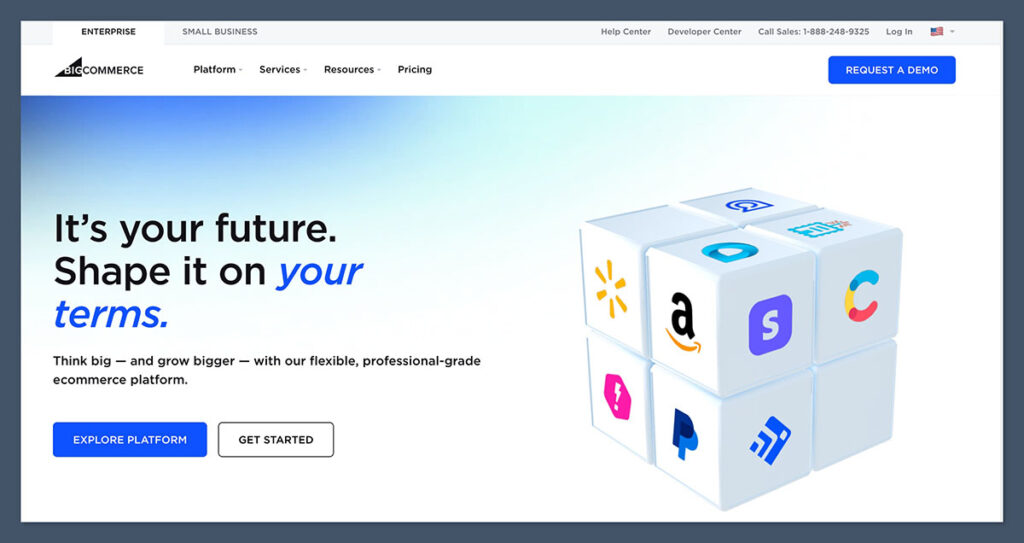
If your business is defined by a massive inventory or a B2B model, BigCommerce is the superior alternative. Unlike Shopify, which relies heavily on third-party apps for core features, BigCommerce includes advanced capabilities—like faceted search, bulk pricing, and multi-currency support—directly in its base plans.
Why It Matters
BigCommerce charges zero transaction fees on any plan, regardless of the payment gateway you choose. For high-volume stores, this can result in thousands of dollars in savings annually. Its "headless" commerce capabilities also make it a favorite for brands that want to keep their content-heavy WordPress or CMS site while using BigCommerce as the robust backend engine for transactions.

4. WooCommerce: The Ultimate Customization Sandbox
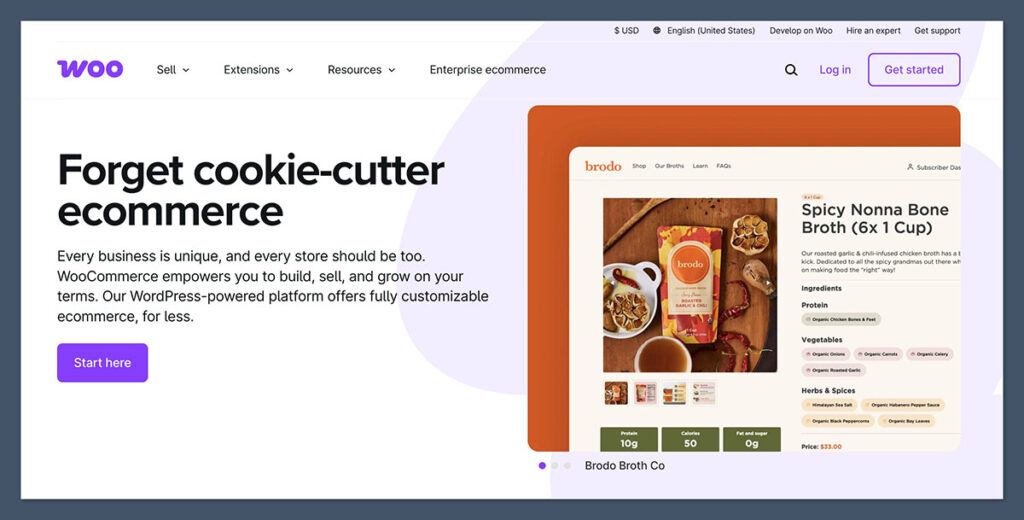
WooCommerce is not a SaaS (Software as a Service) platform; it is a plugin for WordPress. This means you own every byte of your data.
Technical Responsibility
This is a double-edged sword. You are responsible for your own hosting, security updates, and performance optimization. However, the lack of platform-imposed restrictions means that if you can dream it, you can build it. For retailers who feel "locked in" by the proprietary nature of Lightspeed or Shopify, WooCommerce offers total liberation.
5. Wix: The Design-Led Contender
Wix has matured significantly, evolving from a simple site builder into a capable ecommerce platform. Its AI website builder is arguably the best in the industry, allowing users to go from concept to a live, professional-looking store in minutes.
The Target Demographic
Wix is perfect for the "design-led" merchant. If your brand relies on visual storytelling, high-end photography, and unique landing pages, Wix provides the most intuitive design tools to achieve that aesthetic. While its POS functionality is currently limited to the US market, it remains a strong choice for smaller, visually driven retailers.
Comparative Data: Quick Reference
| Platform | Best For | Starting Price | POS Capability |
|---|---|---|---|
| Shopify | Unified Retail | $29/mo | Native (Best in class) |
| Square | Small/Local Shops | Free | Native (Included) |
| BigCommerce | Large Catalogs | $29/mo | Via Integration |
| WooCommerce | Developers/Control | Varies | Via Extensions |
| Wix | Design/Beginners | $29/mo (to sell) | Native (US Only) |
Official Perspectives and Market Implications
Industry analysts observe that the move away from monolithic "all-in-one" platforms like Lightspeed reflects a broader trend in retail: The shift toward the "Best-of-Breed" stack. Modern merchants are increasingly comfortable integrating different tools for different jobs—using one platform for the POS, another for email marketing, and a third for the storefront.
"The era of the ‘jack-of-all-trades’ platform is waning," notes one retail consultant. "Merchants want the best POS for their counter and the best website builder for their conversion rates. If a platform tries to do everything but fails to be best-in-class at any of it, it becomes a liability to the merchant’s growth."
Implications for Your Business
When evaluating these platforms, consider the "Cost of Complexity." A platform might appear cheap, but if it requires constant developer intervention or manual workarounds to handle your inventory, the "hidden" cost of time can quickly exceed the monthly subscription fee of a more premium platform.
How to Make the Final Decision: A Checklist
Before pulling the plug on Lightspeed, ensure you have addressed the following:
- Integration Needs: Does your current accounting software (e.g., QuickBooks, Xero) integrate natively with the new platform?
- Catalog Size: Do you have more than 500 SKUs? If so, prioritize BigCommerce or Shopify’s higher tiers.
- In-Store Complexity: If you operate multiple locations with different stock levels, do not compromise on POS quality. Shopify is your safest move here.
- Technical Capacity: Do you have the time or budget to manage server updates? If the answer is "no," avoid WooCommerce.
- Data Portability: Have you verified that your customer, order, and product data can be exported in a clean CSV or XML format?
Conclusion
Transitioning from Lightspeed eCom is a major operational milestone, but it is often a necessary one for brands that have outgrown the platform’s constraints.
- Choose Shopify if you want a reliable, growth-oriented system that handles both online and offline retail with ease.
- Choose Square Online if your primary objective is to slash overhead costs while maintaining basic sync between your register and your site.
- Choose BigCommerce if your catalog is vast and your need for built-in features outweighs the need for a native POS.
- Choose WooCommerce if you demand total creative control and have the technical resources to manage your own environment.
- Choose Wix if you are a small, creative business that prioritizes design and ease of use above all else.
The most successful retailers are those who view their ecommerce platform not just as a cost, but as an engine for scalability. By taking the time to test these alternatives using their free trials and starter plans, you can ensure that your next platform will not just host your business, but help it thrive.
 Dwi Wanna
  Lina Irawan
  Basiran