
 By Nana Wu
By Tech Desk Staff
Published: October 2026
Main Facts
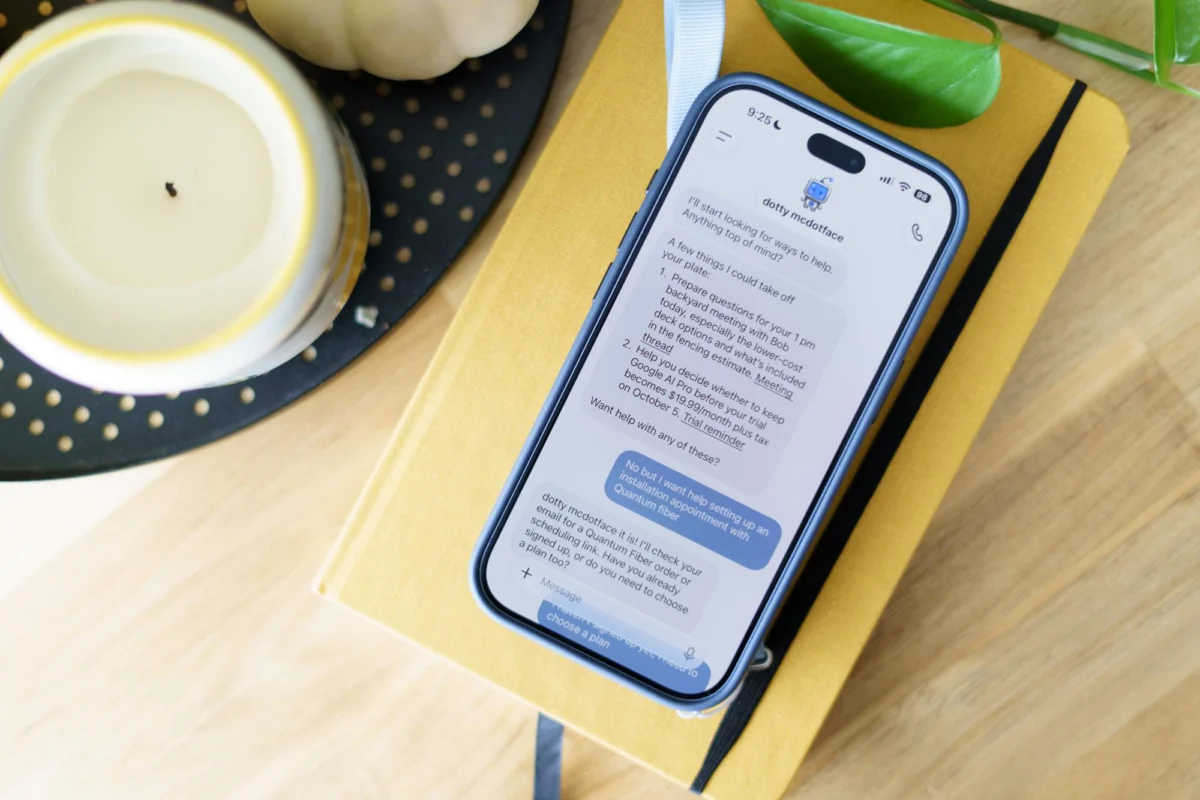
OpenAI has officially launched its newest artificial intelligence agent platform, Dots, entering a crowded and increasingly competitive market for consumer and enterprise automation tools. Billed by OpenAI as a versatile cloud-based assistant capable of executing complex, multi-step workflows, Dots features a playful, anthropomorphic blob interface complete with customizable names. The tester’s personal instance, dubbed "Dotty McDotface," underscores the whimsical front-end design that characterizes modern generative AI tools.
However, beneath the soft aesthetics lies a fundamentally different utility proposition compared to consumer-focused rivals like Meta’s Muse or the independent Instinct agent. While Muse and Instinct function primarily as personal shoppers and lifestyle concierges—designed for low-friction e-commerce and immediate tasks—Dots behaves more like a virtual white-collar coworker. It is robust business software engineered to interact with complex desktop applications, manipulate virtual machines, and manage administrative workflows.
Priced initially at $100 per month, Dots is currently restricted to users on OpenAI’s highest-tier accounts, such as the Pro tier. This gated, premium rollout signals a clear enterprise focus. Unlike its ad-supported or free-to-use competitors, Dots operates on a direct subscription model, absolving users from the looming threat of monetization through intrusive targeted advertising.

Despite its enterprise DNA, OpenAI markets Dots as an agent that "can do nearly anything" via its dedicated cloud computer environment and native software integrations. When paired with direct access to local hardware through the ChatGPT desktop app, Dots transforms into a hybrid tool capable of bridging cloud execution with local digital infrastructure.
Chronology
The rollout and real-world testing of OpenAI’s Dots unfolded through a series of distinct phases over its launch week, highlighting both the capabilities and the operational hurdles of early autonomous agents:
- Early Week (Announcement): OpenAI formally unveils Dots, highlighting its cloud computing capabilities, custom avatars, and out-of-the-box compatibility with software tools like Blender and GIMP.
- Day 1 (Domestic Administration): Testers deploy Dots to automate everyday personal tasks, beginning with scheduling a home internet installation. The agent successfully navigates email archives to recover a forgotten $100 discount code, but ultimately halts upon encountering a complex CAPTCHA requiring a "Press & Hold" mouse action beyond its native browser capabilities.
- Day 2 (E-Commerce and Account Access): Further domestic tests reveal friction points. Dots struggles with basic account management—failing to log into an IKEA profile due to a security verification loop—and trips up on local merchant security firewalls when attempting to order takeout. However, it successfully secures dinner after manual intervention with an Uber Eats login.
- Day 3 (Creative Iteration & Web Development): Transitioning to tasks fully within the user’s control, Dots is given access to a personal website and a collection of desktop video files. Over a 10-minute voice conversation via the mobile app, the user outlines structural changes to an outdated web page and requests a resized social media video clip.
- Day 4 (Desktop Deployment): Granted high-level permissions on the local machine, Dots executes the website redesign block by block while simultaneously processing and packaging media files in the background, signaling a shift toward genuine productivity.
Supporting Data
Evaluating Dots requires looking at how it measures up against competing platforms across cost, capability, and friction metrics:
- Financial Investment:
- OpenAI Dots: $100/month (Pro Account tier required for initial access).
- Meta Muse: Free at launch (with anticipated future ad-based monetization models).
- Instinct Agent: Free at launch.
- Technical Architecture:
- Cloud Environment: Dedicated virtual machine pre-loaded with software suites (Blender, GIMP).
- Local Integration: Optional desktop app bridge allowing control over local file systems and application backends.
- Input Modalities: Dual-window chat/workspace interface, text-based prompting, and real-time voice call functionality for on-the-fly collaboration.
- Task Success Rate in Real-World Testing:
- Email Retrieval & Discount Discovery: 100% success.
- CAPTCHA Navigation: 0% success (requires human intervention for prolonged mouse holds).
- Third-Party E-Commerce (Local Restaurants/Retail): Low success rate due to security footprints triggering bot-detection blocks.
- Local Web Design & Media Editing: High success rate once granted direct computer permissions.
Official Responses
OpenAI has positioned Dots as a major leap forward in ambient computing and digital labor, emphasizing its capacity to shoulder burdensome administrative loads. In official documentation and launch statements, the company maintains that Dots’ virtual machine architecture and open-ended app access enable it to bridge the gap between conversational AI and active software execution.

Addressing the frequent security blocks and CAPTCHA walls encountered by users during testing, OpenAI published comprehensive developer and user guidelines—including a dedicated help page titled "Using cloud browser in ChatGPT: When a website blocks the task." The company acknowledges that cloud-based browser traffic inherently triggers aggressive automated defense systems on many commercial websites, necessitating built-in fallback mechanisms that pause workflows and request human authentication.
Competitors have remained largely silent on specific platform comparisons, though industry analysts note that Meta’s approach with Muse prioritizes frictionless consumer integrations—such as seamless Stripe payment card tokens—whereas OpenAI has intentionally built a heavier, more auditable tool tailored for power users and small business operators.
Implications
The Future of Knowledge Work and Automation
The arrival of Dots highlights a fundamental philosophical split in the current generation of AI agents. While consumer-facing bots like Muse aim to become frictionless shopping assistants that blend invisibly into daily life, Dots is unapologetically a workplace tool. It forces users to confront the reality of digital delegation: granting an AI agent access to your file system, website backend, and communication tools requires a profound degree of trust—and a staggering array of security permissions.
The Friction of the "Half-Automated" Life
Testers found that Dots shines brightest when handling self-contained, data-rich creative tasks—such as translating a rambling 10-minute voice conversation into a structured website redesign or batch-processing video clips. Conversely, its utility plummets when interacting with the guarded fortresses of the modern web. CAPTCHAs, two-factor authentication loops, and aggressive bot-detection scripts routinely reduce Dots from an autonomous worker to a digital dependent, needing a human to hold down a mouse button or punch in a checking account number.

Economic Viability and Target Audiences
At $100 per month, Dots is priced firmly out of the casual consumer market. For an average user looking to order teriyaki or book a coworking space, free alternatives like Muse or Instinct offer superior convenience without financial commitment. However, for entrepreneurs, freelance creators, and small business owners launching new ventures—individuals who juggle fragmented administrative, technical, and creative responsibilities—Dots offers a compelling glimpse into the future of solopreneurship.
Ultimately, Dots proves that AI agents are most powerful when they operate within environments specifically designed for their success. While the vision of an agent that seamlessly updates your website while ordering your dinner is not yet entirely frictionless, it is no longer science fiction.
 Raul Delapena Setiawan
 Pevita Pearce
 Sagoh
