
 By Siti Muinah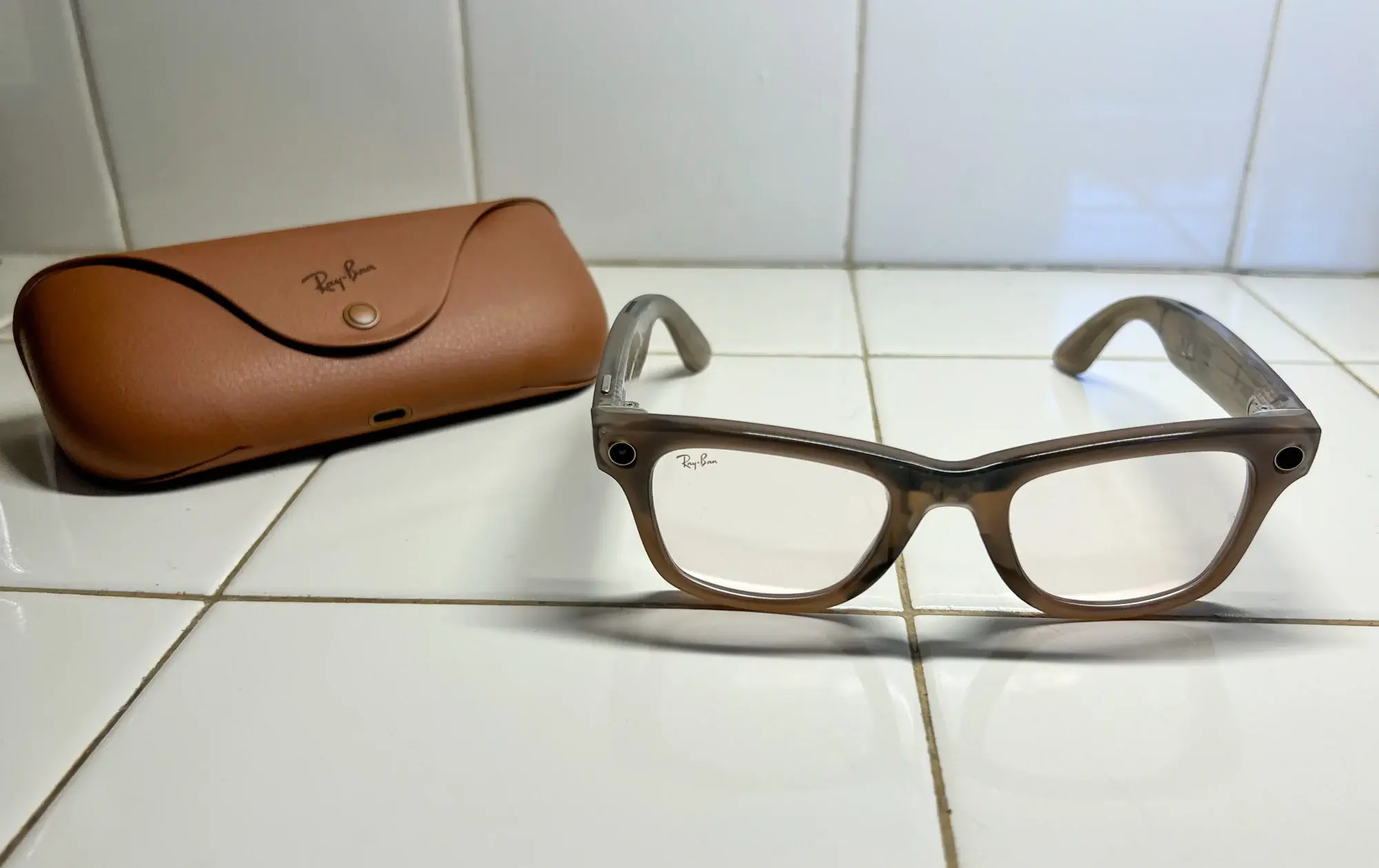
While the broader technology industry remains hyper-focused on standalone artificial intelligence software and complex spatial computing headsets, a quieter, more pervasive hardware revolution is taking place right on the bridge of our noses. Smart glasses have officially transitioned from awkward, novelty tech experiments into practical, highly refined daily-carry accessories. With hardware finally catching up to consumer ambition, tech giants—including Meta, Apple, and Google—alongside a wave of agile startups, are racing toward a future where face computers are as common as wristwatches.
For holiday shoppers and gadget enthusiasts looking to gift the latest in wearable tech, navigating this rapidly expanding market can feel overwhelming. The sheer diversity of styles, specialized features, and price points means that a pair of smart glasses tailored for an avid runner will entirely miss the mark for a remote professional or a frequent-flying gamer.

To demystify the landscape, senior tech reviewers have spent months rigorously testing the latest market entries. The following comprehensive guide breaks down the best smart glasses available for every kind of user, exploring the core categories defining the industry’s explosive growth.
Main Facts: The Current State of Smart Wearables
The smart glasses market is no longer a monolithic category defined solely by video-recording frames. Instead, it has fragmented into distinct technological niches tailored to specific use cases.

- The Market Leaders: Major technology conglomerates are heavily investing in camera-first and AI-integrated architectures, while independent hardware firms carve out spaces in augmented reality (AR) displays and athletic tracking.
- Price and Accessibility: Consumer-grade smart glasses currently range from roughly $250 for stylish, audio-forward or tint-shifting frames to over $400 for advanced heads-up displays and high-definition virtual monitors.
- Core Functionalities: Modern smart frames integrate features such as open-ear audio, localized AI assistants, high-resolution image capture, heads-up navigation overlays, and virtual multi-monitor workspaces.
Chronology: How Smart Glasses Evolved from Gimmick to Mainstream
Understanding how smart glasses reached this pivotal milestone requires looking back at the hardware’s tumultuous history and rapid recent maturation.
- Early 2010s (The Novelty Era): The launch of early exploratory devices introduced consumers to the concept of optical head-mounted displays. While groundbreaking, these early iterations suffered from severe battery limitations, social stigma regarding privacy, bulky aesthetics, and a lack of practical day-to-day utility, relegating them to niche tech circles.
- Late 2010s to 2020 (The Audio Pivot): Recognizing that putting screens directly in front of users’ eyes was prematurely ambitious, manufacturers pivoted toward audio-first frames and rudimentary camera glasses. Brands focused on discreet form factors, integrating bone-conduction or open-ear speakers for hands-on phone calls and music playback without blocking ambient sound.
- 2021–2024 (The AI and Social Integration Boom): The introduction of mainstream fashion-forward partnerships—most notably Meta’s collaboration with Ray-Ban—transformed public perception. By embedding high-quality cameras, seamless social media streaming capabilities, and conversational AI agents into iconic, classic frames, the technology achieved cultural traction.
- 2025–2026 (Specialization and Advanced AR): Today, the market has matured into distinct verticals. Consumers can now choose between dedicated media-consumption visors that act as massive virtual screens, minimalist heads-up display (HUD) glasses for professionals, and ruggedized camera frames built specifically for extreme sports and outdoor documentation.
Supporting Data: Curated Picks for Every Recipient
Selecting the ideal pair of smart glasses depends entirely on the recipient’s lifestyle, profession, and daily habits. Based on extensive hands-on testing, here are the top recommendations across key categories:

1. The Everyday All-Rounder: Ray-Ban Meta Smart Glasses
- Best For: General consumers looking for seamless AI integration, photography, and classic style.
- Price Range: Premium Tier (~$299+)
- Why They Stand Out: For everyday wear, these frames strike the ideal balance between fashion and function. They look indistinguishable from traditional designer sunglasses while packing discrete cameras capable of capturing crisp photos and videos, open-ear speakers for media playback, and instant, hands-free access to conversational AI agents. While users must navigate privacy considerations and Meta’s overarching ecosystem, they remain the benchmark for mainstream smart eyewear.
2. Best for Gamers and Frequent Travelers: Xreal XBX a01
- Best For: Media consumers, digital nomads, and mobile gamers.
- Price Range: Mid-Tier (~$299)
- Why They Stand Out: Rather than attempting to integrate cameras or AI into standard frames, the Xreal XBX a01 functions as a wearable, high-definition monitor. By plugging directly into any device featuring USB-C video output, users unlock a virtual screen equivalent to a massive 147-inch 1080p television. They are an essential travel companion for long-haul flights or professionals needing a portable secondary display for their laptops.
3. Best for Professionals and Tech Enthusiasts: Even Realities G2 Smart Glasses
- Best For: Productivity-driven individuals, remote workers, and multitasking professionals.
- Price Range: Premium Tier
- Why They Stand Out: Eschewing video playback entirely to prioritize all-day wearability and discreet utility, the Even Realities G2 project a subtle, monochrome heads-up display (HUD) into the user’s field of vision. A quick upward glance reveals real-time navigation maps, live news feeds, and contextual information. Equipped with localized AI integration and specialized micro-apps—ranging from environmental identification tools to musical tuning aids—they represent the cutting edge of professional productivity wearables.
4. Best for Athletes and Adventurers: Bleequp Rangers
- Best For: Cyclists, runners, and extreme sports enthusiasts.
- Price Range: Mid-to-High Tier (~$379)
- Why They Stand Out: Built specifically for active lifestyles, the Bleequp Rangers omit complex AI voice assistants in favor of rugged performance. Weighing very little, these sports frames feature a 16-megapixel camera for action-capture, open-ear audio, turn-by-turn routing, and an integrated walkie-talkie function. With an optional battery pack extending recording times up to four hours, they are purpose-built to document intense outdoor workouts safely.
5. Best for the Fashion-Forward: Chamelo Music Shield
- Best For: Trendsetters prioritizing style, custom aesthetics, and casual audio.
- Price Range: Mid-Tier
- Why They Stand Out: While they stretch the definition of "smart" glasses by omitting cameras, AI, and in-lens AR displays, the Chamelo Music Shield wins over users through sheer design innovation. Alongside quality open-ear music playback, their lenses shift from light to dark dynamically with a simple finger swipe. This allows wearers to instantly adapt their tint to changing environmental lighting or coordinate seamlessly with their wardrobe.
Official Responses and Industry Perspectives
Major technology developers and hardware manufacturers have increasingly aligned their strategic roadmaps around the evolution of smart glasses, framing the form factor as the natural successor to the smartphone.
Industry analysts and corporate stakeholders note that the rapid advancement of generative artificial intelligence has fundamentally altered hardware demands. Rather than requiring heavy computational units strapped to the face, modern smart glasses leverage cloud connectivity and lightweight on-device models to process voice commands, translate foreign languages in real-time, and analyze physical environments instantly.

Furthermore, privacy advocates and regulatory bodies have maintained an active dialogue with hardware manufacturers regarding camera-first frames. In response, companies like Meta and various startup competitors have integrated prominent indicator lights and hardware safeguards to signal to bystanders when a recording is actively taking place, attempting to balance consumer demand for frictionless life-logging with public privacy expectations.
Implications: What the Rise of Face Computers Means for Society
The mainstream adoption of smart glasses carries profound implications for how humans interact with technology, public spaces, and one another.

From a professional standpoint, the integration of ambient computing and minimalist HUDs threatens to make traditional pocket-sized smartphones secondary devices. When workers can access real-time transcriptions, hands-free communications, and visual data overlays directly within their peripheral vision, workplace productivity paradigms will shift dramatically.
Culturally, society is navigating a complex transition period regarding digital surveillance and personal etiquette. As camera-first and AI-enabled glasses approach market saturation, social norms surrounding privacy in public spaces are actively being rewritten.

Ultimately, the smart glasses revolution is no longer a speculative sci-fi concept. With hardware options spanning media-heavy virtual displays, athletic recording gear, and professional HUDs, wearable computing has firmly embedded itself into the fabric of modern consumer electronics—ensuring that the future of tech is something we wear, rather than hold.
 Neng Nana
  Asep Darmawan
  Nila Kartika Wati