
 By Pevita Pearce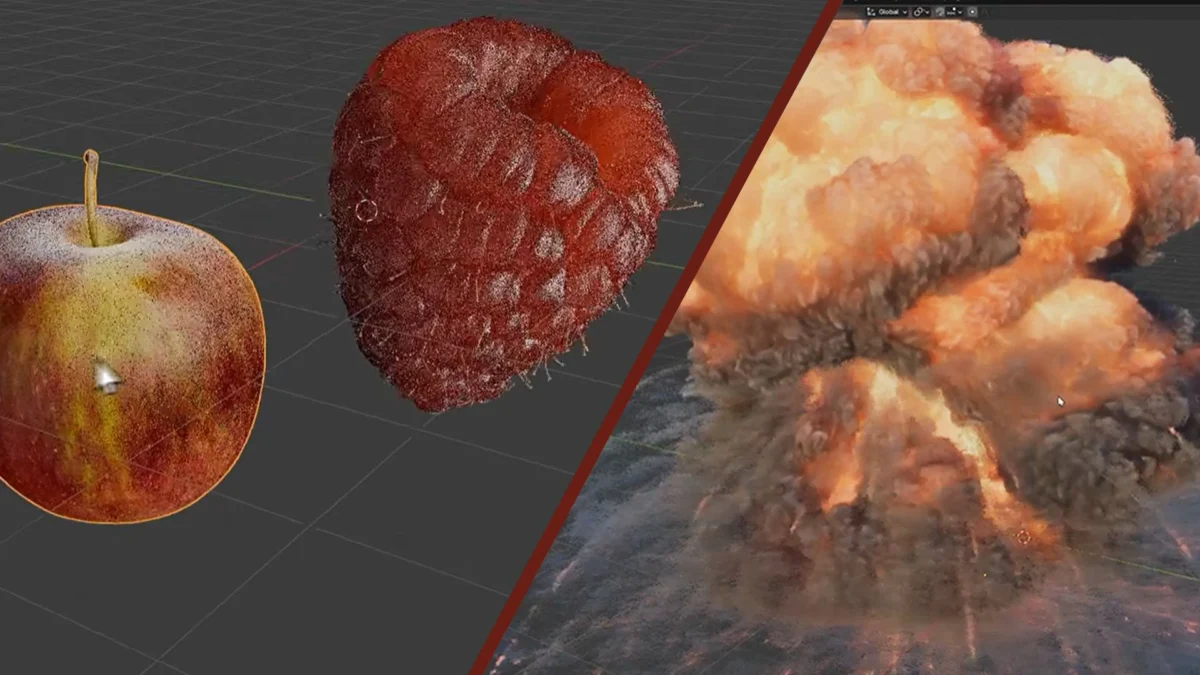
The landscape of 3D content creation is undergoing a seismic shift, and the upcoming release of Blender 5.3 is positioned at the epicenter of this transition. As the industry standard for free, open-source 3D production, Blender continues to evolve, bridging the gap between traditional manual modeling and AI-driven capture technologies. The most significant development in the upcoming 5.3 release, currently in its alpha phase, is the introduction of native 3D Gaussian Splatting support. This integration marks a departure from the cumbersome, third-party-dependent workflows that have previously defined the splatting process, promising to bring photorealistic, environment-based 3D assets directly into the creative pipeline of artists everywhere.
The Core Innovation: What Are Gaussian Splats?
To understand the weight of this announcement, one must first grasp the technical departure that Gaussian Splatting represents. Traditional 3D modeling—the bread and butter of Blender users for decades—relies on geometry. Artists define meshes through vertices, edges, and faces, creating rigid, polygon-based structures that require complex rigging, texturing, and lighting to appear "real."
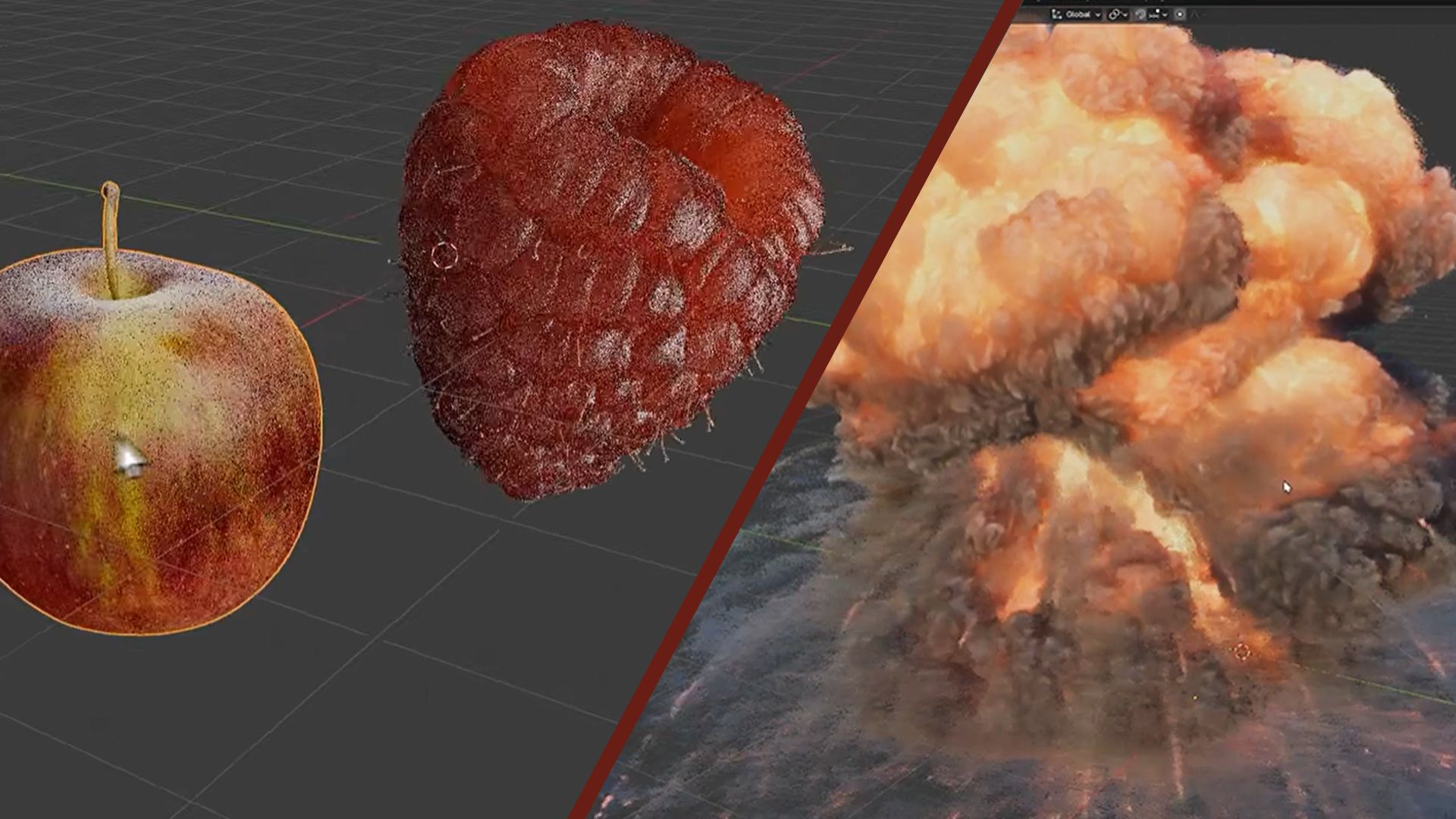
Gaussian Splatting, by contrast, is a radical approach to spatial representation. It allows for the reconstruction of real-world objects and environments as highly detailed, photorealistic 3D scenes derived from a series of 2D photographs or video footage. Rather than building a polygon cage, a Gaussian splat consists of millions of tiny, overlapping, colored 3D ellipsoids (the "blobs"). Each blob carries data regarding its precise spatial position, size, rotation, color, and opacity. The result is a cloud-like representation that, when rendered, offers a level of fidelity and complex light interaction that would take hundreds of hours to replicate using traditional modeling techniques.
A Chronology of Integration
The journey to native support in Blender has been rapid, reflecting the breakneck speed of developments in computer vision and neural rendering.
- Pre-2023: Gaussian Splatting remained largely a niche research topic within academic computer vision circles, primarily confined to specialized libraries and command-line interfaces.
- Late 2023 – Early 2024: The creative community began experimenting with the technology. Artists were forced to rely on external, often unstable tools like COLMAP or various GitHub-hosted repositories (such as "Brush") to process data. These assets then required specialized, often third-party Blender add-ons to be imported, which were frequently prone to version-compatibility issues.
- Mid-2024: As Gaussian Splatting gained mainstream traction in VFX and digital twin production, the demand for a standardized, "out-of-the-box" solution became impossible for the Blender Foundation to ignore.
- Late 2024: Development of the native implementation began, moving toward the current alpha status of version 5.3.
- November 2024 (Expected): The full release of Blender 5.3 is slated to bring these capabilities to the public, marking the first time a major open-source 3D suite treats splats as a first-class citizen in its rendering engines.
Technical Implementation and Current Functionality
In the upcoming version 5.3, users will be able to import 3D Gaussian Splats directly from standard .ply (Polygon File Format) and .spz files. Once imported, these assets are not merely static viewing objects; they are integrated into the rendering pipeline. Users can utilize Blender’s native engines—Workbench, EEVEE, and Cycles—to render these splats within a scene.
This move effectively democratizes the technology. Where once a user needed to be a proficient Python coder or a researcher to utilize splats, they now simply need to import a file. However, it is essential to note that this is an "import-only" feature at this stage. While you can render and manipulate these objects within your scene, there is currently no native export function for Gaussian splats within Blender. This suggests that the current focus is on the integration of existing photogrammetry and neural-rendering assets into existing workflows rather than the creation of new splats from scratch.
Limitations and the Road Ahead
As with any major feature in its alpha phase, the implementation comes with documented caveats. The development team at the Blender Foundation has been transparent regarding the current hurdles:
- Performance Constraints: The computational overhead for rendering millions of tiny Gaussian blobs is substantial. Users should expect performance hits, particularly in complex scenes, as the software struggles to calculate the depth and transparency of the splat cloud.
- Color Space Inconsistencies: The current pipeline assumes an sRGB color space. This can cause discrepancies when the splats are integrated into larger scenes that rely on linear color spaces, which are standard for modern rendering (like Cycles and EEVEE).
- Opacity and Radiance Issues: Areas characterized by low opacity or high radiance often fail to render correctly. This is due to the fundamental difference in how traditional meshes interact with light compared to the mathematical "blobs" of a splat.
- Transformation Limitations: The "Apply Transform" function currently does not fully support the new attributes of a Gaussian splat. Specifically, the system struggles to correctly update the scale, rotation, and spherical harmonics (the data that dictates how the splat reflects light from different angles) when a user attempts to manually adjust the object’s orientation or size.
These limitations are not necessarily permanent, but they serve as a reminder that this technology is in its infancy within the Blender ecosystem.
Implications for the Creative Industry
The inclusion of Gaussian Splatting in Blender 5.3 is more than just a "feature update"—it is a signal of the industry’s direction.
The Death of Manual Modeling?
Far from it. While Gaussian splats offer unprecedented realism, they lack the structural integrity of a mesh. You cannot easily animate a splat, nor can you easily "deform" it for a character rig. Instead, the future of the industry points toward a hybrid workflow. Artists will likely use Gaussian splats for backgrounds, environmental assets, and complex, static set pieces, while continuing to use traditional polygon modeling for hero assets and animated characters.
Accelerated VFX Workflows
For VFX artists, the time-saving potential is massive. Previously, capturing a real-world location for a background plate required extensive LiDAR scanning or days of manual photogrammetry cleanup. With Gaussian Splatting, a production team can capture a location with a smartphone, process the splat, and have a photorealistic, depth-accurate environment ready for a digital composite within hours.
Relighting: The Final Frontier
One of the most exciting aspects of this development is how it intersects with wider industry innovations. As mentioned by firms like Chaos, the primary hurdle for Gaussian splats has historically been the inability to "relight" them—once captured, the lighting is "baked" into the splat. With the industry now racing to solve this, the integration into Blender ensures that as relighting techniques mature, Blender users will be perfectly positioned to implement them immediately.
Conclusion: A Turning Point
Blender 5.3 is set to be a landmark release. By embracing Gaussian Splatting, the Blender Foundation is ensuring that its users remain at the forefront of digital production technology. While the feature is currently in its alpha stage and suffers from expected technical hurdles, the path forward is clear.
For the freelance artist, the indie developer, and the professional studio alike, the barrier to entry for high-fidelity, photorealistic 3D content is lower than ever before. As we look toward the official release in November, the question is no longer whether Gaussian Splatting will become a part of the standard production pipeline, but how quickly the creative community will push the boundaries of what this technology can achieve within the Blender ecosystem.
Whether you are a veteran modeler or a newcomer to 3D, the inclusion of Gaussian Splatting in Blender 5.3 invites you to reconsider the way you capture the world—and how you bring that world into your creative vision. As always, for those looking to adopt these new workflows, ensuring your hardware—particularly your GPU—is up to the task will be the next step in preparing for this technological evolution.
 Neng Nana
  Suro Senen
  Dwi Wanna