
 By Jia Lissa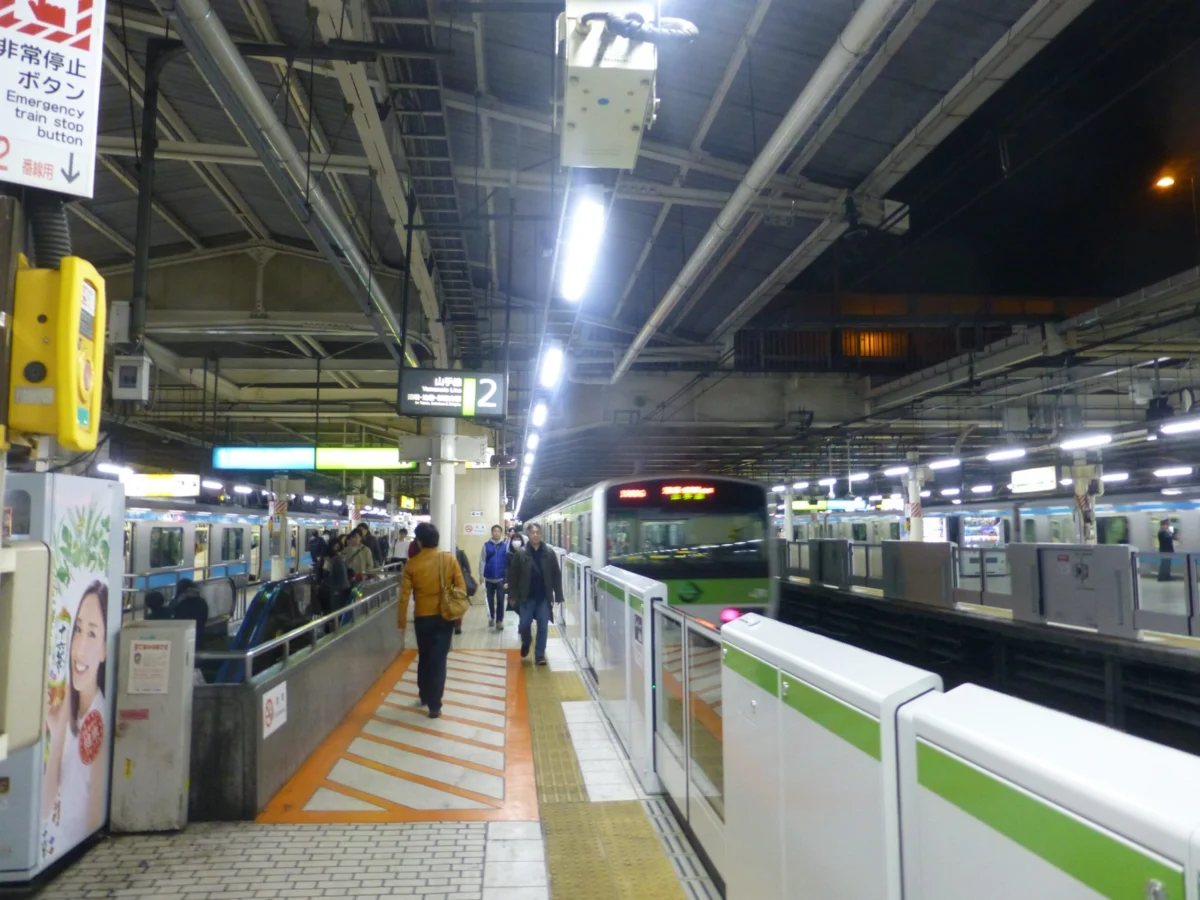
Main Facts
For millions of commuters navigating the sprawling, hyper-efficient labyrinth of the Greater Tokyo rail network, the daily journey is accompanied by a distinctive sonic backdrop. Known as hassha merodi—or departure melodies—these seven-second snippets of music play automatically across station platforms as train doors close, signaling to passengers that departure is imminent. Originally introduced in the late 1980s to soften the harsh acoustic environment of bustling stations and reduce passenger anxiety, these bite-sized compositions have evolved into a beloved facet of Japanese urban culture.
Yet, despite their ubiquity, an exhaustive, unified map of these melodies has never existed in official public records. Enter data visualization designer Akash Wadhwani. Operating from Kanpur, India, Wadhwani spent a month synthesizing disparate datasets, crowdsourced wikis, and archival audio to build an interactive map documenting all 2,496 stations in the Greater Tokyo region. Out of these thousands of stops, his project successfully maps and embeds audio for 200 playable melodies—representing an acoustic snapshot of roughly 8% of the region’s rail infrastructure.
The resulting digital project highlights a fascinating intersection between civic transit, grass-roots internet archiving, and data science. Because official railway operators such as JR East, Tokyo Metro, and regional private lines do not publish open data detailing which specific song plays at each individual platform, Wadhwani had to lean heavily on decentralized community knowledge, bridging linguistic gaps, structural data silos, and technical normalization challenges to bring the hidden soundscape of Tokyo to a global audience.
Chronology: From Accidental Tourist to Data Architect
The Spark: A Mistaken Ride in Tokyo
The genesis of the project dates back to a personal milestone: Wadhwani’s first trip to Tokyo, taken alongside his wife. As a lifelong rail enthusiast, he was already aware of the legendary departure melodies but had never experienced them in person.

The epiphany occurred when Wadhwani finally heard his first platform chime echo across a station. Overjoyed, the couple deliberately boarded the wrong train just to experience more melodies as they bounced between platforms and directions. This impromptu detour exposed a core feature of Tokyo’s acoustic design: the musical pieces change dynamically depending on the platform, the line, and even the direction of travel.
The Dataset Hunt and the "Easy Half"
Upon returning home, Wadhwani sought out open data to map the phenomenon. While Tokyo’s Public Transportation Open Data Center offers a wealth of information—including real-time train positions, schedules, and spatial coordinates—it does not track departure tunes, as such data is non-essential for transit operations. Furthermore, the melodies themselves have been commissioned piecemeal since 1989 from small music production studios.
The infrastructural framework of the map, however, proved surprisingly accessible. Wadhwani utilized data from Mini Tokyo 3D, an open-source 3D map of the Tokyo rail ecosystem. Sifting through its plain-text data files provided 2,522 initial station rows. After filtering out non-railway entities like airline check-in desks, the count settled at 2,496 unique Greater Tokyo stations.
This phase also resolved complex data deduplication hurdles. Major hubs like Shinjuku appear multiple times in administrative datasets because independent operators—such as JR East, Odakyu, Keio, Toei, and Tokyo Metro—maintain separate infrastructure logs for the same physical building.

The Labyrinth of Community Archives
With the physical map secured, Wadhwani turned to the melodies, encountering his first major roadblock: four distinct enthusiast wikis and sound archives, each storing identical data structured in entirely contradictory formats.
- One wiki organized data by song title, listing every station where a particular track played.
- A second inverted the structure, listing stations alongside their associated tunes.
- A third archive categorized audio files strictly by platform and direction.
- A fourth filled in gaps left by smaller, private regional railways.
To unify these sources, Wadhwani systematically inverted and stacked the datasets into a single cohesive table.
The Name-Matching Algorithm and the YouTube Detour
The most precarious phase of the project involved standardizing station names across different archives. Minor discrepancies—such as varying Unicode character widths, the inclusion or omission of the Japanese suffix for "station" (eki), and parenthetical editorial asides—frequently broke automated data-matching scripts.
Wadhwani authored a precise three-line Python normalization function to handle Unicode character normalization and strip away parenthetical annotations (such as historical names or platform identifiers like "arrival chime"). Crucially, he avoided fuzzy matching algorithms, opting for strict string equality to prevent false-positive pairings that would require advanced native Japanese proficiency to manually audit.

Concurrently, Wadhwani attempted to harvest audio cues from 44 YouTube documentary videos and archival footage. While video chapters theoretically offered precise timestamps, most creators designed their markers for human viewers scrubbing through timelines rather than automated data scrapers. Ultimately, only eight YouTube videos yielded reliable matches for 89 stations. Consequently, the core audio files driving the interactive map were sourced from dedicated fan archives, establishing a final verified count of 200 playable station melodies.
Supporting Data: By the Numbers
- 2,496: Total railway and subway stations mapped across the Greater Tokyo area.
- 242: Stations with melodies documented within community fan archives.
- 200: Stations featuring fully playable, published audio recordings on Wadhwani’s map.
- 8%: The total proportion of Greater Tokyo stations possessing accessible, archived audio documentation.
- 143 / 55 / 2: The breakdown of Tokyo Metro, JR East, and Toei stations represented in the final sound database.
- 42: The number of mapped melodies officially attributed to famed composer Minoru Mukaiya out of 83 total credited entries.
- 17: The number of factual errors caught and corrected during Wadhwani’s rigorous pre-publication data audit.
Official Responses and Industry Context
The interface between corporate transit operations and grassroots digital archiving in Japan is historically delicate. Japan’s commercial railway operators maintain strict control over their intellectual property and brand assets. The musical compositions broadcasted across platforms are protected under strict copyright frameworks administered by organizations like JASRAC (Japanese Society for Rights of Authors, Composers and Publishers).
Historically, railway companies have resisted unofficial digital aggregations of their proprietary audio cues. However, because Wadhwani’s project redirects users to pre-existing, community-run archives rather than hosting unauthorized master audio files directly on his server, it operates within a sustainable legal grey area. Major operators have not issued formal cease-and-desist notices, viewing the independent mapping effort as a benign celebration of transit culture rather than a commercial copyright infringement.
Music industry figures, particularly prominent composers like Minoru Mukaiya—who revolutionized Japanese rail acoustics by introducing melodic chimes to replace harsh, jarring buzzers in the late 1980s—have frequently expressed quiet admiration for fan communities that preserve the cultural history of train stations. As platform screen doors are increasingly installed across Tokyo to improve passenger safety, they paradoxically dampen or eliminate the physical propagation of departure melodies on platforms, making independent digital preservation efforts all the more vital.

Implications: The Ethics of Open Data and Digital Preservation
Wadhwani’s project offers profound insights into the limits and responsibilities of modern data visualization. Most digital mapping projects strive for an illusion of completeness, smoothing over gaps with automated interpolations or algorithmic guesses. Wadhwani’s map takes the opposite approach, boldly displaying 8% coverage while leaving the remaining 92% of stations as neutral gray dots.
This design choice highlights a crucial ethical stance in digital humanities: distinguishing between a database’s limitations and objective reality. Labeling unarchived stations as "silent" or "lacking melodies" would falsely weaponize incomplete data against the urban landscape of Tokyo. Instead, by explicitly identifying the map as an audit of existing volunteer archives, the project honors the unseen labor of anonymous internet chroniclers.
Furthermore, the project underscores the fragility of intangible cultural heritage. Urban soundscapes (oto fūkei) are ephemeral; as automated train operations expand, platform architecture changes, and old melodic compositions are retired, entire sonic eras risk vanishing without a trace. Wadhwani’s interactive map serves as a testament to the power of open-source collaboration, proving that even the most fleeting elements of daily civic life can be permanently anchored in the global digital consciousness through patient data stewardship.
 Neng Nana
  Iffa Jayyana
  Basiran