
 By Lina Hope
SEATTLE — In a move set to radically alter how enterprise applications interact with data lakes, Amazon Web Services (AWS) has announced a powerful new capability for Amazon Aurora PostgreSQL. Developers and database administrators can now directly query operational data alongside massive analytical datasets stored in Apache Iceberg and Apache Parquet formats—all without the traditional burden of building and maintaining complex extract, transform, and load (ETL) pipelines.
Powered by the deep integration of DuckDB—following the recent acquisition of DuckLabs by Amazon—this feature allows existing PostgreSQL applications to execute unified queries bridging live operational stores and archived cloud storage. By eliminating data duplication and network hops, AWS is offering a streamlined architecture tailored for modern workloads, ranging from real-time analytics dashboards to sophisticated AI agents that demand both instantaneous transactional context and deep historical archives.
Main Facts: What the Aurora PostgreSQL Update Delivers
The newly released capability fundamentally changes how relational databases and cloud object stores interact. Traditionally, combining real-time operational data with historical archives required reverse-ETL pipelines, data duplication across disparate infrastructure, and continuous synchronization engineering.
With this update, DuckDB is embedded directly within the Aurora PostgreSQL engine. Key functional highlights include:
- Direct Data Lake Querying: Users can execute queries against Apache Iceberg and Apache Parquet files stored directly in Amazon S3 and S3 Tables.
- Unified SQL Interface: Utilizing standard PostgreSQL syntax and existing tools (such as
psqlor the Amazon RDS console), applications can blend live, uncommitted operational writes with years of historical logs in a single command. - Iceberg REST Catalog (IRC) Federation: Through AWS Glue Data Catalog federation, organizations can query Iceberg tables managed across multiple external IRC-compatible catalogs without moving or duplicating the underlying data.
- Advanced Engine Optimizations: Aurora applies automated optimizations, including predicate pushdown and column pruning, ensuring that only relevant data blocks are read from Amazon S3. Frequently accessed segments are cached locally within the Aurora instance to accelerate subsequent lookups.
- Zero Additional Software Cost: The feature is available at no extra charge in all commercial and AWS GovCloud (US) Regions. Users pay only for the incremental Aurora compute consumed by the queries and standard Amazon S3 request fees.
Chronology: The Journey to Embedded Analytics
The convergence of operational databases and analytical data lakes has been a multi-decade engineering challenge for enterprise IT.
The Era of Silos and ETL
For years, relational databases like PostgreSQL served transactional needs (OLTP), while data warehouses and data lakes handled analytics (OLAP). To bridge the two, organizations relied heavily on ETL workflows. Data was periodically extracted from operational stores, transformed into columnar formats, and loaded into analytical repositories. While effective for reporting, this model introduced latency—data was never truly "real-time"—and drove up infrastructure costs due to widespread data duplication.
The Rise of Open Table Formats
The introduction of open table formats like Apache Iceberg and Apache Parquet revolutionized data lakes, giving ACID transactions and time-travel capabilities to cloud object storage. However, applications wanting to merge this historical depth with live transactional databases still faced architectural friction, requiring reverse-ETL pipelines to push historical data back into operational systems.
The DuckLabs Integration and AWS Launch
The turning point arrived when DuckLabs—the core team behind the high-performance analytical database engine DuckDB—joined Amazon. Recognizing the potential to bring analytical efficiency directly into operational engines, AWS engineers embedded DuckDB into Aurora PostgreSQL.
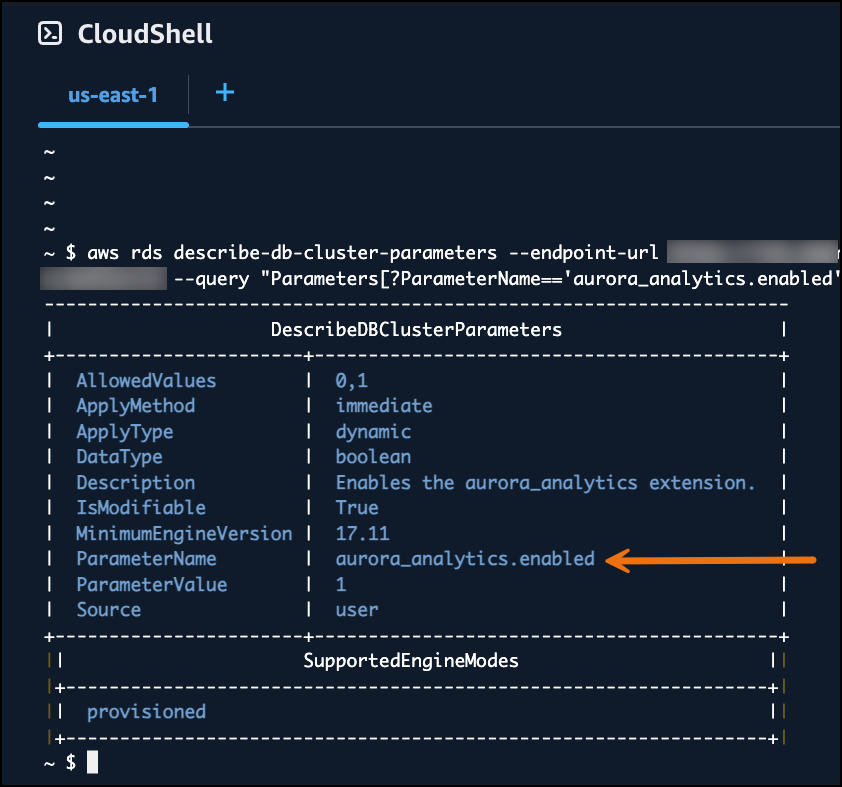
The feature rolled out globally for Aurora PostgreSQL Major Versions 17 (starting with 17.11) and 18 (starting with 18.6). Administrators can activate the capability simply by attaching an IAM role with the AuroraAnalytics feature, enabling the aurora_analytics extension, and defining foreign pointers to their data lake assets.
Supporting Data and Technical Implementation
To understand the practical impact of this release, consider a standard financial application tracking customer behavior. Previously, combining the last seven days of transactions with five years of historical records required complex synchronization scripts.
Step-by-Step Implementation
-
Enabling the Extension:
Database administrators connect to their cluster and load the analytics module:CREATE EXTENSION aurora_analytics; -
Mapping External Parquet Files:
Instead of manually defining complex table schemas, administrators can point directly to S3 storage. Aurora automatically infers the schema from the file metadata:CREATE FOREIGN TABLE transaction_history () SERVER aurora_analytics_server OPTIONS ( location 's3://<my-bucket>/finance/transaction_history.parquet', format 'parquet' );For larger deployments, a single
IMPORT FOREIGN SCHEMAcommand can bulk-create foreign tables across an entire AWS Glue Data Catalog database. -
Executing Unified Queries:
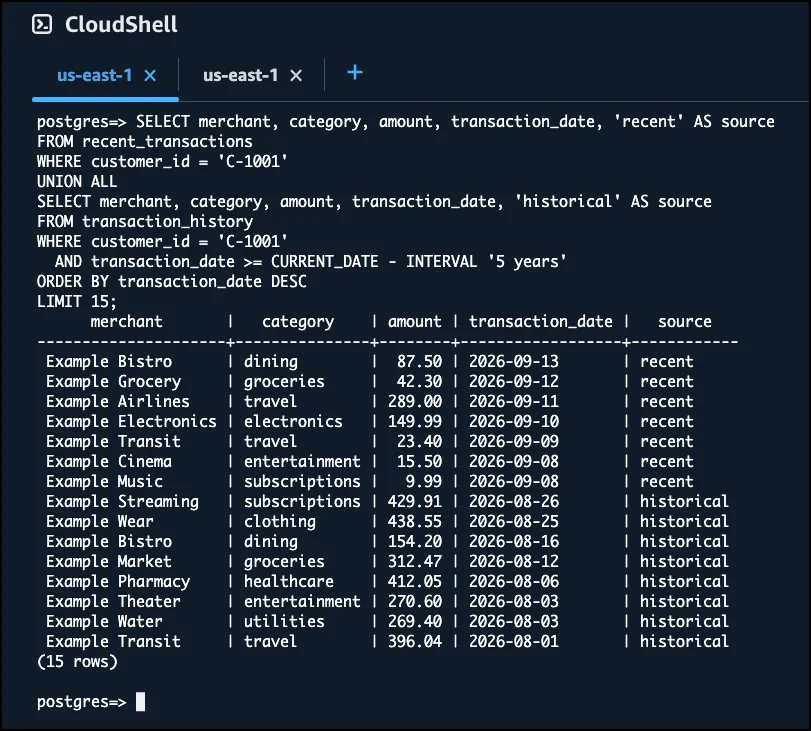
A single query can now seamlessly combine live operational tables with multi-year historical files:
SELECT merchant, category, amount, transaction_date, 'recent' AS source
FROM recent_transactions
WHERE customer_id = 'C-1001'
UNION ALL
SELECT merchant, category, amount, transaction_date, 'historical' AS source
FROM transaction_history
WHERE customer_id = 'C-1001'
 AND transaction_date >= CURRENT_DATE - INTERVAL '5 years'
ORDER BY transaction_date DESC
LIMIT 15;
Under the hood, DuckDB handles the heavy analytical scan of the Parquet files in S3, while Aurora manages the live transactional rows.
Performance and Monitoring
Performance is safeguarded through automated optimizations. Furthermore, administrators can monitor execution metrics—such as rows scanned, bytes read from S3, and cache hit ratios—using the built-in diagnostic function:
SELECT * FROM aurora_analytics_stat_statements();For scenarios demanding single-digit-millisecond latency, data from the data lake can be permanently materialized into native Aurora tables using standard commands like CREATE TABLE AS SELECT or MERGE INTO, isolating analytical workloads away from primary writers by offloading reads to Aurora read replicas.
Official Responses and Strategic Vision
AWS leadership emphasizes that this capability represents a fundamental shift in how developers think about data architecture boundaries.
By integrating DuckDB into Aurora PostgreSQL, AWS is directly addressing the friction developers face when building applications powered by Artificial Intelligence. Modern AI agents require contextual reasoning over both live operational states (such as a shopping cart update happening right now) and deep historical archives (such as five years of past purchases). Pre-replicating every possible dataset an AI agent might need is fundamentally impractical.
"Whether you’re powering real-time dashboards, enriching transactions with historical context, or building AI agents that reason over both live and archived data, you can now do it all through a single, familiar interface," AWS noted in its technical documentation. By relying on an open-source engine foundation like DuckDB, AWS has also signaled that future performance and functionality improvements from the open-source community will seamlessly flow into Aurora and other complementary cloud services.
Implications for Enterprise Architecture and AI Development
The arrival of direct data lake querying within Amazon Aurora PostgreSQL carries profound implications for software engineering, database administration, and corporate IT budgets.
1. The Demise of Reverse-ETL Complexity
For many organizations, maintenance of data pipelines consumes a significant portion of engineering bandwidth. By allowing relational databases to read object storage natively, companies can retire fragile synchronization scripts, reduce storage bloat caused by unnecessary data duplication, and lower total cost of ownership (TCO).
2. Supercharging AI Agents and LLMs
Large Language Model (LLM) agents and autonomous workflows depend heavily on Retrieval-Augmented Generation (RAG) and contextual memory. Giving AI tools the ability to query live operational states alongside petabytes of historical data via standard SQL opens up unprecedented architectural patterns. Agents can execute sophisticated reasoning tasks without waiting for data engineers to provision dedicated analytics pipelines.
3. Democratization of Advanced Analytics
Because the feature relies entirely on standard PostgreSQL syntax, application developers do not need to learn specialized big-data frameworks or complex analytical query languages. Front-end developers, backend engineers, and data scientists can leverage the exact same tools and endpoints they already use for daily application development.
As enterprises continue to migrate mission-critical workloads to cloud-native managed services, the ability to break down the traditional barrier between operational stores and analytical data lakes marks a major milestone in database design—pointing toward a future where data is accessed wherever it lives, transparently and instantaneously.
 Siti Muinah
 Reynand Wu
 Jia Lissa
