
 By Nila Kartika Wati
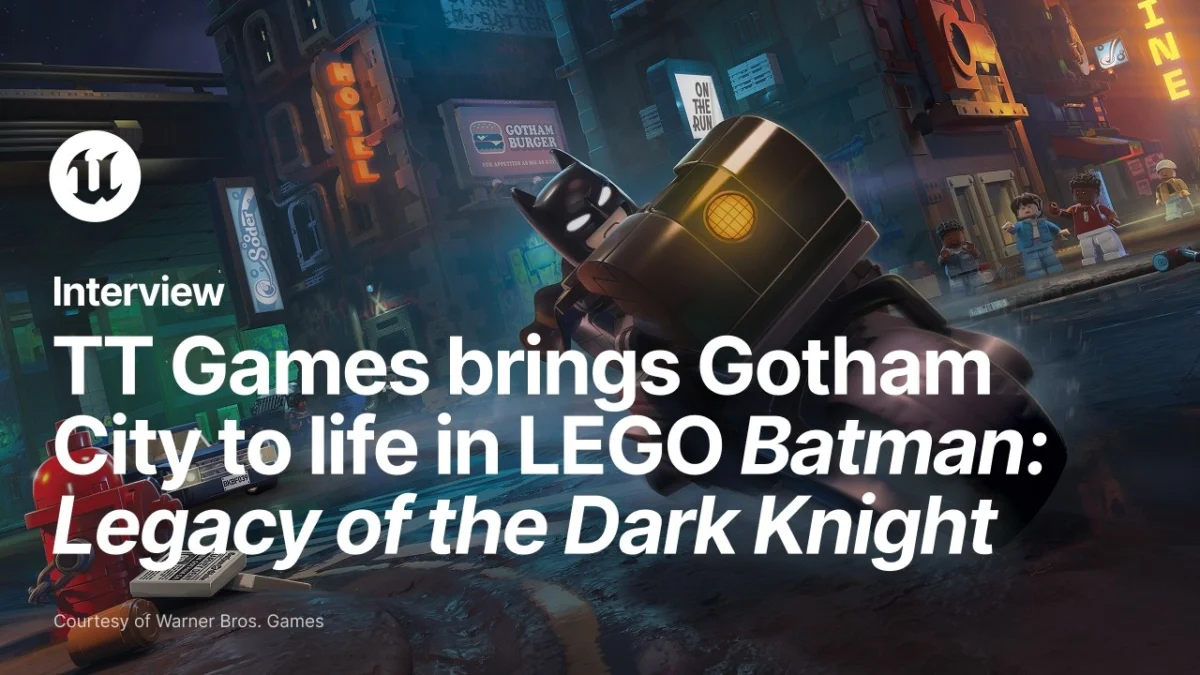
In the rapidly evolving landscape of video game development, the shift toward standardized, high-performance engines has become a hallmark of the modern era. Among these, Unreal Engine 5 (UE5) stands as the industry benchmark for 3D realism and visual fidelity. While the transition from proprietary, in-house engines to Epic Games’ industry-leading platform has enabled unprecedented creative freedom, it has not been without its fair share of discourse. Nowhere is this tension between technical ambition and consumer accessibility more apparent than in the reception of Lego Batman: Legacy of the Dark Knight.
Developed by TT Games, the title has been lauded for its "squeaky clean" aesthetic—a sophisticated blend of hyper-realistic lighting and the classic, charming cartoon sensibilities inherent to the Lego franchise. However, beneath the polished plastic surfaces lies a complex technological architecture that has sparked debate regarding hardware requirements. For a game series traditionally perceived as accessible to younger, more casual audiences, the hefty performance demands of Legacy of the Dark Knight have raised questions about the trade-offs required to bring such high-fidelity visuals to life.
The Technical Shift: Why Unreal Engine 5?
The decision by TT Games to pivot toward Unreal Engine 5 was a strategic maneuver aimed at future-proofing their development pipeline. According to Jonathan Smith, Vice President of Product at TT Games, the migration was not merely about visual upgrades; it was about developer efficiency and modularity.
In an extensive interview on the official Unreal Engine blog, Smith articulated the studio’s justification for the shift. "UE5 is remarkably developer-friendly," Smith explained. "The ability to migrate our existing workflows into a more robust environment allowed us to focus less on engine maintenance and more on the creative nuances of the Gotham City experience."
By adopting Epic’s platform, the studio was able to bridge the gap between legacy development practices and modern, next-generation rendering techniques. This transition, however, required a complete overhaul of how the team handled assets, lighting, and performance scaling—a move that ultimately set the stage for the game’s current technical profile.
A Chronology of Development: From Concept to Gotham
The path to Legacy of the Dark Knight was paved with significant milestones in engine integration. Early in the development cycle, TT Games recognized that to deliver an "open-world Gotham" that felt truly alive, they needed a system capable of handling massive environmental data without compromising frame rates or visual consistency.

- Phase One: Migration and Tooling: The studio spent the initial months of development adapting their proprietary Lego-building systems to function within the Unreal architecture. This involved rewriting core logic to ensure that the "snapping" mechanics and physics of Lego pieces remained consistent with the engine’s built-in physics tools.
- Phase Two: The World Partition Implementation: The team integrated Unreal’s World Partition system. This was the turning point for the game’s scope, allowing developers to break down the sprawling map of Gotham City into manageable, streaming cells. This allowed multiple team members to work on distinct city blocks simultaneously without the risk of version conflicts or performance bottlenecks.
- Phase Three: Gameplay Ability System (GAS) Integration: To streamline character development, the team adopted the Gameplay Ability System (GAS). This provided a standardized framework for hero and villain abilities, significantly reducing the amount of boilerplate code required for combat, traversal, and puzzle-solving mechanics.
- Phase Four: Final Polish and Optimization: The latter half of the development cycle focused on the "Look and Feel." The team implemented a custom Sequencer setup, allowing technical animators to blend the rigid nature of Lego characters with fluid, high-fidelity environmental interactions.
Technical Deep Dive: The Engines of Innovation
The performance requirements that have drawn criticism from some corners of the player base are, in many ways, a direct result of the advanced systems TT Games utilized to create the game’s density.
World Partition and the "Living" City
The World Partition system is arguably the most critical technical component of the game. It enabled the creation of a dense urban environment that feels populated with pedestrians, dynamic traffic, and destructible environments—all while keeping the memory footprint in check. By only loading the immediate environment around the player, the system manages to simulate a sprawling metropolis, though the overhead required to maintain this level of detail is significant, particularly on older hardware.
The Gameplay Ability System (GAS)
The use of GAS was a stroke of genius for long-term project sustainability. In traditional game development, managing unique character abilities can lead to "spaghetti code." By utilizing Unreal’s pre-built ability framework, the developers ensured that as they added new characters—like those featured in the recent Mayhem Collection DLC—the logic for combat and traversal was already established, allowing the team to focus on character-specific animations and flair rather than core programming.
Custom Animation Frameworks
While the game features the trademark stiff movement of Lego figures, the animation team at TT Games utilized a customized version of Unreal’s Sequencer to bridge the gap between Lego logic and cinematic flair. Motion warping was employed to ensure that combat interactions, such as Batman’s takedowns or the Joker’s erratic movements, felt impactful. This layering of advanced animation over stylized character models is exactly what gives the game its unique, "squeaky clean" visual identity.
Official Responses and Studio Justification
TT Games has remained transparent regarding the technical challenges of the project. Jonathan Smith’s commentary at the Develop: Brighton conference earlier this year provided a window into the studio’s philosophy. For TT Games, the visual fidelity provided by Unreal Engine 5 was non-negotiable.
"We wanted to create a Gotham that didn’t feel like a collection of levels, but a living, breathing place," Smith said. "The engine allows us to realize that vision in a way that simply wasn’t possible with our previous toolsets."

While some users on community forums have expressed frustration over the minimum hardware requirements, the studio maintains that these specifications are necessary to provide the intended experience. The "realistic cartoon" look—characterized by physically based rendering (PBR) on plastic surfaces and sophisticated ray-traced reflections—requires modern GPU architecture. The studio’s stance implies a commitment to a "next-gen" vision, prioritizing the visual integrity of the Batman universe over compatibility with aging hardware.
The Implications: A New Era for Licensed Games
The release of Lego Batman: Legacy of the Dark Knight serves as a case study for the future of licensed video games. By moving to a standard industry engine, TT Games has opened the door for higher production values and more ambitious game design.
Implications for Future Development
- Scalability: The use of GAS and World Partition makes it easier for the studio to produce content updates and expansions. This is already evident in the Mayhem Collection DLC, which seamlessly integrated new characters like Harley Quinn and the Joker without requiring a total overhaul of the game’s core architecture.
- Cross-Platform Parity: While the hardware requirements are high, the engine allows the studio to deploy the game across consoles and PCs with greater ease, ensuring that the experience remains consistent across all platforms.
- The Accessibility Debate: The primary implication for the industry is the question of "democratizing" high-fidelity gaming. When a title marketed toward families demands high-end hardware, does it exclude the very demographic it intends to serve? This is a question developers will have to navigate as the industry continues to lean into the capabilities of Unreal Engine 5.
Content Longevity
The Mayhem Collection DLC is perhaps the best example of the studio’s long-term strategy. By leveraging the modularity of the Unreal engine, TT Games can continue to roll out new story missions and "Mayhem Mode" challenges. This keeps the game in the public eye, turning what was once a "one-and-done" purchase into a service-oriented product that evolves over time.
Conclusion
Lego Batman: Legacy of the Dark Knight is more than just a game; it is a demonstration of the power of modern game development tools. While the transition to Unreal Engine 5 has brought with it legitimate conversations about hardware optimization and accessibility, the result is an undeniably vibrant, detailed, and technically impressive rendition of Gotham City.
For TT Games, the tradeoff has been clear: by embracing the complexity of Epic’s engine, they have created a platform that is not only capable of delivering current content but is also agile enough to support years of future growth. As the industry continues to move toward more complex rendering and simulation, the lessons learned from Legacy of the Dark Knight will likely shape the development of major licensed titles for years to come. Whether the audience follows suit by upgrading their hardware remains to be seen, but one thing is certain: the bar for Lego games has been raised, and the streets of Gotham have never looked quite so plastic—or so real.
 Reynand Wu
 Nana Muazin
