
 By Nana Muazin
In an industry currently dominated by the "noise-cancellation wars," where manufacturers frequently sacrifice acoustic purity for the sake of aggressive digital signal processing, the pursuit of high-fidelity audio in the wireless earbud space has often felt like an afterthought. For years, the market has been saturated with devices that prioritize the isolation of silence over the clarity of sound.
Status Audio, a company that has built its reputation on challenging the status quo, recently signaled a shift in this paradigm. With the release of their Pro X earbuds, they successfully bridged the gap between convenience and audiophile-grade performance. Now, they have taken that ambition a step further with the launch of the GoldenSound Edition, a collaboration with the esteemed audio engineer Cameron "GoldenSound" Oatley. This release represents more than just a aesthetic refresh; it is a calculated attempt to bring laboratory-grade tuning to the daily commuter’s pocket.
The Core Hardware: Triple-Driver Architecture
To understand the significance of the GoldenSound Edition, one must first look at the hardware platform upon which it is built. At the heart of the Status Audio Pro X lies a sophisticated triple-driver configuration. Unlike the single-driver setup found in most mainstream earbuds, the Pro X utilizes a 12mm dynamic driver dedicated to the sub-bass frequencies, paired with dual Knowles-balanced armatures tasked with handling the delicate nuances of the mids and highs.
This hardware architecture provides the canvas for both the standard and the GoldenSound profiles. The standard signature profile is characterized by an engaging V-shape sound signature—a tuning that emphasizes deep, weighty bass and crisp, splashy highs. It is an energetic, "fun" sound that excels in instrument separation, making it a favorite for modern pop, hip-hop, and electronic genres. However, for those seeking a more surgical, analytical listening experience, the standard tuning can sometimes feel overly aggressive. This is where the GoldenSound Edition intervenes.
Chronology: From Pro X to GoldenSound
The development of the GoldenSound Edition is a response to a growing segment of the audiophile community that has long demanded "neutrality" in wireless form factors.
- Initial Launch (The Pro X): Upon the launch of the original Pro X, Status Audio established its credentials by offering a hardware-heavy earbud that included an open EQ within their companion application. This allowed users to tinker with frequencies, but it placed the burden of "good sound" on the user’s subjective preferences.
- The Partnership: Recognizing the need for a professional-grade "reference" profile, Status Audio entered a collaboration with Cameron Oatley. Known in the community for his rigorous testing and deep understanding of acoustic measurements, Oatley was tasked with creating a signature tuning that would push the Pro X hardware to its acoustic limits.
- Development Phase: The team employed the Brüel & Kjær 5128—a state-of-the-art head and torso simulator—to map the earbud’s output. This device is the industry standard for measuring how sound behaves within the human ear canal.
- The Launch: The resulting product, the GoldenSound Edition, was released as a refined iteration of the Pro X, featuring a "locked" profile that guarantees the user hears exactly what the engineer intended, without the need for manual EQ adjustment.
Supporting Data: The Science of the "Golden" Profile
The primary differentiator of the GoldenSound Edition is not merely a change in frequency response, but a fundamental shift in philosophy. While the standard Pro X is designed for excitement, the GoldenSound profile is designed for accuracy.
The Brüel & Kjær 5128 Advantage
The use of the B&K 5128 simulator is significant. Most mass-market earbuds are tuned based on generic HRTF (Head-Related Transfer Function) models. By using the 5128, Oatley was able to account for the specific resonance of the human ear canal, resulting in a profile that prioritizes:
- Natural Timbre: Avoiding the "metallic" sound often associated with low-quality balanced armatures.
- Mid-Range Cohesion: Ensuring that vocalists and instruments like acoustic guitars sit properly in the mix, rather than being buried by the bass.
- Treble Smoothness: Reducing the "sibilance" (the harsh ‘s’ and ‘t’ sounds) that can cause ear fatigue during long listening sessions.
By locking this profile, Status Audio removes the variable of user error. Users can still toggle back to the standard, more aggressive V-shape tuning via the Status Audio app, providing the best of both worlds: a professional reference mode for critical listening and a high-energy mode for casual enjoyment.
Aesthetic and Build: A Premium Identity
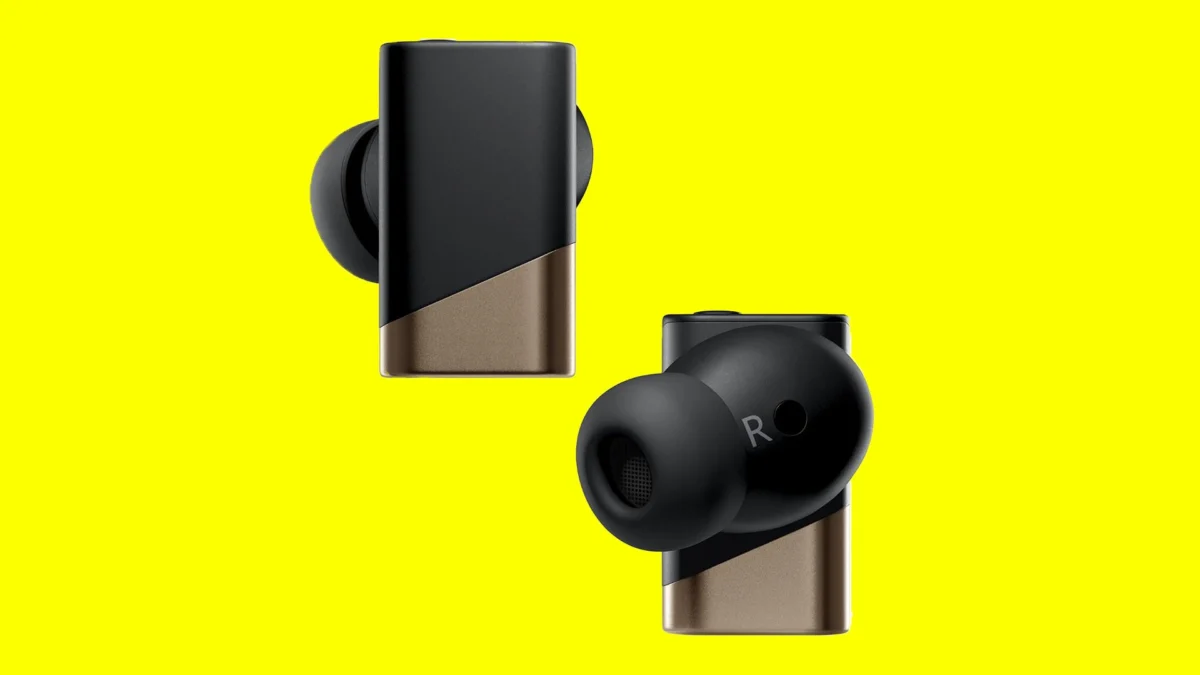
Beyond the internal electronics, the GoldenSound Edition distinguishes itself with a refined visual identity. Eschewing the generic plastics found in most tech peripherals, the earbuds feature a sophisticated matte black finish accented with matte gold elements.
The charging case, often an afterthought in the design process, receives a matching aesthetic treatment. It is finished in a matte black, featuring a matte gold lid stamped with both the Status Audio and GoldenSound logos. This design language aligns with the "pro-audio" aesthetic—clean, understated, and unmistakably premium. It is a visual cue that tells the user they are holding a piece of equipment designed for discerning ears, not just a gadget for mass consumption.
Official Perspectives: The Philosophy of Tuning
In conversations surrounding the release, the team at Status Audio has emphasized that the GoldenSound Edition is not intended to replace the Pro X, but to complement it.
"The goal," notes the design team, "was to show that wireless audio does not have to be synonymous with compromised audio." By providing a locked profile, they are essentially offering a ‘Mastered’ version of the earbud. This reflects a broader trend in the tech industry where hardware companies are moving away from proprietary, ‘closed-garden’ software experiences and instead inviting industry experts to co-create their products. This ‘expert-approved’ label is becoming a powerful marketing tool, as it signals to the consumer that the product has been validated by someone whose career depends on audio quality.
Implications for the Wireless Audio Market
The release of the GoldenSound Edition has significant implications for the future of the wireless earbud market.
1. The Death of the "V-Shape" Monopoly
For years, the consumer market has been dominated by a singular sound signature: boosted bass and boosted highs. The success of the GoldenSound Edition could force other manufacturers to offer "reference" or "studio" tuning profiles as a standard feature, rather than a niche option.
2. The Rise of "Pro-Consumer" Hybrids
We are seeing a convergence of the audiophile world and the mainstream tech world. The GoldenSound Edition proves that you don’t need a wired connection to a DAC/Amp stack to get a high-fidelity experience. As Bluetooth codecs continue to improve, the gap between wired and wireless is narrowing, and products like these are the vanguard of that transition.
3. Software as a Value Add
The ability to switch between profiles within an app is now a standard requirement. Status Audio has demonstrated that the value of an earbud lies not just in its hardware drivers, but in the software-defined sound profiles that can be updated and refined over time.
Conclusion: A New Standard for Inner-Ear Audio
The Status Audio GoldenSound Edition is a rare example of a product that actually lives up to its marketing. In a landscape crowded with over-ear wireless headphones that claim to offer "studio sound," the Pro X GoldenSound Edition stands out by delivering a truly refined, balanced, and acoustic-friendly presentation in a much smaller form factor.
For the listener who has felt underserved by the booming bass and screeching highs of mainstream earbuds, the GoldenSound Edition offers a sophisticated alternative. It is an invitation to listen to music the way it was intended to be heard: with clarity, balance, and a depth of detail that is usually reserved for much larger, wired systems. As we move further into an era of high-bitrate wireless streaming, hardware like the GoldenSound Edition ensures that we have the tools to actually appreciate the quality of the source material. Whether you are a professional mixing tracks on the go or a music lover who demands more from your daily carry, the Status Audio GoldenSound Edition is currently setting the benchmark for what is possible in the world of wireless, inner-ear audio.
 Reynand Wu
 Nila Kartika Wati
 Laily UPN
