
 By Ammar Sabilarrohman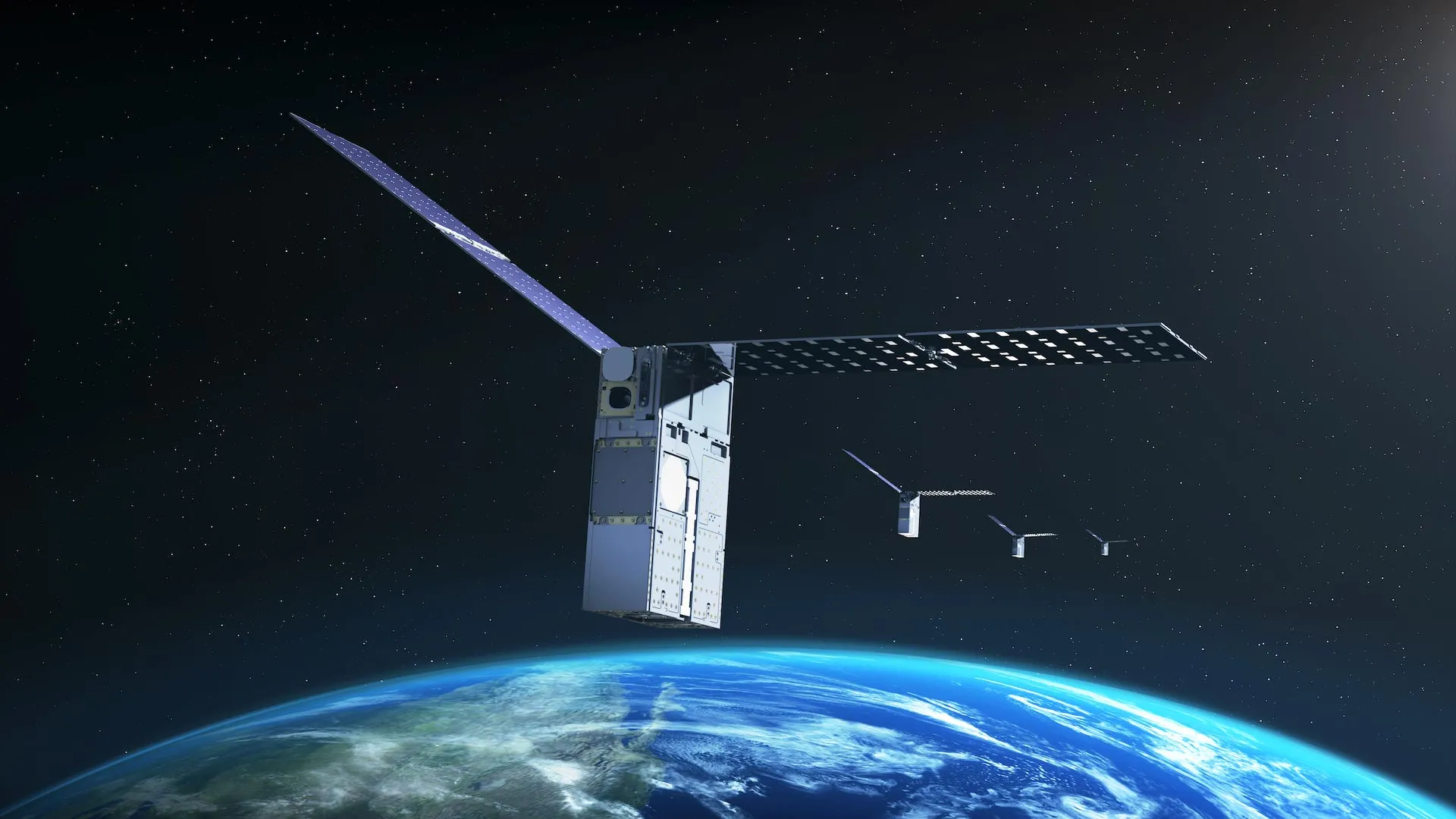
In the vast, silent theater of space, navigation has traditionally been tethered to an umbilical cord of Earth-based signals. For decades, the Global Positioning System (GPS) and deep-space tracking stations have served as the navigational backbone for satellites orbiting our planet. However, as humanity pushes its frontiers toward the Moon, Mars, and beyond, this reliance on Earth-centric infrastructure is becoming a critical bottleneck.
NASA’s Starling mission has recently shattered this paradigm, successfully demonstrating a groundbreaking autonomous navigation system that allows a spacecraft to determine its own orbital position without a single signal from home. By utilizing objects already in space—such as other satellites and orbital debris—as celestial landmarks, the mission has effectively provided future explorers with a "GPS for deep space."
The Genesis of FALCON: Breaking the Tether
At the heart of this achievement is a technology known as FALCON (Fast Autonomous Lost-in-space Catalog-based Optical Navigation). Developed as a joint flight experiment between NASA and EraDrive—a commercial startup born from Stanford University research—FALCON is designed to foster a new era of spacecraft independence.
The core challenge of deep-space travel is that GPS signals grow exponentially weaker as a craft ventures further from Earth. By the time a mission reaches the lunar vicinity, traditional terrestrial signals are often unreliable or entirely unavailable. FALCON bypasses this limitation by transforming a spacecraft’s optical cameras from simple imaging tools into sophisticated navigational instruments. By comparing what it sees in its field of view against an onboard database of known space objects, the spacecraft can triangulate its position with startling accuracy.
Chronology of a Milestone: From Lab to Low Earth Orbit
The journey of FALCON from a theoretical concept to a proven flight system reflects the rapid maturation of small satellite technology.
- The University Roots: The project began under NASA’s University SmallSat Technology Partnerships, a program designed to bridge the gap between academic innovation and practical space application. The research conducted at Stanford eventually coalesced into the formation of EraDrive.
- Integration: Engineers integrated EraDrive’s "Era-Core" flight software—the "brain" of the operation—with the Starling mission’s robust hardware suite. This included onboard star tracker cameras, which are typically used for determining spacecraft orientation, repurposed here to track objects in the environment.
- The 2023 Launch: The Starling mission was launched into orbit in 2023, serving as a high-stakes laboratory to test these autonomous systems in the harsh, real-world environment of space.
- The Validation Phase: Throughout 2024, the mission team initiated the FALCON experiments. The spacecraft spent several days actively observing and identifying objects, comparing its findings against a catalog provided by the U.S. Department of Defense.
- The Future Expansion: Later this year, the mission is scheduled to advance further, with the four spacecraft in the Starling constellation beginning to share tracking data among themselves, creating a decentralized, self-correcting navigation network.
Supporting Data: The Precision of Self-Reliance
The efficacy of the FALCON experiment was measured against the rigid standards of existing space catalogs. During its testing phase, the Starling spacecraft was loaded with a database containing approximately 20,000 known space objects, including their predicted orbital paths.
The results of the test were statistically significant:
- Autonomous Verification: Over a three-day period, FALCON autonomously identified and verified the orbits of over 200 objects without any human intervention from ground control.
- Refining the Catalog: Perhaps most impressive was the system’s ability to improve upon the data provided to it. By using its onboard observations, the spacecraft generated orbital estimates that were more precise than the initial catalog data loaded by ground stations.
- Self-Correction: In separate tests, the spacecraft demonstrated that it could generate its own onboard predictions for the positions of other debris and satellites, effectively "updating" its own map of the cosmos in real-time.
This performance indicates that not only can spacecraft navigate without Earth’s help, but they can also act as "scouts" that improve the collective knowledge of the space environment for all other operators.
Official Perspectives: A "First" in a Series of Successes
The success of the Starling mission has been lauded by NASA leadership as a pivotal moment in small spacecraft engineering. Roger Hunter, program manager for NASA’s Small Spacecraft and Distributed Systems program at the Ames Research Center, highlighted the broader significance of these achievements.
"FALCON is yet another success for the Starling demonstration mission," Hunter stated. "The results from FALCON can have far-reaching implications for on-orbit space-traffic monitoring, collision avoidance, and alternative navigation. The number of ‘firsts’ from Starling just keeps growing."
For NASA, the mission represents a perfect marriage of public funding and private enterprise. By providing a platform like Starling to test EraDrive’s software, NASA has accelerated the commercialization of technologies that will be essential for the next generation of spaceflight. The transition from a university project to a flight-proven commercial product serves as a blueprint for how the agency intends to foster a robust "NewSpace" economy.
Implications for the Future: Beyond the Earth-Bound Era
The implications of an autonomous, optical-based navigation system are profound, touching on everything from safety to the success of human exploration.
1. Space Traffic Management
As the number of satellites in orbit increases, the risk of collisions grows exponentially. Currently, collision avoidance relies on ground stations tracking debris and sending maneuver commands to satellites. An autonomous system like FALCON allows satellites to monitor their immediate surroundings and perform evasive maneuvers independently, reducing the latency and potential for human error inherent in ground-based coordination.
2. Distributed Science Missions
Future science missions often involve "swarms" of satellites working in concert to take simultaneous measurements of magnetic fields or solar activity. These missions require precise alignment. With FALCON, these swarms can maintain their formation and coordinate their positions relative to one another, rather than relying on an external reference frame, ensuring the integrity of their data.
3. Human Exploration of the Moon and Mars
As NASA’s Artemis program looks toward the lunar surface and eventual missions to Mars, the dependence on Earth-based support must be minimized. A crewed mission to the red planet cannot rely on a 20-minute signal delay to make critical navigation decisions. Autonomous systems that can map the environment and determine position in real-time will be mandatory for the safety and success of human crews in deep space.
4. Commercialization and Scalability
By commercializing Era-Core software, NASA is ensuring that this technology is not locked away in a laboratory but is accessible to the broader aerospace industry. Smaller commercial satellite operators, who may lack the massive infrastructure required for complex ground-based tracking, can now adopt "off-the-shelf" autonomous navigation, democratizing access to deep-space operations.
Conclusion: A New Horizon for Autonomy
The Starling mission’s success with FALCON marks a fundamental shift in how we conceive of space navigation. For years, we have viewed satellites as puppets controlled by strings from Earth. With this milestone, NASA has demonstrated that satellites can be autonomous agents, capable of navigating the vast, crowded, and unforgiving environment of orbit on their own terms.
As the mission progresses into its next phase—where the four Starling spacecraft will begin sharing data and navigating as a collective unit—we are witnessing the early stages of a self-sustaining space infrastructure. In the quiet, cold expanse of the vacuum, the Starling mission has proven that the most reliable compass for a spacecraft is not found on Earth, but in the stars themselves.
 Laily UPN
  Evan Lee Salim
  Asro
Asro 