
 By Nana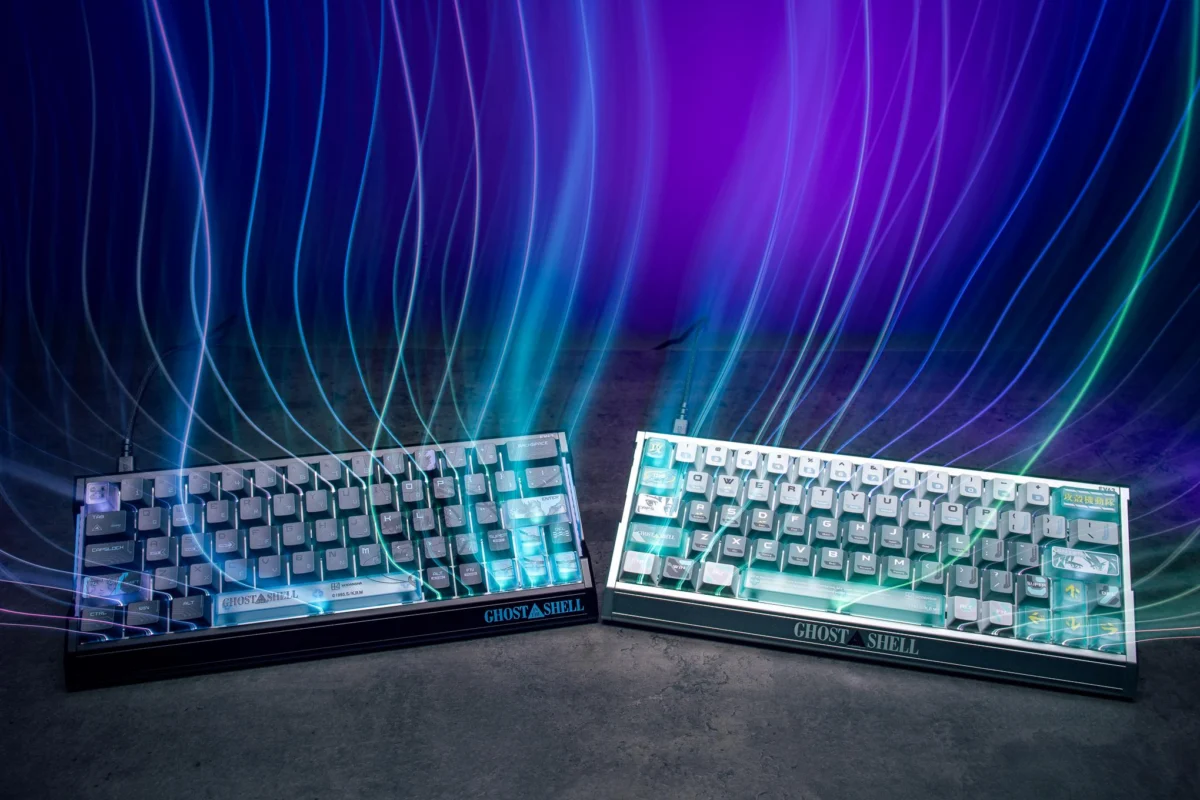
The intersection of anime culture and peripheral hardware has reached a new zenith. While the market has long been saturated with branded collaborations—ranging from Gundam timepieces and Naruto-themed ballpark events to the omnipresent Evangelion aesthetic across Razer and ASUS hardware—most of these offerings often prioritize branding over substance.
However, the new Ghost in the Shell limited edition keyboards from Iqunix represent a significant departure from the norm. By taking a high-performance, Hall-effect gaming chassis and infusing it with the cold, cerebral aesthetic of Mamoru Oshii’s 1995 masterpiece, Iqunix has delivered a product that is as much a functional tool for competitive esports as it is a love letter to one of the most influential works of science fiction in history.
Main Facts: A Convergence of Utility and Artistry
The Iqunix Ghost in the Shell Edition is fundamentally built upon the company’s EV63 platform. It is a 65-percent mechanical keyboard that eschews wireless connectivity in favor of raw, wired performance. At its core, it features an 8,000Hz polling rate and state-of-the-art Hall effect switches, technology popularized by industry leaders like Wooting.
For the uninitiated, Hall effect switches utilize magnetic sensors rather than physical contact points to register keystrokes. This allows for “rapid trigger” functionality, where the switch resets the moment the finger begins to lift, providing a distinct competitive edge in fast-paced shooters like Valorant or Counter-Strike 2.
Priced at $249—a premium over the standard $169 EV63—the Ghost in the Shell variants offer more than just a paint job. They feature a robust aluminum chassis, custom RGB lighting profiles, and unique keycap designs that incorporate iconic imagery from the 1995 film.
Chronology: From 1995 Celluloid to 2026 Hardware
The release of these keyboards is timed to coincide with the July 2026 debut of a new Ghost in the Shell anime series, produced by Science SARU. This strategic launch bridges the gap between the franchise’s deep-seated legacy and its contemporary resurgence.
- 1995: The release of Mamoru Oshii’s Ghost in the Shell film. Its visual language—defined by neon-soaked cityscapes, cybernetic anatomy, and a pervasive sense of philosophical ennui—established a visual standard for the cyberpunk genre that persists to this day.
- Early 2026: Iqunix announces the EV63, a high-performance Hall effect keyboard designed to compete with the top-tier mechanical boards on the market.
- Mid-2026: In conjunction with the announcement of the new animated series, Iqunix reveals the licensed Ghost in the Shell editions, marking a rare instance of a high-end, licensed peripheral that does not sacrifice technical capability for its thematic design.
Supporting Data: Technical Specifications and Build Quality
The Ghost in the Shell editions are not lightweight toys. Weighing in at approximately 2.7 pounds (1.2kg), the keyboard possesses a density and rigidity that rival the 13-inch MacBook Air. This weight is largely due to the aluminum construction, which serves to dampen resonance and provide a premium, stable typing experience.
Switch Performance
The boards utilize KeyTok Nova linear magnetic switches. In testing, these switches offer a crisp, lightweight actuation that avoids the “mushy” sensation common in early Hall effect implementations. The tray-mount design ensures a uniform bottom-out experience, which, when paired with the aluminum housing, produces a satisfying, clear acoustic profile. While it may not reach the deep, “thocky” resonance of custom-built, non-magnetic mechanical keyboards, it stands head-and-shoulders above its direct competition in the Hall effect space, such as the Dry Studio Ice Ring 63 RT.
Aesthetic Integration
The keyboards are available in two distinct colorways: “Shell Core” and “Cyber Blue.” Both designs feature:
- Custom Keycaps: Frosted keycaps on the escape, space bar, left shift, enter, and arrow keys to diffuse the internal RGB light.
- Character Art: The Cyber Blue model features a subtle, stylized outline of Motoko Kusanagi’s profile—taken from the 1995 theatrical poster—etched across the bottom case and several keycaps.
- Lighting: Pre-programmed RGB patterns that mirror the color palettes of the film, ensuring the board looks integrated with the desk setup rather than like a generic accessory with a decal.
Official Responses and Industry Context
In the world of enthusiast keyboards, “collaboration” is often a dirty word, frequently associated with cheap, ABS plastic keycaps and uninspired branding. Industry analysts have noted that the Ghost in the Shell keyboard is a refreshing anomaly.

“Many anime collaborations rely on the name alone to move units,” says one hardware critic. “What Iqunix has done here is demonstrate that you can cater to the ‘hardcore’ enthusiast market while still honoring source material that demands a high level of sophistication.”
Iqunix has positioned the device as a bridge between two worlds: the competitive gamer who demands a sub-millisecond response time and the collector who values the aesthetic of the 1995 film. While the price tag is undeniably steep, the market response suggests that there is a significant appetite for hardware that refuses to compromise on build quality for the sake of branding.
Implications for the Future of Peripheral Design
The success (and quality) of the Iqunix Ghost in the Shell keyboard suggests several key trends for the future of the peripherals market:
1. The Death of the "Gimmick" Collaboration
Consumers are becoming increasingly discerning. As more brands enter the space, the "sticker-slap" method of branding is losing its efficacy. Future collaborations will likely need to follow the Iqunix model: integrating thematic elements into the actual hardware design, such as custom-tooled aluminum cases or proprietary switch tunings, rather than merely swapping keycaps.
2. High-Performance Gaming as the New Baseline
By utilizing a Hall effect platform, Iqunix is signaling that "gaming" hardware should no longer be synonymous with cheap, light, or plasticky construction. Even in the niche world of anime-themed peripherals, users are now expecting "thocky" sound profiles, aluminum frames, and magnetic switches. The floor for what constitutes a "pro-grade" keyboard has officially been raised.
3. The Niche as a Driver of Mass Innovation
While 65-percent Hall effect keyboards are inherently niche, the "Ghost in the Shell" aesthetic provides a hook that brings this technology into the mainstream conversation. It encourages general consumers to learn about rapid trigger, polling rates, and switch actuation, effectively pushing the entire industry toward higher technical standards.
4. Cultural Preservation Through Hardware
There is a growing movement of "digital archeology" where classic cinema and literature are being preserved through high-end collectibles. By choosing the 1995 film as the visual basis—a film that deals explicitly with the relationship between the human soul and the machine—Iqunix has created a thematic synergy that feels earned. The keyboard isn’t just an accessory; it is a piece of desk-based art that reflects the themes of the very medium it celebrates.
Conclusion
The Iqunix Ghost in the Shell Edition is an impressive feat of industrial design. It manages to balance the extreme technical requirements of competitive esports with the delicate, nuanced aesthetic of a seminal work of science fiction. While the price point of $249 positions it firmly in the "enthusiast" category, the build quality and performance metrics justify the investment.
For the fan of The Major or simply the fan of top-tier mechanical hardware, this keyboard is a rare instance where the final product is greater than the sum of its parts. It serves as a stark reminder that when tech companies take their collaborative partners seriously, the result isn’t just a marketing stunt—it’s a superior piece of technology. As we move further into an era where our digital interfaces are an extension of our own "ghosts," having a tool that feels both precise and meaningful is not just a luxury; it is a necessity for the modern digital operator.
 Azzam Bilal Chamdy
  Suro Senen
  Nana Wu