
 By Ali Ikhwan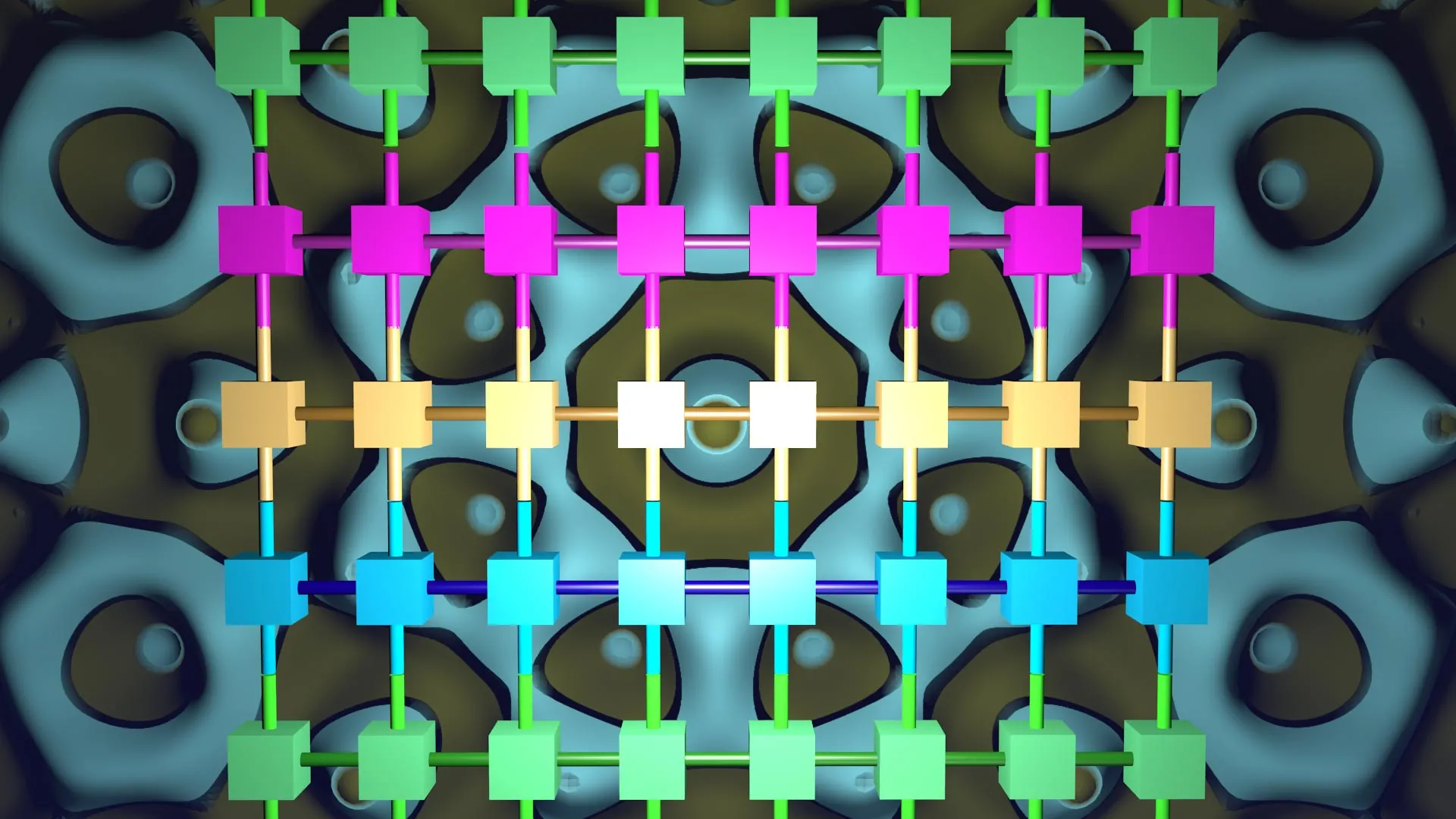
In the rapidly evolving theater of 21st-century physics, the quest to build a functional, fault-tolerant quantum computer has often felt like trying to build a skyscraper without knowing the properties of the steel. Quantum computers and their associated technologies rely on materials that exist at the razor’s edge of physical possibility. These "quantum materials" exhibit behaviors that defy classical intuition, often requiring specific, highly controlled environments to manifest their potential.
However, a team of researchers at Aalto University’s Department of Applied Physics has recently shattered a long-standing computational barrier. By developing a novel, quantum-inspired algorithm, they have unlocked the ability to simulate and predict the behavior of complex, non-periodic quantum materials—structures previously thought to be beyond the reach of even the world’s most powerful supercomputers. This breakthrough not only promises to accelerate the development of advanced quantum hardware but also creates a self-reinforcing cycle of innovation that could define the next era of computational science.
The Mathematical Complexity of the Quantum World
At the heart of this research lies the phenomenon of "moiré patterns." When scientists stack sheets of graphene—a single layer of carbon atoms—and twist them at specific angles, the resulting geometry can fundamentally alter the material’s properties, effectively transforming it from a standard conductor into a superconductor. This "twistronics" has opened a Pandora’s box of possibilities, allowing researchers to arrange layers into increasingly intricate structures, such as quasicrystals and super-moiré materials.
While these structures are physically elegant, they are a nightmare for classical computational models. Quasicrystals, in particular, lack the repeating patterns found in traditional crystals, making them mathematically dense. Simulating these materials requires tracking the interactions of an astronomical number of variables. A single simulation can involve upwards of a quadrillion data points, a scale that overwhelms the processing capacity and memory bandwidth of today’s most advanced supercomputing clusters. Until now, this "computational wall" has acted as a primary bottleneck in the field of materials science, forcing researchers to rely on approximations rather than precise, predictive modeling.
Chronology of the Breakthrough
The path to this discovery was paved by the intersection of two distinct, yet complementary, scientific disciplines: material design and algorithmic theory.
- Initial Conceptualization: Recognizing that traditional methods were failing, the research team—led by Assistant Professor Jose Lado and doctoral researcher Tiago Antão—began exploring how the logic used in quantum computers could be "borrowed" to solve problems on classical hardware.
- The Formulation: The team focused their efforts on "topological quasicrystals." These are rare materials that host unconventional quantum excitations, which are uniquely resistant to external noise—a highly desirable trait for building stable quantum bits (qubits).
- The Algorithmic Pivot: Instead of calculating the material’s structure bit-by-bit, the team adopted a method similar to how quantum computers operate. They employed "tensor networks," a sophisticated mathematical framework that allows researchers to encode exponentially large computational spaces into a more manageable, compressed format.
- Verification and Publication: Following rigorous testing and the successful simulation of a quasicrystal with over 268 million sites, the team’s findings were submitted to Physical Review Letters. The work was subsequently published as an "Editor’s Suggestion," marking it as a significant contribution to the field.
Supporting Data and Technical Architecture
The core of the team’s success lies in their ability to bridge the gap between quantum-many-body theory and classical computing. As Tiago Antão, the paper’s lead author, explains, the algorithm leverages the principles of quantum entanglement to represent the state of the material.
"Quantum computers work in exponentially large computational spaces," Antão notes. "By using tensor networks to encode these spaces, we have demonstrated that colossal problems in quantum materials can be directly solved with the exponential speed-up typically reserved for quantum hardware."
The simulation, which encompassed 268 million lattice sites, represents a quantum leap in capacity. By reformulating the problem, the team bypassed the need to calculate every individual interaction, instead using the algorithm to capture the "global" state of the material. This technique allows for the simulation of super-moiré quasicrystals at scales several orders of magnitude beyond what was previously possible. While the current research is simulation-based, the accuracy of the tensor network approach provides a high-confidence roadmap for laboratory synthesis and experimental verification.
Official Perspectives: A Two-Way Feedback Loop
The implications of this research are profound, particularly regarding the symbiosis between hardware and materials. Assistant Professor Jose Lado, the project lead, describes this as a "productive two-way feedback loop."
"Crucially, these new quantum algorithms can enable the development of new quantum materials to build new paradigms of quantum computers," Lado explains. "In return, these new computers will allow us to simulate even more complex materials. We are essentially creating the tools to build the tools."
The research team, which also included doctoral researcher Yitao Sun and Academy Research Fellow Adolfo Fumega, emphasizes that this work is not just about abstract theory. It is a foundational step toward "dissipationless electronics." If engineers can master these topological materials, they could theoretically design circuits that conduct electricity without losing energy as heat. Given the surging energy demands of AI-driven data centers and the global push for carbon neutrality, the ability to eliminate resistive heat loss could lead to a massive reduction in the energy footprint of global computing infrastructure.
Implications for Future Technology
Looking toward the horizon, the Aalto University team is already planning the next phase of development. The algorithm is designed with modularity in mind, meaning it can eventually be ported from classical supercomputers to actual quantum hardware as that technology matures.
"Our method can be adapted to run on real quantum computers once they reach the necessary scale and fidelity," says Lado. "We are looking toward systems like the new AaltoQ20 and the Finnish Quantum Computing Infrastructure to host future, real-world demonstrations."
This project serves as a cornerstone of the broader Finnish quantum ecosystem. It is supported by Lado’s ERC Consolidator grant, ULTRATWISTROICS, which explores the design of topological qubits using van der Waals materials, and the Center of Excellence in Quantum Materials (QMAT). By aligning these research pillars, the team is positioning Finland at the forefront of the "second quantum revolution."
The Road Ahead: From Simulation to Synthesis
The transition from simulation to practical application will likely involve the physical creation of these super-moiré quasicrystals in the lab. If the experimental results mirror the algorithmic predictions, it could validate the use of these materials as the "standard substrate" for future topological qubits.
Unlike conventional qubits, which are notoriously fragile and prone to decoherence from environmental interference, topological qubits are inherently protected by the very structure of the material they are made from. This could potentially solve the "noise problem" that has stalled the progress of quantum computing for the past decade.
Ultimately, the work of the Aalto University team highlights a shift in scientific philosophy. Instead of waiting for quantum computers to arrive before solving the problems of quantum materials, scientists are now using the logic of quantum information to solve those problems today. In doing so, they are effectively accelerating the timeline for the very technologies that will define the digital landscape of the coming century. As the team continues to refine their algorithms, the barrier between theoretical quantum physics and everyday technological utility is becoming thinner by the day.
 Sagoh
Sagoh  Asro
Asro  Siti Muinah