By Christina Newberry Published by Hootsuite Insights
In the modern digital economy, social media has long transcended its origins as a casual space for brand awareness and community chatter. Today, it represents a multi-billion-dollar ecosystem where enterprise organizations invest heavily in paid campaigns, influencer partnerships, and organic brand building. Yet, as marketing budgets face increasing scrutiny—with recent data revealing that 63% of Chief Marketing Officers (CMOs) cite resource and budget constraints as their primary challenge—the pressure to prove tangible business outcomes has never been higher.
Enter social media analytics: the systematic collection, interpretation, and reporting of data points designed to measure account performance, decode audience behavior, and guide executive decision-making. No longer just a collection of vanity metrics like likes and follows, advanced analytics now serve as the bridge connecting day-to-day social content directly to enterprise revenue, lead generation, and brand health.
The Core Facts: What Is Social Media Analytics?
At its foundational level, social media analytics encompasses the entire lifecycle of social data. This includes owned content metrics (data from your own channels), earned media (conversations and mentions about your brand across the web), and paid data (ad campaign performance).
For enterprise-level teams, siloed platform dashboards are no longer sufficient. Modern analytics requires integrating social media data with web analytics, customer relationship management (CRM) systems, and business intelligence (BI) tools. This integration provides a unified, panoramic view of performance across multiple brands, geographic regions, and digital channels.
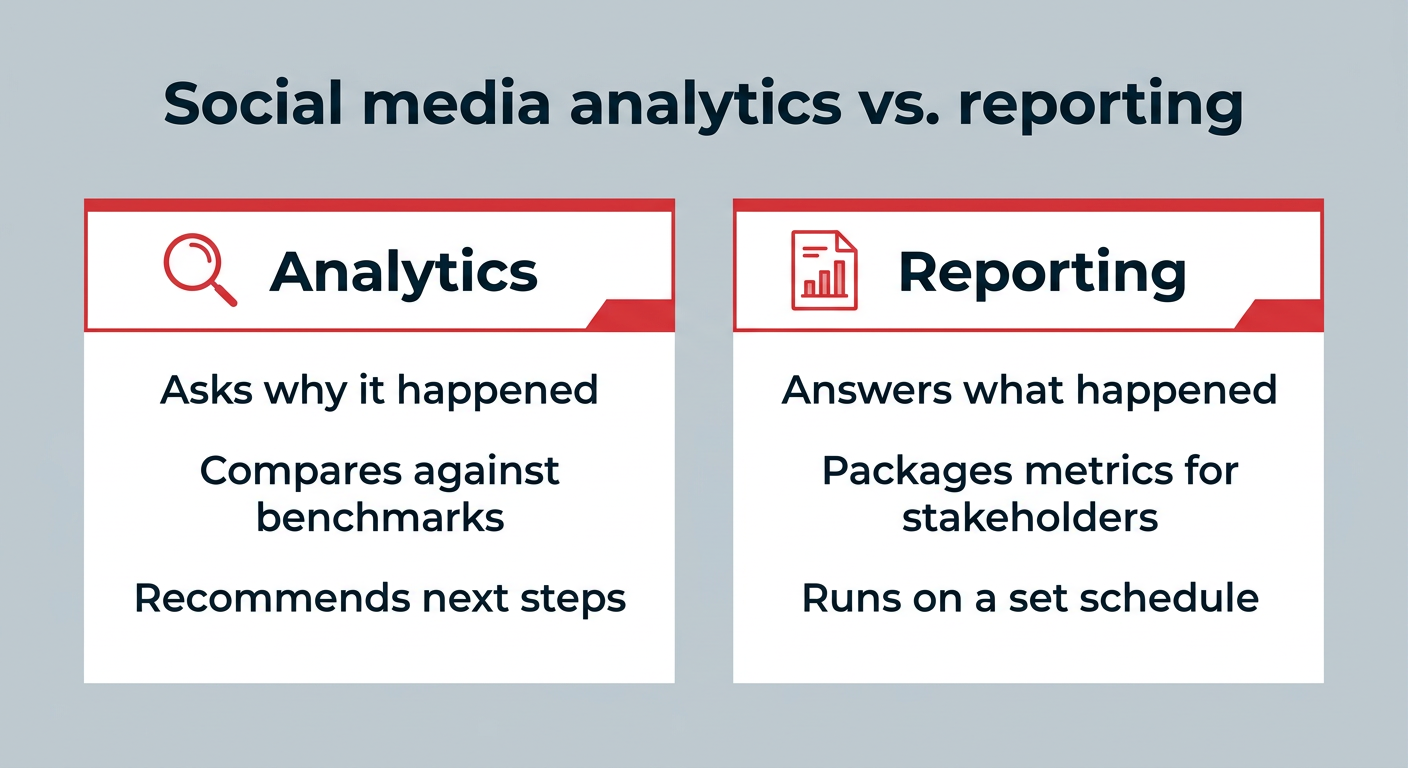
Crucially, marketing experts emphasize a vital distinction: analytics is not the same as reporting.
Social media reporting is the administrative act of organizing and presenting data to stakeholders, keeping leadership informed and creating an archival record of performance.
Social media analytics is the interpretative work of mining that data for actionable insights.
A dashboard full of uninterpreted numbers is merely reporting without analytics—the exact trap where many marketing teams lose strategic value.
Chronology and Evolution: From Gut Instincts to Predictive Intelligence
The evolution of social media measurement has transformed rapidly over the past two decades:
The Early Era (Pre-2010s): Digital marketing relied heavily on basic broadcast metrics. Marketers focused on email opt-ins, basic follower counts, and impressions, treating social channels primarily as digital billboard spaces. Strategy was frequently driven by gut instinct rather than empirical evidence.
The Rise of Native Dashboards (2010–2018): As social platforms matured, networks like Facebook, Twitter (now X), and LinkedIn introduced native analytics tools. While these gave creators and brands unprecedented visibility into individual channel performance, they created a fragmented landscape where marketers had to log into multiple platforms to gauge overall health.
The Unified Enterprise Era (2018–Present): With paid social advertising soaring past $121 billion in the U.S. alone by 2026, the industry has shifted toward unified third-party platforms. Tools like Hootsuite Social OS, Rival IQ, and Sprinklr now allow organizations to synthesize organic, paid, listening, and sentiment data into a single pane of glass, leveraging AI and machine learning to predict trends and optimize campaigns in real time.
Supporting Data: Why Analytics Drive Business Outcomes
Without rigorous analytics, marketing teams operate in a vacuum. Modern data underscores four critical ways analytics transforms social media from a "nice-to-have" expense into a measurable business driver:
1. Performance and Campaign Optimization
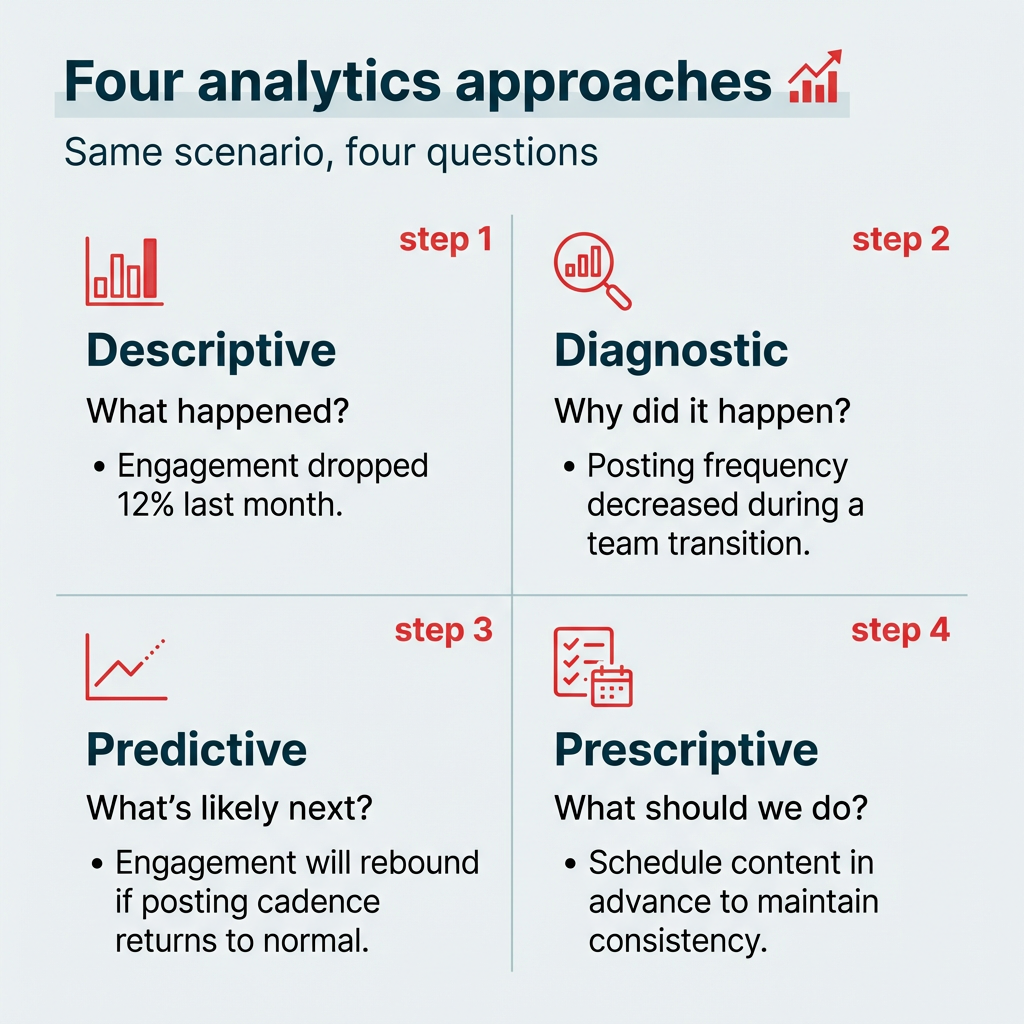
Analytics provide real-time feedback loops. When organic content outperforms or underperforms a brand’s baseline, teams can instantly analyze variables such as format (video versus static images), tone, and publishing time. Furthermore, marketers can run A/B tests to validate hypotheses, reallocating ad spend dynamically from underperforming ads to high-yielding campaigns mid-flight.
2. Audience Demographics and Psychographics
Understanding who is consuming content is just as vital as knowing how many people are watching. For instance, data reveals distinct generational divides: Pew Research highlights a staggering 61-point gap in Instagram usage between 18-to-29-year-olds and adults 65 and older. Analytics help brands tailor aesthetics and messaging accordingly—catering to Gen Z’s preference for brand "vibes" and aesthetics versus older demographics’ gravitation toward inspirational or informative content.
3. Proving ROI and Justifying Budgets
While social metrics can occasionally feel abstract, empirical consumer research reveals that 70% of people who follow brands on social media maintain explicit plans to purchase from them. Advanced analytics tools track revenue, leads, and conversions back to specific posts, successfully refuting the notion that marketing is purely a cost center. By presenting concrete profit-center data, marketing leaders can successfully lobby for increased headcount and strategic resources.
4. Categorizing the Seven Pillars of Social Analytics
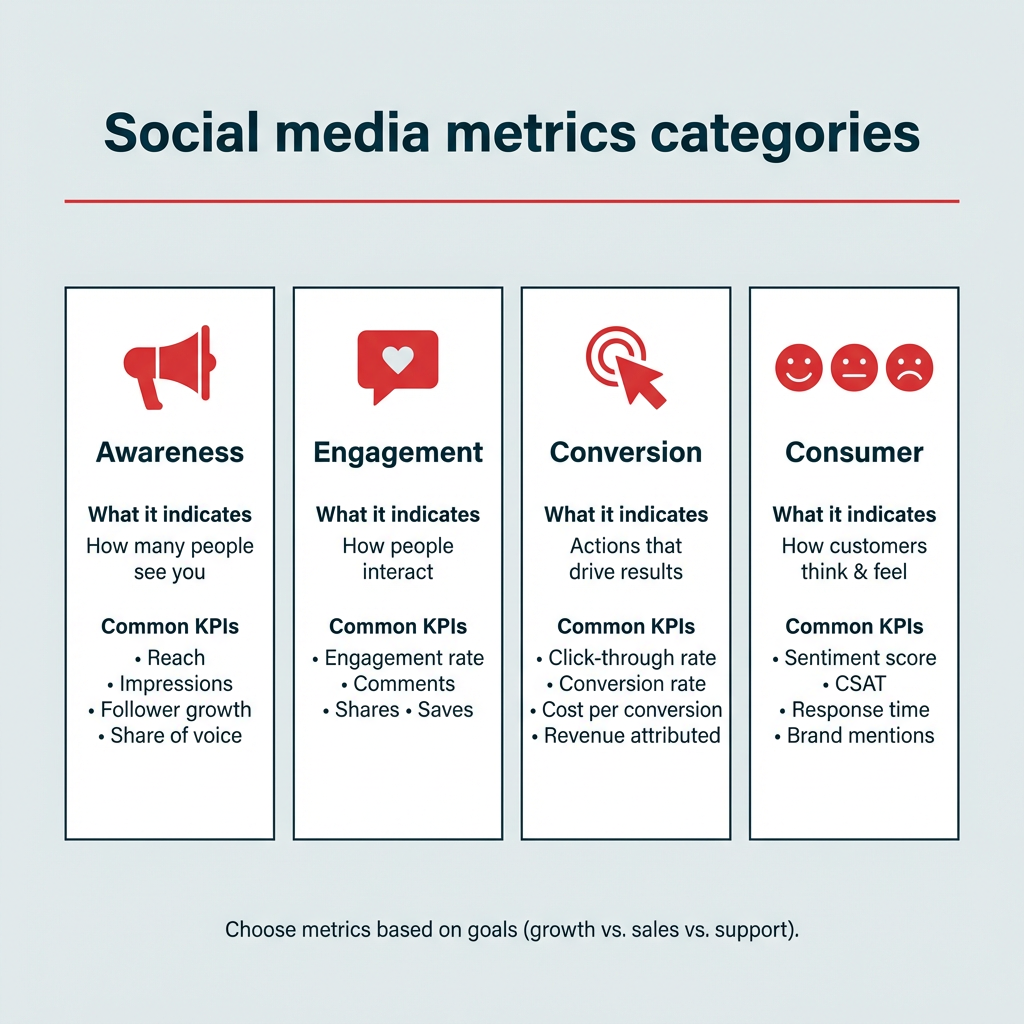
Enterprise analytics generally breaks down into seven distinct disciplines:
Performance Analytics: Tracks internal reach, impressions, and engagement rates.
Audience Analytics: Maps demographic, behavioral, and psychographic traits.
Competitive Analysis: Benchmarks share of voice and engagement against industry rivals.
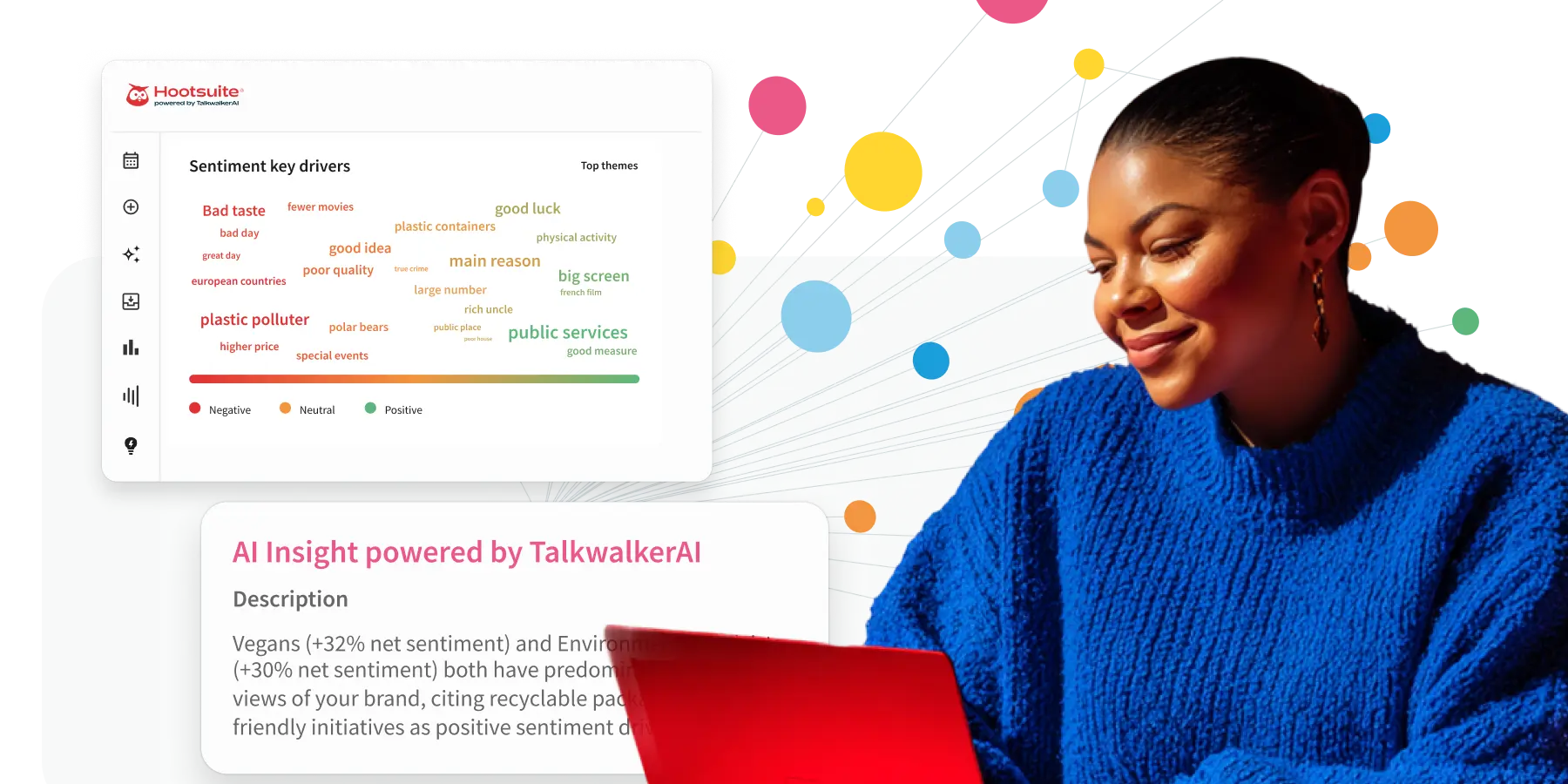
Social Listening & Sentiment Analysis: Monitors public mentions and emotional intent behind brand conversations.
Industry Benchmarking: Evaluates performance against macro industry standards to contextualize success for the C-suite.
Paid Social Analytics: Measures Cost Per Click (CPC), Cost Per Thousand Impressions (CPM), and Return on Ad Spend (ROAS).
Influencer Analytics: Evaluates creator partnerships to ensure ROI on sponsored content.
Official Perspectives and Industry Insights
Top marketing executives consistently advocate for structured, rhythmic reviews of analytics to prevent operational drift.
Tom Edwards, Founder of Bit Quirky Consulting, outlines a disciplined operational schedule:
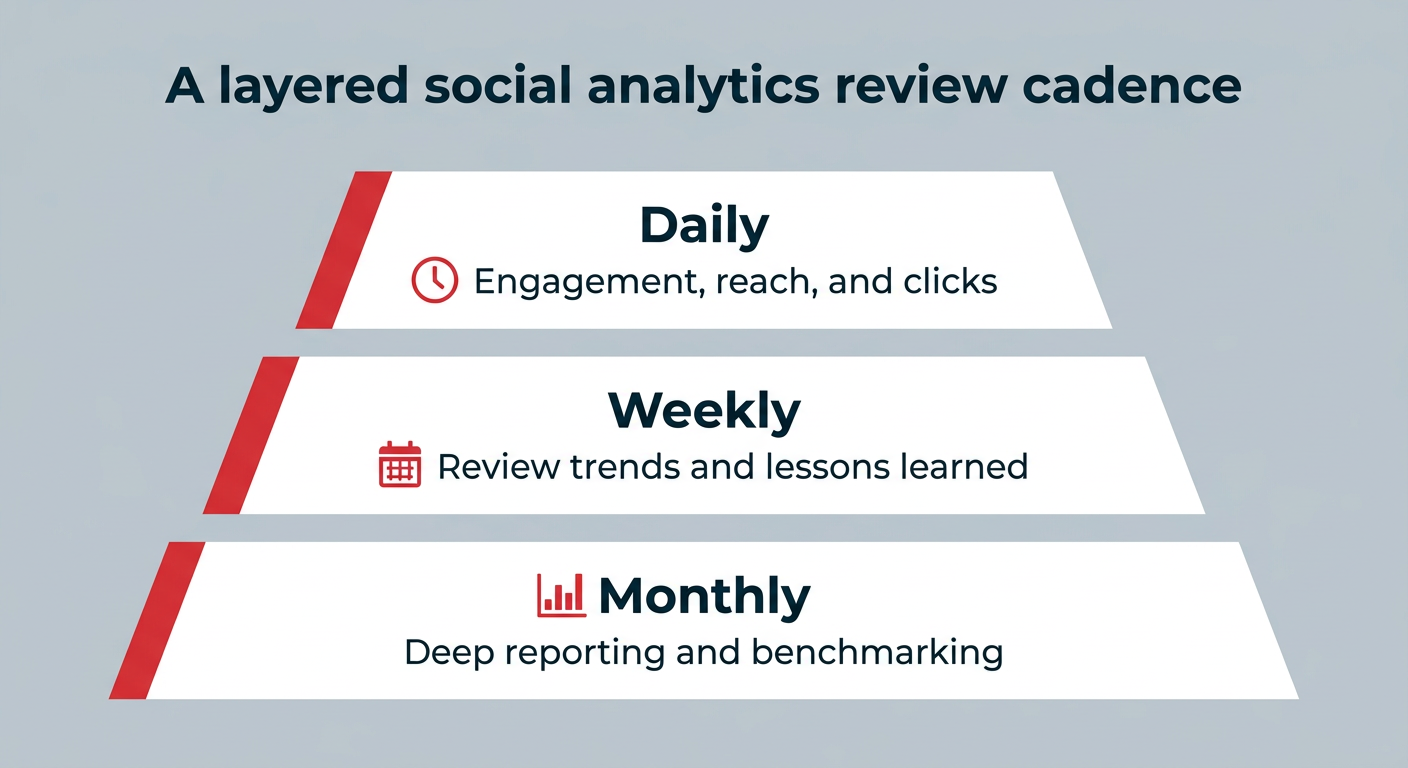
"Daily, we track basic metrics (engagement, reach, and clicks) to spot sudden spikes or drops. Mondays are for reviewing weekend performance, but we reserve Fridays for more in-depth analysis to assess weekly trends. At the end of each month, we dive into detailed benchmarking against industry standards to determine if we need to shift our content strategy."
Similarly, agility during active campaigns can save failing initiatives. Reilly James, Marketing Manager and E-commerce Optimization Expert at William Morris Wallpaper, recalls a pivotal moment:
"During one of our seasonal sales campaigns last year, I noticed a 15% drop in engagement midway through. We switched up our messaging to be more direct, highlighting exclusive time-sensitive discounts, and adjusted the creative to feature more vibrant colors. Within a few days, engagement rebounded by 10%, alongside an uptick in conversions."
Implications for the Future of Enterprise Marketing
The integration of advanced analytics into enterprise workflows carries profound implications for organizational structure and technology stacks. As artificial intelligence tools—such as Hootsuite’s Wisdom and integrated listening apps like Lumen—continue to mature, the barrier to identifying micro-trends and anomalies is dropping rapidly.
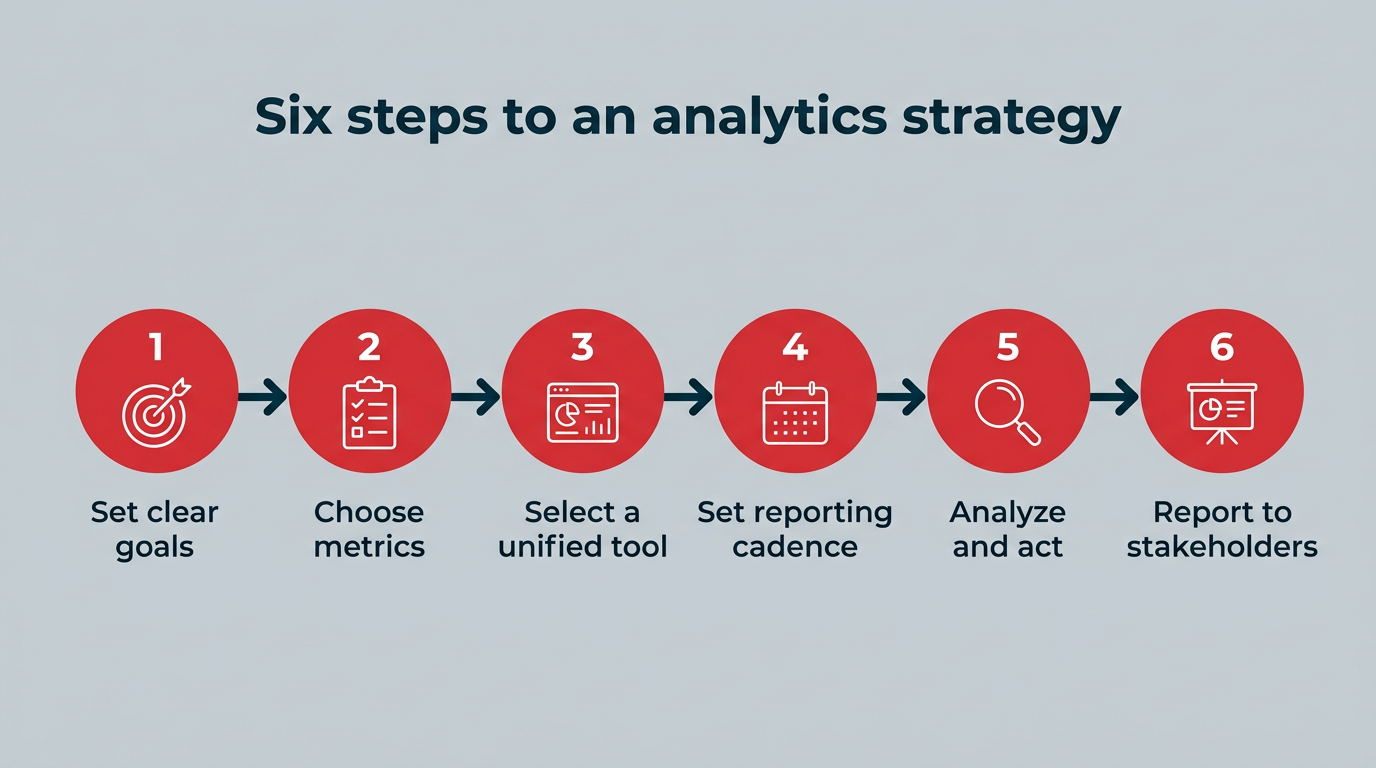
However, technology alone is not a silver bullet. Organizations must implement a disciplined, six-step analytics framework to realize true value:
Set clear goals tied directly to broader business outcomes (e.g., increasing conversion rates by 15% to support a product launch, rather than vaguely aiming to "increase engagement").
Choose restraint in metrics: Focus on 3 to 5 Key Performance Indicators (KPIs) per business goal to avoid dashboard overload.
Select a unified tool to break down cross-platform data silos and maintain historical data beyond restrictive native platform windows (such as 90-day lookback limits).
Establish a layered reporting cadence combining daily check-ins, weekly reviews, and monthly macroeconomic evaluations.
Analyze data and take action swiftly when significant performance spikes or dips occur.
Report results to stakeholders with a strong emphasis on business impact, revenue attribution, and visual clarity.
Ultimately, organizations that master the art and science of social media analytics will successfully transform their social channels from unpredictable broadcast mediums into precise, revenue-generating powerhouses. By bridging raw data with strategic storytelling, marketing leaders can secure their seats at the executive table, justify vital budgets, and steer their brands confidently into the future.

 By Pevita Pearce





 Neng Nana
 Ammar Sabilarrohman
 Jia Lissa
