
 By Nila Kartika Wati
In a decisive strike against the digital architecture supporting Russian state-sponsored hybrid warfare, Dutch financial crime investigators have arrested two prominent figures in the European web hosting industry. The operation, conducted by the Tax Intelligence and Investigation Service (FIOD), signals a major escalation in the European Union’s efforts to hold private service providers accountable for their role in enabling foreign cyber-aggression.
The suspects—a 57-year-old Amsterdam resident and a 39-year-old from The Hague—are accused of violating stringent EU sanctions. Specifically, authorities allege the men facilitated economic resources for entities sanctioned for their ties to Russian intelligence agencies, effectively turning Dutch internet infrastructure into a staging ground for cyberattacks, disinformation campaigns, and political destabilization across the EU.
The Architect of the Operation: Who Was Arrested?
The two men at the center of the investigation are Andrey Nesterenko, a 39-year-old Russian native operating out of the Netherlands, and Youssef Zinad, 57. Nesterenko, a former piano prodigy turned tech entrepreneur, founded MIRhosting, a company that has long skirted the edge of controversy.
The investigation, bolstered by reporting from de Volkskrant and KrebsOnSecurity, paints a picture of a sophisticated shell game. Nesterenko and Zinad were found to be the primary operators behind WorkTitans BV, a company that assumed control of technical infrastructure previously held by "Stark Industries Solutions"—a notorious provider sanctioned by the EU in 2025 for serving as a launchpad for Russian state-backed hacking groups.
Following the May 18 raid, FIOD investigators seized laptops, mobile devices, and more than 800 servers, effectively pulling the plug on a network that had become a persistent thorn in the side of European cybersecurity agencies.
A Chronology of Subversion
The collapse of this infrastructure was not a sudden event, but the culmination of a years-long pattern of digital obfuscation.
2008: The Genesis of Cyber-Warfare
Nesterenko’s history in the industry predates the current conflict by nearly two decades. In 2004, he founded Innovation IT Solutions Corp. By 2008, his infrastructure was linked to stopgeorgia[.]ru, a site used to coordinate massive distributed denial-of-service (DDoS) attacks against Georgian government targets during the Russo-Georgian War. This event is widely cited by historians as the first instance where cyber-offensive operations were synchronized with conventional military maneuvers.
2024: The Rise of Stark Industries
Two weeks before the full-scale invasion of Ukraine in 2022, "Stark Industries Solutions" emerged as a major player in the hosting market. It quickly became the go-to provider for pro-Russian hacking collectives, offering proxy and anonymity services that masked the origins of cyberattacks against European infrastructure.
2025: Sanctions and Shell Games
In May 2025, the European Union imposed sanctions on Moldovan brothers Ivan and Yuri Neculiti and their company, PQHosting, for their role in providing the "internet plumbing" for Stark Industries. However, the sanctions contained a critical loophole: they did not account for the remaining connection Stark maintained to the open internet via the Dutch provider MIRhosting.
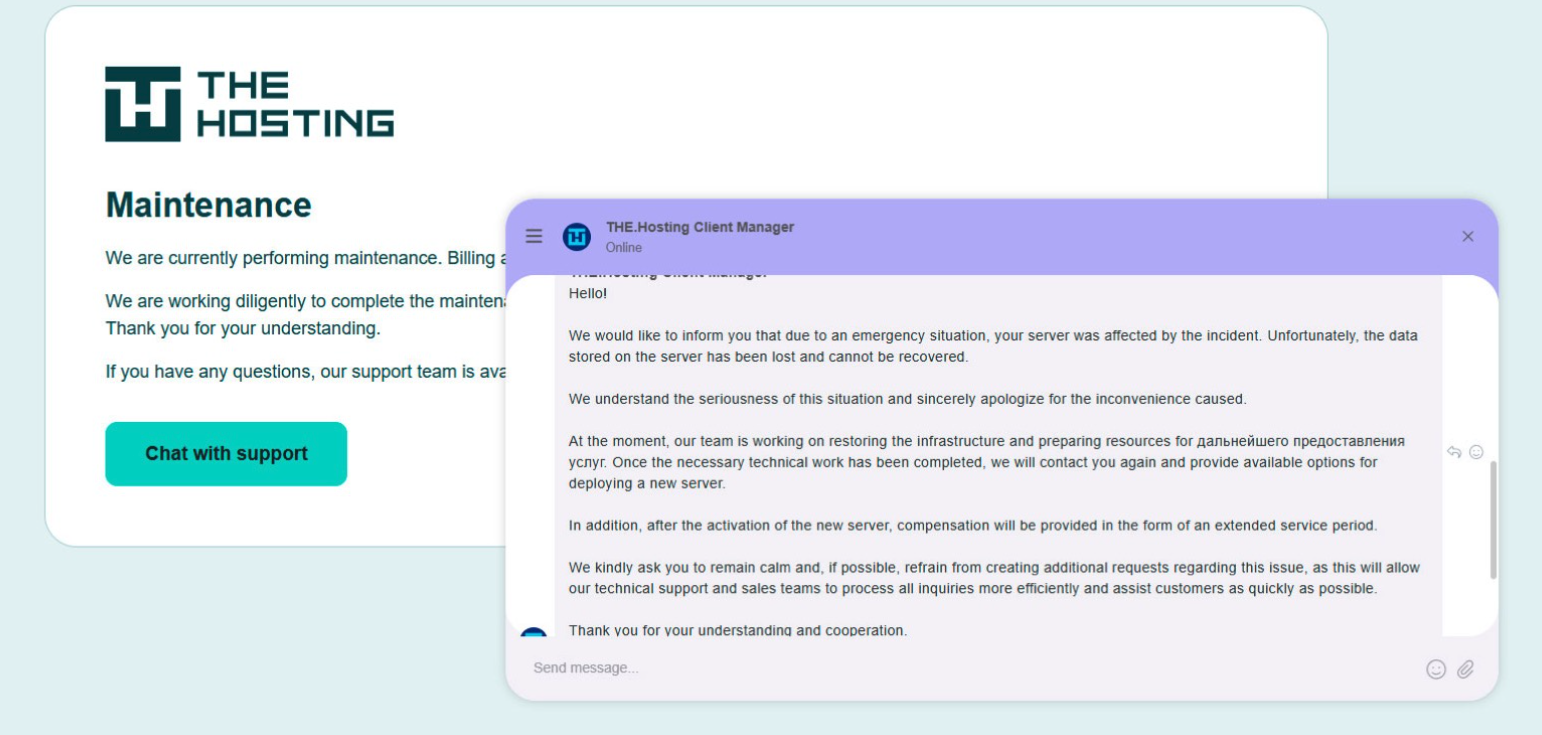
When word leaked that the Neculitis were about to be sanctioned, the network assets were rapidly migrated to a new entity, "the[.]hosting," managed by WorkTitans BV—the company controlled by Nesterenko and Zinad.
2026: The Final Shutdown
On May 18, 2026, the long-running cat-and-mouse game ended. FIOD raided three offices in Enschede and Almere, alongside data centers in Dronten and Schiphol-Rijk, effectively ending the operation of the network.
Supporting Data: Evidence of Malicious Activity
The connection between the Dutch-hosted servers and hostile activity is not merely speculative. Analysis provided by de Volkskrant indicates that during the week of the 2025 Danish municipal elections, WorkTitans and MIRhosting were the most frequently used networks in pro-Russian cyber-campaigns targeting Danish government bodies.
The seizure of 800 servers was accompanied by a stark message to the company’s clients: the hardware was compromised, and the data stored upon it was unrecoverable. This massive data loss highlights the extent to which these "bulletproof" hosting services were deeply embedded in the operations of malicious actors.
The Defense: Official Responses and Denials
Despite the weight of the evidence, Nesterenko has maintained a posture of innocence. In email correspondence, he argued that the transfer of assets to WorkTitans was a legitimate business move rather than a sanctions-evasion tactic.
"Closing or damaging a legitimate Dutch infrastructure company will not stop cybercrime, but it will harm many people who have done nothing wrong," Nesterenko wrote. He insisted that he severed all ties with the Neculiti brothers immediately upon the imposition of EU sanctions in 2025.
MIRhosting issued a formal statement on LinkedIn, claiming that an internal audit revealed no anomalies in network traffic during the period of the Danish elections. "Had large-scale DDoS attacks occurred, such activity would have been evident," the company stated. "Furthermore, prior to the media publication, we had not received any complaints, abuse reports, or official requests regarding suspicious activities."

The case of Youssef Zinad, however, remains shrouded in mystery. Known for keeping a low profile, Zinad reportedly went into hiding as investigators closed in. Records indicate he blocked his social media, ceased all communication, and eventually abandoned his registered business address in Almere, where neighbors reported seeing piles of discarded property. He was eventually located and arrested at a residence in Amsterdam.
Broader Implications: The End of "Bulletproof" Havens?
The arrests in the Netherlands represent a pivotal moment in the fight against "bulletproof" hosting providers—companies that operate with little oversight and ignore abuse complaints to serve high-risk clients. By treating the hosting companies not as passive service providers, but as accomplices in sanctions evasion, the Dutch authorities have created a legal template that other EU member states are likely to follow.
The Accountability Gap
For years, hosting companies have relied on the "conduit theory"—the argument that they are merely the pipes through which data flows and cannot be held responsible for the content transmitted by their customers. However, the involvement of Nesterenko and Zinad in the administrative and legal layers of these companies suggests a much higher level of culpability. By managing the technical infrastructure for specifically sanctioned entities, these individuals moved beyond being neutral service providers and became active participants in a foreign state’s hostile digital campaign.
Impact on Future Hybrid Operations
The removal of 800 servers is a significant operational blow. Each of these servers likely acted as a "node" for botnets, proxy networks, or command-and-control centers. While the decentralized nature of the internet allows malicious actors to migrate, the loss of reliable, high-bandwidth hosting within the EU—a jurisdiction that provides a veneer of legitimacy and high-speed connectivity—increases the cost and complexity of launching attacks.
The Path Forward
As the investigation continues, the focus will likely shift to the financial trails left by these companies. FIOD’s involvement confirms that this is as much a case of financial crime as it is of cyber-espionage. If the Dutch government can successfully secure convictions, it will send a chilling message to other "grey market" tech operators: the shield of the private sector is no longer a defense against charges of state-sponsored subversion.
The digital landscape, once thought to be a borderless frontier immune to the reach of domestic law enforcement, is slowly being reined in. The arrests in Amsterdam and The Hague prove that when the virtual world is used to attack the physical institutions of democracy, the law can—and will—find a way to disconnect the source.
 Sagoh
Sagoh  Evan Lee Salim
  Ammar Sabilarrohman