
 By Jia Lissa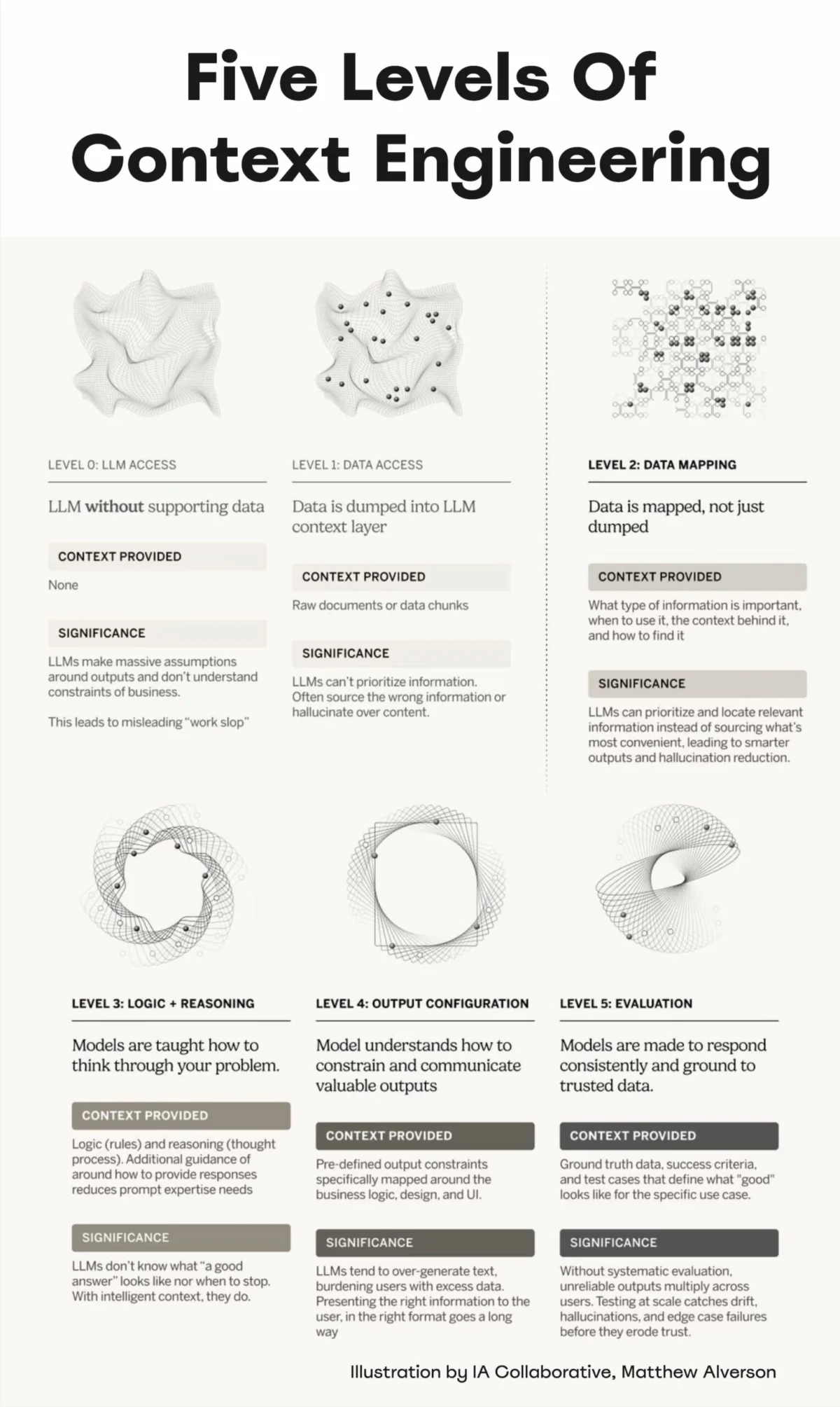
Introduction
Artificial intelligence has fundamentally altered the landscape of product design and front-end development. Tools that promise to generate fully functional prototypes from a simple text prompt or a static sketch are no longer futuristic concepts—they are daily drivers for design teams worldwide. Yet, anyone who has integrated AI deeply into their workflow knows the persistent frustration: the output often drifts wildly from expectations. Tiny inconsistencies multiply across the board; decisions made in passing are forgotten; hard-coded values pollute clean codebases; and models continuously hallucinate layout structures or component states because they lack proper context.
To combat this, the industry is shifting away from expecting AI to magically interpret ambiguous mock-ups. Instead, engineering and design leaders are focusing on a critical methodology: preparing design systems specifically for machine consumption.
Drawing from a practical, highly acclaimed guide by Hardik Pandya of Atlassian, this article explores how organizations can drastically reduce design drifts, minimize systemic mistakes, maintain rigorous context, and elevate the quality of AI-generated prototypes. By treating design decisions as core infrastructure, implementing automated auditing tools, and structuring multi-layered context, teams can finally bridge the chasm between human intent and machine execution.
Main Facts: The Core Anatomy of AI-Ready Design Systems
The primary thesis governing modern AI-assisted prototyping is simple yet profound: better AI outputs are the direct result of better data and clearer human guidance. When organizations feed an LLM (Large Language Model) an unstructured Figma file or a legacy component library, they are forcing the model to guess architectural priorities, accessibility standards, and styling rules. These assumptions inevitably introduce drift.
To resolve this, modern workflows rely on three foundational pillars:
- Design Decisions as Infrastructure: Treating every prioritization choice, design rationale, and accessibility standard as a deployable asset that feeds directly into machine-readable spec files.
- Structured Spec Files and Token Layers: Replacing subjective visual interpretation with rigid Markdown specifications and closed-set token variables that prevent AI from inventing ad-hoc values.
- Automated Auditing and Feedback Loops: Employing specialized validation scripts—such as FigmaLint—to dynamically scan prototypes, flag hard-coded styles, check token bindings, and ensure continuous synchronization between human updates and AI memory.
Chronology: The Evolution from Static Mock-ups to Context-Driven AI Engineering
Phase 1: The Wild West of Prompt-to-Prototype (2022–2023)
In the early days of generative UI tools, the approach was largely empirical. Designers fed screenshots, rough wireframes, or basic component descriptions directly into general-purpose LLMs and multimodal AI engines. The results were visually impressive at first glance, but structurally disastrous.
Without access to a structured design system’s internal logic, models routinely mixed padding scales, applied non-standard color hex codes instead of semantic design tokens, and completely omitted critical interactive states (such as hover, focus, disabled, and active states). Prototypes looked like functioning products, but underneath the hood, they were technical debt incarnate.
Phase 2: The Realization of Context Deficits (2024)
As teams attempted to scale AI prototyping into production environments, the bottleneck shifted from generation speed to consistency maintenance. Design systems engineers realized that visual mock-ups alone do not contain architectural context.
An icon button might look correct, but an AI cannot automatically deduce why a specific padding variable was chosen over another unless that rationale is explicitly codified. This realization sparked a movement toward "context engineering"—the deliberate structuring of information environments so that AI models can reason about code and design with mathematical precision.
Phase 3: Infrastructure-Level Documentation and Tooling (2025–Present)
Today, the industry is witnessing the formalization of "AI-ready design systems." Practitioners like Hardik Pandya have begun open-sourcing standardized architectures where design decisions are treated with the same infrastructural rigor as backend microservices.

Simultaneously, ecosystem tools like FigmaLint have emerged to automate the auditing process, verifying that design tokens are correctly bound before an AI model ever reads the schema. The paradigm has officially shifted: rather than asking AI to interpret raw artboards, we are teaching AI to read structured, human-curated specifications.
Supporting Data and Technical Architecture
To understand how to successfully implement an AI-ready design system, we must examine its structural components in detail. According to Pandya’s framework, an effective AI-guided prototyping pipeline relies on a precise three-layer architecture.
[ Human Design Decisions ]
          │
          ▼
┌─────────────────────────────────────────┐
│         Layer 1: Spec Files             │ (Structured Markdown: Rules, spacing, priorities)
├─────────────────────────────────────────┤
│         Layer 2: Token Layer            │ (Closed-set variables: Colors, typography, sizing)
├─────────────────────────────────────────┤
│         Layer 3: Auditing Scripts       │ (Automated validation: FigmaLint, linting checks)
└─────────────────────────────────────────┘
          │
          ▼
[ High-Quality AI Prototype Generation ]
Layer 1: Structured Spec Files (Markdown-Driven Guidance)
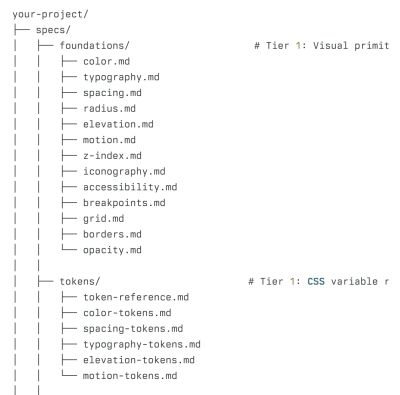
Instead of relying on an AI model to parse complex nested vector layers in a design file, teams compile structured Markdown files that house the core design principles, spacing rules, color palettes, and component usage guidelines.
Because these are plain text files, they are exceptionally cost-effective to process within an LLM’s context window. More importantly, they eliminate ambiguity. When an AI attempts to generate a layout, it references the spec file directly, ensuring adherence to institutional design language without guessing. Furthermore, extending existing code blocks via well-documented specs proves vastly superior to generating code blindly from visual artboards.
Layer 2: The Closed-Set Token Layer
Design drift often happens because an AI model, left without strict boundaries, will invent plausible-sounding values on the fly—such as generating a margin of 13px instead of adhering to an 8px grid system.

An AI-ready design system enforces a strict token layer. Every color, font weight, spacing unit, and elevation level is mapped to a named variable. The AI is explicitly instructed to choose exclusively from this closed set of variables. This programmatic constraint guarantees that generated prototypes remain visually cohesive and compliant with brand guidelines.
Layer 3: Automated Auditing and Continuous Syncing
Even with robust specs, AI models can occasionally hallucinate or overlook constraints. This is where automated auditing scripts and plugins—such as FigmaLint—become indispensable.
FigmaLint serves as an automated sentinel within Figma, scanning design systems for:
- Unbound design tokens
- Detached component instances
- Missing interactive states (focus, hover, active)
- Hard-coded values and anomalous layers
- Accessibility compliance gaps
When integrated into an AI prototyping pipeline, these auditing tools act as a validation gate. If an AI generates code or a layout containing hard-coded values or broken token bindings, the audit script immediately flags the anomalies. The system can then feed these corrections back into the iteration loop, effectively creating a self-healing design workflow.
Additionally, as design systems evolve and ship updates, automated synchronization routines flag which specific Markdown spec files require revision. This prevents the AI from reading outdated documentation, ensuring that generations always reflect the current state of product maturity.
Official Responses and Industry Perspectives
Design systems architects and engineering leaders have increasingly voiced strong alignment around the necessity of context engineering.
Industry veterans note that the greatest misconception in modern software development is the belief that generative AI tools will eliminate the need for meticulous human documentation. On the contrary, AI amplifies the value of good documentation. If a design team fails to articulate its internal logic, principles, and priorities clearly in human-readable and machine-parsable formats, the AI will simply scale chaos at an unprecedented velocity.
As Matthew Alverson and Addy Osmani have outlined in discussions surrounding the "levels of context engineering," providing raw files to an LLM without architectural context is akin to handing a complex blueprint to a contractor without explaining the load-bearing walls. The framework championed by Atlassian’s design advocates underscores that design systems must evolve from static asset libraries into active, living infrastructure documentation that serves both human designers and artificial intelligence agents equally.
Implications for the Future of Product Design
The systemic adoption of AI-ready design systems carries profound implications for the product design and engineering professions over the coming decade.
1. The Rise of "Design Engineering Infrastructure"
Designers can no longer afford to treat design systems merely as visual component libraries. The craft is expanding to encompass information architecture for machines. Writing clear, structured Markdown spec files, maintaining pristine token hierarchies, and configuring automated auditing tools will become core competencies for product designers and design systems engineers alike.

2. Elimination of Technical and Design Debt
Historically, rapid prototyping has been a primary contributor to technical debt. Prototypes built quickly for user testing often made their way into production with hard-coded styles and decoupled components. By enforcing a closed-set token layer and automated auditing prior to code finalization, organizations can systematically intercept and eliminate debt before it ever reaches the codebase.
3. Vendor and Third-Party Interoperability
Enterprise organizations frequently source component libraries and design tokens from external vendors and third-party agencies. Integrating these external systems into an internal product ecosystem often leads to severe design drift. Standardized auditing plugins and spec-driven workflows provide a universal contract: vendors must supply AI-ready spec files and validated tokens, ensuring seamless integration into automated prototyping pipelines.
4. A Shift in the Designer’s Daily Role
Rather than spending endless hours manually adjusting alignment pixels, renaming layers, or hunting down missing component states, designers will transition into orchestrators of context. Their value will lie in their ability to articulate design principles, define rigorous constraints, and refine the systemic rules that guide AI agents.
Conclusion
Artificial intelligence cannot magically resolve underlying technical or design debt without deliberate human guidance. The quality of an AI-generated prototype is a direct reflection of the clarity, structure, and discipline built into the underlying design system.
By treating design decisions as core infrastructure, organizing rules into accessible spec files, enforcing strict token layers, and leveraging automated auditing tools like FigmaLint, teams can eliminate ambiguity and harness the true potential of generative AI. The road ahead requires meticulous maintenance and continuous context engineering, signaling that the partnership between human designers and machine intelligence is only just beginning.

Meet “Design Patterns For AI Interfaces”
For practitioners looking to dive deeper into the intersection of user experience and machine intelligence, Design Patterns For AI Interfaces offers a comprehensive educational resource. Created by Vitaly Friedman, this specialized video course features hundreds of real-life examples and actionable UX guidelines designed to help product teams build AI features that users genuinely value and adopt.
To explore practical methodologies, review real-world case studies, or sign up for upcoming live UX training sessions, visit the official course portal and watch the introductory video preview to stay ahead of the evolving design landscape.
 Nila Kartika Wati
  Evan Lee Salim
  Layla Zulfa