
 By Nana Wu
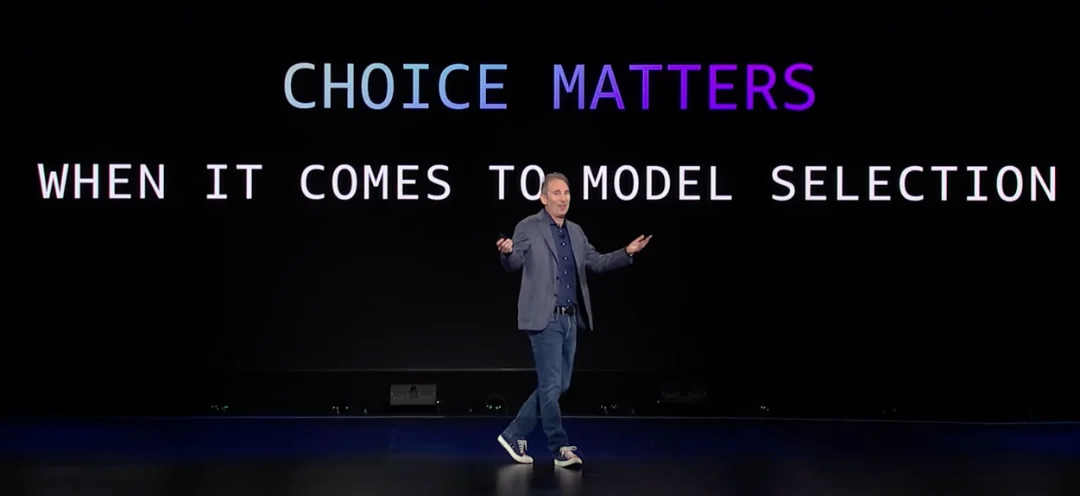
SEATTLE — In the rapidly evolving landscape of generative artificial intelligence, the paradigm is shifting decisively. The central question dominating corporate boardrooms and developer workshops is no longer simply about raw computational intelligence or benchmark dominance. Instead, engineering leaders are wrestling with a more nuanced, cost-conscious calculus: Which model fits this precise workflow, at this optimal cost, and within this exact latency threshold?
This philosophy of strategic optionality took center stage last week on Amazon Web Services (AWS) and Amazon Bedrock. A wave of next-generation frontier models officially joined the platform, led by OpenAI’s new GPT-6 Sol and GPT-6 Luna, alongside Anthropic’s powerful Claude Opus 5.5. Together, these releases represent a fundamental pivot in how organizations deploy artificial intelligence—moving away from a "one-size-fits-all" reliance on massive, generalized models toward a precise, highly optimized multi-model architecture.
Authored by Daniel Abib in the latest AWS News Blog roundup, these updates underscore a broader industry trend: the maturation of generative AI into an operational utility where cost efficiency, token optimization, and agentic workflows are paramount.
Main Facts
The latest expansion of Amazon Bedrock introduces three critical models designed to target specific tiers of enterprise productivity, operational overhead, and complex automated reasoning:
- OpenAI GPT-6 Sol: Tailored specifically for the demanding, recurring workflows of software development and IT operations (DevOps). It delivers enhanced reasoning capabilities for complex coding tasks while boasting a significantly lower price point than its predecessor generation, GPT-5.6.
- OpenAI GPT-6 Luna: Engineered for high-volume, focused, and repeatable tasks. Luna optimizes execution speed and drastically cuts operational costs, making automated, large-scale transaction processing and routine enterprise workflows economically viable.
- Anthropic Claude Opus 5.5: The inaugural release in Anthropic’s Claude 5.5 family. This model introduces advanced token efficiency—accomplishing more complex reasoning tasks with fewer tokens than its predecessor, Opus 5—and is specifically fine-tuned for autonomous agentic coding and long-running analytical workflows.
Beyond these foundational model launches, the broader technological ecosystem on AWS is increasingly focusing on observability tools capable of tracking, debugging, and managing complex, multi-step AI agent interactions.
Chronology: The Evolution of Managed AI on AWS
To understand the weight of last week’s announcements, it is essential to trace the rapid deployment trajectory of frontier models on cloud infrastructure, particularly within the Amazon Bedrock ecosystem.
- Late 2024 to Early 2025: The enterprise generative AI market experienced a massive influx of reasoning-focused models. The introduction of architectures like DeepSeek-R1 and early iterations of OpenAI’s GPT-5 series forced cloud providers to adapt their underlying infrastructure. AWS responded by expanding its custom silicon capabilities—namely AWS Trainium and Inferential chips—to handle the intense computational overhead of reinforcement learning and chain-of-thought processing.
- Mid-2025: As enterprises scaled their proof-of-concepts into production environments, cost and latency emerged as primary bottlenecks. Organizations realized that routing every query—from simple customer service text classification to complex code generation—through the largest, most expensive models was financially unsustainable.
- Late 2025 (GPT-5.6 Era): Platforms began refining price-to-performance ratios. However, developers still faced trade-offs between deep reasoning capabilities and high-throughput execution speed.
- Last Week (The GPT-6 & Claude 5.5 Launch): Marking a major turning point on Amazon Bedrock, OpenAI and Anthropic simultaneously pushed the envelope. OpenAI introduced the dual-model strategy of Sol and Luna to separate heavy development cycles from high-volume automated tasks. Simultaneously, Anthropic dropped Claude Opus 5.5, pushing token efficiency and autonomous agentic workflows to new heights.
Supporting Data: The Intelligence-Versus-Efficiency Curve
The economic model of cloud-based artificial intelligence is undergoing a structural correction. Historically, achieving higher reasoning benchmarks required a linear—if not exponential—increase in compute expenditure and token consumption. The latest models available on Amazon Bedrock challenge this correlation.
Pricing and Cost Dynamics
- Price Reductions: Both GPT-6 Sol and GPT-6 Luna enter the market at substantially lower price points per token compared to the GPT-5.6 generation. This price deflation allows enterprises to experiment with deeper, multi-step prompt chains without risking budget overruns.
- Token Economy: Claude Opus 5.5’s architectural optimizations mean that complex coding tasks require fewer total tokens to achieve a successful compilation or architectural review. By reducing token bloat, enterprises save not only on inference API costs but also on the egress and processing latency associated with massive context windows.
Workload Specialization Metrics
- Development & Operations (Sol): Geared toward high-context environments where codebases span millions of lines. Sol maintains state across complex software architectures, reducing the frequency of hallucinations in debugging pipelines.
- High-Volume Automation (Luna): Optimized for low latency. Luna handles repetitive transactional queries—such as automated invoice parsing, routine customer ticketing, and batch data categorization—at throughput levels that outpace previous-generation equivalents.
- Agentic Execution (Claude Opus 5.5): Built for autonomy. Traditional models required constant human-in-the-loop intervention for long-running workflows. Opus 5.5’s fine-tuning allows it to manage multi-hour coding and data-synthesis jobs independently, evaluating its own intermediate outputs before finalizing a task.
Official Responses and Industry Perspective
Cloud architects and enterprise technology leaders have welcomed the granular choice introduced by these updates. In his weekly roundup commentary, Daniel Abib emphasized that the narrative has officially transitioned from raw capability to operational precision:
"If there’s one theme that defined last week, it’s choice. The frontier models keep arriving, and the interesting question is no longer just ‘how smart is it?’ but ‘which model fits this step, at this cost, at this latency?’ That’s exactly what landed on Amazon Bedrock…"
Industry analysts point out that enterprise software buyers are increasingly skeptical of vendor lock-in and single-model strategies. By curating a diverse marketplace within Amazon Bedrock—where customers can seamlessly toggle between OpenAI’s GPT-6 Sol and Luna, Anthropic’s Claude 5.5, and various open-source or specialized models—AWS is positioning itself as the neutral, highly secure orchestration layer for enterprise AI.
Furthermore, engineering teams note that the inclusion of native observability tools is a vital counterweight to these powerful models. As AI systems evolve from passive text-generators into active agents capable of executing code, modifying databases, and initiating workflows independently, the ability to audit why an agent made a specific decision becomes non-negotiable.
Implications for Enterprise Architecture and the Future
The convergence of GPT-6 Sol, Luna, and Claude Opus 5.5 on Amazon Bedrock carries profound implications for software engineering, cloud economics, and organizational workflows.

1. The Rise of Multi-Model Routing Architectures
Rather than routing all incoming corporate queries to a single frontier model, forward-thinking enterprise architectures are adopting intelligent router patterns. A lightweight router can assess an incoming prompt:
- Routine data extraction or classification tasks are routed to high-throughput, low-cost models like GPT-6 Luna.
- Complex software refactoring, security auditing, or architectural planning is directed to GPT-6 Sol.
- Autonomous multi-step research or agentic code generation is assigned to Claude Opus 5.5.
This cascading approach maximizes performance while minimizing total cost of ownership (TCO).
2. Maturation of Autonomous Agentic Workflows
The capability of Claude Opus 5.5 to perform long-running tasks efficiently signals that 2026 is truly the year of production-grade AI agents. Enterprises are moving beyond chat interfaces into "headless" execution—where AI systems run asynchronously in background pipelines, executing pull requests, running automated test suites, and deploying patches with minimal human oversight.
3. Democratization of Advanced Capabilities
Because GPT-6 Sol and Luna arrive at reduced price points compared to previous generations, smaller businesses and mid-market enterprises can now access tier-one reasoning capabilities that were previously exclusive to heavily funded technology giants. This democratization levels the competitive playing field, allowing lean startups to leverage sophisticated automation tools out of the box.
Looking Ahead
As AWS continues to roll out updates, developers are encouraged to engage with the community through the AWS Builder Center to share deployment patterns and optimization strategies. With new announcements dropping weekly via the What’s New with AWS portal, the velocity of cloud-native generative AI shows no signs of slowing down.
For organizations looking to future-proof their operations, the directive is clear: embrace model optionality, invest in robust observability, and begin matching the specific tool to the precise task.
 Siti Muinah
 Reynand Wu
 Jia Lissa
