
 By rifanmuazin
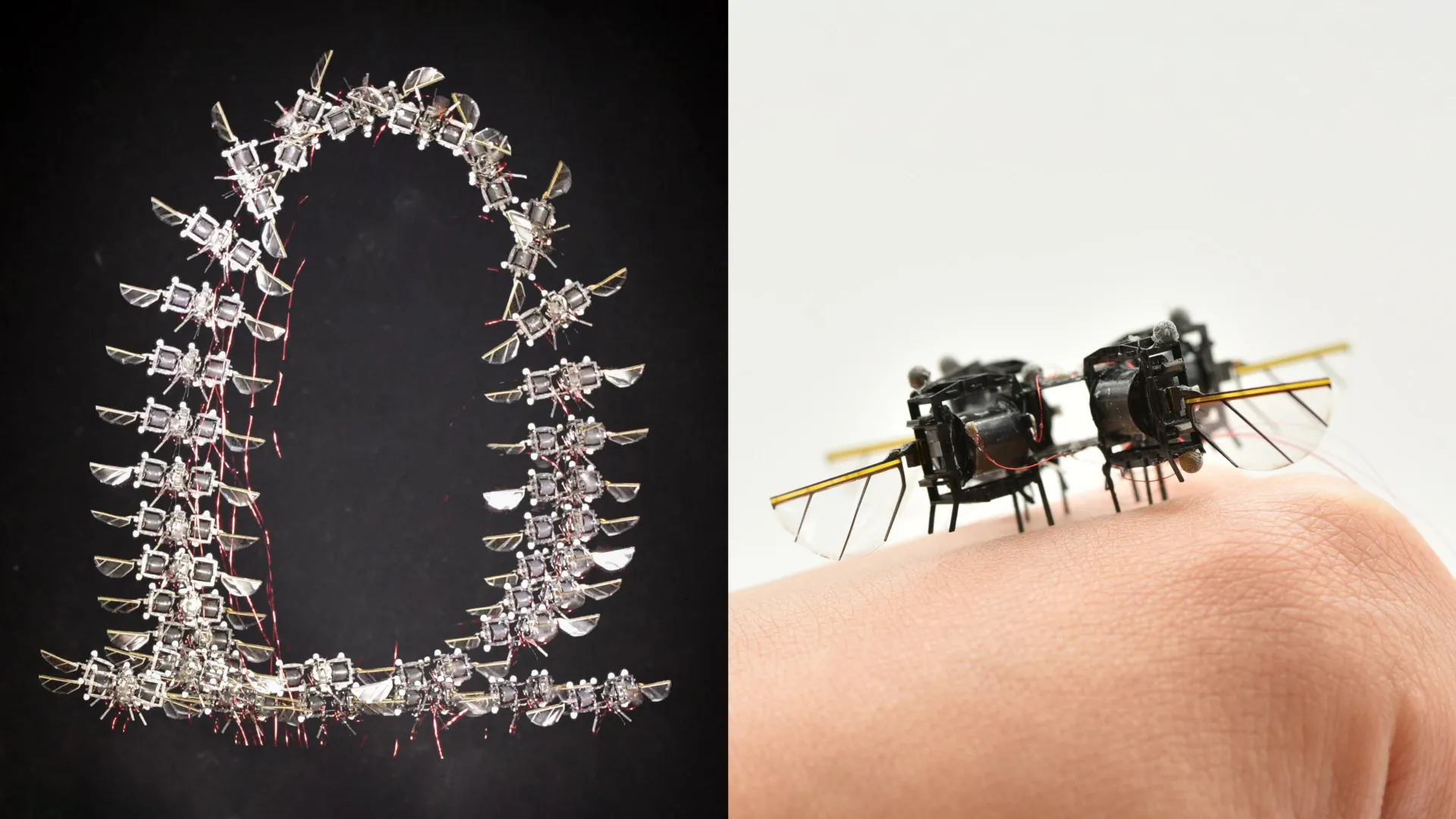
In the aftermath of a catastrophic earthquake, when time is measured in breaths and structural integrity is a memory, the difference between life and death often lies in access. Search-and-rescue teams face the daunting reality of navigating unstable, claustrophobic debris piles where traditional quadcopters—bulky, loud, and physically limited—simply cannot venture. For years, the dream of deploying a swarm of insect-sized robots to slip through these crevices has remained a tantalizing but distant goal.
Now, a team of researchers at the Massachusetts Institute of Technology (MIT) has bridged the gap between fiction and functionality. By integrating a sophisticated, two-part artificial intelligence controller, the team has transformed their micro-scale robots from sluggish, tethered prototypes into high-performance aerial machines capable of speed, precision, and agility that rivals the biological creatures that inspired them.
The Genesis of the Robotic Insect
The development of these microrobots, a project spanning more than five years at MIT’s Soft and Micro Robotics Laboratory, represents a triumph of interdisciplinary engineering. The robots themselves are marvels of miniaturization; they are roughly the size of a vintage microcassette and weigh less than a standard paperclip.
To achieve flight, the team moved away from traditional rigid rotors, instead employing soft artificial muscles. These materials contract with extreme rapidity when an electric current is applied, driving large, flapping wings that mimic the biomechanics of a bee or a dragonfly. While previous iterations of the hardware were physically capable of flight, the "brain"—the onboard control system—was the bottleneck. Earlier models required human intervention to tune flight parameters, making them slow and prone to erratic behavior. The challenge was clear: how to provide a device with such limited weight and power capacity the computational power required to process complex aerodynamics in real time.
Chronology of a Breakthrough
The trajectory toward this recent success can be traced through a series of incremental, yet critical, advancements:
- 2019–2021 (The Hardware Phase): The team focused on refining the "body" of the robot. This period saw the development of more durable frames and the implementation of high-frequency soft actuators, allowing for more aggressive wingbeats.
- 2022 (The Software Wall): Despite the hardware improvements, the robots remained computationally limited. Any attempt to introduce complex maneuvers resulted in crashes, as the controller could not adjust to wind gusts or slight deviations in trajectory.
- 2023 (The Collaborative Pivot): The Soft and Micro Robotics Laboratory joined forces with the Laboratory for Information and Decision Systems (LIDS), led by Professor Jonathan P. How. This partnership combined expertise in microrobotics with advanced control theory and AI.
- 2024 (The Milestone): The team successfully demonstrated an AI-driven control framework capable of high-speed maneuvers, including sustained, consecutive aerial flips, as published in Science Advances.
Supporting Data: By the Numbers
The performance leap provided by the new AI controller is not merely incremental; it is transformative. In head-to-head comparisons against previous versions of the controller, the new system yielded staggering results:
- Speed: A 447% increase in maximum flight speed.
- Acceleration: A 255% increase in acceleration capabilities.
- Agility: The robot successfully completed 10 consecutive somersaults in just 11 seconds.
- Stability: Despite constant wind disturbances introduced during the test, the robot maintained a tight flight path, drifting no more than 4 to 5 centimeters from its target trajectory.
These metrics demonstrate that the robot has moved from "struggling to fly" to "mastering the air." By decoupling the heavy computation from the real-time execution, the researchers ensured that the robot could maintain its weight constraints while still benefiting from the complex planning required for acrobatic flight.
Official Responses and Expert Perspectives
The project’s success is viewed by its lead researchers as a "paradigm shift" in the field of micro-robotics.
"We want to be able to use these robots in scenarios that more traditional quadcopter robots would have trouble flying into," explains Kevin Chen, an associate professor in the Department of Electrical Engineering and Computer Science (EECS) and head of the Soft and Micro Robotics Laboratory. "Now, with our bioinspired control framework, the flight performance of our robot is comparable to insects in terms of speed, acceleration, and the pitching angle. This is quite an exciting step toward that future goal."
Jonathan P. How, the Ford Professor of Engineering and co-senior author, emphasizes the symbiotic nature of the research: "The hardware advances pushed the controller so there was more we could do on the software side, but at the same time, as the controller developed, there was more they could do with the hardware. As Kevin’s team demonstrates new capabilities, we demonstrate that we can utilize them."
Yi-Hsuan Hsiao, an EECS graduate student and co-lead author, notes the wider impact: "This work demonstrates that soft and microrobots, traditionally limited in speed, can now leverage advanced control algorithms to achieve agility approaching that of natural insects and larger robots, opening up new opportunities for multimodal locomotion."
The Anatomy of the AI Controller
The "secret sauce" behind this advancement is a two-step AI control system that solves the computational trade-off between power and agility.
1. The Expert Planner (Model-Predictive Control)
The first layer of the system uses a model-predictive controller. This acts as the "architect" of the flight, relying on a mathematical model of the robot’s dynamics. It predicts how the robot will react to different thrusts and torques, planning a path that avoids crashes. Because this requires heavy computing power, it is not ideal for real-time, millisecond-by-millisecond adjustments.
2. The Real-Time Policy (Imitation Learning)
To translate the "expert" plans into reality, the team used a deep-learning technique called imitation learning. The AI was trained to observe the expert planner’s decisions and "learn" how to replicate those high-speed maneuvers. This creates a lightweight, fast policy that can run in real-time on the robot’s hardware. Essentially, the robot "memorizes" the complex, expert-calculated moves and can execute them instantly without needing to solve the heavy math while in the air.
Implications: A New Era for Rescue and Beyond
The implications of this technology extend far beyond the laboratory. By mimicking the "saccade"—the rapid, sharp pitching movement insects use to change direction and stabilize their vision—the researchers have opened the door for future onboard sensing.
"This bio-mimicking flight behavior could help us in the future when we start putting cameras and sensors on board the robot," says Chen.
The path forward involves several key objectives:
- Autonomy: Moving away from external motion-capture systems to fully onboard sensors, allowing the robots to navigate unmapped environments.
- Swarming: Coordinating groups of these robots so they can work in tandem to map collapsed buildings, relay information, or even act as a localized communication mesh.
- Obstacle Avoidance: Developing algorithms that allow individual units to avoid collisions with each other and their surroundings in real-time.
As these machines become more autonomous, their role in search and rescue will likely become central. Imagine a scenario where, moments after a structure collapses, a swarm of these robots is released. They flow into the rubble like water, their small size allowing them to reach pockets where victims are trapped, their agility allowing them to avoid falling debris, and their onboard sensors transmitting vital data back to rescue crews.
This research, funded by the National Science Foundation, the Office of Naval Research, the Air Force Office of Scientific Research, MathWorks, and the Zakhartchenko Fellowship, stands as a testament to what is possible when deep-learning meets soft robotics. The era of the robotic insect has arrived, and it is more agile, more intelligent, and more capable than ever before.
 Ali Ikhwan
 Reynand Wu
 Ammar Sabilarrohman
