BENGALURU, ORLANDO, SHANGHAI — In a continued effort to champion the architects, educators, and visionaries driving the global cloud computing ecosystem, Amazon Web Services (AWS) has officially inducted three new members into its globally recognized AWS Heroes program.
The announcement, published via the official AWS News Blog, highlights a diverse cohort of technology leaders spanning three continents: Avinash Shashikant Dalvi of Bengaluru, India; Dr. Joanne Skiles of Orlando, United States; and Xiaofei Li of Shanghai, China. These individuals join a vibrant, worldwide network of elite technical experts who go above and beyond their daily professional obligations to mentor developers, share cutting-edge knowledge, and cultivate thriving local and digital tech communities.
Main Facts
The AWS Heroes program was established to recognize prominent members of the global cloud community who have exhibited a distinct passion for sharing their knowledge and advocating for best practices on the AWS platform. Heroes are chosen not by corporate mandate, but based on their continuous, high-impact contributions to the developer community—ranging from open-source contributions and public speaking to organizing local meetups and producing educational content.
The latest additions to the roster bring specialized expertise in serverless computing, artificial intelligence (AI), containerization, and regional community building:
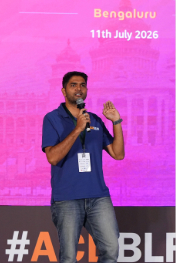
Avinash Shashikant Dalvi (Bengaluru, India) has been named an AWS Serverless Hero. A seasoned tech architect and co-organizer of the AWS User Group Bengaluru, Dalvi specializes in serverless architectures, containerized workloads, and production-ready applications. His prolific output includes over 40 community talks, technical deep-dives into services like Amazon ECS, AWS Fargate, AWS Lambda, and AWS Amplify, as well as the curation of the AWS for Product Builders newsletter.
Dr. Joanne Skiles (Orlando, USA) also joins the ranks as an AWS Serverless Hero. An engineering leader, computer science professor, and educator with more than 16 years of full-stack development experience, Skiles bridges the gap between enterprise architecture and academia. Alongside organizing the Orlando AWS User Group, she produces technical content through her YouTube channel, conference keynotes, and podcasts (Chaotic Commits and Her Career Unplugged). At Rollins College, she leads the Transparent Systems lab, focusing on serverless infrastructure and cloud-based AI systems.
Xiaofei Li (Shanghai, China) is recognized as an AWS Community Hero. A distinguished "AWS Golden Jacket" holder, Li is a cornerstone of the Greater China cloud community. He has founded and led several massive initiatives, including the Kiro Chinese User Community—which boasts over 5,000 members—as well as managing the Amazon Quick and Tokyo Chinese AWS communities. Notably, Li spearheaded the Chinese localization of the AWS Builder Cards game, engaging over 3,000 participants across 15 cities, while actively supporting mentorship programs for underserved students and Women in Tech initiatives.
Chronology of the AWS Heroes Program and Community Evolution
To fully understand the significance of these inductions, it is helpful to trace the evolution of community-led advocacy within the broader history of cloud computing.
Phase 1: The Grassroots Era (Early 2010s)
In the formative years of cloud computing, developer resources were largely confined to official product documentation, whitepapers, and rudimentary forums. As enterprises began migrating mission-critical workloads to the cloud, a distinct knowledge gap emerged. Early adopters began organizing informal meetups in cities like Seattle, San Francisco, and London. These grassroots gatherings served as the primary incubators for shared troubleshooting, architectural patterns, and peer-to-peer mentoring.
Phase 2: Formalization and the Birth of AWS Heroes (Late 2010s)
Recognizing that community leaders were vital to the sustainable adoption of cloud technologies, AWS formalized its outreach by launching the AWS Heroes program. The initiative was designed to create a direct bridge between passionate external technologists and the internal product engineering teams at Amazon. Over the years, the program expanded from a handful of general cloud advocates into specialized sub-categories—such as Serverless Heroes, Container Heroes, Data Heroes, and Machine Learning Heroes—reflecting the growing complexity and modularity of the AWS service portfolio.
Phase 3: Global Expansion and Modern Hybrid Ecosystems (2020–Present)
Today, the AWS Heroes network spans dozens of countries, reflecting the truly global nature of software engineering. Modern community leaders no longer operate solely within physical meetups; they leverage hybrid models that combine global podcasts, localized newsletters, massive virtual user groups, and academic research labs. The inductions of Dalvi, Skiles, and Li represent this contemporary era, where technical excellence must be paired with inclusive education, global accessibility, and cross-cultural knowledge transfer.
Supporting Data and Ecosystem Impact
The scale at which AWS Heroes operate is staggering. Quantitative metrics from the backgrounds of the newly inducted class illustrate the profound multiplier effect these leaders have on the broader developer ecosystem:
Reach and Scale: Xiaofei Li’s founding of the Kiro Chinese User Community demonstrates hyper-growth community building, uniting over 5,000 active cloud practitioners in a single localized network. Furthermore, his localized rollout of AWS Builder Cards engaged more than 3,000 participants across 15 distinct cities, gamifying cloud architecture education.
Content Production and Knowledge Dissemination: Avinash Shashikant Dalvi’s track record of delivering over 40 community-driven presentations highlights the continuous demand for peer-led architectural guidance. Coupled with his AWS for Product Builders newsletter, Dalvi systematically breaks down complex topics such as Amazon ECS, Fargate, and Lambda for thousands of software engineers navigating production environments.
Academic Integration: Dr. Joanne Skiles represents a vital intersection between industry best practices and formal higher education. With 16 years of full-stack engineering experience brought directly into her role as a professor at Rollins College—and amplified via her podcasts (Chaotic Commits and Her Career Unplugged)—Skiles influences both current enterprise developers and the next generation of computer science graduates. Her work in the Transparent Systems lab actively investigates the practical implementation of serverless and AI paradigms.
Official Responses and Perspectives
While AWS routinely highlights community achievements, the ethos of the AWS Heroes program is best understood through the philosophy of community-led growth. Industry observers and cloud advocates frequently emphasize that the democratization of cloud technology would be impossible without the tireless efforts of independent educators.
Taylor Jacobsen, representing AWS community advocacy, noted in the announcement:
"AWS Heroes are a vibrant, worldwide group of AWS experts who go above and beyond to share knowledge, mentor others, and build thriving communities. These individuals make a real difference in helping developers and organizations succeed with AWS."
Echoing this sentiment, external technology analysts note that programs like AWS Heroes serve as an essential trust layer in the modern software supply chain. When enterprises evaluate cloud platforms, they rely heavily on the independent validation, architectural blueprints, and troubleshooting guides produced by recognized community leaders rather than solely depending on vendor marketing materials. By elevating figures like Dalvi, Skiles, and Li, AWS validates a decentralized model of technical authority where credibility is earned through peer mentorship and practical, hands-on contribution.
Implications for the Future of Cloud Development
The addition of Dalvi, Skiles, and Li to the AWS Heroes roster carries several important implications for the future of cloud computing, developer relations, and enterprise technology adoption:
1. The Rise of Hyper-Localized Tech Communities
As cloud adoption matures in regions outside North America and Europe—particularly across South Asia and Greater China—the demand for localized, culturally nuanced technical education has skyrocketed. Leaders like Avinash Shashikant Dalvi in Bengaluru and Xiaofei Li in Shanghai prove that regional user groups are no longer peripheral to the global tech conversation; they are central innovation hubs. Their localized newsletters, user groups, and gamified learning initiatives (such as AWS Builder Cards) pave the way for a more globally inclusive developer workforce.
2. Bridging Industry and Academia
Dr. Joanne Skiles’ induction underscores an overdue trend: the blending of academic computer science curricula with practical, modern cloud architecture. For years, universities struggled to keep pace with the rapid iteration cycles of public cloud providers. By embedding serverless computing, full-stack systems, and AI workflows into undergraduate education and university labs, educators like Skiles ensure that graduating computer scientists enter the workforce day-one ready to build production-grade cloud applications.
3. The Maturation of Serverless and AI Workloads
Both Dalvi and Skiles hold the specific designation of Serverless Hero, reflecting where the cutting edge of application development currently resides. As organizations increasingly abandon monolithic infrastructures in favor of event-driven architectures powered by AWS Lambda, Fargate, and managed AI services, the complexity of debugging, cost-optimizing, and securing these systems grows exponentially. Heroes specializing in serverless paradigms act as essential pathfinders, publishing patterns and anti-patterns that save organizations countless hours of engineering trial and error.
4. Diversity, Mentorship, and Social Impact
A common thread among this month’s inductees is an explicit commitment to lifting others up. Xiaofei Li’s dedication to Women in Tech and mentoring underserved students, alongside Skiles’ career-focused podcasts and mentorship, highlights a maturing tech culture. The modern cloud hero is measured not only by lines of code written or systems architected, but by how many builders they successfully onboard into the ecosystem.
Conclusion
The recognition of Avinash Shashikant Dalvi, Dr. Joanne Skiles, and Xiaofei Li as AWS Heroes reinforces the core truth of modern technology: behind every robust cloud infrastructure, scalable serverless application, and global enterprise migration is a human community built on shared knowledge and mutual support.
As the cloud computing landscape continues to evolve with the rapid integration of artificial intelligence, edge computing, and advanced container orchestration, the role of independent community leaders will only grow more critical. For developers, architects, and organizations looking to connect with these new Heroes or learn more about the program, resources remain publicly accessible via the official AWS Builder Center and the AWS Heroes webpage.

 By Siti Muinah




 Sagoh
 Reynand Wu
