
 By Asep Darmawan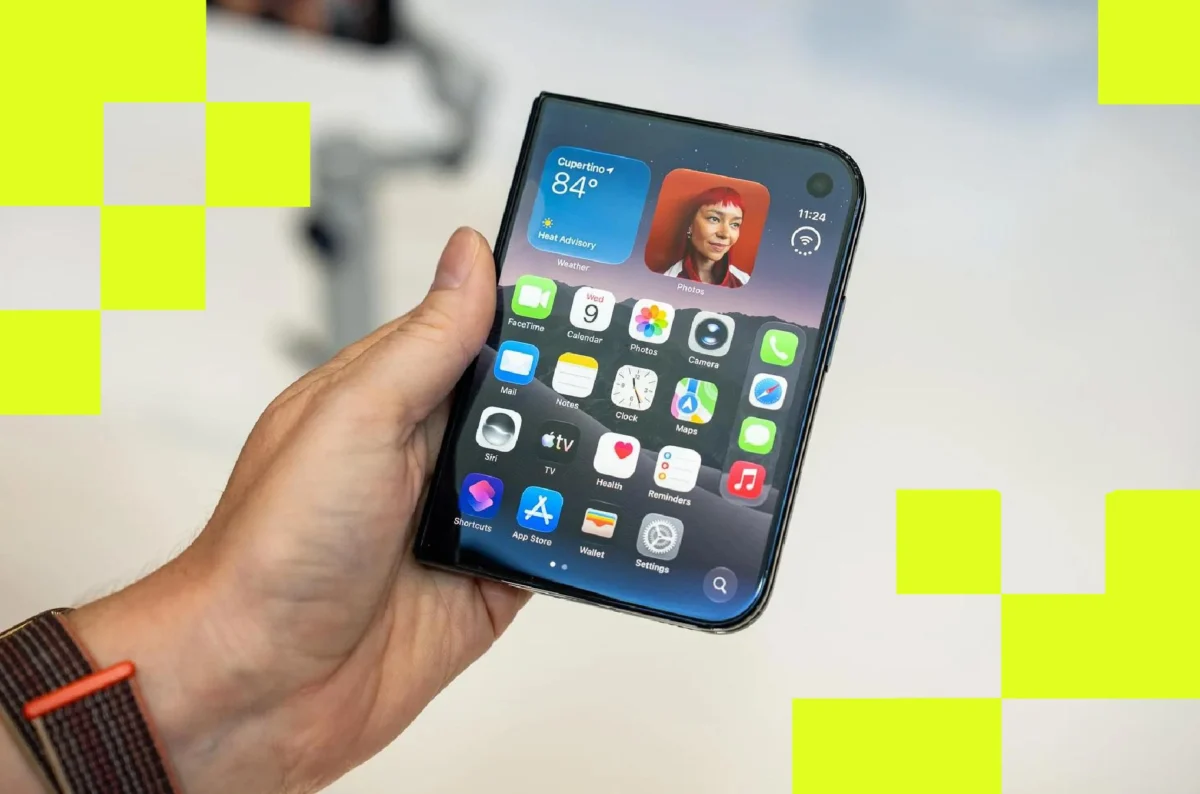
By Tech Desk Analysis
Enriched and Expanded Coverage
Main Facts
Apple has once again shifted the tectonic plates of the consumer electronics industry. In what is rapidly shaping up to be one of the most consequential hardware cycles in the company’s recent history, Apple has unveiled a sweeping product lineup that introduces radical new form factors, mechanical camera innovations, and ambient artificial intelligence features.
Chief among the announcements is Apple’s long-awaited debut in the foldable smartphone market with the newly minted iPhone Duo, alongside the iPhone 18 Pro, which sports a groundbreaking variable-aperture camera system. Complementing these mobile releases are next-generation Apple Watches outfitted with enhanced sensor arrays and an always-on microphone capable of continuous conversational summarization.
Perhaps equally significant to the hardware itself is the changing of the guard at the top. This product cycle marks the high-stakes debut of John Ternus as Apple’s Chief Executive Officer, stepping into the shoes of Tim Cook to deliver his first major keynote presentation. Ternus’s baptism by fire includes not only ushering Apple into the competitive foldable arena but also defending potentially controversial privacy and utility paradigms, particularly regarding Apple Intelligence integration on wearable devices.
Chronology: From Cupertino Keynote to Deep-Dive Analysis
The rollout of Apple’s latest ecosystem update followed a meticulously choreographed timeline, starting on the Apple Park campus in Cupertino and rippling immediately outward to tech analysts and media outlets worldwide.
- Pre-Keynote Anticipation: Industry speculation reached fever pitch regarding Apple’s counter-strategy to stagnant smartphone growth. Rumors of a foldable device had circulated for half a decade, but concrete supply chain leaks in late 2025 confirmed that Apple was finally ready to challenge Samsung, Google, and OnePlus in the foldable space.
- The Keynote Presentation: John Ternus took the Steve Jobs Theater stage to introduce the slate. Eschewing the incremental updates of previous years, the presentation jumped straight into hardware reinvention, highlighting the iPhone Duo and the mechanical evolutions of the iPhone 18 Pro.
- Hands-On Testing & Critical Evaluation: Immediately following the keynote, select journalists—including The Verge’s Allison Johnson and Victoria Song—were given restricted hands-on time in Cupertino to evaluate the devices.
- Post-Launch Media Deep-Dives: Industry retrospectives, such as comprehensive breakdowns on The Vergecast, began dissecting the engineering choices behind the hardware. Discussions centered on whether Apple’s delayed entry into foldables gave them a structural advantage by cherry-picking the best features of Android competitors, while simultaneously questioning the long-term viability of ambient AI listening on smartwatches.
Supporting Data and Technical Breakdown
To understand the magnitude of Apple’s latest hardware release, one must examine the engineering specs and design philosophies driving the iPhone 18 Pro, the iPhone Duo, and the latest Apple Watch iterations.
The iPhone 18 Pro: Mechanical Apertures and Computational Photography
The iPhone 18 Pro introduces a variable-aperture camera system, moving beyond the fixed apertures that have dominated smartphone photography for over a decade. While the marketing hype heavily leans into the creative flexibility of stopping down the lens to alter depth-of-field dynamically, optical engineers and early reviewers have raised nuanced technical questions.
- The Core Upgrade: Technical analysis suggests that the true generational leap may not lie in the act of stopping the aperture down, but rather in the hardware capability of opening it wider than previous generations, allowing significantly more light into the sensor for low-performance environments before relying purely on computational noise reduction.
- Sensor Integration: Paired with a next-generation image signal processor (ISP), the physical aperture adjustment works in tandem with Apple’s photonic engine to handle edge-case lighting scenarios that previously produced digital artifacts.
The iPhone Duo: Apple’s Foldable Strategy
Apple has officially entered the foldable market with the iPhone Duo, a device that heavily reflects a "late-mover advantage" strategy.

- Form Factor Philosophy: Rather than inventing a brand-new form factor from scratch, Apple surveyed the landscape of Android foldables (such as the Samsung Galaxy Z Fold series and Google Pixel Fold) to curate and refine the most successful design choices.
- Durability and Crease Management: Apple engineers utilized a proprietary multi-layer ultra-thin glass (UTG) paired with a fluid hinge mechanism designed to minimize the display crease—a persistent pain point for first- and second-generation Android foldables.
- Software Adaptation: iPadOS-style multitasking paradigms have been ported down to the foldable inner display, allowing seamless transitions when opening and closing the device without forcing third-party developers to rewrite their applications entirely from scratch.
Wearable Tech: Sensor Arrays and Ambient AI
The new Apple Watch hardware introduces a redesigned sensor array capable of tracking advanced biometrics. However, the most debated feature is the integration of an always-on microphone dedicated to background conversation summarization.
- Data vs. "Vibes": While health tech analysts are parsing whether the new sensor metrics offer clinically actionable data or simply trend-based wellness tracking ("vibes-based health data"), the privacy and computational implications of continuous background audio parsing have raised immediate red flags among cybersecurity experts.
- AI Processing: By running local language models (LLMs) or routing compressed audio summaries via on-device silicon, Apple is attempting to position the Apple Watch not just as a fitness tracker, but as a proactive memory assistant.
Official Responses and Industry Reactions
The reception to Apple’s announcements has been a mixture of awe, caution, and fierce debate, particularly regarding leadership and artificial intelligence ethics.
John Ternus’s Debut as CEO
Stepping into the role of CEO following Tim Cook’s tenure is no small task. Industry watchers evaluated Ternus’s keynote performance closely. Observers noted that Ternus leaned heavily into his engineering background, speaking with granular detail about material science, thermal dissipation in foldable hinges, and optical physics. While lacking the theatrical flair of early Steve Jobs keynotes, Ternus projected an air of pragmatic technical competence that reassured investors looking for steady hands at the wheel.
The AI Privacy Debate
The introduction of always-on conversation summarization on the Apple Watch has triggered immediate pushback from privacy advocates. In an official statement addressing initial privacy concerns, Apple reiterated its commitment to on-device processing, stating:
"Privacy is a fundamental human right. All audio processing and conversational summarization occur locally on the secure enclave of your device, ensuring that your personal conversations never leave your hardware or touch external cloud servers without explicit, user-initiated consent."
Despite these assurances, privacy watchdogs remain skeptical about the societal implications of ambient listening devices worn continuously in public spaces, workplace environments, and private homes.
Implications: What This Means for the Future of Tech
Apple’s 2026 hardware and software announcements signal several major paradigm shifts for the consumer technology landscape:
- The Maturation of the Foldable Market: With Apple officially stamping its approval on the foldable form factor via the iPhone Duo, foldables are moving away from being a luxury enthusiast novelty and entering the mainstream flagship conversation. Android competitors will now have to contend with Apple’s marketing machine and ecosystem lock-in driving adoption for folding screens.
- The Camera Renaissance: The inclusion of variable apertures in mobile phones suggests that computational photography alone has hit a plateau, forcing manufacturers to return to mechanical optical innovations to extract better image quality.
- The Normalization of Ambient AI: By placing always-on listening features on smartwatches, Apple is aggressively pushing consumers toward an ambient computing future. If successful, this normalizes continuous AI surveillance of daily life, setting a precedent that other tech giants will undoubtedly rush to follow.
- A New Leadership Era: John Ternus’s successful navigation of this complex product launch proves that Apple’s engineering-first corporate culture remains intact, signaling a stable transition into the post-Cook era of hardware design and software integration.
 Siti Muinah
  Asro
Asro  Suro Senen