
 By Reynand Wu
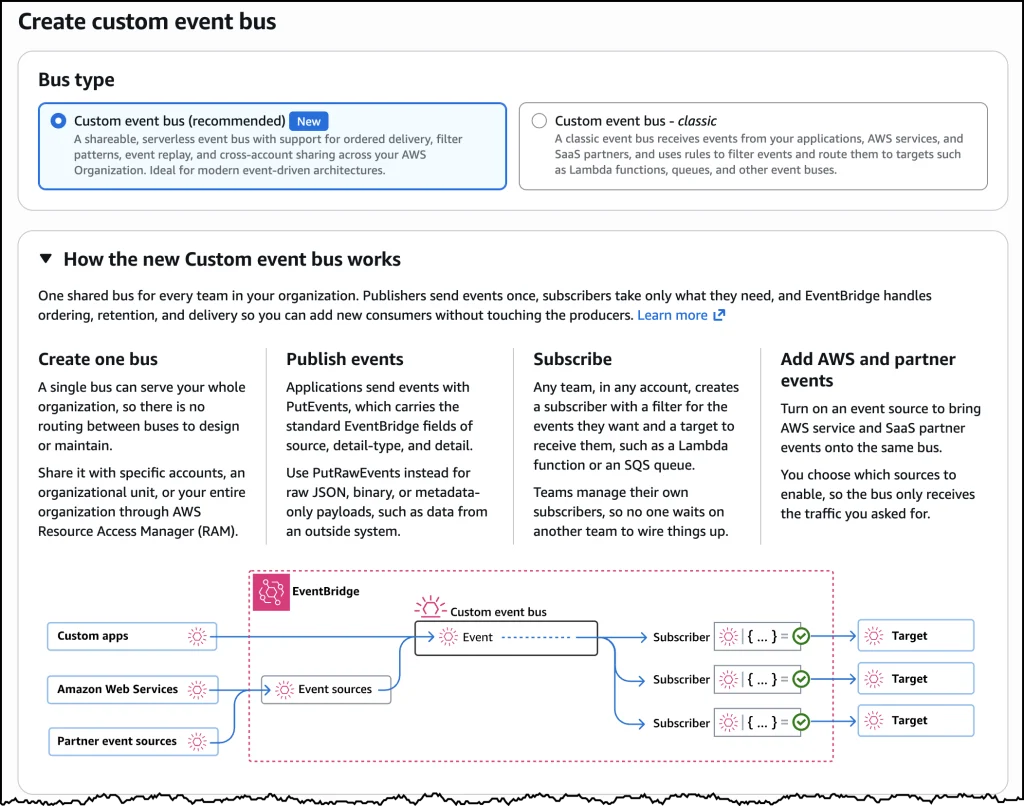
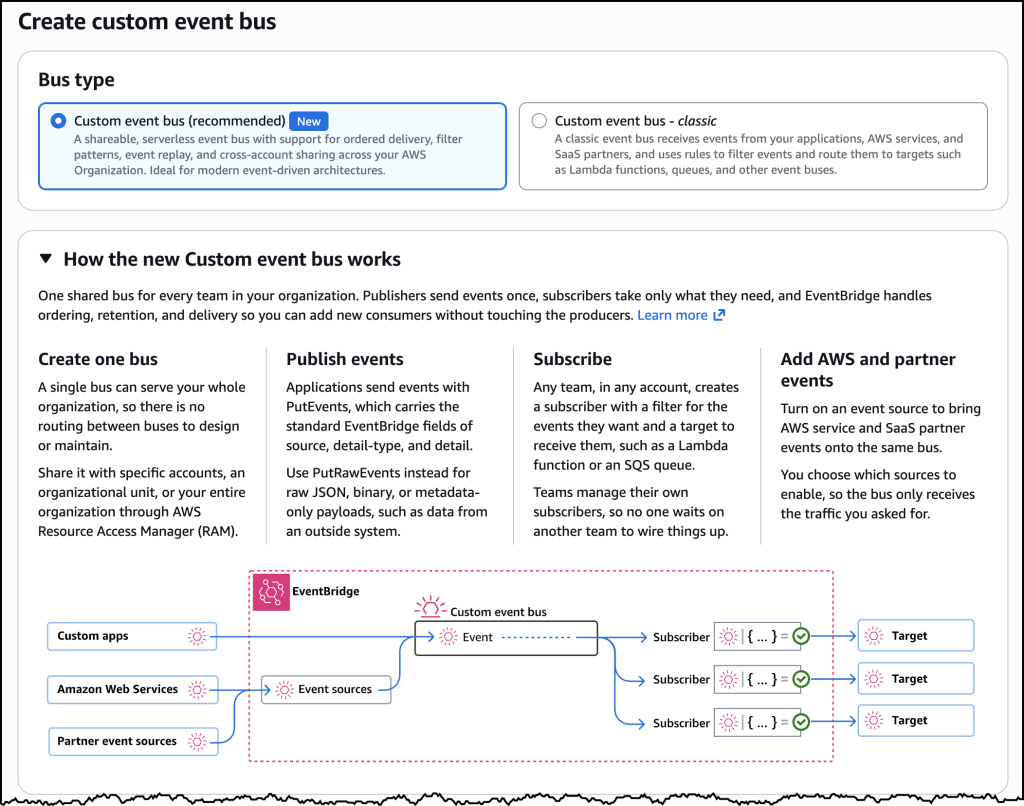
SEATTLE — In a major development for cloud architects and distributed systems engineers, Amazon Web Services (AWS) has announced the immediate availability of a powerfully overhauled enhanced custom event bus for Amazon EventBridge. Purpose-built to eliminate the operational friction inherent in large-scale, multi-account enterprise deployments, the new release introduces native event ordering, organization-wide sharing via AWS Resource Access Manager (AWS RAM), a streamlined "Subscriber" resource model, advanced transformation capabilities, and a decoupled ingress-egress pricing paradigm.
The rollout marks one of the most substantial architectural updates to AWS’s serverless event router since its inception. While the original architecture—now designated as the Custom event bus – classic—remains fully supported for legacy workloads, the new enhanced bus represents a complete rethink of how decentralized organizations handle event-driven communication at scale.
Main Facts: What is the Enhanced Custom Event Bus?
As organizations embrace modern microservices, the standard industry blueprint shifts toward a multi-account cloud strategy. In this paradigm, distinct business units, product squads, and engineering teams operate within isolated AWS accounts to maintain security boundaries, billing clarity, and deployment autonomy.
However, connecting these silos via Amazon EventBridge previously forced platform engineers into complex workarounds. Teams had to spin up multiple individual custom event buses across accounts, wiring them together using intricate cross-account resource policies and bus-to-bus routing configurations.
This multi-bus approach reintroduced the operational overhead that serverless computing was originally meant to eradicate:
- Visibility Gaps: Platform teams lost centralized visibility into which downstream accounts were subscribing to specific upstream events.
- Compound Costs: Cross-account and bus-to-bus routing operations drove up expenses exponentially.
- Complex Workarounds: Teams requiring strict sequencing (such as logistics tracking or financial ledgers) were forced to stitch together convoluted workarounds—frequently injecting Amazon Simple Queue Service (Amazon SQS) queues between buses and targets—or abandon EventBridge entirely for alternative messaging technologies.
The newly released enhanced custom event bus solves these friction points through several core innovations:

- Centralized Organization-Wide Sharing: Rather than deploying countless distributed buses, administrators can provision a single, shared event bus spanning all AWS accounts within an entire AWS Organization via deep integration with AWS RAM.
- Native Event Ordering (
EventGroupId): Publishers can assign an identifier to events, allowing EventBridge to deliver sequenced payloads to specific subscribers in exact chronological order without breaking asynchronous performance for other consumers. - Streamlined Subscriber Resource: A unified resource model that bundles event filtering, target definition, retry parameters, and dead-letter queue (DLQ) destinations into a single manageable entity.
- Content-Based Deduplication & Transformation: Automated payload hashing to achieve exactly-once processing semantics for erratic publishers, alongside JSONata expressions and deserialization for formats like Apache Avro and Protocol Buffers.
- Split-Billing Pricing Model: A redesigned throughput pricing structure where publishers pay for ingested volume and subscribers pay for delivered volume, eliminating cumulative routing penalties.
Chronology of Development and Release
The journey toward the enhanced custom event bus reflects years of customer feedback from enterprise users scaling serverless architectures into tens or hundreds of individual AWS accounts.
- Phase 1: The Single-Account Era (Early EventBridge Adoption): Developers built initial event-driven applications relying heavily on a default or single custom event bus inside a monolithic or lightly segmented AWS account.
- Phase 2: The Multi-Account Proliferation: As enterprise cloud adoption matured, security and governance best practices mandated multi-account environments (via AWS Organizations and AWS Control Tower). Engineering teams began instantiating localized custom buses per team, relying on complex IAM trust policies and resource-based permissions to bridge them.
- Phase 3: The Workaround Era: Platform engineers increasingly voiced concerns over scaling limits, routing costs, and the lack of native ordering guarantees. Teams resorted to intermediary queues (such as Amazon SQS) and custom polling logic to maintain event sequencing.
- Phase 4: General Availability (Today): AWS engineering finalized the enhanced custom event bus architecture, rolling it out natively to major global regions with complete support via the AWS Management Console, AWS Command Line Interface (CLI), and infrastructure-as-code APIs.
Supporting Data and Technical Architecture
A deep dive into the technical specifications reveals an engineering approach tailored specifically for high-throughput, mission-critical workloads.
Organization-Wide Sharing & Resource Quotas
By leveraging AWS RAM, platform administrators can designate a central event bus and share it instantaneously with specific AWS accounts, organizational units (OUs), or the entire enterprise organization.
Crucially, the enhanced bus scales drastically higher out of the box than its predecessor. It features a default quota of 10,000 Subscribers per bus, a threshold designed to prevent organizational fragmentation caused by strict subscriber limitations. If an enterprise requires higher capacities, quota increases are available upon request.
Granular Event Ordering and Synchronous Invocation
While event-driven architectures thrive on asynchronous, out-of-order processing, real-world edge cases—such as tracking a delivery truck’s geographic coordinates or processing sequential financial ledger entries—demand strict FIFO (First-In, First-Out) handling.
EventGroupIdIntegration: Publishers attach anEventGroupIdmetadata tag to outgoing payloads.- Selective Ordering: EventBridge guarantees sequential delivery exclusively to subscribers that opt into ordered consumption. Meanwhile, other decoupled microservices on the exact same bus can consume those very same events asynchronously without bottlenecking.
- Synchronous Targets: To ensure zero data loss during ordered execution, the enhanced bus supports direct synchronous invocation for compute targets like AWS Lambda. This eliminates the legacy requirement of deploying an intermediary Amazon SQS queue solely to guarantee sequential processing order.
Advanced Payload Processing: Deduplication and Deserialization
Handling retries and disparate data formats historically required writing custom middleware. The enhanced custom event bus builds these capabilities directly into the routing layer:

- Content-Based Deduplication: For event sources that lack native idempotency tokens or retry tracking, EventBridge can automatically hash meaningful elements of an event payload. If duplicate events arrive within a strict five-minute window due to network timeouts or partial failures, the service collapses them, turning at-least-once delivery into exactly-once semantics.
- Deserialization & JSONata Transformations: Enterprises utilizing Apache Avro or Protocol Buffers can now stream binary or serialized formats directly to EventBridge. The service automatically deserializes payloads into JSON, empowering subscribers to execute precise filter patterns over the entire message body. Furthermore, JSONata expressions allow downstream consumers to reshape, rename, or compute new fields on the fly before payloads hit their final targets.
The New Ingress-Egress Pricing Structure
Economic scalability is often the deciding factor in enterprise software selection. The enhanced custom event bus deprecates the legacy per-event pricing model in favor of a clean ingress-and-egress throughput model:
- Publishers pay solely for the volume of events successfully ingested into the bus.
- Subscribers pay solely for the volume of events delivered to their respective targets.
This eliminates the compounding financial penalties associated with multi-hop, bus-to-bus cross-account routing configurations.
Official Responses and Strategic Vision
AWS spokespeople and product leaders emphasized that the release directly addresses the structural growing pains experienced by mature cloud-native enterprises.
"When organizations scale serverless applications across dozens or hundreds of AWS accounts, their infrastructure shouldn’t feel like a patchwork of workarounds," noted a senior product manager close to the development team. "With the enhanced custom event bus, we are returning simplicity to the architecture. Platform teams regain absolute governance and visibility, while application developers can publish and subscribe instantly without wrestling with IAM policies or cross-account routing fees."
Industry analysts have similarly lauded the release, pointing out that solving event ordering natively within a managed pub/sub serverless broker removes one of the final remaining hurdles for enterprises migrating core financial, logistical, and transactional workloads entirely to serverless paradigms.
Implications for Developers, Platform Engineers, and Enterprises
The arrival of the enhanced custom event bus carries profound implications across multiple tiers of an enterprise technology organization:
1. For Platform Engineering Teams
- Streamlined Governance: Centralized management planes enable platform teams to monitor all enterprise event flows, enforce strict security guardrails via AWS RAM, and dictate precise publishing and subscribing permissions without micromanaging individual team accounts.
- Reduced Maintenance Overhead: The elimination of complex bus-to-bus peering configurations dramatically reduces infrastructural code maintenance and IaC (Infrastructure as Code) complexity.
2. For Application Developers
- Accelerated Time-to-Market: Developers no longer need to wait for infrastructure provisioning or coordinate complex cross-account security handshakes to consume an enterprise event. They can independently instantiate Subscriber resources to filter and pull only the data they require.
- Simplified Error Handling: Built-in content-based deduplication and unified subscriber resources (combining retries, filters, DLQs, and targets) drastically reduce the boilerplate code required to build resilient microservices.
3. For Enterprise Financial Stakeholders
- Predictable Cost Allocation: The transparent ingress/egress pricing model aligns cloud expenditures directly with actual data consumption and publishing volume. Cost centers become easier to isolate, audit, and optimize as business units scale.
Availability and Getting Started
The enhanced custom event bus is available globally starting today.
Supported AWS Regions:
- North America: US East (N. Virginia, Ohio), US West (Oregon)
- Europe: Europe (Ireland, Frankfurt, Stockholm, Spain)
- Asia Pacific: Asia Pacific (Hong Kong, Malaysia, Mumbai, Singapore, Sydney, Thailand, Tokyo)
Engineering teams can provision their first enhanced custom event bus immediately utilizing the AWS Management Console, the AWS Command Line Interface (CLI), or infrastructure-as-code deployments via EventBridge APIs. Legacy custom event buses will remain fully operational under the designation Custom event bus – classic, ensuring zero disruption to existing production workloads while organizations adopt the new enhanced architecture at their own pace.
For comprehensive configuration tutorials, pricing breakdowns, and API references, developers are encouraged to visit the official AWS EventBridge Documentation or access the service directly through the AWS Management Console.
 Sagoh
 Siti Muinah
