
 By Ammar Sabilarrohman
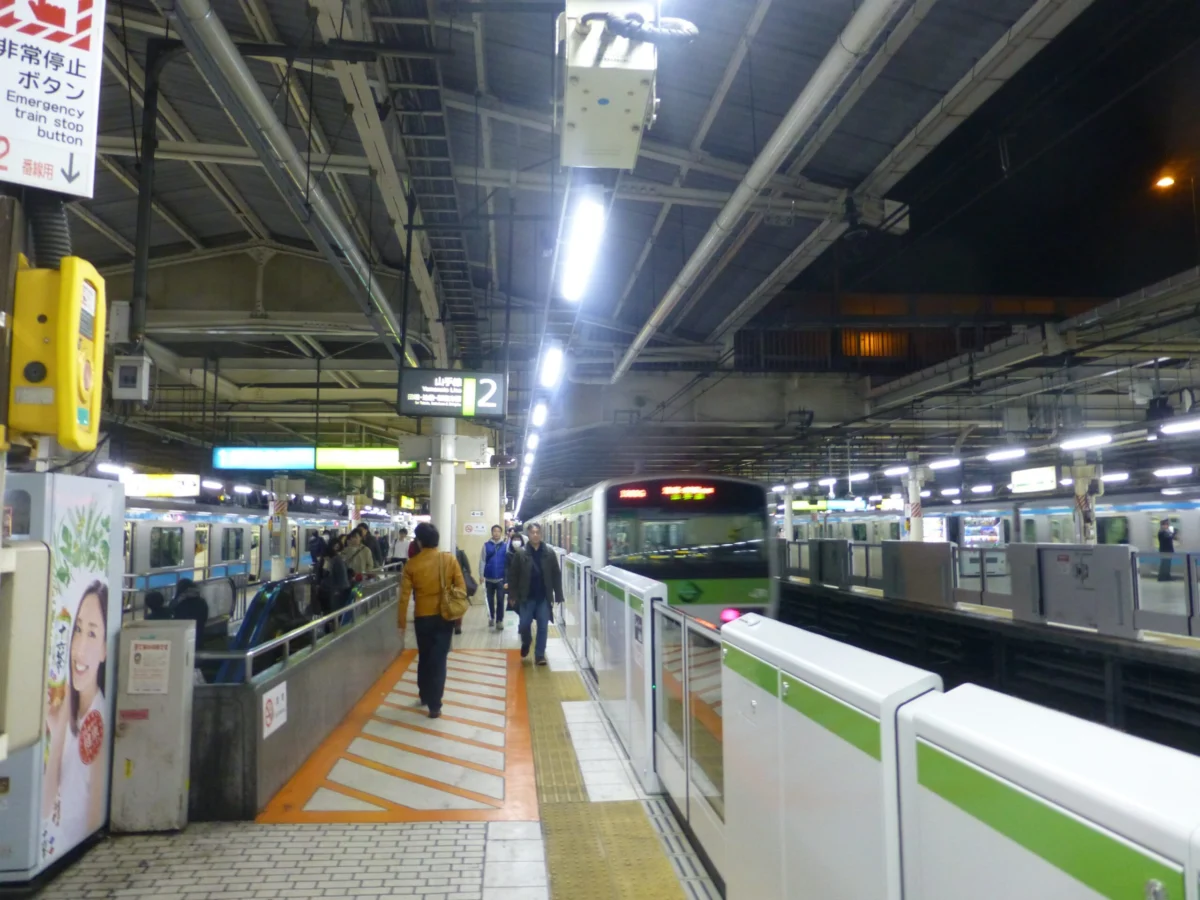
By Akash Wadhwani
Main Facts: The Symphony of the Rails
To the uninitiated traveler, the Greater Tokyo rail network is an intimidating, hyper-efficient labyrinth of concrete, steel, and endless transit streams. But for those who slow down enough to listen, it is also a musical instrument.
Across Tokyo’s sprawling transit arteries, trains do not simply depart in silence. Instead, as the doors chime and the conductor prepares to push off, platforms come alive with hassha merodi—catchy, seven-second departure melodies designed to signal train departures and gently smooth out the psychological friction of urban commuting.
Yet, despite the ubiquitous nature of these sonic signatures, mapping them has long been an impossible dream. Until recently, no official public database existed to document which specific tune played at which platform across Tokyo’s 2,496 rail stations.
Enter a new interactive data visualization that changes everything. Developed by data designer Akash Wadhwani from his home in Kanpur, India, the project successfully maps all 2,496 stations of the Greater Tokyo rail network, shining a spotlight on the 200 stations with verifiable, playable departure melodies.

The resulting digital map reveals an intriguing reality: only about 8% of Greater Tokyo’s massive station network features officially documented and publicly accessible departure melody recordings. The remaining 92% stand as unmapped gray dots—a testament to the vast, decentralized, and often undocumented nature of Japan’s railway acoustics.
Chronology: From a Lost Honeymoon Ride to a Digital Archive
The genesis of this cartographic endeavor was entirely accidental, born from a mix of romantic exploration and lifelong rail fandom.
The Spark in Tokyo
"My wife and I went to Tokyo. It was the first trip we had taken together," recalls Wadhwani. As a longtime rail enthusiast, he was already intimately familiar with the concept of departure melodies. For years, he had read about the short, snappy jingles that echo across Japanese platforms. Yet, he had never experienced them in person.
That changed the moment he heard his first platform chime. "I was more excited than a grown man should be about a train leaving," he admits.
Driven by curiosity, Wadhwani hatched a plan to experience more of them. "So we got on the wrong train, on purpose. Japan is signed well enough that getting lost takes real effort. I wanted to hear more stations, so we rode one the wrong way and then rode it back."

It was during these unintended detours that Wadhwani discovered the deeper nuance of the system: the music changes dynamically depending on the platform, the railway line, and even the direction of travel. What began as a newlywed misadventure planted the seeds for an obsessively detailed data-gathering mission.
Building the Base Map: The Easy Half
When Wadhwani returned home, he immediately searched for an existing dataset to map his auditory discoveries. While Tokyo’s Public Transportation Open Data Center provides a wealth of operational data—including live train positions, timetables, and exact coordinates—it stops short of cataloging departure songs. Running a train doesn’t require a melody registry.
Instead, the responsibility of archiving these tunes has fallen to a dedicated subculture of Japanese rail fans who maintain independent wikis, sound-file repositories, and exhaustive YouTube compilation videos.
Wadhwani turned to Mini Tokyo 3D, an open-source 3D map of the Tokyo network that provides clean, downloadable files detailing station names, lines, and geographic coordinates. Filtering through this data yielded 2,522 rows, which condensed down to 2,496 actual stations once airline check-in desks and non-railway facilities were stripped away.
Crucially, this phase solved a major structural headache: harmonizing multi-operator hubs. For instance, Shinjuku Station appears as 11 distinct rows in raw transit data because operators like JR East, Odakyu, Keio, Toei, and Tokyo Metro maintain separate administrative records. Without a unified dataset to cluster these entries, mapping the network accurately would have been mathematically impossible.

Untangling Four Conflicting Lists
With the physical map secured, Wadhwani tackled the true challenge: matching the melodies.
He gathered data from four distinct fan archives, each structured with wildly conflicting formats:
- The Song-First Wiki: Organized by musical compositions, listing every station that plays a specific tune (637 entries).
- The Station-First Wiki: Organized by stations, listing their associated songs alongside composer credits (203 entries).
- The Platform-Specific Sound Site: Split rigidly by platform and direction, covering 120 stations across 428 distinct audio entries.
- The Private Railway Archive: A supplementary list filling in gaps left by major networks.
To combine these fractured sources, Wadhwani had to normalize inconsistent Japanese text formats. This required writing precise normalization logic in Python to handle character width variants (such as full-width versus half-width kana), strip editorial asides, and manage platform-specific naming brackets.
The YouTube and Audio Detour
Because copyright laws and royalty collection agencies like JASRAC prevent unauthorized hosting of commercial music files, Wadhwani could not simply upload audio directly to his server. Instead, he turned to YouTube archives equipped with chapter markers.
Out of 44 collected videos, only 13 featured usable timestamps. Even then, automated parsing hit roadblocks: video uploaders frequently mark timecodes by railway line rather than specific station stops, assuming listeners would passively stream the audio rather than search it textually. Ultimately, 8 vetted videos yielded matches for 89 stations.

The rest of the map’s audio infrastructure was sourced directly from dedicated fan repositories, resulting in a final verified catalog of 200 playable station melodies.
Supporting Data: By the Numbers
The quantitative breakdown of Wadhwani’s mapping project highlights the sheer scale of Greater Tokyo’s rail network juxtaposed against the niche, grassroots nature of sound archiving:
- 2,496: Total active railway stations across the Greater Tokyo area.
- 242: Stations with melodies thoroughly documented in fan archives.
- 200: Stations with verified, publicly accessible audio files linked on the final map.
- 8%: The total percentage of Greater Tokyo stations possessing a fully archived and playable departure melody online.
- 143 vs. 55 vs. 2: The operator breakdown of the 200 archived melodies, heavily skewed toward Tokyo Metro (143), followed by JR East (55), and Toei (2).
- 17: Factual errors identified and corrected during the pre-publication audit of 140 distinct historical claims on the site.
Official Responses and Industry Context
The existence of departure melodies—known culturally as hassha merodi—stems from a fascinating blend of operational safety and urban branding that dates back to the late 1980s.
Initially introduced to combat the jarring, anxiety-inducing auditory environment of bustling platforms (often dominated by harsh buzzers and whistles), musical chimes were designed to reduce commuter stress and prevent platform accidents. Over the decades, railway operators realized these jingles possessed immense marketing power. Specific stations began adopting localized tunes that reflect regional pop culture, local history, or commercial ties.
For instance, stations along the iconic Yamanote Line feature distinct, locally curated melodies produced by specialized music houses. Prominent composers like Minoru Mukaiya—formerly of the fusion band Casiopea—built legendary status by crafting atmospheric electronic chimes for major lines.

Despite their cultural prominence, major rail operators such as JR East and Tokyo Metro maintain strict, protective stances over their intellectual property. They rarely publish comprehensive master lists of departure scores, leaving the preservation of this sonic heritage entirely in the hands of passionate independent hobbyists. Commenting on the data gaps in his map, Wadhwani notes the delicate balance of attribution:
"When a dot is gray, I can’t tell you why. Maybe nobody ever recorded that station… Saying the station has no melody, or that the platform is silent, would be a claim about Tokyo, and my data can’t carry either."
Implications: Preserving an Unseen Urban Heritage
Wadhwani’s map does more than merely chart transit audio; it serves as a powerful commentary on the fragility of digital archiving and grassroots urban history.
In modern urban design, sonic environments are frequently erased in the name of modernization. As Tokyo’s rail network installs automated platform-edge doors (PSDGs) to improve safety, older open-platform announcements and classic chimes are frequently phased out in favor of standardized electronic alerts.
By pulling together disparate forum posts, uncaught wikis, and crowd-sourced YouTube timestamps into a single, cohesive geographic interface, the project highlights the vital role of digital preservationists. It proves that the history of a city is preserved not just in municipal archives and government white papers, but in the collective obsessions of ordinary commuters who refuse to let the soundtrack of their daily lives fade away into silence.
 Azzam Bilal Chamdy
 Asep Darmawan
 Suro Senen
