
 By Ali Ikhwan

In the high-stakes world of modern digital marketing, operating in a vacuum is a luxury brands can no longer afford. With global social ad spending eclipsing $276 billion and over half of marketing professionals now utilizing artificial intelligence to accelerate content production, standing out on social media has never been more difficult.

To break through the algorithmic noise, social media teams are increasingly turning to a structured practice: the social media competitor analysis. Far beyond a superficial look at rival feeds, a well-executed competitor analysis transforms raw social data into a strategic compass, dictating where to allocate content budgets, which formats to prioritize, and how to rapidly react to market shifts.

Main Facts: The Anatomy of a Modern Competitor Analysis
A social media competitor analysis is a systematic evaluation of your rivals’ digital content, audience engagement, and overall market activity to benchmark your own performance.
Without competitive context, high-level metrics are meaningless. An engagement rate of 2% is just a number in isolation; paired with industry benchmarks, it reveals whether your brand is leading its category or falling drastically behind.

Why Competitor Analysis Matters Now
- The AI Content Flood: With 51% of content teams leveraging AI to scale output, the sheer volume of digital content has raised the bar for brand differentiation. Algorithms increasingly reward relevance over simple publishing frequency, making deep analytical insight essential.
- Justifying Marketing Spend: With digital channels commanding nearly 61.1% of total marketing budgets—and social advertising taking up 12.2%—marketing leaders are regularly forced to justify their investments. Competitive benchmarking provides the hard evidence needed to defend those budgets.
- Shortening Reaction Times: Real-time tracking allows brands to spot competitor product launches, messaging pivots, or reputation issues long before they turn into industry trends.
Chronology: The 5-Step Process to Sizing Up Your Competition
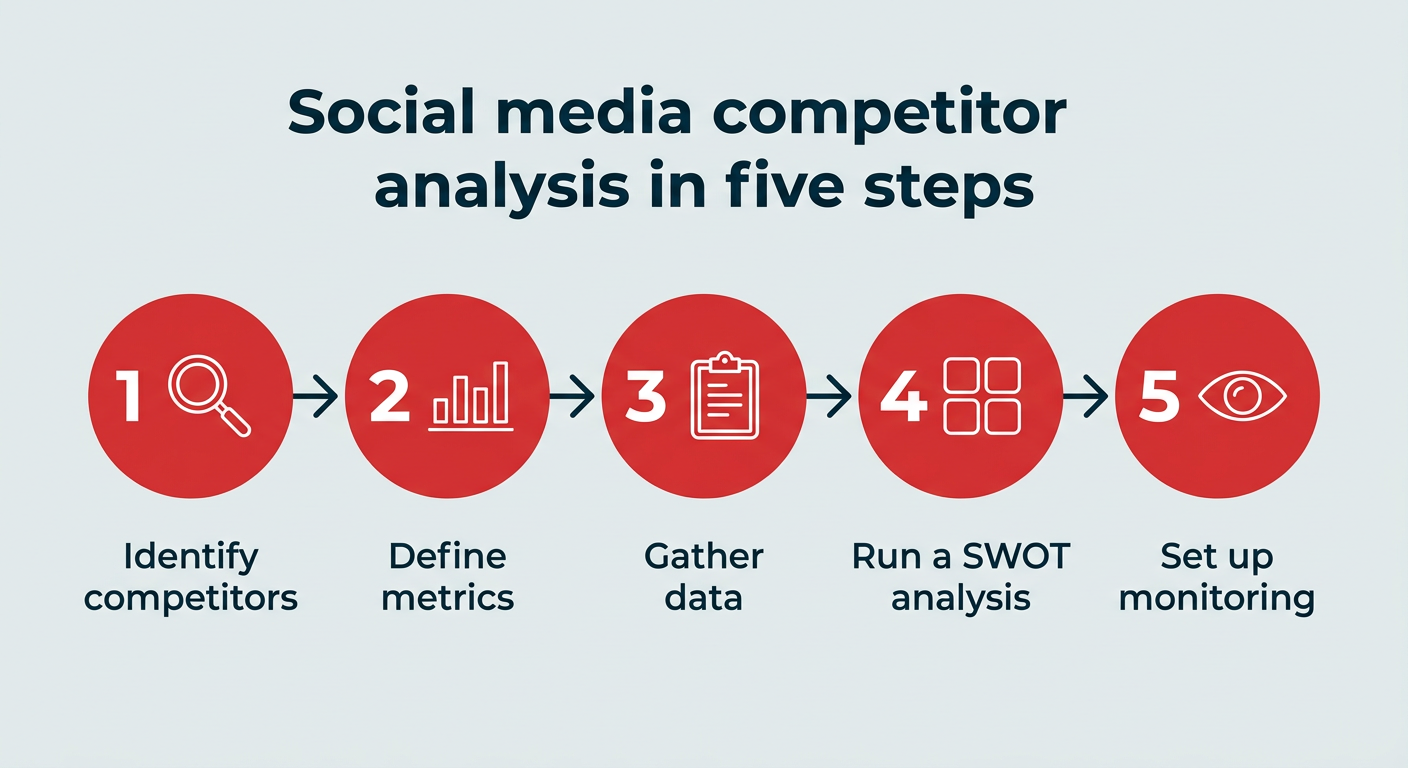
Conducting a robust social media competitive analysis requires a repeatable workflow. Experts recommend a five-step framework to transition from raw data collection to actionable strategy.

Step 1: Identify Your True Competitors
The process begins by uncovering who you are actually competing against for audience attention.

- Keyword Research: Use tools like Google Ads Keyword Planner and Google Search Console to pinpoint terms your brand targets. For example, a boutique Manhattan hotel with local art and wine tastings isn’t just competing with "NYC hotels"—they are vying for the same experiential traveler.
- Search Engine and Social Search Audits: Review who ranks for your keywords on Google, but don’t stop there. Gen Z and younger demographics frequently use platforms like TikTok and Instagram as search engines. Examine who dominates Reels, Shorts, and hashtag pages.
- Audience Alignment: Use platform analytics (such as Meta Business Suite Insights and TikTok Analytics) to see which brands your current followers are already engaging with. Narrow this expansive list down to your top three to five direct competitors.
Step 2: Define Your Core Metrics
Before collecting data, establish five to seven metrics that map directly to your overarching goals:
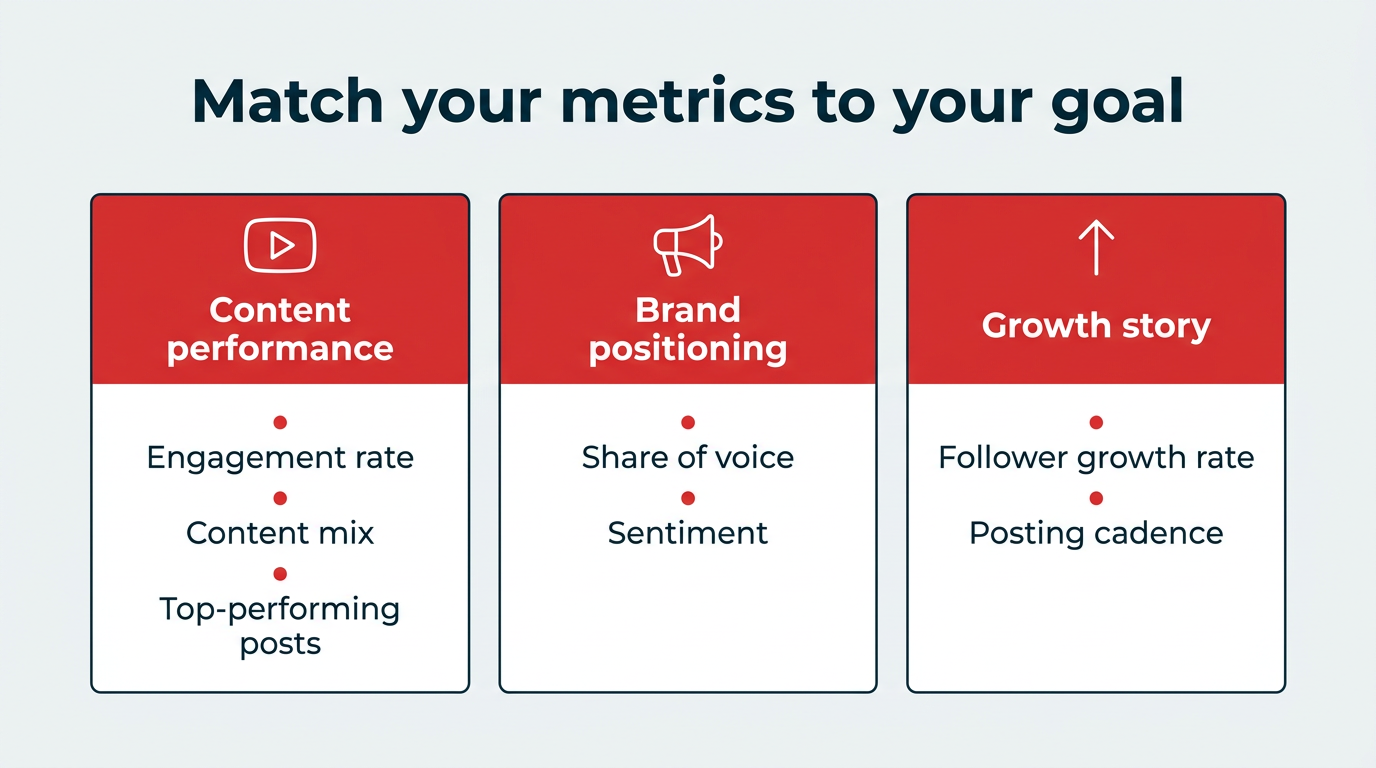
- For Content Performance: Track engagement rates, content mix (video vs. carousel vs. static), and top-performing posts.
- For Brand Positioning: Prioritize share of voice and audience sentiment.
- For Growth Stories: Focus on follower growth rates and posting cadence.
Step 3: Gather Competitor Data
Dive into competitor profiles to track their publishing habits, organic reach, paid amplification strategies, and comment-section dynamics. Look closely for "sponsored" labels or engagement spikes that signal paid media spend rather than purely organic traction.

Step 4: Run a SWOT Analysis
Synthesize your findings through a classic SWOT framework:
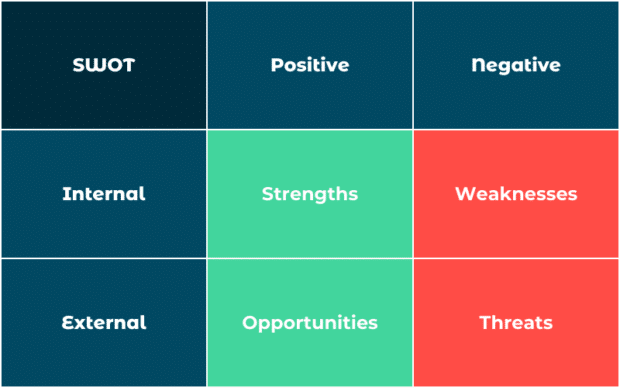
- Strengths: Metrics where your performance eclipses the competition.
- Weaknesses: Areas where your accounts lag behind, ripe for A/B testing and strategic adjustments.
- Opportunities: Gaps in the market—such as a competitor ignoring TikTok or failing to address a specific consumer demographic.
- Threats: External pressures, including aggressive startup competitors or sudden algorithm shifts.
Step 5: Establish Ongoing Monitoring
A competitive analysis should never be a one-time project. Set a review cadence—quarterly for most brands, or monthly for fast-moving sectors like retail, travel, and consumer tech—and log insights continuously to keep your strategy agile.
Supporting Data: Essential Metrics and Top Industry Tools
To make sense of the digital landscape, marketers must track the right metrics using reliable, enterprise-grade software.
The Core Metrics Checklist
| Metric | What It Tells You | Where to Find It |
|---|---|---|
| Engagement Rate | How well content resonates relative to audience size | Native analytics, specialized tools |
| Follower Growth Rate | Whether an audience is accelerating or stalling | Platform analytics over time |
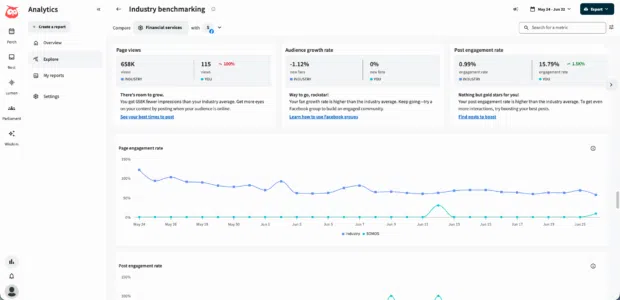
| Share of Voice | How much of the category conversation your brand owns | Social listening tools |
| Sentiment | Whether public perception skews positive, neutral, or negative | Social intelligence suites |
| Content Mix | Which formats (video, image, text) competitors rely on | Manual profile review, benchmarking tools |
Industry-Leading Tool Stack
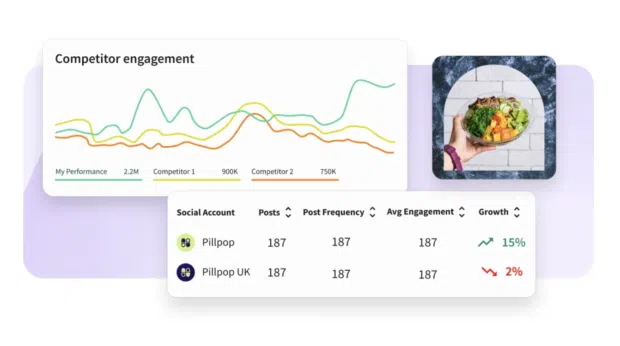
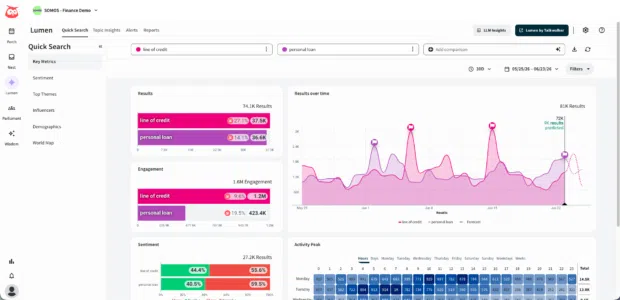
- Hootsuite: A comprehensive platform that combines competitive benchmarking (Perch) with social listening (Lumen) and natural-language query features (Wisdom), allowing teams to manage publishing, listening, and analysis under one roof.
- Rival IQ: Built explicitly for head-to-head competitive reporting, offering clear engagement and posting-cadence comparisons.
- Socialinsider: Ideal for deep-dive content performance comparisons categorized by format, topic, and campaign.
- Synapview: Excellent for monitoring niche conversations, competitor activity, and hashtags on platforms like Reddit and independent blogs.
- Mentionlytics: A social listening tool that tracks brand mentions and performs advanced sentiment analysis across the web and major social networks.
- Sprout Social: Offers robust social management solutions alongside competitive reports, word clouds, and audience growth tracking.
Official Responses and Industry Perspectives
Industry leaders emphasize that the primary failure of modern social media analysis is treating it as an exercise in passive reporting rather than an operational driver.
According to digital strategists, analytics teams often fall into traps such as obsessing over vanity metrics (like raw follower counts) rather than evaluating qualitative engagement, or relying solely on manual spreadsheets that quickly become outdated.

Enterprise experts stress that integrating social listening with quantitative benchmarking is no longer optional. While metrics tell you what happened, listening tools explain the why—capturing shifting consumer sentiments and unearthing emerging brand risks before they turn into full-scale public relations challenges. Furthermore, incorporating AI-assisted insights allows teams to query large datasets in plain language, shifting analyst hours away from manual data entry and toward high-level strategic interpretation.

Implications: Turning Insights Into Action
Ultimately, the value of a social media competitor analysis lies entirely in its execution. An analysis that does not alter a decision is merely an expensive report.

To bridge the gap between research and results, marketing teams must translate their SWOT findings into time-bound adjustments across their content calendars, resource allocation, and campaign priorities. By continuously benchmarking performance against real-world competitors and remaining adaptable to shifting platform algorithms, brands can secure a sustainable competitive advantage in an increasingly crowded digital economy.
 Neng Nana
 Ammar Sabilarrohman
 Jia Lissa
