
 By Nana Wu
In the rapidly evolving digital economy of 2025, the barrier to entry for small businesses has never been lower, yet the complexity of financial infrastructure has never been higher. For the modern entrepreneur, selecting the right payment processor is no longer just a "back-office" decision—it is a strategic choice that dictates conversion rates, customer trust, and operational cash flow.
With an overwhelming array of choices, selecting a provider that aligns with your specific business model—whether you are a brick-and-mortar boutique or a global SaaS startup—is critical. This guide examines the leading payment systems of 2025, evaluating them based on security, integration, and the bottom-line impact on your business.
Defining the Ecosystem: What is a Payment System?
Before diving into specific vendors, it is essential to define the architecture of a payment system. In technical terms, a payment system is an integrated platform or network that facilitates the secure transfer of value from a buyer to a seller.
These systems act as the digital bridge between a customer’s bank and your business account. They encompass:
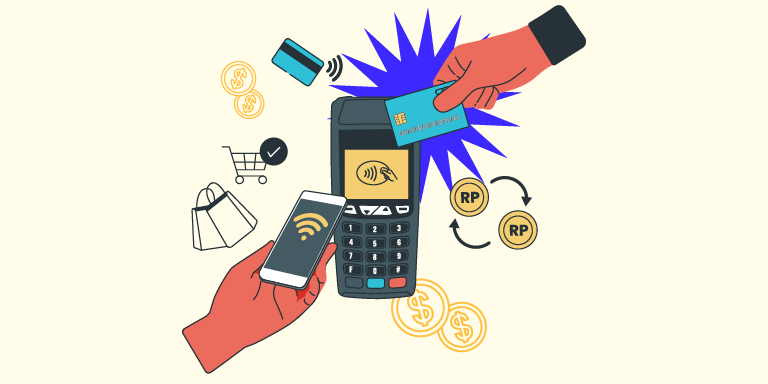
- Payment Gateways: The front-end technology that captures credit card information on your website.
- Merchant Account Providers: The financial institutions that hold the funds before they are deposited into your business bank account.
- Mobile Wallets: Interfaces like Apple Pay or Google Pay that streamline checkout.
It is important to note what these systems are not: they are not accounting software, nor are they your business bank account itself. While many modern providers offer "all-in-one" dashboards that resemble accounting tools, their primary mandate remains the secure, compliant, and efficient movement of capital.
The Strategic Framework: How to Evaluate Your Provider
In my research, I evaluated dozens of platforms based on five core pillars essential for small business survival.
1. Payout Velocity
Cash flow is the lifeblood of any startup. The "payout time"—the duration between a customer’s transaction and the funds appearing in your account—can range from instant to several business days. For businesses operating on thin margins, a three-day delay can be the difference between making payroll or missing it.
2. Conversion Optimization (Ease of Payment)
A complex checkout process is the number one cause of cart abandonment. A superior payment system offers a "frictionless" experience, ideally keeping the user on your domain rather than redirecting them to a third-party site, which can erode customer confidence.

3. Global vs. Local Accessibility
If your target audience is international, you need a provider that supports multi-currency settlement and cross-border transactions. Conversely, if you are a hyper-local service provider, you may prioritize low-cost, domestic-only processing.
4. The Complexity of Pricing
The industry is notorious for "hidden" fees. Some providers charge a flat percentage, while others use a tiered model based on card type. Understanding your average transaction size is vital to choosing between a provider with low monthly fees and higher transaction costs, or vice versa.
5. Security and Compliance
In 2025, the cost of a data breach can be fatal to a small brand. Every provider listed below is PCI-DSS (Payment Card Industry Data Security Standard) compliant, ensuring that your customers’ sensitive data is encrypted and handled according to global best practices.
The Top 6 Payment Systems for 2025
1. Stripe: The Developer’s Gold Standard
Stripe remains the industry leader for digital-first businesses. Its API-driven architecture allows for near-infinite customization.
- Pros: Exceptional UI/UX, seamless website integration, and a vast ecosystem of third-party plugins.
- Drawback: The initial setup can be daunting for non-technical founders. You may need to hire a developer to unlock the platform’s full potential.
- Pricing: Standard flat-rate pricing (typically 2.9% + $0.30 per online transaction).
2. PayPal: The Trusted Household Name
PayPal continues to dominate because of its sheer brand recognition. For many consumers, seeing the PayPal logo provides a sense of security that encourages them to hit "buy."
- Pros: Instant trust factor, global reach, and the ability to accept payments without the customer needing to create an account.
- Drawback: Redirecting users to a PayPal landing page can occasionally result in higher bounce rates compared to "embedded" checkouts.
- Pricing: Variable, depending on the transaction type and geographic origin of the funds.
3. Authorize.net: The Enterprise-Grade Veteran
A subsidiary of Visa, Authorize.net is a reliable, battle-tested solution that has been a staple of the industry for decades.
- Pros: Unmatched fraud protection features and a highly reliable API that rarely experiences downtime.
- Drawback: It is a more traditional platform; it lacks the "modern" feel of newer fintech startups and requires a more rigorous application process.
- Pricing: Typically involves a monthly gateway fee in addition to transaction costs.
4. Amazon Pay: Leveraging Existing Trust
By allowing customers to use their existing Amazon account details, Amazon Pay significantly reduces the friction of the checkout process.
- Pros: High conversion rates due to familiarity; users don’t have to type in their credit card numbers or shipping addresses.
- Drawback: You are essentially inviting the Amazon ecosystem into your customer experience, which some brands wish to avoid for competitive reasons.
- Pricing: Competitive rates that scale with volume.
5. Square: The Brick-and-Mortar Champion
If your business operates a physical storefront or a mobile pop-up shop, Square is the undisputed king.
- Pros: Their hardware—from card readers to full POS registers—is industry-leading and incredibly intuitive to set up.
- Drawback: While they have an online store builder, their ecosystem is primarily optimized for physical, in-person transactions.
- Pricing: Highly transparent, flat-rate pricing.
6. SecurePay: The Versatile Alternative
SecurePay offers a robust suite of tools that balances power with simplicity. It is an excellent middle-ground for businesses that need more features than a basic gateway but less complexity than a custom Stripe build.
- Pros: Extensive support for various payment methods and a very user-friendly trial period.
- Drawback: Lower brand awareness can lead to hesitation among some customers who prefer to stick with giants like PayPal.
- Pricing: Scalable options that accommodate both small startups and growing SMEs.
Chronology: The Evolution of Payments
The shift toward these systems reflects a broader technological trend. In the early 2010s, payment processing was a gated community reserved for banks and large corporations. The "Fintech Revolution" of 2015–2020, led by companies like Stripe and Square, democratized this access.
By 2022, the focus shifted from simple processing to "embedded finance," where payment systems began offering lending, insurance, and payroll integration. We are now in the "Efficiency Era" (2025 and beyond), where the goal is to make the entire financial stack invisible, automated, and AI-driven.
Supporting Data: The Impact of Friction
Industry data consistently shows that for every 100 milliseconds of latency added to a checkout page, conversion rates drop by 1%. Furthermore, offering three or more payment options (e.g., Credit Card, PayPal, and Apple Pay) can increase checkout completion by up to 20%. These figures underscore why choosing the right system is not merely an operational task but a revenue-generating strategy.
Implications for Small Business Owners
The primary implication of this landscape is that flexibility is king. You are no longer locked into one provider. Many modern businesses use a "multi-gateway" approach, utilizing Stripe for their primary e-commerce store while keeping a Square terminal at their physical location.
However, before you finalize your choice, audit your customer base. Ask yourself: Where are they located? What devices are they using? What is their preferred payment method? If your customers are Gen Z, a mobile-first wallet integration is mandatory. If you are selling B2B services, an ACH/bank transfer integration may be more cost-effective than high-fee credit card processing.
Frequently Asked Questions (FAQ)
Q: Is there a "best" system for everyone?
A: No. The best system is the one that minimizes your specific transaction costs while maximizing your conversion rates based on your unique audience.
Q: Do I need a merchant account?
A: Most modern providers, such as Stripe or Square, act as "Payment Service Providers" (PSPs), which means they aggregate your payments. You generally do not need to open a separate, traditional merchant account with a bank.
Q: How do I handle chargebacks?
A: Most of the systems listed above provide a dashboard to contest chargebacks. However, the best defense is a proactive one: clear refund policies and transparent billing descriptors that appear on the customer’s bank statement.
Q: Can I change my provider later?
A: Yes, but it involves technical migration. It is best to choose a platform that can scale with you for at least 24 months to avoid the headache of changing systems mid-growth.
Disclaimer: The pricing information provided reflects the market landscape as of early 2025. Payment processing rates are subject to change based on volume, geographic regulation, and provider updates. Always consult the official documentation of your chosen provider before committing to a contract.
 Dwi Wanna
  rifanmuazin
  Asep Darmawan