
 By Reynand Wu
In a profound embarrassment for the agency tasked with defending the nation’s digital infrastructure, the U.S. Cybersecurity and Infrastructure Security Agency (CISA) is currently scrambling to contain the fallout from a catastrophic security breach. Following a report by KrebsOnSecurity, it has been revealed that a CISA contractor inadvertently—or perhaps through gross negligence—exposed a vast trove of agency secrets, including AWS GovCloud keys and internal authentication credentials, on a public GitHub repository.
The incident has triggered an immediate and aggressive response from Capitol Hill, where lawmakers are questioning the structural integrity and security culture of an agency already reeling from a period of significant internal upheaval.
The Anatomy of the Breach: "Private-CISA"
The exposure centerd on a public GitHub profile titled "Private-CISA." Investigators discovered that a contractor, who possessed high-level administrative access to CISA’s code development environment, had populated this repository with plaintext credentials for dozens of internal systems.
Security researchers who examined the repository’s commit logs observed that the contractor had actively bypassed GitHub’s native security protections—features specifically designed to scan for and block the publication of sensitive keys and tokens. The repository, which appears to have been utilized as a "scratchpad" for synchronizing data between work and personal devices, effectively served as an open-access roadmap to the agency’s digital backend.
The contents of the repository were alarming in their specificity. Filenames recovered by researchers included labels such as "Important AWS Tokens.txt," "kube-config.txt," and browser-based password exports. These files provided potential adversaries with the "keys to the kingdom," granting access to critical cloud-based infrastructure that CISA is supposed to be securing on behalf of the American public.
Chronology of the Exposure and Discovery
- November 2025: Initial creation of the "Private-CISA" repository. Experts believe the contractor began using the public platform to synchronize work files at this time.
- Late April 2026: The repository is updated with some of its most sensitive and high-value credentials, significantly increasing the risk profile of the exposure.
- May 18, 2026: KrebsOnSecurity breaks the news, bringing the repository to the attention of the public and, by extension, global threat actors.
- May 19, 2026: Congressional leaders, including Sen. Maggie Hassan (D-NH) and Rep. Bennie Thompson (D-MS), issue formal inquiries to CISA’s acting leadership, demanding a full accounting of the breach.
- May 20, 2026: Security researcher Dylan Ayrey, creator of the open-source tool TruffleHog, reveals that CISA had failed to rotate a critical RSA private key. This key granted full access to the "CISA-IT" GitHub organization, allowing for the potential hijacking of CI/CD (Continuous Integration and Continuous Delivery) pipelines.
- Post-May 20, 2026: CISA reportedly invalidates the specific RSA key identified by Ayrey, though concerns persist regarding other unrotated credentials across the agency’s broader technology stack.
The "TruffleHog" Warning: How Vulnerable Was the Agency?
The involvement of Dylan Ayrey and his security firm, Truffle Security, highlighted a harrowing reality of the modern threat landscape. Ayrey’s tools, designed to scan public repositories for leaked secrets, effectively alerted the world to the agency’s failure.
"An attacker with this key could read source code from every repository in the CISA-IT organization, including private repos," Ayrey explained. "They could register rogue self-hosted runners to hijack CI/CD pipelines, access repository secrets, and modify admin settings, including branch protection rules."
The implications are severe. By gaining access to the CI/CD pipeline, an attacker could theoretically inject malicious code into software updates destined for other government agencies, potentially turning a CISA breach into a supply-chain attack of national proportions. Because GitHub publishes a public "firehose" of all commits, threat actors—including state-sponsored groups from Russia, China, and Iran—monitor these feeds in real-time. It is highly probable that the credentials were "scraped" by malicious actors the moment they were committed to the public repo.
Official Responses and the Culture of Accountability
CISA has been notably tight-lipped regarding the duration of the exposure, providing only brief, boilerplate statements. In an initial response, the agency claimed, "There is no indication that any sensitive data was compromised as a result of the incident."
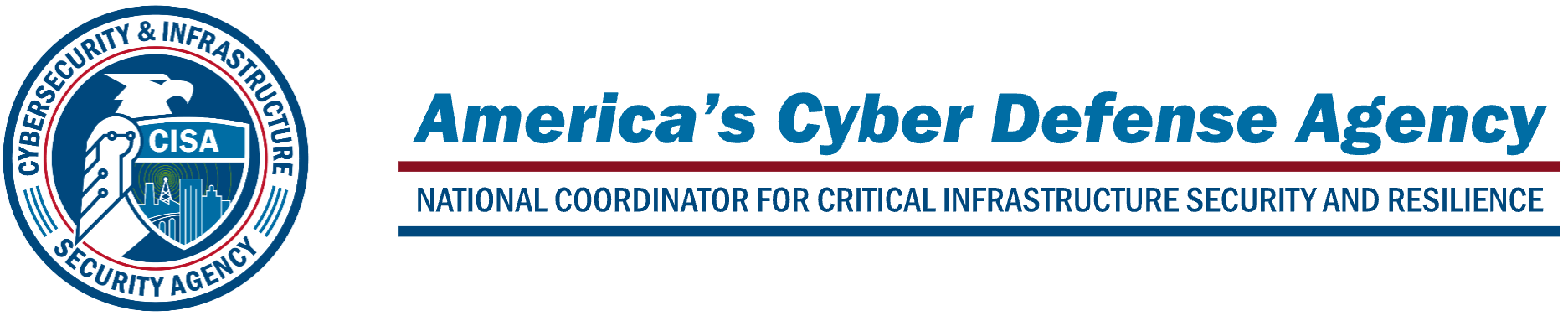
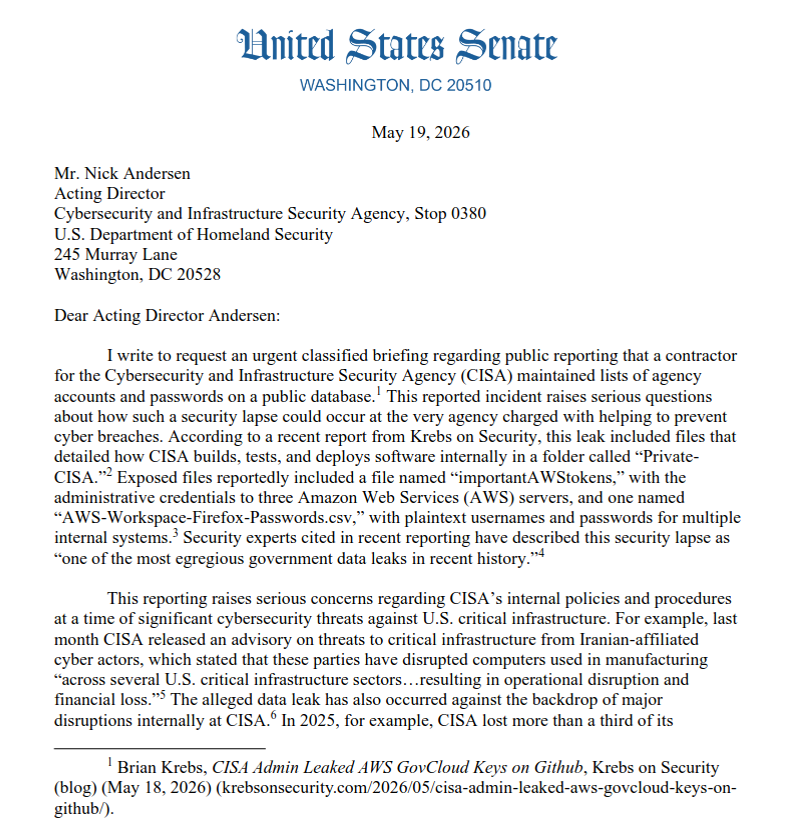
However, this assertion is being treated with skepticism by lawmakers. In a scathing letter to CISA’s Acting Director Nick Andersen, Senator Maggie Hassan highlighted the irony of the situation: "This reporting raises serious concerns regarding CISA’s internal policies and procedures at a time of significant cybersecurity threats against U.S. critical infrastructure."
The frustration from Congress is amplified by the current state of the agency. As noted in the correspondence, CISA has recently undergone a massive internal reorganization, losing over one-third of its workforce and nearly all of its senior leadership following a series of forced retirements and resignations under the current administration.
Rep. Bennie Thompson and Rep. Delia Ramirez added their voices to the chorus of criticism, suggesting that the breach is a symptom of a broader, systemic decline. "We are concerned that this incident reflects a diminished security culture and/or an inability for CISA to adequately manage its contract support," they wrote. "It’s no secret that our adversaries seek to gain access to and persistence on federal networks. The files contained in the ‘Private-CISA’ repository provided the information, access, and roadmap to do just that."
The Human Factor: Beyond Technical Controls
While the focus remains on CISA’s failure to implement rotation protocols, security experts are beginning to question whether this is a problem that can be solved through technology alone.
James Wilson, editor for the Risky Business podcast, noted that while organizations can mandate top-down policies on company-managed platforms, they are largely powerless to prevent a contractor from using a personal, private GitHub account to store work data. Adam Boileau, his co-host, emphasized the "human problem" inherent in the incident.
"This is a thing you can’t solve with a technical control," Boileau argued. "You have hired a contractor to do this work, and they have decided of their own volition to use GitHub to synchronize content from a work machine to a home machine. I don’t know what technical controls you could put in place given that this is being done presumably outside of anything CISA managed or even had visibility on."
This perspective shifts the debate toward the vetting and training of third-party contractors. If the agency cannot guarantee that its contractors are adhering to basic operational security (OPSEC) standards, the entire perimeter of the federal network remains porous.
Implications: The Long Road to Remediation
As of the latest reports, CISA continues to work with vendors to rotate the remaining exposed credentials. The delay in this process—lasting over a week after the initial notification—has drawn significant fire from the cybersecurity community. In an era where "zero trust" is the standard for government security, the presence of plaintext keys in a public repository represents a complete failure of the agency’s foundational security principles.
The long-term implications are twofold. First, the agency must undergo an exhaustive audit to determine if any of these credentials were used to gain persistence within federal systems. Given that threat actors often "lay low" once they gain access to a network, the full extent of this breach may not be known for months.
Second, the incident will likely lead to a legislative push for stricter oversight of government contractors. If CISA, the "lead agency" for cyber defense, cannot manage its own supply chain security, the legislative branch will almost certainly move to impose more rigid, perhaps even punitive, standards on how federal contractors handle government code and secrets.
For now, the "Private-CISA" debacle stands as a stark warning: in the digital age, a single disgruntled or careless individual with an internet connection and an administrative login can dismantle years of cybersecurity efforts. The agency’s reputation, and the security of the nation’s digital infrastructure, now hinges on how transparently and effectively it handles the remainder of this cleanup process.
 Sagoh
Sagoh  Evan Lee Salim
  Ammar Sabilarrohman