
 By Dwi Wanna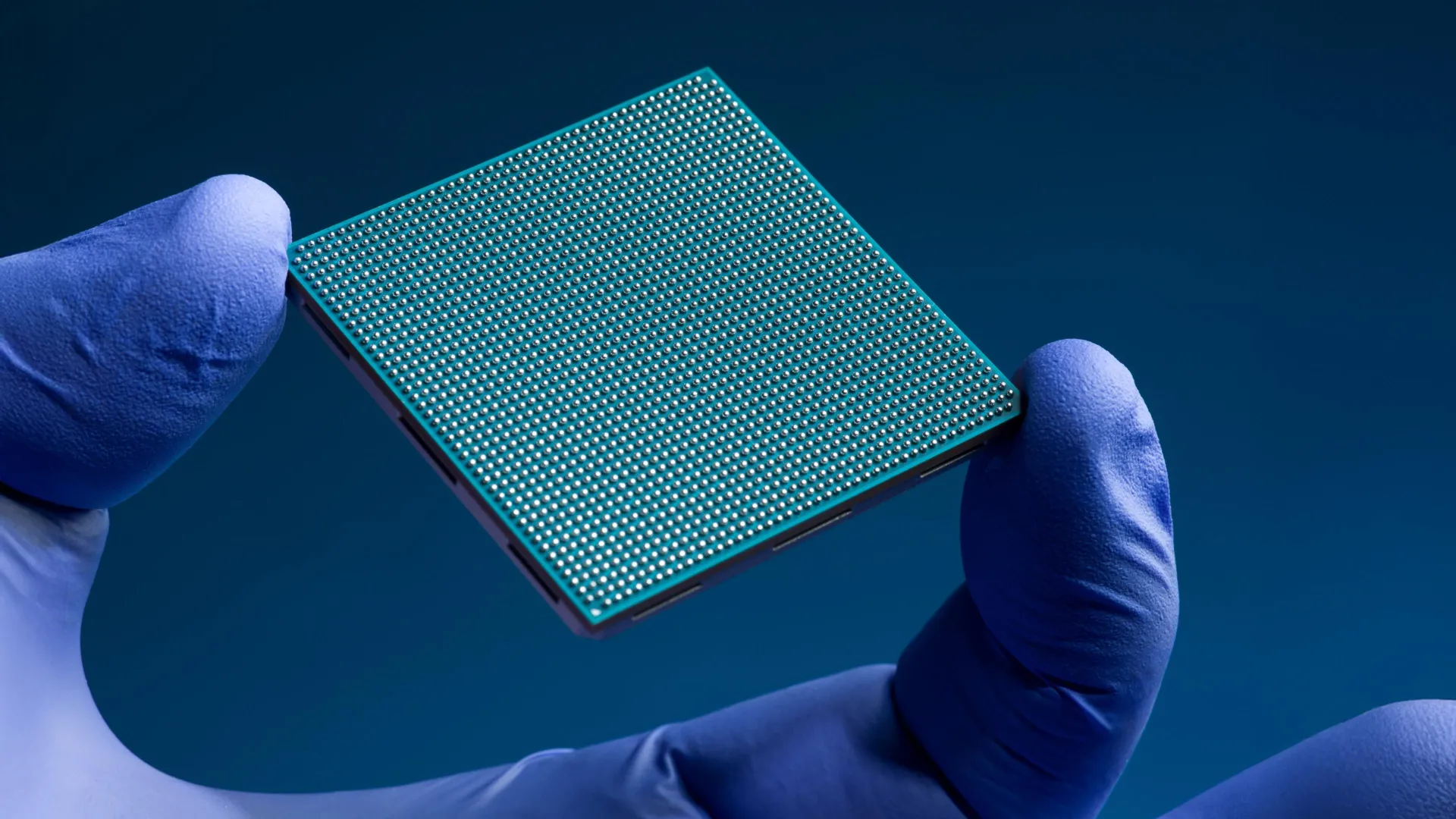
For decades, the spacecraft that have ventured into the furthest reaches of our solar system have been governed by computing technology that would appear prehistoric to the average consumer. While our smartphones receive annual upgrades, the processors powering deep-space probes are often relics of the 1990s—durable, reliable, and radiation-hardened, yet glacially slow by modern standards.
NASA is now on the cusp of a generational shift. Through the High Performance Spaceflight Computing (HPSC) project, the agency is ushering in a new era of space-grade hardware. By developing a multicore, radiation-hardened "system-on-a-chip" (SoC) that promises a 100-fold increase in computing power, NASA is not merely upgrading its hardware; it is enabling a future where spacecraft can think, act, and survive on their own.
The Bottleneck: Why Space Computing Lags Behind
To understand the significance of this leap, one must understand the harsh reality of the space environment. In deep space, electronics are bombarded by high-energy cosmic rays and solar particles. These particles can strike a processor, flipping a "bit" from a 0 to a 1, which causes the computer to crash or force the spacecraft into "safe mode"—a dormant state that leaves the mission vulnerable and scientists on Earth waiting in limbo.
To mitigate these risks, NASA has traditionally relied on older, proven architectures. These chips are bulky, power-hungry, and possess a fraction of the processing speed of a modern tablet. While this trade-off has ensured mission success for decades, it has also imposed a hard ceiling on what missions can achieve. Complex tasks, such as real-time autonomous navigation or high-speed data analysis, have been virtually impossible to perform onboard.
Chronology of an Engineering Breakthrough
The journey toward the next generation of spaceflight computing has been a deliberate, multi-year process involving a strategic marriage of government vision and commercial ingenuity.
- 2022: The Partnership Formed: NASA’s Jet Propulsion Laboratory (JPL) officially selected Microchip Technology Inc., based in Chandler, Arizona, to lead the development of the processor. Unlike traditional government contracts where NASA funds the entirety of the research, this project leveraged a commercial partnership model, with Microchip investing significant capital into the R&D process.
- Early 2024: The "Hello Universe" Milestone: After months of design and fabrication, the first sample chips arrived at JPL for the grueling qualification phase. To mark the occasion, engineers sent a symbolic "Hello Universe" message through the chip, a nod to the foundational moments of early computing history.
- February 2024 – Present: The Gauntlet of Testing: JPL engineers initiated a rigorous, multi-month testing campaign. This phase involves subjecting the silicon to extreme thermal fluctuations, intense electromagnetic radiation, and mechanical shock—all designed to replicate the violent stresses of a rocket launch and the unforgiving vacuum of space.
- Future Milestones: Once the processor clears the final qualification hurdles, the goal is to integrate the SoC into a wide spectrum of assets, from small-scale CubeSats orbiting Earth to the massive, crewed habitats destined for the lunar surface and eventually Mars.
Technical Specifications: A "System-on-a-Chip" Powerhouse
The HPSC processor is a "system-on-a-chip" (SoC), a sophisticated architecture that integrates multiple components—central processing units (CPUs), memory controllers, networking systems, and input/output interfaces—onto a single piece of silicon.
This design mirrors the technology inside high-end smartphones, where energy efficiency and footprint are paramount. However, the HPSC is distinct in its durability. It is designed to survive for years in the deep-space environment, potentially operating for a decade or more without the possibility of a hardware upgrade or repair.
Initial reports from the test floor at JPL are nothing short of transformative. NASA has indicated that the processor is performing as intended, demonstrating computing power approximately 500 times greater than the radiation-hardened chips currently flying in orbit. This leap in performance will allow future landers to process high-resolution sensor data in milliseconds—data that currently takes minutes or hours to interpret.
Official Perspectives: Building the Legacy
The development of this technology is overseen by the Space Technology Mission Directorate’s Game Changing Development (GCD) program at NASA’s Langley Research Center. For those leading the project, the HPSC is the culmination of years of technical collaboration.
"Building on the legacy of previous space processors, this new multicore system is fault-tolerant, flexible, and extremely high-performing," said Eugene Schwanbeck, program element manager in NASA’s Game Changing Development program. "NASA’s commitment to advancing spaceflight computing is a triumph of technical achievement and collaboration."
The testing environment at JPL is equally demanding. Jim Butler, the HPSC project manager at JPL, noted the complexity of the validation process. "We are putting these new chips through the wringer by carrying out radiation, thermal, and shock tests while also evaluating their performance through a rigorous functional test campaign," Butler said.
Crucially, the testing is not just about raw power; it is about real-world utility. "To simulate real-world performance, we are using high-fidelity landing scenarios from real NASA missions that would typically require power-intensive hardware to process huge volumes of landing-sensor data," Butler added. "This is an exciting time for us to be working on hardware that will enable NASA’s next giant leaps."
Implications: The Autonomous Future
The introduction of the HPSC chip changes the fundamental architecture of space exploration. Currently, most spacecraft are essentially "remote-controlled" robots. Because of the vast distances between Earth and our targets—the Moon, Mars, and beyond—communication delays are inevitable. A signal can take several minutes to reach Mars, making real-time human intervention impossible during critical events like planetary landings or obstacle avoidance.
With the HPSC’s onboard AI capabilities, the dynamic changes. A rover equipped with this processor can identify a scientific anomaly, navigate hazardous terrain, and adjust its landing trajectory without waiting for a command from Earth. It can perform high-speed scientific analysis locally, transmitting only the most relevant, compressed data back to scientists. This increases the science return of every mission and significantly reduces the risk of loss due to communication latency.
Furthermore, the impact extends beyond robotics. For crewed missions to the Moon and Mars, the HPSC will provide the computational backbone for life-support systems, navigation, and mission management, ensuring that astronauts have the high-speed data processing needed for long-duration deep-space travel.
A Ripple Effect: Commercial and Earthly Benefits
The impact of this development will not be contained within the vacuum of space. By partnering with Microchip Technology Inc., NASA has ensured that this technology is not a one-off government prototype. The company plans to adapt the architecture of this high-performance, resilient processor for industries on Earth.
Key sectors expected to benefit include:
- Aviation: Enhanced flight control systems that require both high performance and extreme reliability.
- Automotive: The shift toward autonomous vehicles requires chips that are incredibly resilient to temperature fluctuations and capable of processing sensor data in real-time—a challenge the HPSC is specifically designed to solve.
- Industrial Automation: Robotics and manufacturing systems that operate in harsh environments will benefit from the SoC’s compact, energy-efficient, and fault-tolerant design.
Conclusion: The New Foundation of Exploration
NASA’s High Performance Spaceflight Computing project is a quiet revolution. While the public often focuses on the rockets and the spacecraft, the true limiting factor of space exploration has always been the intelligence of the machine itself.
By shrinking the distance between "processing power" and "survivability," NASA is building the nervous system for the next generation of explorers. As the testing continues and the chip moves toward flight readiness, it stands as a testament to what is possible when government ambition meets the rigor of commercial engineering. The "Hello Universe" message sent by the team is more than a technical check—it is a promise that future missions will be faster, smarter, and more capable of uncovering the mysteries of the cosmos than ever before.
 Sagoh
Sagoh  Asro
Asro  Siti Muinah