
 By Nana Muazin
As we navigate through 2026, the dropshipping industry remains a powerhouse of global commerce, currently valued at approximately $543.53 billion. While the barrier to entry remains low, the "gold rush" era of the early 2020s has given way to a sophisticated, hyper-competitive landscape. Success today is no longer defined merely by finding a trending product; it is defined by supply chain reliability, operational efficiency, and the strategic deployment of artificial intelligence.
For modern entrepreneurs, the platform powering their operations acts as the backbone of their business. Two titans have emerged as the primary choices for Shopify-centric retailers: Doba and Spocket. While both facilitate the connection between retailers and suppliers, they represent fundamentally different philosophies regarding scale, automation, and user experience.
Main Facts: Defining the Two Titans
At its core, dropshipping is an exercise in risk management and logistics. The challenge for 2026 is that consumers expect Amazon-level delivery speeds, regardless of the size of the store they are purchasing from.
Doba: The Operational Command Center
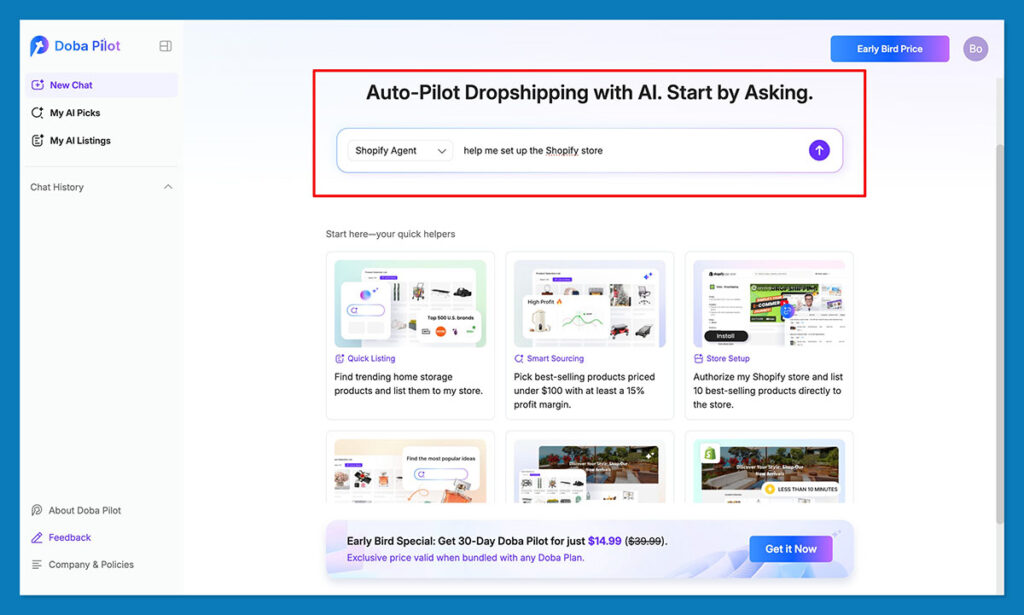
Doba has evolved far beyond its origins as a simple supplier directory. In 2026, it functions as a centralized operations hub. With a catalog exceeding one million SKUs, it is designed for the retailer who views dropshipping as a scalable, multi-channel enterprise. Its recent integration of Doba Pilot—an AI-driven agent—marks a shift toward "hands-off" management, handling everything from market research to post-sales dispute resolution.
Spocket: The Curator’s Choice
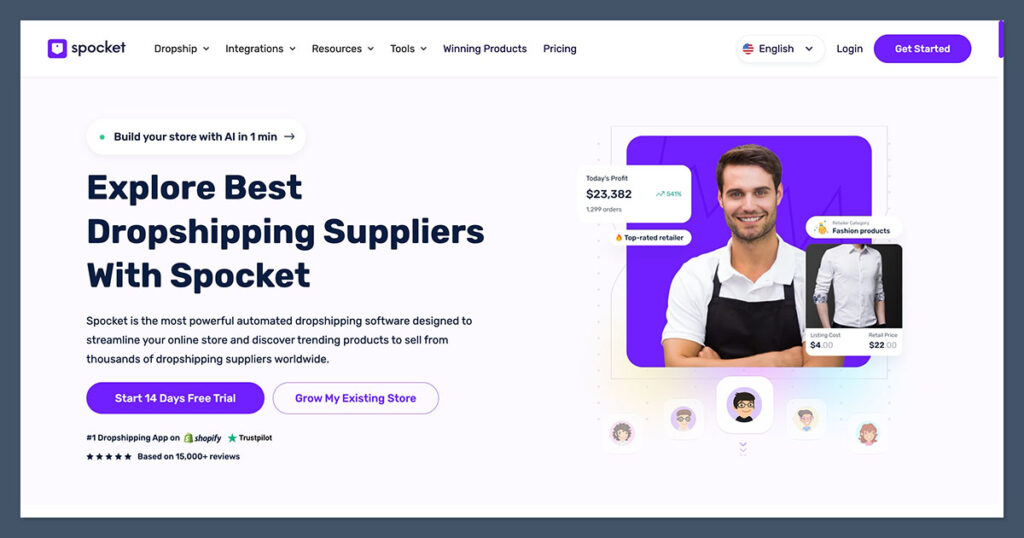
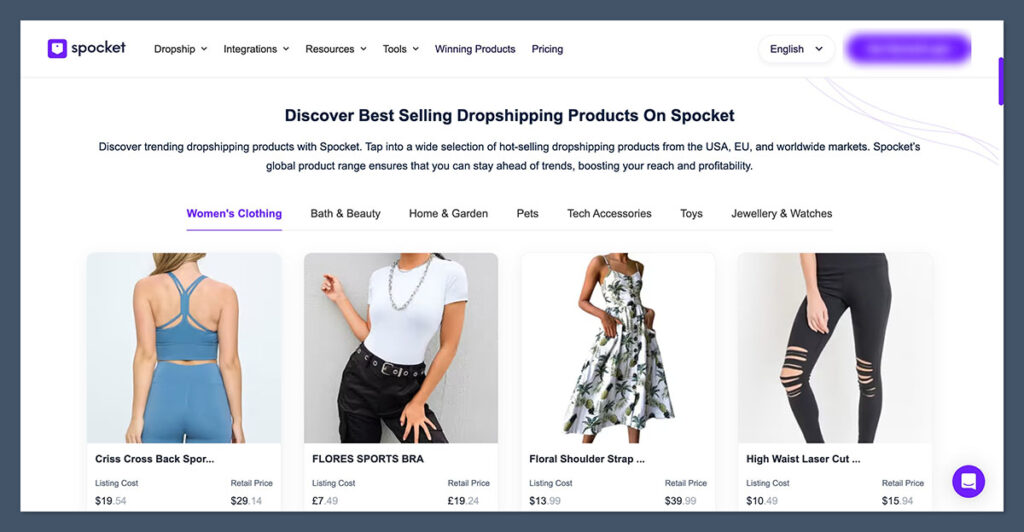
Spocket positions itself as the premium, boutique alternative. Its value proposition is built on selectivity and quality control. By prioritizing suppliers based in the United States and Europe, Spocket offers a curated shopping experience that appeals to brands aiming for higher price points and better customer trust. While it lacks the sheer operational depth of Doba, it excels in simplicity and brand-focused features like custom invoices.
Chronology of Evolution: From Directories to AI Agents
To understand why these platforms are the leaders in 2026, one must look at their recent developmental trajectories.
- 2023-2024: Both platforms focused on expanding their integrations with major storefronts like Shopify, WooCommerce, and BigCommerce. During this period, the industry saw a shift toward domestic shipping as a key differentiator.
- 2025: A massive push toward AI-assisted workflows began. Spocket refined its filtering algorithms, while Doba began developing the groundwork for what would become the "Doba Pilot."
- 2026 (Present Day): The "AI Agent" era has arrived. Doba launched a significantly upgraded version of Doba Pilot, transforming it from a search tool into a comprehensive business assistant that can manage inventory, sync listings across TikTok Shop and Amazon, and even handle complex fulfillment exceptions.
Supporting Data: A Side-by-Side Comparison
When evaluating these platforms, the data suggests that your choice should be dictated by your specific business model.
| Comparison Point | Doba | Spocket |
|---|---|---|
| Best Fit | Growing, multi-channel brands | Beginners & boutique retailers |
| Starting Price | $29.99/mo | $39.99/mo |
| Catalog Size | 1M+ SKUs | ~1M products |
| AI Integration | High (Doba Pilot – Full Automation) | Moderate (Smart Filtering) |
| Supplier Focus | Global with heavy US footprint | US & EU-centric |
| Multi-Channel | Native support (TikTok, Amazon, etc) | Limited to store-specific subs |
Pricing Structures and Hidden Costs
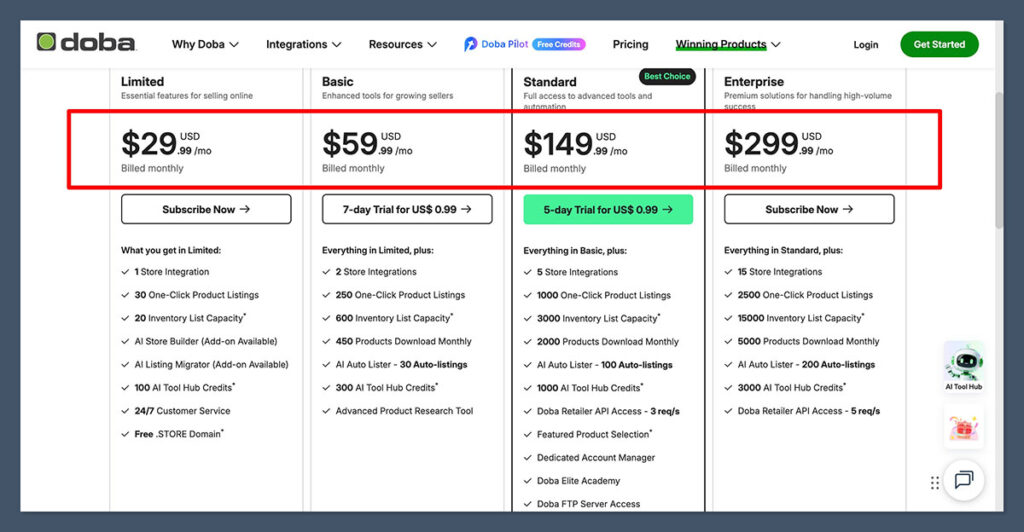
While Doba enters the market at a lower price point ($29.99), it is a tiered system designed to grow with the user. The Standard plan ($149.99/mo) provides the full suite of API access and dedicated support. Spocket, starting at $39.99/mo, offers a simpler path but carries a significant "hidden" cost: because every store connected requires a separate subscription, the platform can become exponentially more expensive for agencies or entrepreneurs running a portfolio of niche websites.
The AI Revolution: Doba Pilot vs. Spocket’s Filters
The most significant divergence in 2026 is the adoption of AI.

Doba Pilot’s Operational Dominance
Doba Pilot is effectively an AI employee. It utilizes Market Scout to analyze seasonality and competition, effectively removing the "guessing game" from product selection. Furthermore, its ability to manage fulfillment—automatically intercepting unshipped orders or tracking logistics exceptions—is a game-changer for high-volume sellers. By allowing users to remain within a single interface, it eliminates the "tab-switching" fatigue that plagues many small business owners.
Spocket’s Selective Intelligence
Spocket takes a more conservative approach to AI. It focuses on intelligent filtering rather than autonomous action. By allowing users to sort by supplier origin, shipping speed, and "best-seller" status, it ensures that the user is always the final arbiter of what appears in their store. For retailers who are deeply protective of their brand image and want to maintain a "hand-picked" aesthetic, this is a distinct advantage.
Implications for the Modern Retailer
Choosing between these platforms carries long-term implications for your business model.
1. The Scaling Strategy
If your goal is to build a massive, multi-channel operation—selling simultaneously on TikTok Shop, Walmart, and your own Shopify site—Doba is the clear winner. Its ability to sync inventory levels and handle bulk listing migrations prevents the "out-of-stock" disasters that often tank new e-commerce businesses.
2. The Brand Perception Strategy
If your goal is to build a high-ticket, premium brand that emphasizes quality and localized, fast shipping, Spocket is superior. The ability to issue branded invoices and the ease of ordering test samples through a dedicated interface allows for a level of quality control that is harder to achieve with Doba’s broader, more varied supplier network.
3. The Human-Capital Factor
Doba, due to its deep feature set, has a steeper learning curve. However, the Doba Academy and the conversational nature of Doba Pilot have mitigated this significantly in 2026. Spocket remains the "pick-up-and-play" option, requiring far less technical onboarding time.
Official Stance and Market Outlook
Both companies have publicly committed to stricter supplier vetting processes as we enter the latter half of 2026. As consumers become more discerning about product quality, platforms that allow low-quality goods to flood the market risk losing their credibility.
Doba’s policy of mandating refunds for late dispatches and providing prepaid labels for damaged goods reflects a maturation of the dropshipping sector. Similarly, Spocket’s insistence on a 95% order success rate from its suppliers signals a move toward institutionalized reliability.
The Verdict: Which Path to Take?
For the entrepreneur standing at the crossroads in 2026:
- Choose Doba if you are building an empire. If you want to automate the drudgery of logistics, explore multiple sales channels, and utilize AI to handle the heavy lifting of market research, the investment is worth the complexity.
- Choose Spocket if you are a curator. If your priority is finding high-quality suppliers in the US and Europe, maintaining a simple, manageable workflow, and ensuring that your customer receives a branded, high-quality experience, then Spocket’s ease of use and supplier quality remain unmatched.
Ultimately, the "best" platform is the one that allows you to spend less time managing the back end and more time focused on your primary job: driving traffic and converting customers. In 2026, the technology is no longer the bottleneck—the only limit is your brand vision.
 Laily UPN
 Neng Nana
 Sagoh
