
 By Muslim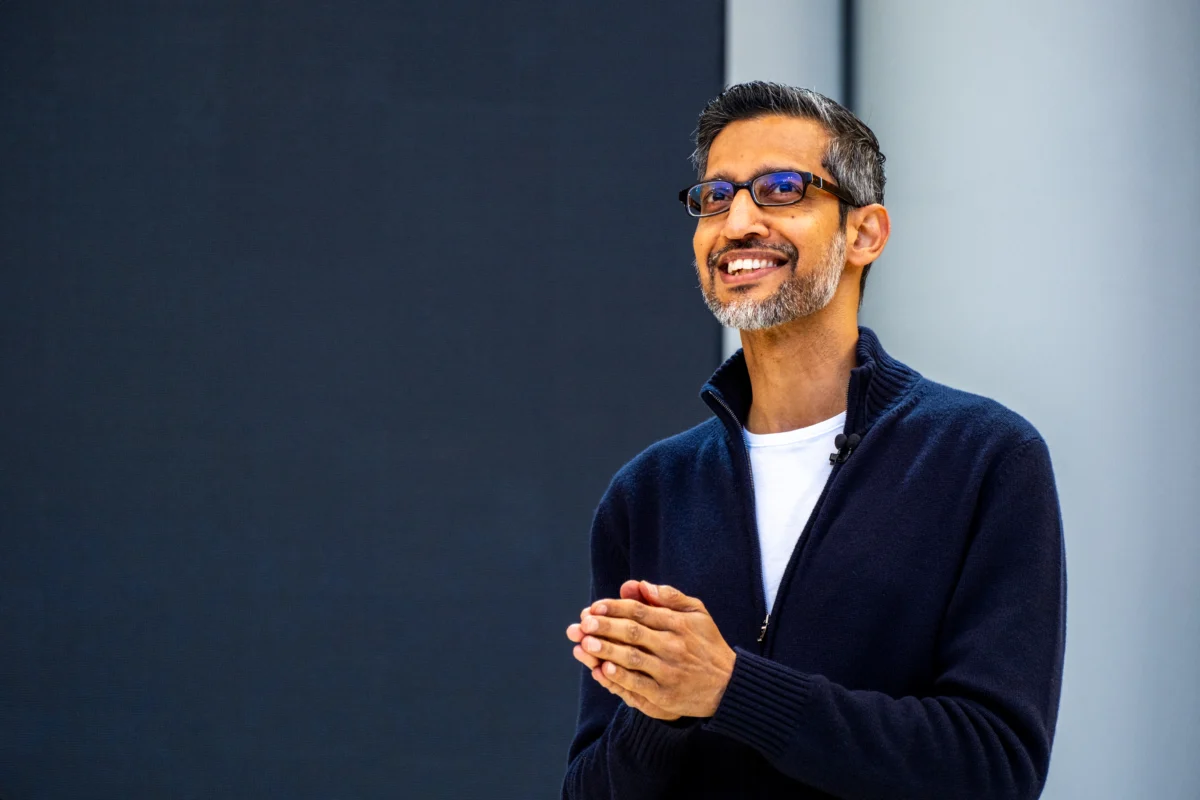
If the financial markets were a barometer for the collective ambition of the technology sector, the needle has just surged into the red. Alphabet, the parent company of Google, has officially shattered records with an $85 billion equity offering, a move that serves as both a testament to the company’s internal fiscal health and a definitive signal that institutional investors are ravenous for exposure to the artificial intelligence revolution.
The sheer scale of the capital raised—and the speed at which it was secured—has sent shockwaves through Wall Street, effectively resetting the ceiling for what a single company can demand from public markets. As investors from retail traders to legendary conglomerates like Berkshire Hathaway clamor for a seat at the table, the implications for the broader tech ecosystem are profound.
Main Facts: A Record-Shattering Financial Feat
Alphabet’s gargantuan fundraising effort was initially designed as a two-tranche strategy totaling $40 billion. However, the market’s response was so overwhelmingly positive that the company ended up securing $45 billion in its first wave alone. CEO Sundar Pichai confirmed the development via a post on X, noting that the demand far exceeded the company’s original projections.
The offering, which included two distinct classes of shares alongside "depositary shares" specifically priced to lower the barrier to entry for smaller investors, was marked by the high-profile participation of Warren Buffett’s Berkshire Hathaway, which invested $10 billion. With another $40 billion tranche slated for the coming quarter, the total capital infusion will reach $85 billion.
This figure obliterates the previous record for equity offerings, which had been held by Brazilian oil giant Petroleo Brasileiro SA since its $70 billion raise in 2010. By surpassing this benchmark, Alphabet has not only outperformed a decade-and-a-half-old record but has also demonstrated that AI infrastructure—rather than traditional commodities—is now the primary engine of global capital movement.
Chronology: From Strategy to Market Dominance
The trajectory of this deal highlights the precision with which Alphabet is managing its transition toward an AI-first future.
- Pre-Announcement Phase: Throughout early 2026, analysts noted Alphabet’s aggressive pivot toward massive capital expenditure (CapEx) targets. The company signaled that its primary challenge was not technology, but the sheer physical scale of the data centers required to house next-generation AI models.
- The Launch: Alphabet officially entered the market with a targeted $40 billion raise. The strategy involved a tiered share structure to ensure both institutional depth and retail breadth.
- The Over-Subscription: Within days of the offering, the order book was heavily oversubscribed. Investors—ranging from pension funds and sovereign wealth funds to individual retail investors—pushed the initial tranche to $45 billion.
- The Commitment: Following the successful close of the first phase, CEO Sundar Pichai reaffirmed the company’s commitment to the secondary $40 billion tranche, solidifying the $85 billion goal.
- Future Outlook: Market observers are now turning their eyes to the third and fourth quarters of 2026, as the second half of the raise is integrated into the company’s long-term AI infrastructure projects.
Supporting Data: The Anatomy of a Tech Giant
It is essential to distinguish Alphabet’s fundraising from the speculative ventures that have characterized much of the AI hype cycle. Alphabet is not a debt-riddled startup; it is a financial powerhouse.
In the first quarter of 2026 alone, the company reported $110 billion in revenue, reflecting a 22% year-over-year growth rate. With exceptionally high profit margins and a dominant position in search, advertising, and cloud services, Alphabet represents a "safe harbor" for investors looking to play the AI trend without the volatility associated with unproven startups.
However, the capital requirements remain staggering. According to statements made by Pichai at Google I/O last month, the company expects to spend between $180 billion and $190 billion on capital expenditures before the end of 2026. These funds are almost exclusively earmarked for the "AI build-out"—the construction of massive, energy-intensive data centers and the procurement of advanced silicon chips required to train and deploy foundational models.
Official Responses and Strategic Rationale
CEO Sundar Pichai has been transparent regarding the purpose of the capital. In his communications to shareholders and the public, he framed the $85 billion not as a defensive measure, but as an aggressive investment in future utility.
"This is part of our multi-year investment strategy to meet the AI opportunity ahead and support the demand we’re seeing from enterprises and consumers," Pichai stated. The rationale is clear: the AI race is a war of attrition. The companies that can secure the most compute power and the most robust infrastructure first will be the ones that capture the market share of the next decade.
By raising this capital now, Alphabet is effectively "pre-paying" for its future dominance, ensuring that it is not constrained by liquidity when competitors are forced to tighten their belts due to the high cost of interest or market volatility.
Implications for the Broader AI IPO Pipeline
Perhaps the most significant takeaway from Alphabet’s success is what it signals for the upcoming IPO pipeline. The technology industry is currently preparing for a wave of high-profile public offerings, most notably from companies like Anthropic, SpaceX, and OpenAI.
The Anthropic Precedent
Anthropic’s recent filing to go public is being viewed through the lens of Alphabet’s success. If the public markets have the appetite to absorb $45 billion from Alphabet in a single tranche, they are likely hungry for the pure-play AI exposure that an Anthropic IPO provides.
The Valuation Paradox
There is an expectation that companies like Anthropic and SpaceX may reach valuations that were previously considered impossible, potentially even surpassing the records set by legacy tech giants. However, this success is contingent on a critical variable: the endurance of investor sentiment.
The $8 Trillion Question
A recent report from Goldman Sachs highlighted an unprecedented $8 trillion in AI-related spending committed over the next five years. This capital must be sourced from somewhere. Whether it is through company revenues, loans, or ongoing stock sales, the sheer volume of cash required is unprecedented.
The fundamental question for the market is whether public investors possess the "stomach" for a sustained, multi-year, multi-trillion-dollar capital drain. If the market continues to view AI as an existential necessity, the funding will continue. If, however, there is a cooling in the productivity gains seen by enterprises, the flow of capital could tighten abruptly.
Conclusion: A New Era of Capital Markets
Alphabet’s $85 billion raise is more than just a successful financial transaction; it is a definitive marker of the AI era. It proves that the "smart money" has moved past the experimental phase and is now fully committed to the heavy-lifting phase of industrial-scale infrastructure.
As we look toward the remainder of 2026, the focus will shift from the amount of money raised to the return on that capital. The companies that succeed will be those that can turn these billions of dollars in CapEx into tangible, scalable revenue. For now, the market has spoken: it believes the AI revolution is not just hype—it is a transformation that is worth every penny of the $85 billion, and likely trillions more to come.
For the retail investor and the institutional fund manager alike, the message from Alphabet is clear: the race for the future of intelligence is on, and the ticket price for entry is higher than anyone dared to imagine just a year ago. Whether this massive liquidity influx creates a stable foundation for the next decade of growth or a speculative bubble remains the defining economic question of our time.
 Sagoh
Sagoh  Iffa Jayyana
  Lina Hope