
 By Siti Muinah

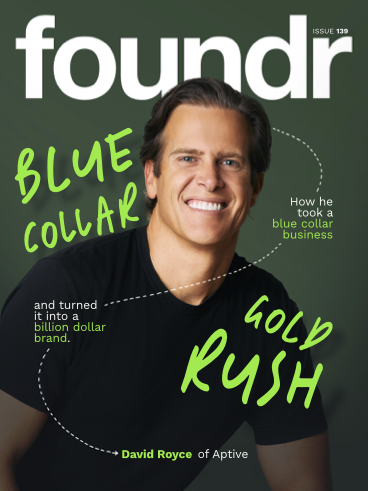
In the high-stakes world of American business, the narrative of success is often sanitized. We are told to look for the "next big thing" in AI, fintech, or biotechnology. We are conditioned to chase prestige, venture capital, and the polished aesthetics of Silicon Valley. David Royce, the founder and chairman of Aptive Environmental, built his career by doing the exact opposite.
He didn’t build his fortune by disrupting software; he built it by disrupting the way we think about "boring" industries. Today, Aptive stands as the third-largest residential pest control service in North America, a massive enterprise that proves that while revenues may be vanity, cash flow is reality, and the most lucrative opportunities are often those hidden in plain sight.
The Foundation: From "Not Smart" to Sales Prodigy
The arc of David Royce’s life did not begin in an Ivy League boardroom. As a child, he struggled academically, a result of undiagnosed ADHD that made traditional schooling feel like a prison of boredom. "I struggled in school because I couldn’t focus unless I cared deeply," Royce recalls. "When you’re a kid, you don’t say, ‘I might have undiagnosed ADHD.’ You say, ‘I guess I’m not smart.’"
The turning point arrived in the sixth grade in the form of a teacher named Mrs. Luft. She was the first person to see potential in Royce, providing the external validation he needed to begin believing in his own capabilities. This experience taught him a lesson that would become the cornerstone of his leadership style: that people perform best when they feel seen and valued.

Years later, Royce would find that his ADHD—a liability in a classroom—was a superpower in the high-octane world of sales. Sales provided the stimulation his brain craved. His introduction to the industry was serendipitous; looking for summer work, he followed a friend into the world of door-to-door pest control. His start was disastrous. For his first week in Sacramento, he failed to close a single sale, putting him in the precarious position of having earned zero dollars on a commission-only gig.
While most would have quit, Royce did the "thing nobody else wanted to do." He spent his weekends studying sales literature and analyzing the performance of his peers. By the end of the summer, the kid who was "bad at school" was the top-performing rookie in a company of 200 reps. He had learned the most vital lesson of his career: persistence is genius in disguise.
Chronology of a Billion-Dollar Climb
Royce’s journey from a summer salesman to a titan of industry follows a clear, methodical path of growth and refinement.
- The Early Years (College): Royce earned $225,000 in a single summer through door-to-door sales. Rather than spending it, he saved $300,000, earmarking it for an MBA.
- The Pivot: Encouraged by a mentor who had recently sold his own pest control startup for $10 million, Royce realized that his finance degree and sales prowess were the perfect tools to disrupt the fragmented, unsexy pest control market. He skipped the MBA and invested his savings directly into his first venture.
- The Cash Flow Crisis (Year 1): Success nearly killed the company. By generating 7,500 new customers—significantly more than the 5,000 projected—the company faced a massive liquidity crunch. Because commissions were paid upfront, the business model was temporarily inverted. Royce navigated this by negotiating with his team, offering interest in exchange for delayed payments, proving that "cash flow is reality."
- The Serial Entrepreneurship Model: Royce developed a unique exit strategy. He sold three consecutive companies to the same strategic buyer, but crucially, he only sold the customer lists and the technical infrastructure. He retained his leadership teams and sales force, essentially "re-launching" with a pre-vetted, high-performing squad.
- The Birth of Aptive: With the launch of Aptive, Royce applied everything he had learned about technology, culture, and scaling. He integrated software to gamify sales and invested heavily in employee equity, eventually creating a powerhouse that hit $500 million in annual revenue.
Supporting Data: Why "Boring" Wins
Royce’s thesis—that unsexy industries harbor the most wealth—is backed by compelling economic data. According to analysis cited by The Wall Street Journal, roughly 43% of the top 0.1% of income earners in the United States are involved in what most would consider "boring" blue-collar industries.

The reasoning is simple:
- Recession Resistance: "Bugs don’t read The Wall Street Journal," as Royce puts it. While tech valuations fluctuate wildly based on market sentiment, essential services—plumbing, pest control, HVAC—provide steady, recurring revenue regardless of the economic climate.
- The Aging Demographic: Millions of baby boomer owners of these service-based businesses are approaching retirement. Many lack a succession plan, creating a massive vacuum for younger, tech-savvy entrepreneurs to move in, consolidate, and modernize these legacy operations.
- The AI Barrier: While artificial intelligence is rapidly automating white-collar functions, it cannot fix a plumbing issue or physically treat termites. The physical nature of the work provides an inherent "moat" against digital disruption.
The Philosophy of Culture and Leadership
Royce’s approach to culture is perhaps his most debated, yet successful, attribute. His HQ is legendary, featuring basketball courts, golf simulators, and company-sponsored trips to exotic locations. However, Royce is quick to clarify: "Perks are sugar. They’re not the protein."
The true driver of his culture was his training program and, more importantly, his commitment to employee ownership. By giving away 25% of the company to his staff, he turned employees into owners. When the business reached its half-billion-dollar revenue mark, that equity translated into life-changing payouts for his team. This wasn’t just benevolence; it was the ultimate retention strategy. Ownership, he argues, is far more effective than any ping-pong table or office perk.
Lessons in Scaling and Letting Go
The most difficult transition for any founder is moving from being the "hero" to the "architect." Royce admits that letting go of the CEO seat was the hardest hurdle of his career. He had spent a decade grooming his successor, but the real challenge was staying out of the way once the transition occurred.

"I had to learn that leadership at that level means letting someone else win, even if they’d do it differently," he reflects.
This transition also brought a painful lesson regarding executive hires. After hiring a high-profile CFO from a billion-dollar tech firm, the company faltered during a sale process. The hire, while impressive on paper, lacked the "ground-level" understanding of how specific expenses impacted the company’s unique business model. The missed forecasts caused potential buyers to walk away, a hard lesson in the principle of "trust but verify."
Implications: The Future of Entrepreneurship
David Royce’s story serves as a blueprint for a new generation of entrepreneurs. It suggests that the most successful ventures are often those that solve real-world, physical problems with high-level financial and operational discipline.
For those looking to build lasting wealth, the implications are clear:
- Ignore the Image: Do not choose an industry because it looks good in a suit. Choose it because it has healthy margins and recurring revenue.
- Prioritize Cash Flow: Understand that profit is a metric, but cash flow is the survival mechanism.
- Build Leaders, Not Followers: The true measure of a company’s success is not its final valuation, but the strength of the leaders it produces.
As Royce concludes, "If you don’t enjoy the climb, the summit is going to disappoint you." His success was never about the pest control itself; it was about the rigorous discipline, the investment in people, and the stubborn refusal to accept failure. In an era obsessed with digital vanity, Royce’s career remains a testament to the power of grit, the importance of "unsexy" fundamentals, and the enduring value of doing what others are too proud to attempt.
 Basiran
 Azzam Bilal Chamdy
 Asep Darmawan
