
 By Neng Nana
Main Facts
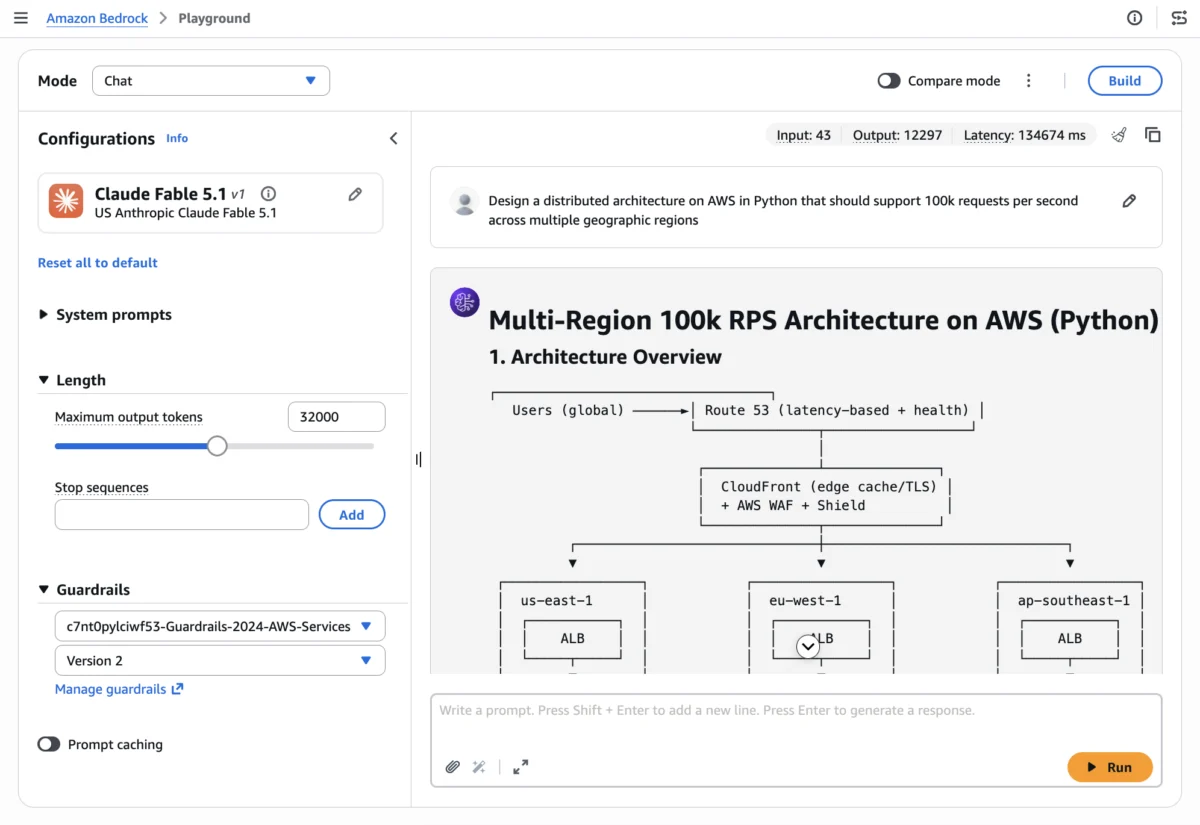
The landscape of enterprise artificial intelligence shifted significantly last week with the official arrival of Anthropic’s Claude Fable 5.1 on Amazon Web Services (AWS). Positioned as a major leap forward in artificial intelligence capabilities, Claude Fable 5.1 is engineered to deliver high-tier "frontier intelligence" tailored for complex, ambitious, and multi-faceted enterprise tasks. Unlike traditional AI models that excel in short, isolated query-and-response interactions, Fable 5.1 is explicitly designed to handle long-running, high-stakes workflows spanning hours and multiple applications.
Whether managing comprehensive software development projects, conducting rigorous scientific research, or executing deep enterprise data transformations, Fable 5.1 can autonomously own large segments of a project. It is capable of developing features across an entire codebase, executing intricate code reviews, and performing extensive performance optimizations over extended operational sessions.
To support this advanced deployment, Anthropic has classified Claude Fable 5.1 as a Covered Model—a specialized tier of AI models subject to heightened data retention protocols, stringent safety reviews, and meticulous access policies regardless of where they are hosted.
To bridge the gap between advanced capability and corporate data governance, AWS and Anthropic have jointly introduced innovative security frameworks, including the aws_review data retention mode and Enterprise Frontier Safeguards (EFS). These mechanisms ensure that organizations can harness next-generation AI models while retaining absolute control over their sensitive operational data within secure cloud boundaries. Developers and enterprise architects can access Claude Fable 5.1 immediately through two primary pathways: Amazon Bedrock and the Claude Platform on AWS.
Chronology
The integration of Claude Fable 5.1 into the AWS ecosystem represents the culmination of a rapidly accelerating partnership between Amazon and Anthropic, punctuated by key developmental milestones:
- Early Development and Architecture Collaboration: Engineers from both AWS and Anthropic collaborated closely to design a model capable of sustaining complex, multi-hour operations without degrading contextual memory or processing accuracy. This resulted in the architecture behind Claude Fable 5.1, focused heavily on software engineering and automated research workflows.
- Safety and Governance Formulation: Recognizing the risks inherent in autonomous, long-running AI agents capable of altering codebases and interacting with deep enterprise systems, Anthropic categorized Fable 5.1 as a Covered Model. Concurrently, AWS security architects developed specialized governance tools—such as the
aws_reviewretention configuration and Enterprise Frontier Safeguards—to meet strict corporate compliance standards. - The Official Launch (Last Week): Claude Fable 5.1 officially became generally available on AWS. The deployment went live across Amazon Bedrock and the Claude Platform on AWS, accompanied by updated documentation, model cards, and developer integration guides.
- Ongoing Ecosystem Integration: As enterprises begin testing and deploying the model for large-scale code management and scientific simulations, AWS continues to update its developer resources via the AWS Builder Center, upcoming AWS Summits, and the What’s New with AWS portal to provide ongoing support and community-driven best practices.
Supporting Data
The technological and operational framework supporting Claude Fable 5.1 relies on several defined parameters, security modes, and architectural choices:
- Operational Scope: Engineered for workflows running continuously for hours, spanning multiple applications and massive code repositories.
- Data Retention Windows: Under the new
aws_reviewdata retention configuration mode, user prompts and model outputs are retained for up to 30 days specifically to facilitate human safety reviews conducted by authorized Amazon personnel. - Security Boundary Enforcement: The
aws_reviewmode operates strictly within the AWS security perimeter. Meanwhile, legacy options such asprovider_data_shareare systematically phased out for covered models, ensuring that Amazon Bedrock does not transmit proprietary customer data back to the model provider (Anthropic). - Access Channels: Available globally to eligible enterprise customers through two distinct AWS services:
- Amazon Bedrock: Providing serverless access with managed security, encryption, and scalability.
- Claude Platform on AWS: Offering specialized deployment options for native Claude toolsets.
- Governance Framework: Enterprise Frontier Safeguards (EFS), co-developed by AWS and Anthropic, serve as the regulatory and technical bridge allowing regulated industries to adopt frontier AI models without compromising compliance frameworks.
Official Responses
Executives and technical leaders from both Amazon Web Services and Anthropic have highlighted the strategic importance of this release in addressing the evolving demands of enterprise technology teams.
Industry analysts and AWS community advocates have echoed these sentiments, pointing out that the primary bottleneck for enterprise AI adoption has historically been trust and data governance rather than raw intelligence. By tying Claude Fable 5.1 directly to rigorous safety policies and internal cloud boundaries, the collaboration successfully directly targets enterprise risk aversion.
In official documentation and community updates released through the AWS News Blog—curated by prominent AWS advocate Channy—the companies emphasized that autonomy must be balanced with observability. The implementation of the aws_review configuration mode and EFS represents a direct response to feedback from enterprise Chief Information Security Officers (CISOs) who demanded visibility and control over how advanced models process corporate intellectual property.
Implications
The deployment of Claude Fable 5.1 on AWS carries profound implications for the software development industry, enterprise workflow automation, and the broader cloud computing market:

1. Transformation of Software Engineering
With the capability to independently manage features across an entire codebase, conduct automated code reviews, and execute performance optimization over extended sessions, Fable 5.1 shifts the role of human developers. Rather than writing every line of boilerplate or debugging minor syntax errors, engineers will increasingly transition into "AI managers" or orchestrators—reviewing architectural plans, setting parameters, and auditing code generated by autonomous agents. This promises unprecedented velocity in software delivery cycles.
2. Redefining Enterprise Trust and AI Governance
The introduction of the aws_review mode and Enterprise Frontier Safeguards sets a new benchmark for how cloud providers and foundational model creators must cooperate. As AI agents become more autonomous and capable of handling high-stakes workflows, the demand for transparent data handling will only intensify. By ensuring that safety reviews happen within controlled cloud perimeters without data leakage to third parties, AWS has established a template for secure, high-capability AI deployment that regulated sectors—such as finance, healthcare, and government—can comfortably adopt.
3. Accelerated Migration to Managed AI Platforms
By offering Fable 5.1 natively through Amazon Bedrock and the Claude Platform on AWS, the partnership reduces the friction associated with deploying frontier-class models. Enterprises no longer need to build custom infrastructure or negotiate bespoke compliance agreements to leverage cutting-edge intelligence; they can tap into secure, scalable managed services immediately. This is expected to drive further consolidation of enterprise AI workloads into major cloud ecosystems, cementing AWS as a central hub for mission-critical artificial intelligence operations.
 Siti Muinah
 Reynand Wu
 Jia Lissa
