
 By Evan Lee Salim
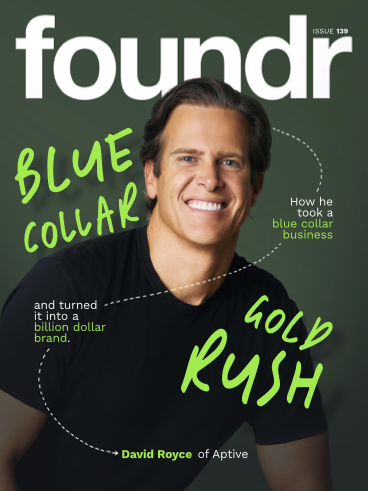
In the high-stakes world of modern entrepreneurship, the blueprint for success is often mythologized: it requires a disruptive tech platform, a venture-backed SaaS model, or a revolutionary consumer app. David Royce, the founder and chairman of Aptive Environmental, built his fortune on a foundation that most of his peers wouldn’t touch with a ten-foot pole: pest control.
Today, Aptive stands as the third-largest residential pest control service in North America. But Royce’s journey to the top was not defined by a polished finance degree or a Silicon Valley incubator. Instead, it was forged in the humid, high-rejection crucible of door-to-door sales. Royce’s success story serves as a masterclass in the value of blue-collar grit, the power of unconventional cash flow management, and the realization that the most lucrative opportunities are often those hidden in plain sight.
The Genesis: From Academic Struggles to Sales Mastery
David Royce’s trajectory was not linear. As a child, he frequently grappled with feelings of inadequacy, often labeling himself "not smart" because of his inability to focus in traditional classroom settings. It wasn’t until his adult years that he understood these struggles were linked to undiagnosed ADHD.
However, Royce reframed his condition: in mundane environments, his brain struggled; in high-stakes, hyper-focused environments like sales, his ADHD became a competitive advantage. The turning point occurred in the sixth grade when a teacher named Mrs. Luft saw potential in him that he didn’t yet see in himself. Her belief served as a catalyst, teaching him that persistence could overcome almost any perceived intellectual barrier.

The Crucible of Door-to-Door Sales
Royce entered the pest control industry by accident, following a friend’s advice to take on a summer job. His debut was catastrophic. Working on a commission-only basis, he spent his first five days in Sacramento selling nothing. While his peers hit their quotas, Royce was effectively performing "free cardio" under the hot sun.
Rather than quitting, he turned to the bookstore. He spent 90 minutes every day studying sales psychology and tactics. By the end of that summer, he was the top sales rookie in a company of 200 people. This period codified his core philosophy: "Persistence is genius in disguise."
Chronology: Building a Multi-Stage Empire
Royce’s career can be categorized by a series of deliberate, calculated moves that prioritized cash flow over vanity metrics.
1. The Early Lessons
After graduating with a finance degree, Royce faced a crossroad: join an investment bank or start his own pest control business. His mentor—a seasoned operator who had just sold his own startup for $10 million—urged him to avoid the 100-hour work weeks of banking and instead apply his finance knowledge to the blue-collar sector.

2. The Scaling Phase
Using $300,000 in savings—money earned from his college summers—Royce launched his first venture. He was not looking for "prestige"; he was looking for a gap in the market. He interviewed his mentor, identified 30 specific pain points in the existing business model, and methodically addressed them.
3. The Near-Bankruptcy
In his first year in Los Angeles, Royce faced a "good problem" that nearly destroyed him: hyper-growth. His model required paying commissions before customer revenue was fully realized. He had projected 5,000 new customers; he achieved 7,500. He narrowly avoided collapse by negotiating with his sales leaders, offering interest on delayed payments. This taught him a vital lesson: "Revenues are vanity. Profits are sanity. But cash flow is reality."
4. The Exit Strategy
Royce mastered the art of the "asset deal." Rather than selling the entire company—including the people—he sold only the customer lists and technicians to strategic buyers. He then took his core leadership team and capital to launch the next iteration, effectively growing his empire while maintaining his "golden goose": his human capital.
Supporting Data: Why "Unsexy" Industries Dominate
Royce’s success aligns with a broader economic trend. The "stealthy wealthy" are rarely found in the headlines of tech journals; they are often owners of essential service businesses.

- The 0.1% Demographic: Among the top 0.1% of income earners in the U.S., roughly 43% are involved in blue-collar, service-based industries.
- Recession-Proof Models: As Royce notes, "Bugs don’t read The Wall Street Journal." Pest control, waste management, and plumbing remain essential regardless of market volatility.
- The Great Retirement: Millions of Baby Boomer owners of these businesses are currently retiring, leaving a vacuum of leadership and ownership that is ripe for consolidation.
Official Perspectives: Culture as a Strategic Asset
When asked about his management style, Royce rejects the idea that "culture" is merely a set of perks. While Aptive HQ features an NCAA-sized basketball court and a golf simulator, Royce insists these are just "sugar."
The Protein: Ownership and Training
The real drivers of Aptive’s culture were, first, a world-class training program that enabled reps to outperform peers at other firms by 70%, and second, a massive equity distribution. Royce gave away 25% of the company to his employees. At the point of exit, this resulted in life-changing payouts for team members, allowing them to clear debts and build personal wealth.
"Turns out," Royce notes, "ownership is a far better retention tool than ping-pong tables."
Implications: The Architect, Not the Hero
One of the most difficult transitions for any founder is moving from "hero" to "architect." Royce spent a decade grooming his successor, a move that forced him to confront whether he had built a functional organization or a personal dependency.
Lessons in Corporate Governance
Royce’s experience also highlights the dangers of "hiring for the resume." When he brought in a high-profile CFO from a billion-dollar tech firm, the disconnect between tech-company culture and the operational realities of pest control nearly scuttled a billion-dollar exit. The CFO’s lack of experience with the specific nuances of their expense structure led to missed forecasts, which in turn caused potential buyers to lose confidence.
The lesson was clear:
- Trust, but verify: High-profile resumes do not guarantee operational fit.
- Forecast accuracy is non-negotiable: Missing projections during a sale process gives buyers all the leverage.
- Growth is a cycle: Not every sales process ends in a deal, and that is acceptable—the process itself provides invaluable data to refine the business for the next attempt.
Conclusion: The Summit is the Journey
Reflecting on two decades of building, Royce remains humble about the nature of success. When asked about his "number"—the point at which he would have enough—he realizes the answer is always "just a little more."
Ultimately, Royce’s story is not about the pest control industry. It is about the discipline to pursue an unglamorous path, the integrity to share wealth with the team that helps build it, and the humility to stop being the hero of the story so that others can lead. For those looking to build their own empires, Royce offers a final piece of advice: if you don’t enjoy the climb, the summit will inevitably disappoint you. Entrepreneurship is not about the exit; it is about the expertise and character forged in the daily grind of doing what others are unwilling to do.
 Dwi Wanna
  rifanmuazin
  Asep Darmawan