
 By Raul Delapena Setiawan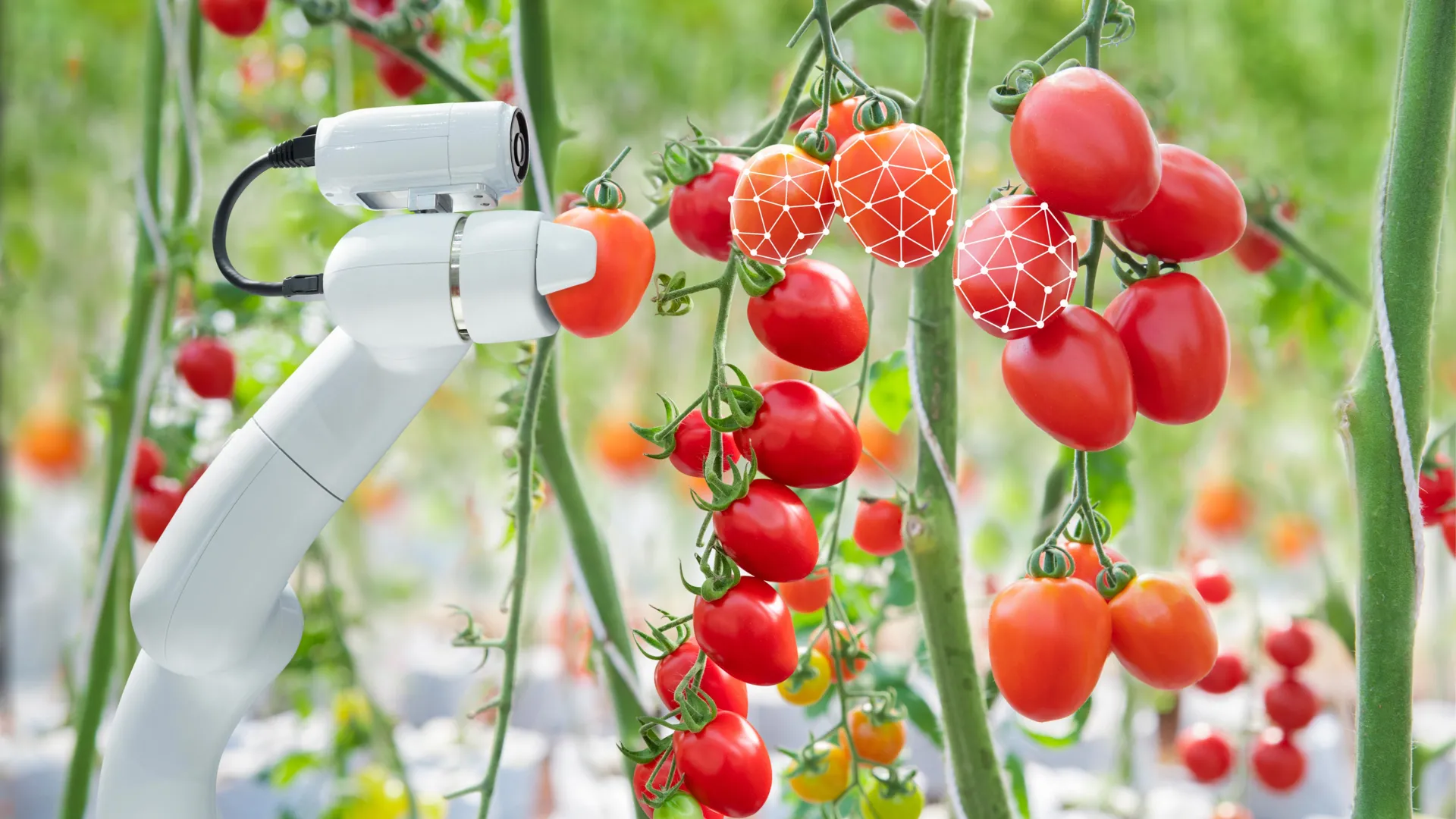
The global agricultural sector is facing a quiet but profound crisis. As aging populations in developed nations and shifting labor trends globally lead to chronic farm labor shortages, the reliance on manual harvesting—a grueling, labor-intensive task—has become unsustainable. While automation has long been a staple of industrial agriculture, the delicate nature of fresh produce has historically served as a barrier to robotic adoption. Unlike grain or corn, which can be harvested through brute force by heavy machinery, fresh crops like tomatoes require a level of finesse that has, until recently, eluded artificial intelligence.
However, a breakthrough from Osaka Metropolitan University (OMU) is bridging this gap. Assistant Professor Takuya Fujinaga of the Graduate School of Engineering has pioneered a new approach to robotic harvesting, shifting the focus from simple detection to “harvest-ease estimation.” By teaching robots to evaluate the physical accessibility of a tomato before reaching for it, researchers are moving closer to a future where autonomous systems can operate with the discernment of a seasoned human picker.
The Complexity of the Cluster: Why Tomatoes Defy Automation
To the average consumer, a tomato is a straightforward object. To an agricultural robot, however, a tomato plant is a high-stakes obstacle course. Tomatoes do not grow in isolation; they flourish in dense, chaotic clusters. A robotic arm reaching into this environment must contend with a web of stems, occluding leaves, and neighboring fruits that are often at different stages of ripeness.
Traditional robotic systems were designed primarily for object detection. If a camera identified a red object, the robot would attempt a pick. This binary approach frequently leads to failure: the robot might collide with a stem, bruise the fruit, or inadvertently damage the plant by pulling at an entangled vine. The challenge is not just seeing the tomato; it is understanding the geometry of the harvest. A robot must calculate the optimal angle of approach, account for potential obstructions, and execute a movement that extracts the fruit without damaging the plant’s structural integrity.
Chronology of the Innovation: From Detection to Decision-Making
The development of Professor Fujinaga’s system represents a departure from standard computer vision protocols. The research, recently published in the journal Smart Agricultural Technology, traces a clear evolution in how robots perceive agricultural tasks.
Phase 1: The Vision-Only Era
For years, the industry focused on image recognition. Developers utilized deep learning models to help robots distinguish between ripe and unripe tomatoes. While this successfully increased the "target identification" rate, it did little to address the physical reality of the harvest. A robot could "see" the fruit but remained "blind" to the logistical difficulty of the path to that fruit.
Phase 2: Introducing Statistical Analysis
Fujinaga’s team integrated image recognition with a secondary layer of statistical analysis. By inputting visual data regarding stem orientation, leaf density, and relative depth, the system began to generate a "harvest-ease" score. This score functions as a predictive probability model: how likely is it that a specific approach vector will result in a successful, damage-free harvest?
Phase 3: Dynamic Re-evaluation
The most significant milestone in the project’s chronology was the introduction of the "re-try" protocol. In recent field tests, the system demonstrated an ability to analyze an initial failure. If a front-facing approach was blocked by a leaf or an awkward stem angle, the robot would pivot—literally and figuratively—to attempt a side-approach. This adaptive behavior mimics the problem-solving skills of a human worker, who instinctively adjusts their hand position to clear obstacles.
Supporting Data: The 81% Success Threshold
The efficacy of the system was validated through rigorous field testing, where the robot was tasked with harvesting tomatoes in varying conditions. The results have provided a compelling case for the scalability of the technology.
- Overall Success Rate: The system achieved an 81% success rate in autonomous harvesting, a significant jump over previous iterations that struggled with the physical constraints of clusters.
- Adaptability Metrics: Perhaps most importantly, 25% of the successful harvests were achieved only after an initial, failed attempt. This indicates that the "harvest-ease" algorithm is not merely a static assessment tool but a dynamic, iterative decision-making framework.
- Quantitative Evaluation: By treating "harvest-ease" as a measurable variable, the team has effectively quantified the difficulty of the harvest. This allows farmers to categorize crops based on their accessibility, providing a metric that can be used to optimize greenhouse layouts for future robotic compatibility.
Official Perspectives: Redefining Human-Robot Collaboration
Professor Fujinaga’s research is not aimed at replacing the human workforce, but rather at redefining the relationship between labor and technology. In his view, the future of farming lies in a hybrid model of collaboration.
"This moves beyond simply asking ‘can a robot pick a tomato?’ to thinking about ‘how likely is a successful pick?’, which is more meaningful for real-world farming," Fujinaga stated. He emphasizes that the goal is to offload the repetitive, high-volume tasks to the machine while leveraging human intuition for the complex, "low-ease" cases.
"We envision a new form of agriculture where robots and humans collaborate," he added. "Robots will automatically harvest tomatoes that are easy to pick, while humans will handle the more challenging fruits." This division of labor could fundamentally alter the economics of greenhouse farming. By allowing machines to handle the "easy" picks, human workers can focus their time and energy on managing crop health, delicate pruning, and the harvesting of fruits in positions that remain too complex for current robotic sensors.
Implications for the Global Agricultural Industry
The implications of this research extend far beyond the tomato rows of Osaka. As the global population continues to climb, the demand for efficient, year-round food production is skyrocketing. Greenhouse agriculture, which offers higher yields and lower water usage than traditional open-field farming, is the logical solution—but it is also the most labor-intensive.
Solving the Labor Shortage
The agricultural sector has long struggled with a "revolving door" of labor. Seasonal workers are increasingly difficult to source, and the physical toll of harvesting leads to high turnover. By automating the most repetitive aspects of the job, the industry can create a more stable, technology-integrated environment that might prove more attractive to the next generation of agricultural technicians.
Optimizing Crop Geometry
Fujinaga’s findings also suggest a shift in how crops are bred and trained. If robots can quantify "harvest-ease," agricultural scientists might begin to breed tomato varieties specifically optimized for robotic harvesting—plants with more open growth patterns or stems that are easier for robotic grippers to manipulate. This "design for automation" approach could further increase the success rate of robotic systems, creating a virtuous cycle of improvement.
The Rise of Intelligent Agents
The move toward "harvest-ease" decision-making is part of a broader trend in AI toward "embodied intelligence." It is no longer enough for an AI to be smart in a digital sense; it must understand the physics of the physical world. This research serves as a blueprint for other sectors, including manufacturing, waste sorting, and disaster recovery, where robots must operate in cluttered, unpredictable environments.
Conclusion: The Path Ahead
The work of Professor Fujinaga and his team at Osaka Metropolitan University represents a critical step in the maturation of agricultural robotics. By moving the conversation from "can it see" to "can it effectively act," the team has provided a framework for robots to navigate the nuanced realities of the natural world.
As these systems move from the laboratory into commercial greenhouses, the agricultural industry will likely see a transformation in how farms operate. The robots of the future will not be simple machines programmed to move in fixed patterns; they will be intelligent agents capable of assessing, adapting, and collaborating. In the quiet rows of the greenhouse, the partnership between human ingenuity and robotic precision is beginning to bloom, promising a more efficient, sustainable, and productive future for global agriculture.
The publication of these findings in Smart Agricultural Technology serves as both a conclusion to a successful study and a starting point for a new era of "intelligent" farming. As the technology continues to scale, the dream of an autonomous harvest is looking less like a futuristic fantasy and more like an impending, welcome reality.
 Sagoh
Sagoh  Asro
Asro  Siti Muinah