
 By Nana Muazin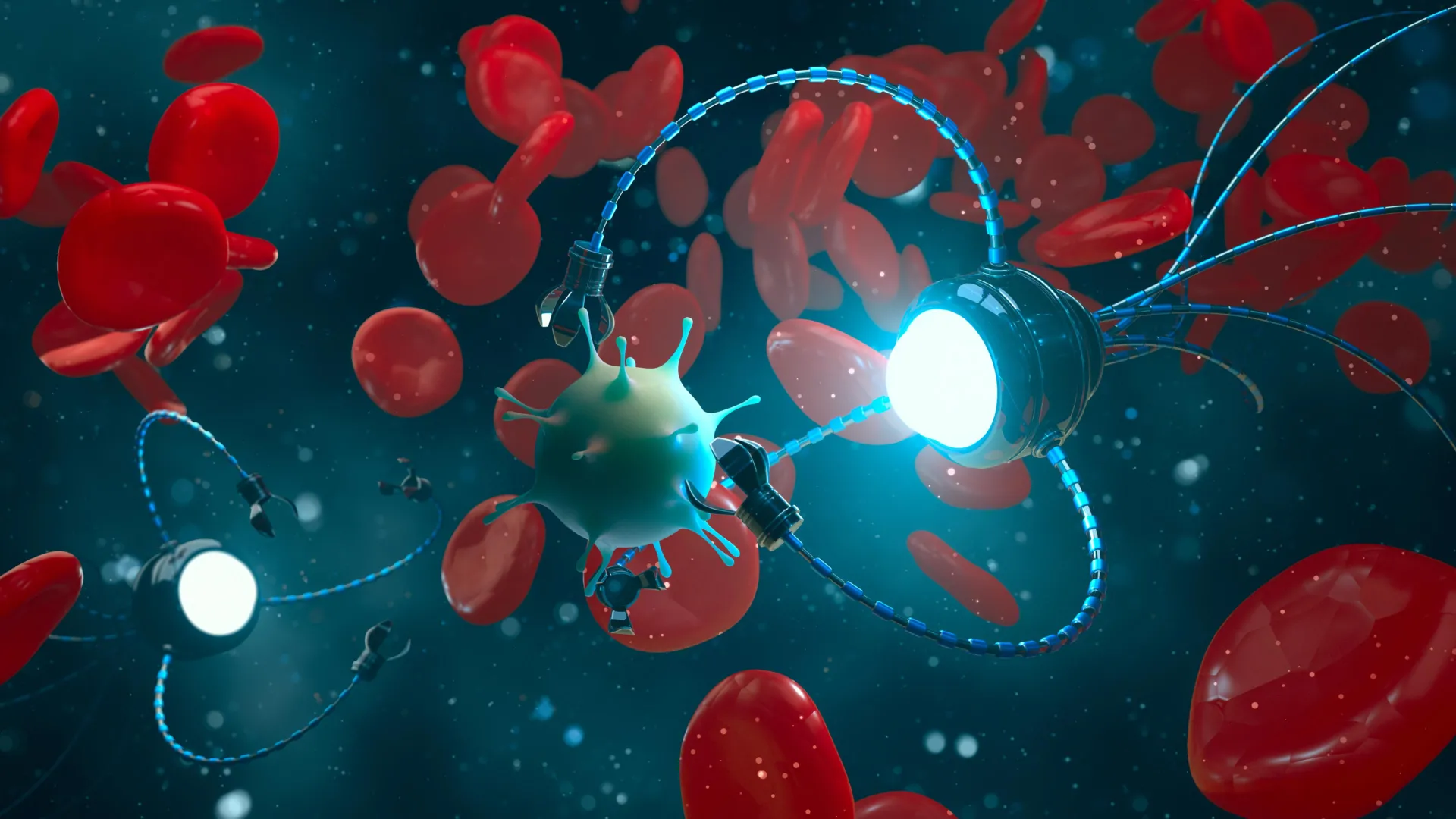
Imagine a future where the battlefield against disease is not a hospital room or a sterile laboratory, but the microscopic corridors of your own bloodstream. In this envisioned reality, a fleet of invisible, programmable sentinels—constructed not of steel or silicon, but of the very genetic material that defines life—navigates your circulatory system. These DNA-based nanorobots identify rogue cancer cells, neutralize viral pathogens with surgical precision, and repair damaged tissue at the molecular level.
While this may sound like the premise of a science-fiction epic, it is the burgeoning reality of DNA nanotechnology. As researchers transition from theoretical modeling to experimental proof-of-concept, the field is rapidly evolving, promising to revolutionize everything from oncology to molecular computing. However, as with any transformative technology, the leap from the petri dish to the patient remains a formidable hurdle.
The Architectural Blueprint: Engineering at the Nanoscale
The foundational premise of DNA robotics lies in the unique chemical properties of deoxyribonucleic acid. Beyond its role as a biological blueprint, DNA is an incredibly versatile construction material. By exploiting the predictable "A-T" and "C-G" base-pairing rules, scientists can program DNA strands to self-assemble into intricate, three-dimensional architectures.
Borrowing from Macro-Engineering
To advance these structures from static shapes to dynamic machines, researchers are looking toward the principles of traditional robotics. By incorporating rigid joints, flexible hinges, and compliant mechanisms, scientists are creating "DNA origami"—a technique where long strands of DNA are folded into specific, functional shapes. These machines are not merely passive scaffolds; they are actuators capable of performing work. By mimicking the mechanical design of macroscopic robots, researchers are successfully adapting concepts like load-bearing hinges and levers to the nanometer scale, allowing DNA systems to perform controlled, repeatable mechanical tasks.
Chronology of Progress: From Static Scaffolds to Dynamic Machines
The trajectory of DNA nanotechnology has been marked by a series of rapid-fire innovations over the last two decades.
- 2006: The Origami Breakthrough: Paul Rothemund introduced "DNA origami," demonstrating that long, single-stranded DNA could be folded into arbitrary two-dimensional shapes using short "staple" strands. This provided the "construction set" for all future DNA machinery.
- 2010–2015: The Rise of Nanomechanical Devices: Researchers began developing DNA "tweezers" and walkers—devices capable of opening and closing or moving across a surface. These experiments proved that DNA structures could perform motion in response to chemical stimuli.
- 2016–2020: Target-Specific Delivery: Scientific milestones were reached in the use of DNA "nanocages" that could open in the presence of specific molecular markers, effectively acting as logic-gated drug delivery vehicles.
- 2021–Present: Toward Autonomous Systems: Current efforts are focused on integrating AI-driven design tools and external control signals (light, magnetic fields) to move beyond "one-shot" devices toward fully autonomous, multi-tasking platforms.
The Toolkit of Control: Directing Motion in a Chaotic Environment
The greatest challenge facing a nanorobot is the environment in which it operates. At the molecular scale, the world is governed not by gravity or inertia, but by the relentless, chaotic bombardment of Brownian motion. In this environment, a robot doesn’t just "walk"—it is constantly jostled by water molecules, making precise navigation a monumental task.
Biochemical Programming: The "Fuel" of Motion
To master this chaos, researchers utilize "DNA strand displacement." By designing specific sequences to act as "fuel," scientists can trigger structural changes within the robot. When a fuel strand binds to a robot’s component, it displaces a previous strand, forcing the machine to shift shape or move forward. This process is highly programmable, allowing for the creation of sophisticated biochemical "circuits" that dictate the robot’s behavior based on its environment.
External Signal Integration
Biochemical cues alone are sometimes insufficient for real-time control. Consequently, researchers are integrating physical stimuli to steer these machines. By applying localized electric or magnetic fields, or utilizing specific wavelengths of light, scientists can induce structural changes in light-sensitive DNA molecules. These external signals provide a "remote control" mechanism, allowing for the fine-tuning of nanorobotic operations from outside the biological system.
Implications for Healthcare and Advanced Manufacturing
The implications of mastering molecular machines are staggering, spanning the most critical sectors of human industry.
The Rise of "Nano-Surgeons"
In medicine, the goal is to shift from systemic treatments—such as chemotherapy, which affects both healthy and diseased cells—to precision targeting. DNA nanorobots could be programmed to patrol the bloodstream, recognizing the unique surface proteins of a tumor. Upon docking, they could release a concentrated payload of medication directly into the cancer cell, sparing the surrounding tissue. Ongoing research into viral capture, including experiments involving SARS-CoV-2, suggests these platforms could eventually serve as rapid-response immunotherapies, trapping viruses before they can infect host cells.
Revolutionizing Molecular Computing
Beyond medicine, DNA robots represent a paradigm shift in manufacturing. As programmable templates, they can arrange nanoparticles with sub-nanometer accuracy. This level of precision is currently unattainable with traditional lithography. By organizing matter at the atomic scale, these robots could lead to the development of next-generation molecular computers, which would be orders of magnitude more efficient and powerful than current silicon-based processors. Furthermore, they could create ultra-efficient optical sensors and metamaterials with properties tailored at the light-wavelength scale.
Supporting Data: The Current Landscape of Capability
While the promise is vast, the current state of the field is defined by "proof-of-concept" maturity. Data from recent academic studies indicates:
- Operational Success Rates: In controlled, simplified environments, DNA robots show a 70% to 90% accuracy rate in target identification.
- Design Complexity: Current functional robots typically consist of hundreds of DNA strands, with design cycles lasting months.
- Scaling Potential: While current systems operate in isolation, simulations suggest that "swarms" of nanorobots could theoretically cooperate to perform complex tasks, provided that inter-robot signaling can be standardized.
Overcoming the "Scaling Gap": Expert Perspectives
The research community remains clear-eyed about the obstacles. Dr. Elena Vance, a lead researcher in bio-nanotechnology, notes, "We have moved past the ‘what if’ phase and into the ‘how to’ phase. But the ‘how to’ involves immense engineering friction."
The Need for Standardization
One of the primary hurdles is the lack of a standardized "parts library." Currently, every lab designs its own proprietary DNA motifs, making collaboration and scaling difficult. Industry experts are calling for a universal, open-source repository of DNA parts—much like the standard logic gates used in traditional electronics—that would allow researchers to "plug and play" modular components.
Simulation and AI
The mechanical properties of DNA are complex and highly sensitive to pH, temperature, and salt concentration. To predict how a robot will behave in the unpredictable environment of the human body, researchers are turning to AI. Machine learning algorithms are currently being trained to simulate the folding and movement of DNA structures, drastically reducing the time required to iterate designs from years to weeks.
The Road Ahead: A Collaborative Future
The transition of DNA robotics from the laboratory to the pharmacy shelf will require more than just biological ingenuity; it will require a massive, interdisciplinary effort.
- Bio-Manufacturing Infrastructure: We need the capability to synthesize these robots in large, high-purity batches, which is currently a costly and slow process.
- Regulatory Frameworks: Governing bodies like the FDA will eventually need to create new pathways for the approval of autonomous molecular machines, as they defy current classifications for drugs or medical devices.
- Ethical Considerations: As with any technology that can manipulate biological systems, the potential for unintended side effects or misuse must be addressed through rigorous safety testing and ethical oversight.
Conclusion: Mastering the Molecular World
The vision articulated by the scientific community is bold: "The robots of tomorrow won’t just be made of metal and plastic. They will be biological, programmable, and intelligent." By merging the precision of robotics with the versatility of life’s own code, we are on the precipice of a new industrial revolution—one that takes place inside the very cells that constitute our existence.
The journey from proof-of-concept to practical application will be long, fraught with technical setbacks and complex regulatory hurdles. Yet, the potential to eradicate diseases at their source and construct technologies of unimaginable sophistication is a goal worth pursuing. We are no longer merely observing the molecular world; through the lens of DNA robotics, we are finally learning how to master it. The molecular age has begun, and its architects are just starting to lay the foundation.
 Sagoh
Sagoh  Asro
Asro  Siti Muinah