
 By Ali Ikhwan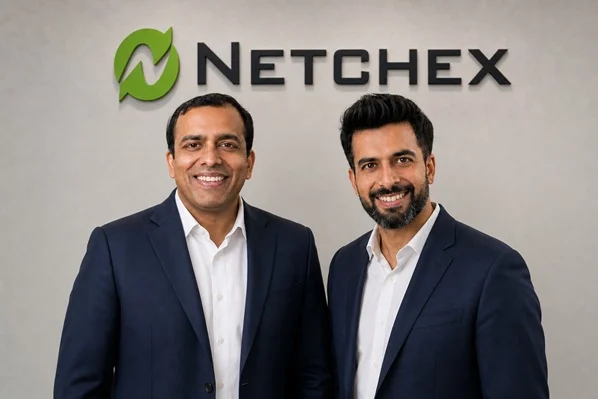
In the modern business landscape, the divide between corporate office technology and the "real-world" operational floor has never been more apparent. While white-collar professionals have been rapidly adopting generative AI to streamline emails and document drafting, the deskless workforce—the backbone of the hospitality, retail, healthcare, and automotive industries—has remained largely tethered to manual, fragmented administrative processes.
Today, Netchex, a premier payroll and human capital management (HCM) provider, is closing that gap with the launch of Mesh, a sophisticated team of AI-driven HR teammates. Unlike the standard "chat-and-answer" bots that dominate the current software market, Mesh is designed to be proactive, autonomous, and integrative, effectively functioning as an always-on administrative department for businesses that cannot afford the luxury of a massive HR staff.
The Core Innovation: Moving from Chatbots to "Teammates"
The fundamental flaw in much of today’s HR technology is its reactive nature. Most systems wait for a human to log in, identify a problem, and ask for a report or a solution. In high-velocity environments like restaurant groups or hotel chains, where 80% of the workforce is mobile and away from a desk, this reactive model creates a bottleneck.
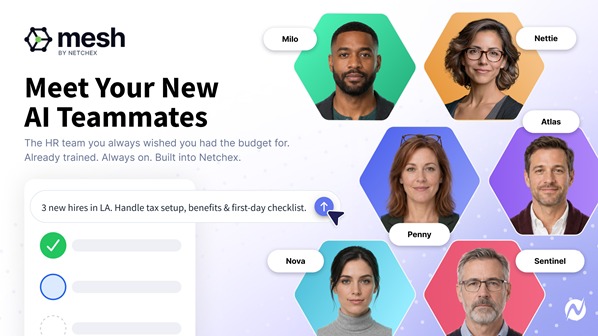
Mesh changes this paradigm by introducing six specialized AI "teammates" that function within the Netchex ecosystem. These agents do not merely wait for instructions; they monitor payroll, compliance, scheduling, and HR data in real-time. They are designed to "see" the entire operational puzzle, connecting data points that were previously siloed. For instance, Mesh can flag a scheduling pattern that is causing employee burnout—a key indicator of high turnover—or identify an expiring technician certification weeks before it becomes a compliance violation or a staffing emergency.
By acting as a "force multiplier," Mesh allows lean administrative teams to handle the workload of a much larger enterprise, essentially democratizing the kind of operational efficiency previously reserved for global corporations with deep HR resources.
Chronology: From AI Acquisition to Operational Reality
The journey to Mesh began with a strategic vision to transform Netchex from a traditional payroll provider into a data-driven intelligence hub.
- The Vision: Recognizing that deskless businesses struggled with chronic understaffing and administrative overhead, Netchex leadership sought to integrate AI that wasn’t just a "feature," but an operational layer.
- The Strategic Acquisition: The foundation of this technology was the acquisition of Mesh.ai, a Y Combinator-backed performance and engagement platform. The Mesh.ai team brought not only advanced AI architecture but a culture of "AI-first" product design.
- The Development Phase: Post-acquisition, the combined engineering teams focused on mapping every critical HR workflow. They identified the "pain points"—payroll errors, timecard inaccuracies, and scheduling gaps—and built autonomous agents to intercept these issues before they escalated into full-blown crises.
- The Early Access Program: Before today’s public launch, a group of Netchex customers—including entities like the multi-property hotel group Northwest X Southern—tested the system. The results were immediate, with users reporting significant recapturing of "Monday morning" administrative time and a marked reduction in payroll corrections.
- The Official Launch: Today, Mesh debuts as a multi-platform solution that lives inside the Netchex environment while also being accessible through conversational interfaces like ChatGPT and Claude.
Supporting Data: Why Proactive HR Matters
The business case for Mesh is supported by both internal performance metrics and broader industry shifts. According to industry analysis, including data from Gartner, the integration of task-specific AI agents is accelerating rapidly. By 2026, it is projected that 40% of enterprise applications will feature these types of agents, a massive leap from less than 5% in 2025.
For Netchex customers, the benefits are tangible:
- Administrative Recovery: Early adopters report winning back roughly 50% of their typical Monday administrative load. By automating the "prep work" of payroll and HR audits, admins are freed from the drudgery of data entry and verification.
- Accuracy and Compliance: By continuously scanning for errors, Mesh significantly reduces the frequency of payroll corrections. This not only saves money but also fosters trust between the employer and the employee.
- Cross-Platform Agility: Because Mesh is integrated into platforms like ChatGPT and Claude, it meets employees and managers where they already are. A shift manager can now spot an overtime trend or approve a PTO request through a simple, conversational interface, eliminating the need to log into a complex desktop portal.
Official Perspectives: The Leadership Vision
The development of Mesh was driven by a desire to balance high-tech capability with the practical realities of the "frontline" economy.
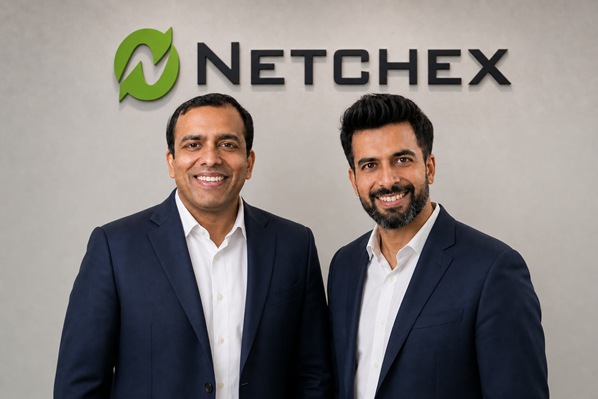
Abhinav Agrawal, CEO of Netchex, frames the launch as a mission-critical move for small-to-mid-sized businesses: "Our mission has always been to build the best software and support for deskless industries. AI teammates are how we keep delivering on that, giving every operator the bench strength that used to be reserved for companies ten times their size."
Saurabh Nangia, Chief Product Officer of Netchex and founder of Mesh.ai, emphasized that the true power of the platform lies in its ability to synthesize disconnected data: "Operators have been told AI will change everything, but so far it mostly just answers questions when you ask. Mesh gets ahead of the work, handles what people hate doing, and lets them focus on what matters. It can do that because it sees payroll, time, scheduling, and HR as one operation, not different disconnected systems."
The user perspective is equally positive. Tabitha Lehman of Northwest X Southern noted the practical impact on her daily workflow: "Our team is small, and we all wear a lot of hats. Having an AI agent continuously checking for errors, handling the prep work, and taking care of routine steps could be a total game changer."
Implications: The Future of the "Deskless" Workplace
The introduction of Mesh signals a broader shift in the HCM software industry. For years, HR software has been designed for the corporate cubicle. By catering to the specific needs of restaurants, dealerships, and healthcare practices, Netchex is positioning itself at the forefront of a major market pivot.
1. The Death of Manual Redundancy
The "admin-heavy" nature of payroll and scheduling is largely due to the fact that systems historically did not talk to one another. By creating an integrated AI layer that acts across these silos, Netchex is effectively ending the era of manual data reconciliation.
2. Democratizing Operational Excellence
In the past, to maintain perfect compliance and scheduling efficiency, a company needed a large HR department. With Mesh, a five-person restaurant group can leverage the same predictive analytics and error-checking capabilities as a massive corporation. This lowers the barrier to entry for operational excellence and allows smaller businesses to compete on a more level playing field.
3. Human-in-the-Loop Governance
Crucially, the Netchex model does not suggest "lights-out" automation where AI makes all final decisions. Instead, it prioritizes "human-in-the-loop" governance. Mesh identifies issues, performs the heavy lifting of gathering data and proposing solutions, but leaves the final authorization to the human manager. This ensures that sensitive decisions—such as firing, hiring, or significant pay adjustments—remain under human control, satisfying both ethical and legal requirements.
Conclusion: A New Standard for HR
As Netchex continues to roll out Mesh to its customer base, the focus will remain on expansion. The company plans to add more "teammates" to the roster, further broadening the scope of the AI’s capabilities.
For the modern business owner, the takeaway is clear: the era of the passive HR portal is ending. We are entering an era of the "intelligent operation," where software is no longer a static repository for data, but a dynamic, proactive partner in the day-to-day success of the business.
With more than 7,500 businesses already relying on Netchex, the impact of this AI rollout is likely to be significant. By blending the specialized needs of the frontline workforce with the bleeding-edge capabilities of generative AI, Netchex has provided a blueprint for how legacy industries can successfully modernize, one automated workflow at a time.
For those interested in seeing the future of HR firsthand, Netchex is currently inviting businesses to join their early access program and witness the AI teammates in action at netchex.com/mesh.
 Iffa Jayyana
  Raul Delapena Setiawan
  Laily UPN