
 By Suro Senen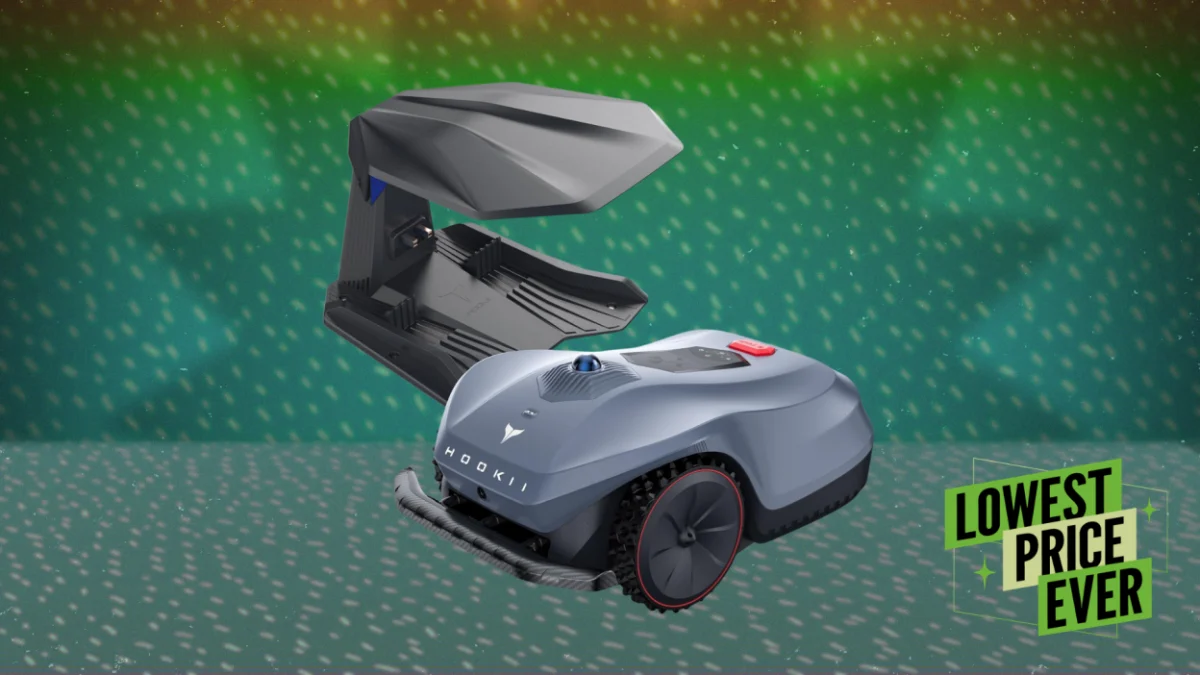
The evolution of home automation has been characterized by a gradual migration from the interior to the exterior. While robotic vacuum cleaners revolutionized indoor floor care over the last decade, the outdoor space—specifically the time-consuming chore of lawn maintenance—remained stubbornly manual. Today, that narrative is shifting. As homeowners increasingly seek to reclaim their weekends from the monotonous cycle of mowing, edging, and trimming, the market for autonomous lawn care has matured. A significant development in this space is the current promotional offering for the Neomow X SE Robot Lawn Mower, which has seen its price slashed by $700, bringing it to a more accessible $1,499.
Main Facts: Cutting the Cord on Traditional Mowing
The Neomow X SE stands out in an increasingly crowded field of robotic mowers by addressing the most significant barrier to entry for the average consumer: installation complexity. Historically, robotic mowers necessitated the burying of perimeter wires or the installation of complex Real-Time Kinematic (RTK) antenna arrays to guide the device. These setups were not only time-consuming but also prone to failure if the wire was severed by garden tools or pets.
The Neomow X SE eliminates this requirement entirely through a wire-free, plug-and-play architecture. By utilizing 3D LiDAR SLAM (Simultaneous Localization and Mapping) combined with advanced AI vision, the mower generates a precise digital map of the yard in real-time. This sophisticated navigation allows it to treat the lawn much like a high-end indoor robot vacuum treats a floor plan, identifying obstacles, navigating around trees, and avoiding flower beds without the need for physical guidance systems.
Chronology of Home Automation Evolution
To understand the significance of the Neomow X SE, one must look at the timeline of autonomous home maintenance:
- 2002–2010 (The Genesis Phase): The introduction of the first generation of consumer-grade robot vacuums established the feasibility of autonomous navigation in contained indoor environments. During this time, robotic mowers were largely restricted to industrial or professional landscaping use, featuring primitive sensors and heavy reliance on boundary wires.
- 2011–2018 (The Refinement Phase): Smart home connectivity began to integrate with outdoor devices. However, consumers were still tethered to manual wire installations. The "smart" aspect was limited to scheduling rather than true environmental awareness.
- 2019–2023 (The Sensor Revolution): The industry saw a transition toward RTK-GPS and visual navigation systems. While these were more precise, they often required expensive external hardware installations that deterred casual homeowners.
- 2024–Present (The AI-Driven Era): We have entered the current era, characterized by edge-computing and AI vision. Devices like the Neomow X SE now rely on internal processing power to navigate complex terrains. The focus has shifted from "how to keep the robot in the yard" to "how to make the robot perform the best possible cut."
Supporting Data and Technical Specifications
The Neomow X SE is designed for medium-to-large residential properties, boasting a maximum capacity of 0.75 acres. The technical specifications highlight a device built for durability and precision:
- Navigation & AI: Utilizing 3D LiDAR SLAM, the mower creates a high-fidelity map, enabling it to navigate shaded areas—where GPS signals often struggle—and perform nocturnal operations without human intervention.
- Power and Performance: A 13Ah battery provides a robust 2-hour runtime, allowing it to tackle significant portions of a yard on a single charge.
- All-Terrain Capabilities: The mower features front-wheel drive and rugged tires, capable of navigating inclines and obstacles up to 1.6 inches in height.
- Customization: Through the companion app, users can establish up to 40 distinct working zones. This is critical for homeowners who want to keep the mower out of specific areas like vegetable gardens, koi ponds, or areas where children play.
- Environmental Durability: With an IPX5 waterproof rating, the unit is protected against rain and irrigation systems, removing the anxiety of leaving the device outdoors during unpredictable weather.
Implications for the Modern Homeowner
The transition to robotic lawn care is not merely a matter of convenience; it is an economic decision. For households that currently spend between $50 and $150 per visit for professional lawn services, the upfront investment in a device like the Neomow X SE can effectively pay for itself within a single or double growing season.

Furthermore, the environmental implications of moving to electric, autonomous mowing are significant. Unlike gas-powered mowers, which contribute to noise pollution and carbon emissions, the Neomow X SE offers a quiet, emission-free alternative. Because the mower operates frequently, it cuts only a small fraction of the grass blade at a time, a process known as "mulching." This returns vital nutrients to the soil, promoting a healthier, thicker lawn that requires less synthetic fertilizer over time.
For the tech-conscious homeowner, the integration of 4G, Wi-Fi, and Bluetooth, combined with GPS anti-theft tracking, provides peace of mind. The ability to monitor the mower’s progress from a smartphone, receive alerts if the unit is moved, and adjust cutting heights (from 1.2 to 3.3 inches) on the fly turns a chore into a manageable, data-driven task.
Future Outlook: The Role of AI in Landscaping
The trajectory of the industry suggests that the Neomow X SE is merely the vanguard of a larger movement. As AI vision becomes more nuanced, future iterations of these devices will likely be able to identify invasive weed species, adjust cutting patterns to optimize grass health based on localized moisture levels, and potentially even assist in yard cleanup tasks.
The current price reduction of the Neomow X SE to $1,499 represents a strategic inflection point. By making high-end, LiDAR-based navigation technology available at a mid-tier price point, the manufacturer is signaling a move toward mass-market adoption. For those who have been hesitant to embrace the technology due to the "barrier of installation," this wire-free solution removes the primary obstacle.
In conclusion, as we look toward the future of the American lawn, the shift away from manual labor toward autonomous, intelligent systems seems inevitable. The Neomow X SE, with its focus on ease of use, sophisticated navigation, and robust hardware, stands as a testament to how far home automation has come. For the homeowner looking to reclaim their time and invest in the long-term health of their landscape, the current market conditions offer a compelling reason to make the switch. The era of the "weekend lawn chore" is rapidly coming to a close, replaced by the silent, efficient, and precise operation of the autonomous mower.
 Layla Zulfa
  Asro
Asro  Reynand Wu