
 By Raul Delapena Setiawan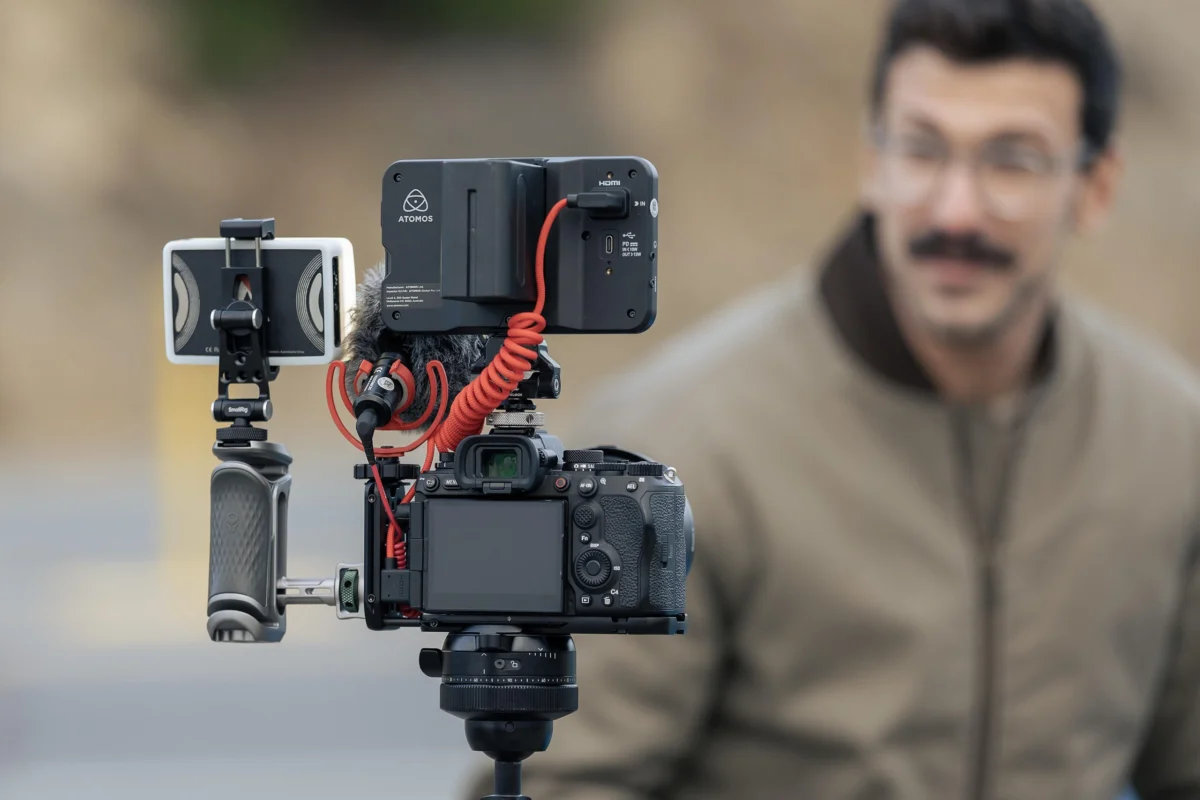
For the professional photographer or the passionate hobbyist, the loss of a camera body isn’t just a financial setback—it’s a catastrophic loss of data, personal projects, and professional livelihood. Whether it is a forgotten bag in an Uber or a misplaced kit in an airport terminal, the anxiety of leaving expensive, irreplaceable equipment behind is a universal experience for those in the field.
For years, the industry standard for tracking gear has been the humble Bluetooth finder tag. However, these trackers have traditionally been an aesthetic and functional afterthought, often dangling from camera straps like kitschy keychains from a bygone era. They get snagged on zippers, obstruct physical controls, and generally clutter the streamlined ergonomics of modern mirrorless systems.
Today, Peak Design, a brand synonymous with refined, functional photography gear, announced a paradigm shift in how we secure and augment our cameras. The company has officially launched its Field Bracket system on Kickstarter—a modular, precision-engineered solution that aims to integrate tracking technology, ergonomic support, and rigging capability into a single, elegant ecosystem.
Main Facts: A New Standard for Modular Rigging
The Field Bracket is not a singular product, but rather a foundation for a comprehensive camera-rigging ecosystem. At its core, it is a custom-molded L-bracket designed to fit specific camera bodies with surgical precision. Unlike universal brackets that often feel bulky or prone to shifting, the Field Bracket is contoured to the unique geometry of the camera it supports.
The primary innovations of the system include:
- Integrated Beacon Finder Tag: The bracket features a dedicated, recessed slot designed to house the proprietary "Beacon" finder tag. This tag is compatible with both Apple’s Find My network and Google’s Find My Device network, ensuring cross-platform compatibility.
- Modular Expansion: Beyond its role as a tripod-mounting accessory, the bracket acts as a chassis for a variety of add-ons, including specialized hand grips, finger grips, and “cheese plates” for mounting external peripherals like microphones, LED lights, or field monitors.
- The "Field Latch" System: This is the heart of the product’s modularity. Using a proprietary tool-free locking mechanism, users can snap on or remove vertical components in seconds.
- Ergonomic Integration: The bracket is designed to coexist with Peak Design’s existing ecosystem. It maintains full compatibility with the company’s signature "Capture Clip" and strap mounting points, ensuring that photographers do not have to compromise their existing workflow to gain the benefits of the bracket.
Chronology of Development: From Pain Point to Prototype
The development of the Field Bracket did not happen in a vacuum. Peak Design has long maintained an active feedback loop with its community, and the "clumsiness" factor—the fear of loss—was a recurring theme in user surveys.
The project began as an internal initiative to address the "dangly tag" problem. Engineers at Peak Design spent eighteen months prototyping a way to integrate tracking technology directly into the base plate of a camera. The challenge was two-fold: signal attenuation (metal bodies often block Bluetooth signals) and battery accessibility.

By Q3 of 2025, the company had finalized a design that used a non-conductive, high-impact composite for the tag housing while maintaining a CNC-machined aluminum skeleton for the structural L-bracket. Following extensive field testing with professional street and travel photographers, the product was finalized in mid-2026. The launch on Kickstarter, which went live today, serves as both a distribution platform and a method for the company to gauge which camera models—ranging from Sony Alpha series to Fujifilm X-series—should be prioritized for mass manufacturing.
Supporting Data and Technical Specifications
The Beacon Finder Tag, which serves as the electronic centerpiece of the system, is built for the rigors of professional use.
- Battery Life: The tag is powered by a standard, user-replaceable CR2025 coin cell, providing up to six months of active service.
- Durability: The unit is rated for IP67 water and dust resistance, meaning it can withstand accidental submersion and harsh environmental conditions, such as desert dust or light rain.
- Form Factor: The tag fits flush within the base plate of the Field Bracket, effectively making it invisible to the casual observer and immune to the snagging issues of traditional keychain-style tags.
- Pricing: Early-bird backers can secure the base Field Bracket for $125. The full "pro bundle," which includes the L-bracket, the Beacon tag, the cheese plate, and the additional grip modules, is priced at $199 during the campaign. The eventual retail MSRP for the bracket is set at $149.95, with the full bundle reaching $269.80.
Official Responses and Strategic Vision
In a statement accompanying the launch, Peak Design’s lead design engineer noted that the Field Bracket represents a move toward "invisible utility."
"We believe that the best gear is the gear you forget you’re using," the representative said. "Photographers shouldn’t have to choose between protecting their investment and maintaining a clean, ergonomic shooting experience. With the Field Bracket, the tracker is a part of the camera’s architecture, not an accessory tied to a strap."
When asked about the compatibility limitations at launch, the company emphasized that it is utilizing a community-driven development model. The "Field Bracket Compatibility" portal on the Kickstarter page allows users to vote on which camera models they want to see supported next. This democratic approach to manufacturing is a signature of the brand, intended to ensure that the production run meets actual market demand rather than speculative projections.
Implications: The Future of Camera Ecosystems
The introduction of the Field Bracket has significant implications for the photography industry.
1. The Death of the "Keychain" Tracker
For years, the tech industry has ignored the specific needs of photographers when it comes to location tracking. By integrating this technology into an essential piece of hardware like an L-bracket, Peak Design is setting a new standard. It is highly probable that other accessory manufacturers will follow suit, eventually making "finder-ready" camera cages and plates an industry standard.

2. Professionalizing the "Rig"
The rise of the "content creator" has blurred the lines between still photography and videography. The modular nature of the Field Bracket—specifically the "cheese plate" attachment—allows a photographer to transform a simple mirrorless body into a full-fledged cinema rig in under ten seconds. This versatility is likely to appeal to wedding videographers, travel documentary makers, and influencers who require rapid transitions between handheld shooting and tripod-stabilized production.
3. Sustainability and Longevity
By choosing to use a standard CR2025 battery rather than a proprietary, rechargeable internal battery, Peak Design is making a conscious choice for longevity. Rechargeable batteries eventually degrade, potentially bricking a device after a few years. A user-replaceable battery ensures that the Beacon tag can function as long as the user remains within the Apple or Google ecosystem.
4. Market Impact
The decision to launch on Kickstarter is a strategic one. Beyond funding, it allows Peak Design to validate the demand for specific camera mounts. With the camera market currently fragmented across brands like Canon, Nikon, Sony, Fujifilm, and Panasonic, mass-producing custom-molded brackets is a high-risk endeavor. By utilizing the crowdfunding model, Peak Design mitigates this risk while providing their most dedicated users with a discount—a win-win scenario that has served the company well in previous product launches.
Conclusion: A Worthy Investment?
The Field Bracket is, ultimately, an insurance policy. While $150 to $200 may seem like a premium price point for a piece of mounting hardware, the value proposition lies in the peace of mind. For a professional, the time spent tracking a lost bag or the cost of replacing a camera far outweighs the initial investment of a smart, integrated bracket.
As the lines between tech-adjacent accessories and traditional mechanical gear continue to blur, Peak Design’s latest offering stands out as a thoughtful, well-executed bridge between the two. For those of us who have felt the sinking heart of leaving a camera in the back of a ride-share, the Field Bracket isn’t just an accessory—it’s a necessity.
For those interested in participating in the launch, the Kickstarter campaign is currently active, with limited-time early-bird pricing available for those who act quickly.
 Siti Muinah
  Asro
Asro 